Disclosure: Some links in this post are affiliate links. As an Amazon Associate I earn from qualifying purchases, at no extra cost to you. Learn more
Specs are compiled from manufacturer listings and verified buyer reviews and can change over time — please confirm the key details on the product page before buying.
If your carrots come out short, forked, or leafy on top with almost nothing underneath, the problem is usually the food, not your soil. The five picks below cover that gap, and one of them is a straight 0-0-60 potassium granule that carrot growers reach for when the tops look great and the roots do not.
This guide is built by comparing the manufacturers’ published specifications and the patterns across verified customer reviews, so you get each pick’s real strengths and trade-offs instead of marketing spin.
You will see which bag suits a raised bed, which suits a container, and which one is simply potassium on its own for gardeners who already have the rest covered. Here is how to pick the right carrot fertilizer without guessing at ratios.
Top Picks

How To Choose The Best Carrot Fertilizer
The fertilizer shelf is confusing because every bag shouts about big harvests. For carrots you only need to answer three questions: what ratio is in the bag, how it gets into the soil, and how far one bag stretches. Get those right and the rest is packaging.
Match the ratio to the job
Those three numbers are nitrogen, phosphorus and potassium, always in that order. Carrots build a root, so a low first number and higher second and third numbers suit them. A 5-10-10 fertilizer leans that way, and a 0-0-60 product is potassium alone with no nitrogen or phosphorus at all.
That last point cuts both ways. Pure potassium is a precision tool, not a complete feed. Use it when a soil test or a struggling plant tells you potassium is the gap, and use a balanced blend when you want one bag to do the whole job.
Granules or liquid
Granules are the slower, steadier choice — you work them into the top inch of soil and they break down over time. That suits a bed you are preparing before sowing carrot seed. Liquid concentrates mix into your watering can and reach thirsty roots quickly, which helps a plant that has stalled mid-season.
Read the coverage number, not the bag size
A bag that states its rate in square feet tells you how much ground it covers. A bag that does not forces you to do the math yourself, and that is where most overfeeding happens. Carrot seed is sown thin, so a little goes a long way and overfeeding costs you root quality.
Made in USA and resealable packaging
Several of these bags are made in the USA and come in resealable pouches. That matters more than it sounds: you rarely use a whole bag on one sowing, so a pouch that seals keeps the granules dry and free-flowing for the next planting.
Side-by-Side Comparison
| Model | Best For | NPK Ratio | Form | Unit Count | Amazon |
|---|---|---|---|---|---|
| Muriate of Potash 0-0-60 (MOP)★ Best Overall | Targeted potassium for struggling roots | 0-0-60 | Granules | 80 Ounce | Amazon |
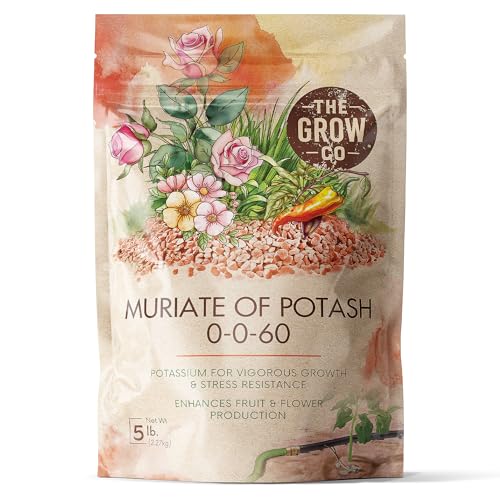
| The Grow Co Muriate of Potash 5 lbsMeasured Rate | Big beds on a measured rate | 0-0-60 | Granules | 80 Ounce | Amazon |
| Cz Garden 5-10-10 Tomato & Vegetable | All-round vegetable bed, fruiting stage | 5-10-10 | Granules | 64 Ounce | Amazon |
| TPS Nutrients 5-10-10 Liquid | Container carrots and quick rescue | 5-10-10 | Liquid | 32 Fluid Ounces | Amazon |
| Big A Carrot Fertilizer | Root vegetables, kelp blend | — | Granules | 13.5 Ounce | Amazon |
Detailed Reviews
1. Muriate of Potash 0-0-60 Fertilizer Made in USA
Our pick — 4.5+★ from 950+ verified ratings; the strongest balance of quality and price.
Potassium at full strength, for the grower who already knows the roots are starving.
The number that decides this pick is 0-0-60 — a fertilizer with zero nitrogen, zero phosphorus and a full 60 percent potassium. For carrots that is the point. Nitrogen pushes leaf growth, and too much of it gives you a tall ferny top over a thin, woody root. This bag skips nitrogen entirely and hands the plant the nutrient that drives root fill and thicker cell walls, which is what turns a pencil into a carrot.
It arrives as water-soluble granules in a heavy-duty resealable pouch holding 80 ounces, so you pour what you need and seal the rest for the next sowing. Granules work into the top inch of soil and release as you water, which fits the way most people prep a carrot bed before seed goes down. Spread evenly and it does not clump or blow away.
What wins people over is the quality of the granule itself — the single most-discussed strength in its feedback — and the effectiveness that follows. Potato growers report plants that hold up better through hot weather, and blooms within 2-4 weeks of feeding. One grower’s near-dead palms came back upright after a couple of doses, where a general palm food had failed. As a potato and root gardener put it plainly: “Blooming and end of growth boost.”
What earns its place at the top
- A straight 0-0-60 ratio means no nitrogen pushing leaf growth at the expense of the root.
- Water-soluble granules spread evenly across a bed and dissolve as you water.
- The 80-ounce resealable pouch keeps the rest dry between plantings.
- Works across flowers, lawns, fruit trees and vegetables, not just one crop.
Where you need to be careful
- It is potassium only — carrots still need phosphorus and other nutrients from somewhere.
- Overuse does harm plants, so timing and rate matter more here than with a mild blend.
- You need a rough idea of your soil to use it well, which a soil test settles.
Reach for this if: your soil already has the basics and you want to push potassium hard at the root-building stage.
Pair it with something: a balanced blend, because there is no phosphorus or nitrogen in this pouch at all.
2. Muriate of Potash Fertilizer 5 lbs
Same full-strength potassium, but this bag tells you exactly how far it goes.
The two potash bags here share a 0-0-60 ratio, so the difference is not the nutrient — it is the instructions. This one states its coverage at 1,000 square feet per 0.5 pounds, and gives you a working rate: 1/2 lb, roughly 1.25 cups, into the top inch of soil over that area, or a teaspoon near the drip line for a single plant. That is the number that stops overfeeding in a carrot bed, where a light hand matters.
The crystal-form granules are concentrated and dissolve readily, and the bag lays out what potassium does in plain terms: it helps move sugar and other nutrients through the plant, reduces moisture loss, and builds thicker outer cell walls. For a root crop that shows up as sturdier stems and roots that hold up through dry spells and temperature swings rather than going soft.
Quality is the clear headline in its feedback, followed by how easy it is to handle. Citrus growers get a production bump from it, and bloom-heavy plants respond in a way that reads as a booster rather than a base feed: “Super handy, this stuff is a real bloom booster.” The caution worth knowing is the math problem — the coverage is given per 1,000 square feet, and scaling that down to a 12-inch rose container or a single shrub takes some multiplying. Buyers who want a spoon-per-plant answer will find themselves converting.
The honest trade-off: the rate card is written for broad areas, so small plantings require you to do the conversion yourself before you feed anything.
Best fit: a larger vegetable patch or lawn edge where a stated per-square-foot rate saves you from guesswork.
skip it if: your carrots live in a few pots and you would rather not do the arithmetic.
3. Cz Garden 5-10-10 Tomato & Vegetable Fertilizer

One bag that feeds the whole bed, carrots included, with iron and micronutrients along for the ride.
Here the ratio is 5-10-10, which means a low dose of nitrogen and a heavier hand with phosphorus and potassium — the combination that favors fruit and root over leaf. It also carries 2 percent iron plus micronutrients, the trace elements that decide whether leaves stay deep green instead of yellowing at the edges. For a mixed vegetable bed where carrots share space with tomatoes and peppers, that spread is the reason to buy it over a single-nutrient bag.
Four pounds of granules arrive in a resealable heavy-duty pouch, and the maker states a mix of 1-2 tablespoons per plant. That is a rate you can actually apply by hand at the base of a carrot row without dragging out a scale. Granules break down steadily in the top inch of soil rather than flushing straight through.
Effectiveness is what carries this one in the feedback, and it is not subtle. Tomato growers describe huge green leaves and lots of fruit, and vegetable gardeners who have used it for years say it never burned their plants. Cherry trees, roses and lilies get the same treatment, with one gardener going back for two more bags. The feeding rhythm is easy to hold: “Just use once in 2 weeks during fruiting.” Where cooks of the garden diverge is the bag itself — several find the 64-ounce pouch small for the ground it covers, so on a large plot you will be reordering sooner than you would like.
Why it sits high on this list: a 5-10-10 blend with iron and micronutrients is a complete feed, not a correction for one deficiency, so it suits a beginner who wants one bag for everything.
What to plan around: the pouch is 64 ounces, so a big vegetable garden burns through it fast and the per-plant rate only applies if you actually measure the tablespoons.
Grab this one if: you grow carrots alongside fruiting crops and want a single granular feed that covers the whole bed.
Think twice if: you already know your soil is short on potassium only — a straight potash bag targets that better.
4. 5-10-10 Fertilizer 32oz
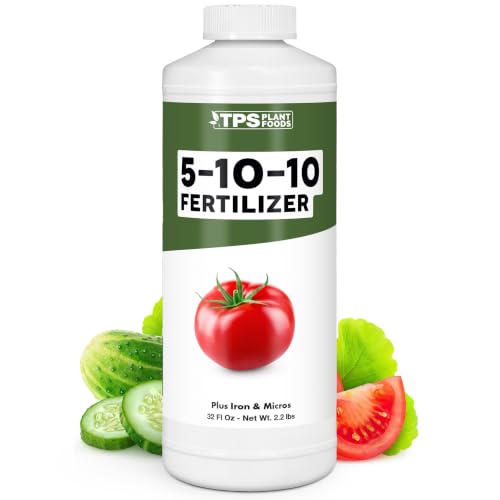
The liquid option for pot-grown carrots that need feeding the same afternoon you notice the stall.
Carrots in containers have a shallower root zone and dry out faster, so a granule that has to break down first can be too slow. This one is a concentrated liquid at a 5-10-10 ratio in a 32-fluid-ounce bottle. You dilute it into your watering can and it goes straight into the soil with the water, which means the phosphorus and potassium reach the root zone in that same watering rather than over the following weeks.
The low-nitrogen, high phosphorus and potassium mix is aimed squarely at the blooming and fruiting stage. That is exactly the programming you want late in a carrot’s life: the plant stops throwing new top growth and puts its energy into the root. Because it is a liquid it also spreads evenly through a pot with no risk of a granule sitting against one root and scorching it.
Effectiveness is what owners talk about most, and the stories are specific. A jalapeño that looked finished for the season came back into bloom and set peppers again. A stalled bell pepper pushed lush leaves and, by the second feed, more than 30 buds. Half-dead Knockout roses bloomed again within 3 weeks. On cucumbers and tomatoes the pattern is the same — more fruit, not just bigger bushes. The recurring snag is the bottle. It is smaller than the picture suggests and the concentrate gets used up quickly, and one gardener notes it is not organic and ships without a measuring cup.
Why pot growers like it
- Liquid form absorbs immediately, so it helps a plant that has stalled.
- The 5-10-10 ratio steers energy toward roots, blooms and fruit over foliage.
- Dilutes into a watering can — no granules to work into the soil.
Budget for these
- 32 fluid ounces runs out fast on a thirsty container garden.
- No measuring cup in the box, so you supply your own.
- Not an organic formula, which rules it out for some growers.
Pick this for: raised pots, grow bags and any carrot planting where you need to feed through the water and see a response quickly.
Look elsewhere if: you want a certified organic input or enough volume to last a whole season in one bottle.
5. Big A Carrot Fertilizer and Root Vegetable Fertilizers
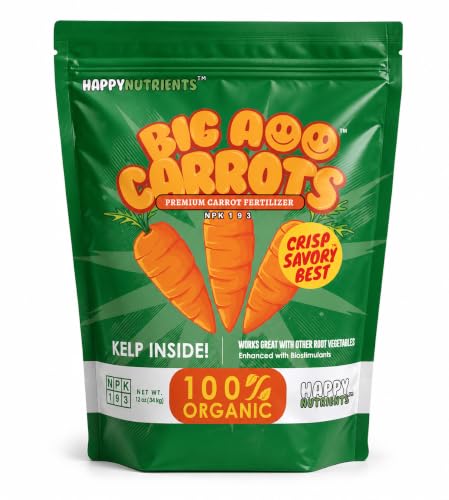
A kelp-based blend aimed at carrots first and every other root crop a close second.
Most bags on this list are general purpose and you adapt them to carrots. This one starts the other way around. It is built around a kelp blend and targets root vegetables by name — carrots, yams, beets and onions — while still feeding the wider garden. Beyond nitrogen and phosphorus it adds the secondary nutrients calcium and magnesium, so the root gets more than one thing to work with as it fills out.
The application is the part that suits carrots specifically. You work the highly soluble powder into the soil directly before seeding, which puts the nutrients exactly where a germinating carrot root will grow into them. Carrot seed is tiny and slow to start, so having food already in the top layer means the seedling is not waiting on a feed applied weeks later. The bag holds 13.5 ounces of granules.
What people praise most is the quality of the blend, and the sizes they pull out of the ground back that up. Sweet potatoes in a city-balcony box came in at 19.5 lbs total, including one 3.5-lb specimen. Succession sowings of radishes, turnips and carrots beat a general feed: larger radishes, finger-length carrots, well-filled turnips. One reviewer pulled carrots bigger than an infant’s arm. The catch is the bag — 13.5 ounces is a small pouch, so a long carrot row or several beds will empty it faster than a five-pound sack would.
The root-crop logic: a kelp blend with calcium and magnesium, designed to go into the soil before seed, is a coherent match for how carrots actually grow.
The size reality: at 13.5 ounces, it is a small pouch and best treated as a targeted carrot-row product rather than a whole-garden supply.
Worth it for: dedicated carrot and root-vegetable growers who want a kelp blend and are seeding straight into prepared soil.
Not your bag if: you need one large sack to cover a whole plot — this pouch is small by comparison.
Know the Specs
The NPK Ratio Explained
Those three numbers are nitrogen, phosphorus and potassium, in that fixed order. Nitrogen drives leafy growth, phosphorus supports roots and flowering, and potassium helps the plant move sugars, thicken cell walls and hold water. A carrot pushed with nitrogen gives you a big ferny top and a thin root, which is why a 5-10-10 blend or a 0-0-60 potash product fits better than a high-nitrogen lawn feed. Read the ratio before you read the marketing line on the front.
Granules Versus Liquid
Granules are solid and you work them into the top inch of soil, where they release as you water. That slow release suits bed preparation before sowing. Liquids are concentrates you dilute into a watering can, so the nutrients arrive with the water and reach the root zone in the same session. In a container, where the root zone is shallow and dries out, the liquid typically gets there faster; in an open bed, the granule keeps feeding for longer.
Coverage Rate Per Square Foot
A stated rate like 1,000 square feet per 0.5 pounds tells you how far the bag stretches and how much to apply. Without it you are guessing, and guessing on a root crop usually means overfeeding. Measure the bed once, note the rate from the label, and dose to that number rather than to the size of the bag.
Secondary Nutrients and Micronutrients
Calcium, magnesium, iron and the trace elements are not the headline numbers, but they decide how healthy the plant looks and how well it finishes. Iron keeps leaves deep green, magnesium supports the plant’s internal chemistry, and calcium helps build structure. A blend that lists them is doing more per scoop than a bag of straight potassium.
Common Questions
What NPK ratio is best for carrots?
Can I use a tomato fertilizer on carrots?
Is straight potash enough on its own for carrots?
Should I feed carrots before sowing or after they come up?
How much fertilizer does a single carrot plant need?
Can too much fertilizer ruin carrots?
Is a liquid or granular fertilizer better for carrots in pots?
How do I work out how far one bag will go?
Do I need to test my soil before adding potash?
The Bottom Line
For most carrot growers, the fairest place to start is the Cz Garden 5-10-10 Tomato & Vegetable Fertilizer — a low-nitrogen blend with iron and micronutrients, which covers the whole bed rather than one deficiency. If your soil is already fed and potassium is the missing piece, reach for the Muriate of Potash 0-0-60, the straight-potassium pick built on a full 60 percent potassium ratio. And for carrots in pots where you want to feed through the watering can, the TPS Nutrients 5-10-10 liquid is the one to grab. Whichever you choose, dose to the printed rate and let the root — not the leaf — tell you whether it worked.
How we choose
We do not accept paid placement. Every pick is matched to a real buyer and a real use-case; we do not hands-on test units.
Sources
Specifications: manufacturer listings and product documentation. Review insights: verified customer reviews, as of October 2026. Pricing: not shown on this page (it changes often); check the current price via the retailer link.
As an Amazon Associate, Aappliancez earns from qualifying purchases. This does not affect which products we feature.