Disclosure: Some links in this post are affiliate links. As an Amazon Associate I earn from qualifying purchases, at no extra cost to you. Learn more
Specs are compiled from manufacturer listings and verified buyer reviews and can change over time — please confirm the key details on the product page before buying.
If you have ever watched a sensor, a dressing, or a patch lift at the corner by lunchtime, you already know the real problem. Most patch adhesives fail not because they are weak, but because they were never built for sweat, showering, and skin that moves. The picks below solve that in three different ways: a sticky barrier wipe that goes on before the patch, a liquid bond that goes under it, and transparent film covers that seal over the top.
This guide is built by comparing the manufacturers’ published specifications and the patterns across verified customer reviews, so you get each pick’s real strengths and trade-offs instead of marketing spin.
What follows is a working shortlist organized by how you plan to use it: barrier prep, liquid securement, and film covers. Each entry names the exact size, pack count, or formula you are getting, so you can match it to your device before you buy. Here is the honest breakdown of the patch adhesive options worth your time.
Top Picks
How To Choose The Best Patch Adhesive
The first decision is not brand. It is placement. A barrier wipe or a liquid adhesive sits between your skin and the patch and makes the patch grip harder. A transparent film dressing sits on top of the patch and shields it from water and rub. Buying the wrong one for your device is the most common way people end up disappointed.
Match the form to what you are securing
If your problem is a sensor or an appliance that lifts from the skin side, you want a prep wipe or a liquid bond. If your problem is water getting in from outside, or a dressing you need to keep an eye on, a clear film patch does the job. Some people use both, applying the prep first and a film over the top.
Check the pack count against your change schedule
A box of 50 wipes and a box of 100 film patches are very different commitments. Count how many times you change your device in a month and multiply. A 100-pack of films makes sense for daily changes; a 50-count wipe box suits weekly applications.
Read the adhesion note, not just the star line
Every product here is well regarded, but they fail in different ways. Films tend to lift at the edges on oily or hairy skin. Wipes leave a tacky residue on fingers. Liquids can be awkward to apply precisely. Knowing whether a product fails by edge lift, tacky fingers, or fussy application tells you more than a star score.
Side-by-Side Comparison
| Model | Best For | Form | Pack Count | Patch Size | Amazon |
|---|---|---|---|---|---|
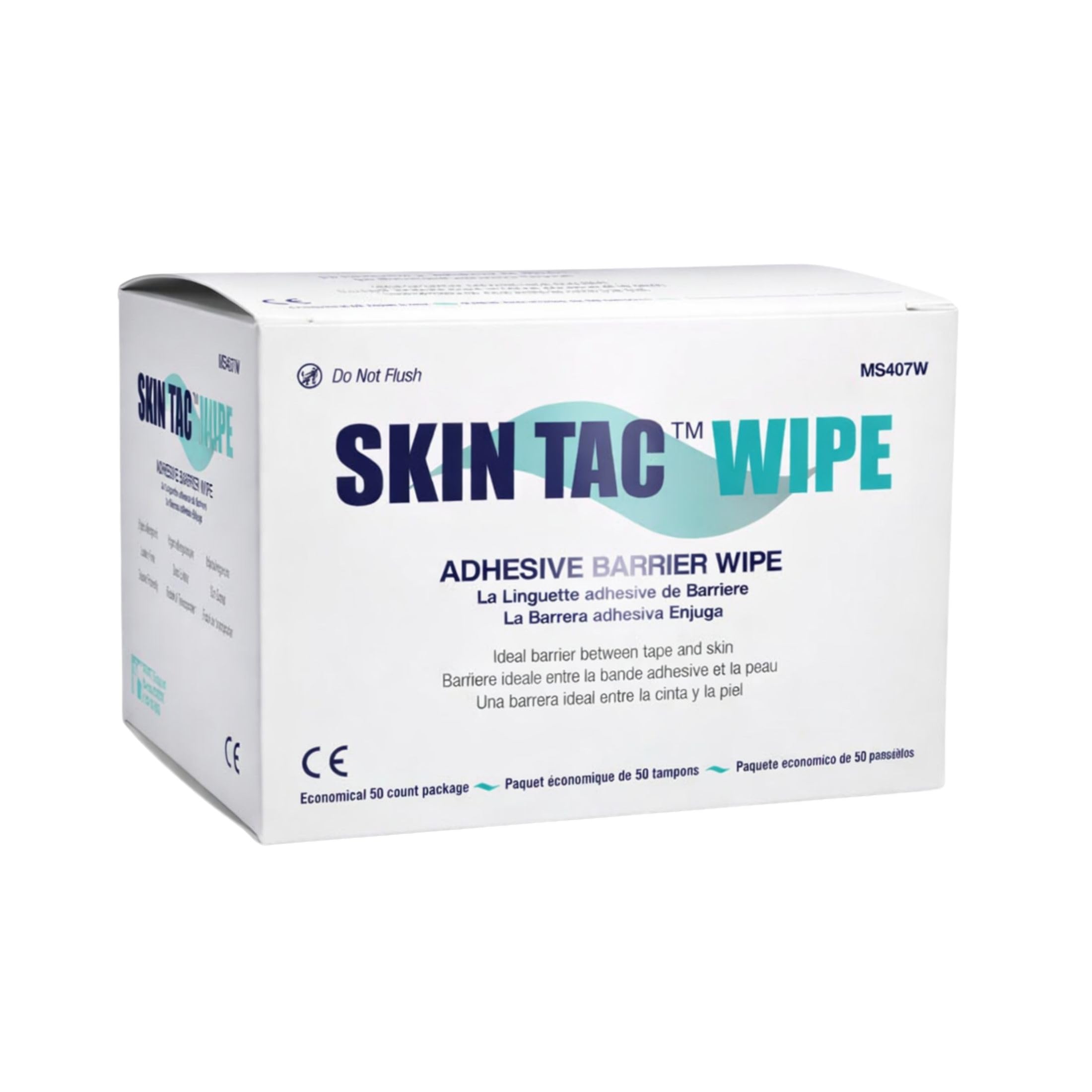
| Torbot Skin Tac”H” Barrier Prep Wipes★ Best Overall | Prep before sensors and appliances | Liquid wipe | 50 | — | Amazon |
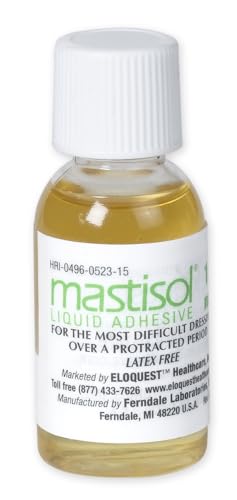
| Mastisol Liquid Medical AdhesiveStrongest Hold | Maximum hold under dressings | Liquid in bottle | 1 bottle | — | Amazon |
| Everlit Care Transparent Film Dressing | Watching a wound while it heals | Clear film patch | 100 | 2.36″ x 2.75″ | Amazon |
| Carbou Transparent Film Dressing | Large-area coverage | Clear film patch | 50 | 4″ x 4.75″ | Amazon |
| YHOVID 100-Pack Transparent Film Dressing | High-volume daily changes | Clear film patch | 100 | 4″ x 4.75″ | Amazon |
Detailed Reviews
1. Torbot Skin Tac”H” Adhesive Barrier Prep Wipes
Our pick — 4.5+★ from 8,500+ verified ratings; the strongest balance of quality and price.
The wipe you use before the patch, so the patch stops losing its grip on day four.
Fifty individually wrapped wipes, each one soaked in a tacky liquid that you swipe on clean skin before the device goes down. That is the whole product, and it is the one most people in this category should start with. It is latex-free and hypo-allergenic, aimed at skin that reacts to ordinary tapes.
The reason it wins is simple: it fixes the layer everyone else ignores. Skipping it means your sensor is stuck to bare skin, which is exactly where sweat and oils collect. The wipe leaves a tacky barrier that fades in the extra areas beyond the patch, so you are not walking around with sticky arms all day.
What owners describe most is the lifespan change. People securing a glucose monitor report the overlay holding for the full sensor stretch instead of peeling early, with no irritation through sweat and showers. Swimmers do note it may give up slightly sooner when very wet. The one practical catch is handling: the wipes are genuinely sticky, so use gloves, and keep alcohol or baby oil nearby to clean your fingers afterward.
What earns it the top spot
- Works before the patch goes on, so it fixes the root cause of edge lift
- Latex-free and hypo-allergenic for reactive skin
- 50 individually wrapped wipes keeps each one moist until you open it
- Holds through showers and sweat for sensor overlays
Where it asks a little care
- Very tacky on fingers — gloves make application far cleaner
- Sustained soaking can shorten hold slightly
- Needs a clean, dry surface first to work properly
Reach for this if: you apply sensors, pumps, ostomy appliances, or medical tape and want the first layer to actually hold.
Keep in mind: the sticky transfer is real, so plan for gloves and a cleanup wipe.
2. Mastisol Liquid Medical Adhesive
When a wipe is not enough, this is the bottle that makes dressings stay put.
This is a liquid, not a wipe, and it arrives in a single bottle with a full cure time of 24 hours. The formula is non-water soluble, which is the reason it survives high-moisture areas where ordinary tape gives up. It is latex-free and compatible with CHG-impregnated dressings, catheter securement devices, and steri-strips.
The trade-off for that hold is application fuss. It is thicker and more deliberate than a swipe, and dipping the tip of a cotton swab in it gives you far more control than pouring. Once it dries it is fast — dressings go down and stay. Owners describe it restoring a sensor that had already begun to loosen, and one ileostomy user reported applying it over a skin protectant to reach a full week between appliance changes on a scarred abdomen.
The honest catch is residue. It does not dissolve in water, so removal takes an oil-based cleanser or dedicated adhesive remover wipes. A few people also wish the bottle came larger or with a brush applicator. Neither is a dealbreaker if you go in expecting it.
Applied with control: Swab application beats pouring, and once dry it locks a dressing down hard enough for devices that were sliding off early.
The residue bill: Non-water-soluble is the feature and the cost. Keep an oil-based remover on hand before you start.
Pick this one for: stubborn devices, high-moisture areas, or appliances that need to survive a full week.
Not the easy pick: if you want a quick swipe and nothing to clean up afterward, the wipe above is friendlier.
3. Everlit Care Transparent Film Dressing, 100 Pack

A clear window over the dressing, so you can check without peeling anything off.
Each patch measures 2.36″ x 2.75″ and there are 100 in the box, individually packed. The film is thin and breathable, designed to let air reach the site while holding a moisture balance.
Size is where this pick splits from the Carbou film below. That one runs 4″ x 4.75″, so the Everlit is the smaller of the two — its strength is volume and flexibility, not blanket coverage. Buyers trim it down for smaller sites and cut it in half for face and eye use. Post-surgical users covering a lower back incision reported showering with it and finding only one patch out of about six letting in a trickle of water, likely from ointment creeping under the edge.
Be realistic about adhesion on curved, mobile skin. The clear film holds well on a flat back but is less forgiving over joints, and it wants a genuinely dry surface before it goes on. On the plus side, 100 patches at this size means you can change daily without rationing them.
Why it earns a place
- 100 individually packed patches for frequent changes
- Clear film lets you monitor the site without removal
- Window-frame border makes centering straightforward
- Breathable enough for extended wear
What to plan around
- 2.36″ x 2.75″ is a modest size — trim or overlap for larger sites
- Adhesion drops on curved or sweaty areas
- Ointments under the edge can loosen the seal
A good fit for: post-surgical showering, IV sites, tattoo aftercare, and any dressing you want to keep an eye on.
Look at the 4″ x 4.75″ options instead if you need to cover a wide incision in one piece.
4. Carbou Transparent Film Dressing, 50 Pack

The bigger film patch, for when a small square leaves half your incision exposed.
At 4″ x 4.75″, these are 69% more coverage per patch than the Everlit films at 2.36″ x 2.75″ — a gap you feel immediately when you are trying to cover a wide incision in one go. You get 50 in the pack, each pre-cut and individually wrapped, made from a clear polyurethane film with a release paper backing.
The film itself is remarkably thin, thinner than cling wrap according to people who have used it, which is why it sits flat against a shoulder or a hip without bunching. It is breathable for airflow but waterproof enough to shower through, and the hypoallergenic latex-free adhesive is a real consideration for anyone who reacts to standard bandage tape. People covering a healing incision after skin-cancer removal have layered non-stick gauze under it and found it stayed for days.
Where it can let you down is movement and sweat. The adhesive is strong enough to be rough on fragile or thin skin, and it can lift near underarms where the skin folds and perspires. That is a fit issue rather than a fault, but on high-motion areas you will want a prep wipe underneath.
The size argument: Larger patches mean one piece covers the site with margin to spare, and that margin is what keeps water out at the edges.
Handle with care: Strong adhesion on thin skin needs slow, deliberate removal, and high-friction areas will test it.
Best matched to: wide incisions, big tattoo areas, and anyone who wants one patch to cover it all.
skip it if: you are covering a small, flat site — the Everlit size stretches further at 100 per box.
5. YHOVID 100-Pack Transparent Film Dressing
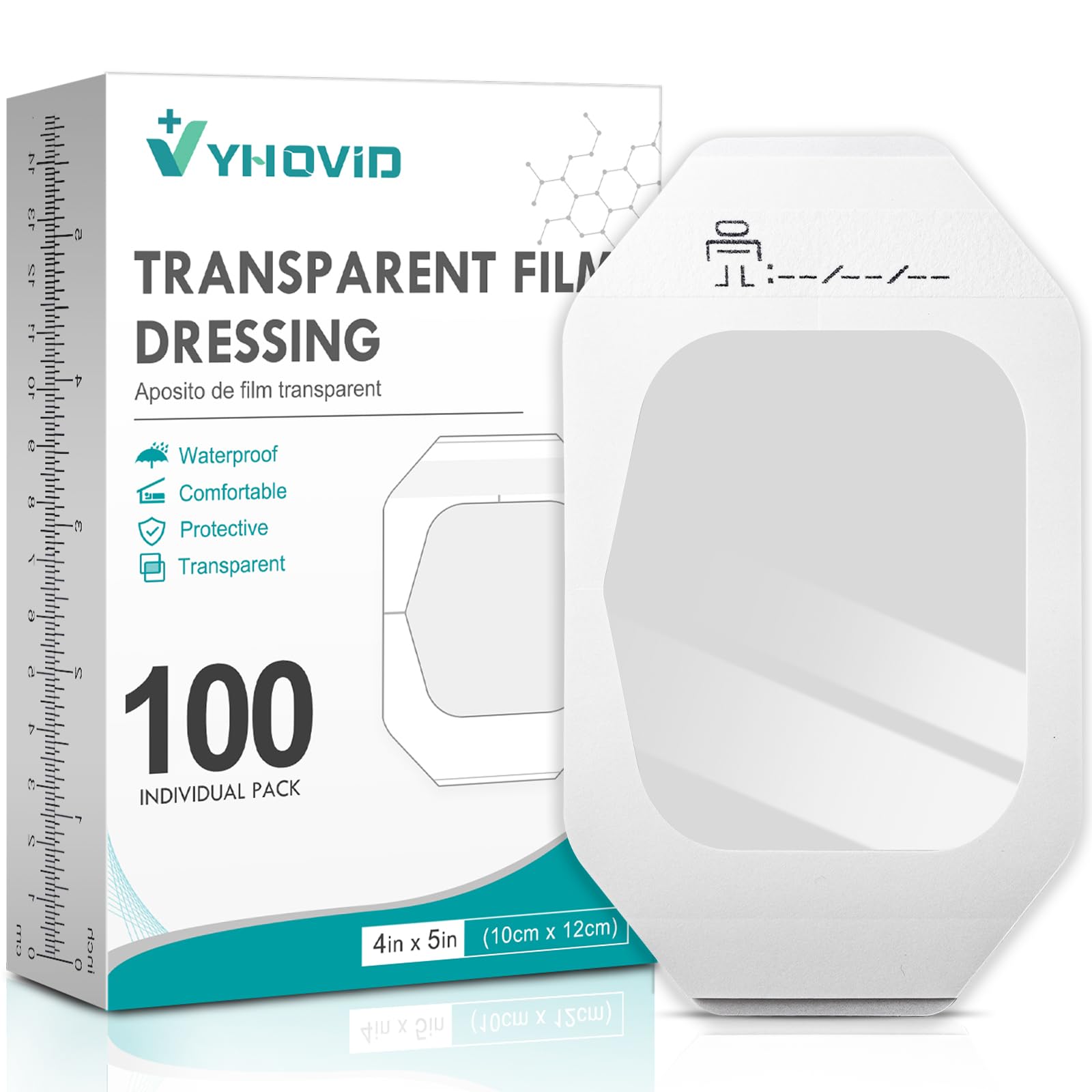
Twice the patches of the Carbou box, in the same generous 4″ x 4.75″ size.
Here is the direct math against the Carbou above: the same 4″ x 4.75″ patch, but 100 in the pack instead of 50. That is a 2.0x gap in count for a like-for-like size. If you change your film often — daily, or every couple of days — that difference decides how often you reorder.
Adhesion is the thing people talk about most with these, and the film sticks firmly enough to hold through baths, showers, and swimming. It is a bonded clear polyurethane film with release paper, latex-free, and it peels back from the skin rather than sticking to the wound itself. The breathable, high-ductility film lets you flex it over a knee or an elbow, and it is thin enough to sit unnoticed under clothing.
One honest caveat: the manufacturer’s own note says these should not be applied directly to open or heavily weeping wounds — use gauze underneath, and peel back rather than pull up when removing. A small number of sensitive-skin users have reported irritation, so patch-test first if you react easily.
Built for frequency: 100 large patches at 4″ x 4.75″ means you can cover a sensor, an IV site, or a dressing every day without watching the box empty.
Read the instructions: this is a cover film, not a primary wound dressing, and it wants gauze or a non-woven layer against an open site.
For high-volume users: great when you go through several patches a week and want the widest size in bulk.
Careful if: your skin is easily irritated by adhesives, or you need a dressing that contacts an open wound directly.
Know the Specs
Barrier wipes vs liquid adhesive
Both create a tacky layer between skin and patch, but they apply very differently. A wipe is a one-swipe, pre-measured dose inside a sealed packet, easy to carry and hard to over-apply. A liquid in a bottle gives you adjustable volume and stronger hold, but needs a swab and careful placement. Wipes suit weekly applications; liquids suit stubborn devices and high-moisture areas.
Patch dimensions and how they fit the body
A 2.36″ x 2.75″ patch is compact — good for a small incision, an IV site, or a trimmed-down sensor cover. A 4″ x 4.75″ patch gives roughly two-thirds more coverage per piece, which is what you want for a wide wound, a large tattoo area, or a device with a cable coming off it. The right size is the one that covers your site with margin to spare.
Waterproof vs breathable film
A transparent film has to be waterproof to keep liquid out and breathable to let skin function. Those goals pull in opposite directions, which is why film dressings are graded thin rather than thick. Thinner film conforms to a shoulder or hip without bunching, which is what keeps the corners down.
Latex-free and hypo-allergenic
Latex-free matters for anyone with a latex sensitivity, and it is printed on almost every product here. Hypo-allergenic is a milder claim — it means the maker designed for reactive skin, not that the patch is guaranteed to suit every person. If you have reacted to tapes before, test a small patch first.
Common Questions
Should I use a prep wipe or a transparent film for a CGM sensor?
Does Skin Tac work with a Dexcom sensor?
How long does a transparent film dressing stay on?
Is a 4″ x 4.75″ patch better than a 2.36″ x 2.75″ patch?
Can I put a transparent film directly on an open wound?
How do I remove liquid adhesive residue?
Which packs are latex-free?
Will a barrier wipe help if my dressing keeps lifting at the corners?
Can these patches be used in the shower or swimming pool?
How many patches do I need for a month of daily changes?
The Bottom Line
For most people, the strongest starting point among these patch adhesive picks is the Torbot Skin Tac”H” wipes, because they fix the layer under the patch instead of fighting the symptom at the edge. It holds 4.5+ stars across 8,000+ ratings, and that consistency is rare for a wipe this tacky to handle.
If a wipe is not enough and your device keeps sliding off early, the Mastisol liquid is the upgrade to reach for, as long as you accept the residue cleanup. For coverage over the top, the Carbou 4″ x 4.75″ film gives you the widest patch, and the YHOVID 100-pack is the smarter buy if you change film often. Pick the layer your device actually needs — prep wipe, liquid, or film — and reorder before the box runs dry.
How we choose
We do not accept paid placement. Every pick is matched to a real buyer and a real use-case; we do not hands-on test units.
Sources
Specifications: manufacturer listings and product documentation. Review insights: verified customer reviews, as of October 2026. Pricing: not shown on this page (it changes often); check the current price via the retailer link.
As an Amazon Associate, Aappliancez earns from qualifying purchases. This does not affect which products we feature.