Disclosure: Some links in this post are affiliate links. As an Amazon Associate I earn from qualifying purchases, at no extra cost to you. Learn more
Specs are compiled from manufacturer listings and verified buyer reviews and can change over time — please confirm the key details on the product page before buying.
Concrete holds mold in a way tile never does. The pores soak up moisture and the stain settles in deep, so wiping the surface does almost nothing. What you need is a product that reaches into that grain and lifts the discoloration out — and the five picks below are the ones worth your time. The BLOCK 1 entry is the one to buy first for most people: it works fast, needs no scrubbing, and the crowd favorite holds 4.5+ stars across 900+ ratings.
This guide is built by comparing the manufacturers’ published specifications and the patterns across verified customer reviews, so you get each pick’s real strengths and trade-offs instead of marketing spin.
Concrete is a different beast from tile or drywall: it is porous, often outdoors, and frequently stained by years of damp rather than a single spill. Below you will find how each formula behaves on masonry, which ones need a garden sprayer, and which ones leave a residue you must rinse. The right mold killer for concrete depends on whether you are treating a basement floor or a driveway.
Top Picks
How To Choose The Best Mold Killer for Concrete
Concrete punishes the wrong product. A trigger spray that works on shower grout can vanish into a rough patio slab without touching the stain, and a harsh acid that strips a driveway can etch the surface. The three decisions below cover almost every case.
Bleach or bleach-free — and what that means for concrete
A bleach-based spray kills mold fast and lifts the black color within minutes. The trade-off is fumes and the risk of splatter bleaching nearby surfaces, so you need ventilation and protective gear. A bleach-free concentrate like CLR PRO works more slowly and may need several applications on porous stone. It is the better choice when you are working indoors or near plants and fabrics you want to protect.
Coverage per gallon — the number that decides the job
Concrete jobs are measured in square feet, not spray bottles. A concentrate that mixes up to 5 gallons or cleans up to 1,500 sq. ft. covers a whole patio or fence line in one purchase. A ready-to-use gallon goes straight on the wall but runs out faster on large slabs. Measure your slab and match it to the label’s square-footage figure before you buy.
Application method — sprayer, bottle or fogger
Rough concrete eats trigger sprays. A pump-up garden sprayer puts down an even coat across a broad slab without your hand cramping. For indoor basement walls and crawl spaces, a cold fogger reaches into corners a spray bottle cannot. Check what the label says the product can be applied with before you commit.
Side-by-Side Comparison
| Model | Best For | Format | Coverage | Bleach | Amazon |
|---|---|---|---|---|---|
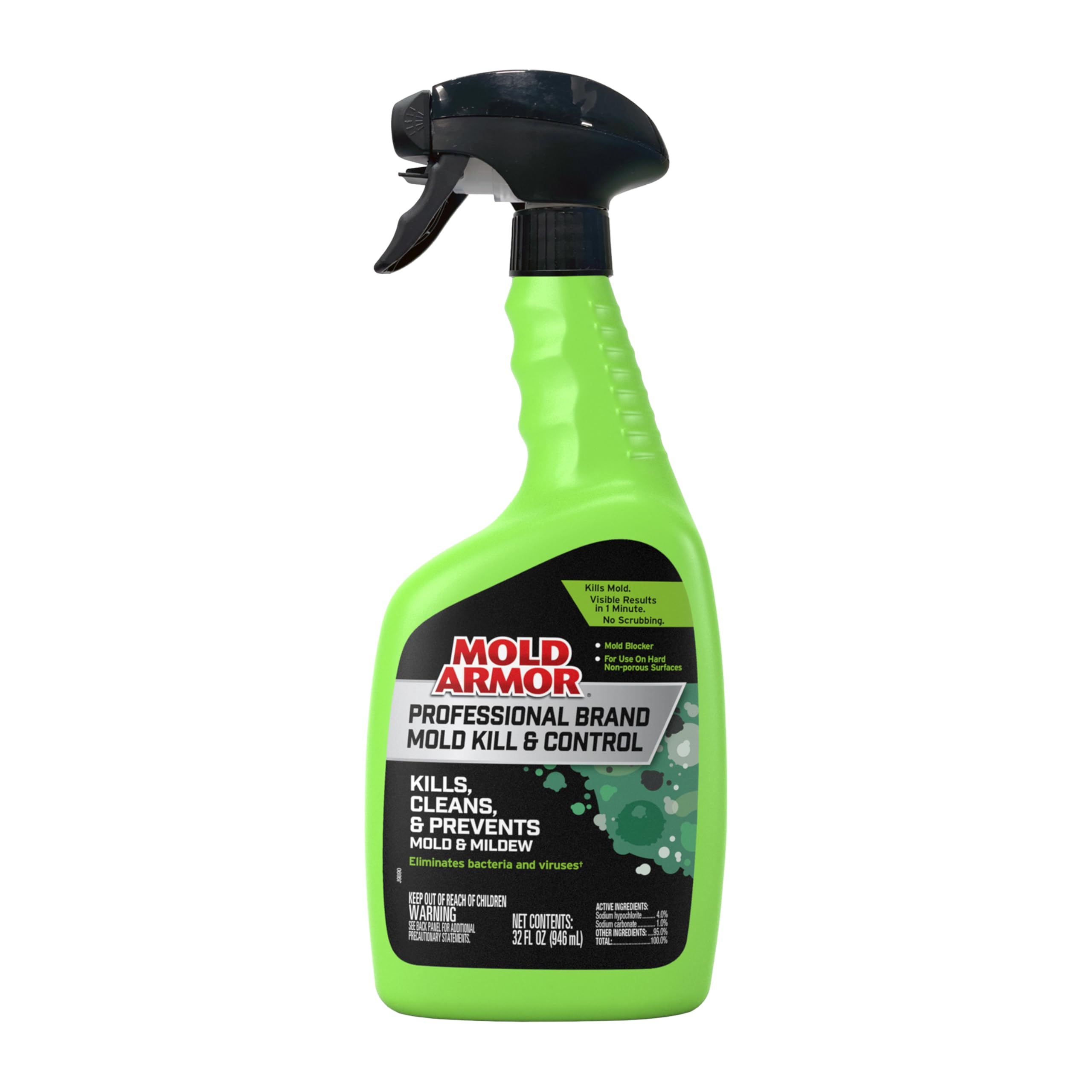
| MOLD ARMOR Professional Mold Kill & Control Spray★ Best Overall | Fast touch-ups on hard surfaces | 32 oz. spray | — | Yes | Amazon |
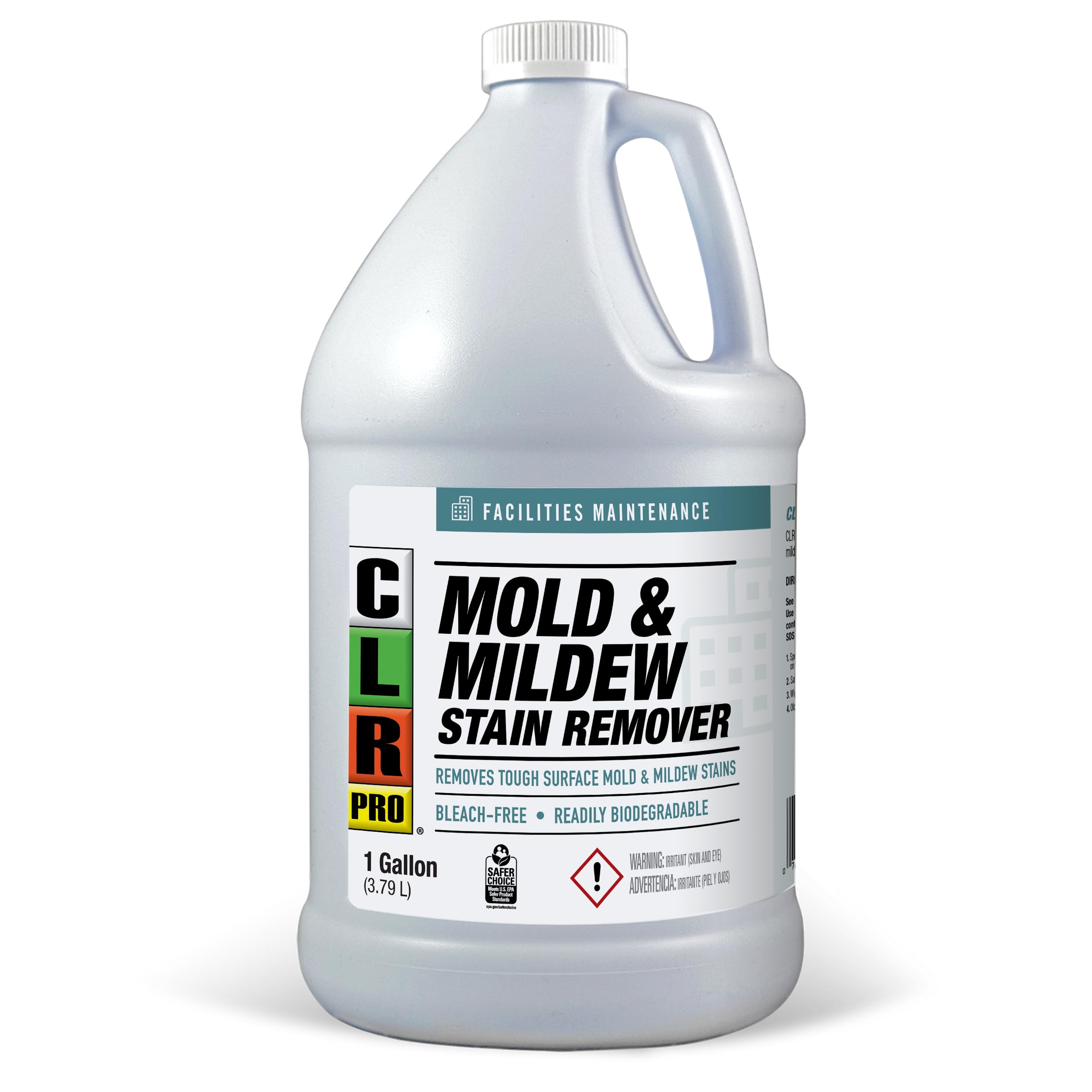
| CLR PRO Heavy Duty Mold and Mildew Stain RemoverBleach-Free Pick | Indoor jobs where fumes matter | 1 gallon liquid | — | No | Amazon |
| Rust-Oleum Jomax Spray Once | Large outdoor slabs and siding | 1 gallon concentrate | Up to 5 gallons mixed; up to 1,500 sq. ft. | No | Amazon |
| RMR-86 Instant Mold and Mildew Stain Remover Spray | Deep-set stains on concrete floors | 1 gallon spray | — | Yes | Amazon |
| Concrobium Mold Control | Indoor remediation and prevention | 1 gallon refill | 800–1,600 sq. ft. per gallon | No | Amazon |
Detailed Reviews
1. MOLD ARMOR Professional Mold Kill & Control Spray
Our pick — 4.5+★ from 950+ verified ratings; the strongest balance of quality and price.
The fast-acting spray that turns black concrete stains white before your eyes.
Its main selling point is speed: visible results in minutes, no scrubbing. Mold stains on concrete usually mean a weekend of scrubbing with a stiff brush. This 32 oz. spray is built to do the work while you stand there watching — the manufacturer promises visible results in minutes, and the effectiveness is exactly what wins people over. Concrete steps, garage floors and basement ledges that have looked gray-black for years come back to their original light tone with a spray and a light sponge.
At 2.4 pounds it is the lightest bottle on this list, and it sits comfortably on a shelf between jobs. Compare that to the gallon jug of CLR PRO, which weighs 8.75 pounds — this one you can carry up a stepladder without a second thought. The only real formula here is a bleach-based one, so plan for N95 protection, goggles, gloves and open airflow. Buyers report splatter that bleaches fabric, so keep old clothes on and move the good towel out of the room.
Set your expectations on longevity honestly. Some jobs stay clean for a season and some for considerably longer; this spray kills what is on the surface and does not seal the concrete against future damp. If your problem is a basement wall that keeps wicking moisture, pair the cleaning with a moisture fix rather than flooding the wall again every few months.
Where it earns its keep
- Visible results in minutes — the fastest acting option here.
- 2.4 pounds, easy to carry up a ladder or into a crawl space.
- No scrubbing required for surface stains on steps and ledges.
Before you spray
- Bleach-based, so fumes are real — ventilation and PPE are not optional.
- Sprayer heads have snapped off for some buyers, so treat the trigger gently.
The quickest clean: Reach for this if you have a concrete repair you can see and want it gone this afternoon, not next week.
The honest catch: Unsealed concrete will get damp again — this kills the mold, it does not stop the moisture that feeds it.
2. CLR PRO Heavy Duty Mold and Mildew Stain Remover
A no-bleach gallon for indoor concrete where you can’t open every window.
Not every concrete job is a patio. Basement floors, crawl space walls and utility rooms sit right under your living space, and a bleach fog rolling through the house is a genuine problem. This CLR PRO gallon is the pick for those spaces. The formula contains no bleach, no ammonia and no phosphates, and it is part of the EPA’s Safer Choice Program — a label that flags products screened as a safer alternative to harsher chemicals. Buyers praise its cleaning performance on indoor concrete, and the bleach-free formula keeps fumes out of the rooms above it.
What it will not do is match the instant-bright result of a chlorine spray. On stone and concrete it often takes several applications and water rinsing, and some users found it did nothing at all on heavy embedded staining — including rust, which this product is not built to lift. That is the honest trade-off. This is a stain remover, not a magic eraser, and porous concrete soaks the cleaner in slowly.
The 8.75-pound jug is the heaviest bottle in this group, but one gallon goes a long way as a concentrate. Beyond the concrete, it handles outdoor curtains, boat upholstery and colored grout without stripping fabric — a versatility that makes it worth the shelf space.
Made for enclosed spaces: The absence of bleach is why this one earns a place for indoor slabs and basement floors where you are working near air you share.
The slower approach: Plan on two or three passes with a rinse between them rather than a single spray — this is patience work.
For the indoors job: Choose it if fumes are the thing standing between you and a clean basement floor.
Look elsewhere if: You need instant black-to-white on a badly stained slab and are set up to run a bleach-rated sprayer.
3. Rust-Oleum Jomax Spray Once

One gallon, up to five gallons mixed — built for whole patios and fence lines.
Some concrete jobs are too big for a hand spray. A driveway, a patio slab, a retaining wall and the fence behind it can add up to a full weekend of work, and this is the product sized for that. The concentrate mixes up to five gallons of cleaning solution and cleans up to 1,500 sq. ft., so a single bottle covers a run of outdoor hardscape. It is bleach-free, applied with a pump-up garden sprayer, and needs no scrubbing or rinsing afterward.
That “no scrubbing” promise comes with a caveat you need to hear. Unlike the immediate snap of a bleach spray, Jomax relies on weather — sun, rain and time do the work. Users report results over one to two days rather than minutes, and one season of hold with weather exposure before the growth starts to return. In other words it is a set-and-wait product, not an instant fix. Owners mention diluting it 1:5 with water and finding it effective on outdoor mold and algae on concrete and siding.
The 3.8-pound bottle is light enough to haul onto a roof edge. There is a small annoyance — the bottle splashes when you pour it, and users suggest drilling a breather hole to keep the flow steady. Keep it off electrical fixtures and HVAC equipment, and skip applying it before rain or on a windy day.
Why big-job buyers reach for it
- Makes up to 5 gallons of working solution from one bottle.
- Cleans up to 1,500 sq. ft. — a whole patio and then some.
- No rinsing required, which saves a step on large outdoor areas.
Trip-ups to know
- Results arrive in 1–2 days and last one season with weather exposure, not instantly.
- The bottle splashes when pouring — have a funnel or drill a breather hole.
Buy it when square footage is the goal: This is the one you want for a driveway, patio or fence run that would empty three spray bottles.
Step past it when: You need a stain gone this hour and cannot give it a day of sun and rain.
4. RMR-86 Instant Mold and Mildew Stain Remover Spray

The professional-strength stain remover that eats deep-set concrete discoloration.
This is the biggest name in the category by a wide margin — 4.0+ stars across a rating pool 67,000+ buyers. That volume makes it the default scrub-free stain remover buyers land on for deep-set concrete discoloration. On concrete it is aimed at the ugly black and green staining that has gone deep into the surface, the kind a broom and a scrub brush never touch. Spray it on and the discoloration lifts without elbow grease.
The blast here is bleach, and it is strong. Every account of this product comes with the same advice: open the windows, run a fan, wear a mask and goggles, and cover anything nearby you do not want bleached. Users report mold reappearing on shower tile being gone in minutes and deep-seated grout recovering its original color — this is a fast, potent strip-and-lift, and the formula is meant to be used with respect, not casually.
One storage note that comes up again and again: keep it under the original screw cap once opened, not with the spray nozzle threaded on, or it will leak down the side of the bottle and bleach whatever it sits on. That is a storage quirk, not a knock on its stain-lifting power. For a concrete floor with years of stubborn staining, the odds are good you will only need one pass.
What it does for stained concrete: Deep-set black and green discoloration lifts without scrubbing — the formula is built to attack the stain rather than the surface.
Handle it like a pro would: Bleach fumes are the price of that speed, so ventilation, gloves and goggles are part of the job, not a recommendation.
The proven stain-lifter: Reach for it when a concrete floor has deep, old staining that other bottles have bounced off.
Keep looking if: You need a gentler, low-odor product for a confined indoor space with no airflow.
5. Concrobium Mold Control

The no-fumes gallon that leaves a barrier behind so mold does not come back.
Every other product here kills what is already on the concrete. This one adds a second act: as it dries, the EPA-registered formula leaves an invisible barrier on the surface, and the claim is that this barrier stops regrowth rather than just cleaning up the current crop. For a basement floor that keeps damp, or a garage slab that sits under a leaky roof, that prevention is the reason to pay for it. A gallon handles 800–1,600 sq. ft., and you apply it with a cold fogger, spray, cloth or brush with no scrubbing or rinsing required.
There is no bleach and no harsh chemical smell in the bottle. Users report applying it with a rented fogger in a full remediation setup and seeing the job hold a year later. It also dries clean without discoloring surfaces — it treated dark wood paneling indoors without a stain. Applied to a musty crawl space or rafters in a bathroom renovation, it cut the smell within 24 hours.
The honest downside is patience on heavy growth. On badly encrusted canvas it took many applications and scrubbing before the near-new look returned, and some users find it pricey and note the mold creeping back after roughly 8–10 months if damp returns. Give the surface a proper soak and keep the moisture fixed and it earns its cost.
Where the value sits
- Dries to an invisible barrier that works against regrowth, not just cleaning.
- EPA-registered, bleach-free and odorless at application.
- One gallon covers 800–1,600 sq. ft. per the label.
Set your expectations
- Heavy embedded growth needs repeat applications to lift fully.
- Some note the price and a return of mold after 8–10 months in damp conditions.
The long game: Choose it if you want to clean once and get ahead of the next bloom on a damp concrete surface.
Not the pick if: You are chasing an instant black-to-white reveal on an old slab and want speed above prevention.
Know the Specs
Bleach vs. Bleach-Free
A bleach-based spray (MOLD ARMOR and RMR-86) strips discoloration within minutes and kills surface growth on contact. The trade-off is fumes and splatter that can bleach fabric and nearby finishes. Bleach-free formulas (CLR PRO, Jomax and Concrobium) avoid those risks but work more slowly on porous concrete, sometimes needing several applications and a rinse between them. Pick bleach for speed on an outdoor slab; pick bleach-free for indoor work or near materials you want to protect.
Coverage and Mixing
Coverage is the figure that tells you how far one purchase will stretch. Jomax mixes up to 5 gallons and cleans up to 1,500 sq. ft., which suits a full patio and then some. Concrobium covers 800–1,600 sq. ft. per gallon. A ready-to-use bottle applies straight out of the container but runs out fast on a large slab. Match the coverage number to the square footage you are actually treating before you buy, and remember that rough concrete soaks up more liquid than a smooth floor.
Application Method
Rough concrete shreds trigger spray heads. A pump-up garden sprayer lays down an even coat across a wide slab without hand cramping. For indoor basement walls and crawl spaces, a cold fogger reaches corners a spray bottle misses. Jomax specifies a pump-up garden sprayer, and Concrobium can be applied with a cold fogger, spray, cloth or brush. Check the label for the approved applicator — a pump-up sprayer, fogger or trigger bottle — before you commit to a method.
Residue and Rinsing
Concrete staining comes out in different ways. A concentrate like Jomax needs no rinsing and lets weather finish the job over a day or two. A bleach spray on stone often needs a rinse to remove residue. A bleach-free concentrate may leave a cleaner film that you rinse away between passes. Read whether the product dries clear or needs a rinse — on a basement floor this decides whether you can walk on it that day or wait.
Common Questions
Will a mold killer for concrete work on a rough, porous patio slab?
Can I use a bleach-based spray on colored or sealed concrete?
How long does a mold killer last on concrete before the mold returns?
Do I need to scrub concrete after applying the cleaner?
Is a bleach-free product strong enough for black mold on concrete?
What safety gear should I use when applying these on concrete?
Will the spray leave a residue or stain the concrete?
How many square feet will one gallon of mold killer cover?
Can I use a mold killer for concrete on brick or a wooden deck?
How long should I wait before painting or sealing concrete after treating mold?
The Bottom Line
If speed and simplicity matter most, the mold killer for concrete to reach for first is the MOLD ARMOR Professional Mold Kill & Control Spray — it works fast, needs no scrubbing, and is the easiest for a normal household concrete job. If a whole patio or fence run is on the list, the Rust-Oleum Jomax Spray Once gives you the most coverage per bottle with the least fuss. And for an indoor basement or crawl space where fumes rule the decision, the bleach-free CLR PRO Heavy Duty Remover is the more comfortable choice — though the pick most buyers will recognize is the RMR-86, the crowd favorite with 4.0+ stars and a huge base of happy owners.
How we choose
We do not accept paid placement. Every pick is matched to a real buyer and a real use-case; we do not hands-on test units.
Sources
Specifications: manufacturer listings and product documentation. Review insights: verified customer reviews, as of October 2026. Pricing: not shown on this page (it changes often); check the current price via the retailer link.
As an Amazon Associate, Aappliancez earns from qualifying purchases. This does not affect which products we feature.