Disclosure: Some links in this post are affiliate links. As an Amazon Associate I earn from qualifying purchases, at no extra cost to you. Learn more
Specs are compiled from manufacturer listings and verified buyer reviews and can change over time — please confirm the key details on the product page before buying.
A dwarf evergreen has one job your lawn does not: it looks the same in February as it did in June. That is why people buy them for porch planters, front-foundation beds and tight borders where a full-size hedge would swallow the walkway. The catch most buyers hit is size and survival — a plant can arrive healthy and still sulk for a season, or show up smaller than the photo. This guide sorts the seven picks below by what each one is actually built for, so you can match a plant to your zone, your sunlight and your patience.
This guide is built by comparing the manufacturers’ published specifications and the patterns across verified customer reviews, so you get each pick’s real strengths and trade-offs instead of marketing spin.
Expect plenty of honest detail on mature width, cold hardiness and container size. By the end you’ll know exactly which one earns the spot by your front door — a practical shortlist of dwarf evergreens ranked by real-world fit rather than glossy nursery photos.
Top Picks

How To Choose The Best Dwarf Evergreens
Buying a live shrub online is a bet on three things: that it survives the truck, that it survives your winter, and that it stays the size you planned for. Get all three right and the shrub holds its shape for years with little more than watering. Get them wrong and you are replanting next spring.
Start with your USDA zone, not the photo
Every listing here quotes a USDA zone range — that is the cold-hardiness band a plant tolerates, expressed as a number from the cold end to the warm end. A spruce listed for zones 3-8 handles a brutal northern winter. A nandina listed for zones 6-10 will not. If your zone sits outside a plant’s range, that plant is the wrong buy no matter how good it looks.
Read mature height AND mature spread
A dwarf evergreen is compact, not tiny. Several picks here reach 6-8 feet tall at maturity, and the holly spreads 8-10 feet wide. Measure your bed before you order. The width figure is the one buyers forget, and it is the one that crowds a walkway two summers later.
Match the sun to the plant
Full sun, part shade and full shade are not interchangeable. Boxwood and spruce take full sun to partial shade. The pieris wants partial shade. Planting a shade-leaning shrub in baking afternoon sun is a common first-timer mistake that shows up as scorched foliage by August.
Side-by-Side Comparison
| Model | Best For | Mature Height | Hardy Zones | Container | Amazon |
|---|---|---|---|---|---|
| Picea glauca ‘Conica’ (Dwarf Alberta Spruce)★ Best Overall | Classic cone shape in a pot | 6-8 ft | 3-8 | #2 | Amazon |
| Obsession NandinaBest Color | Red color and deer pressure | 3-4 ft | 6-10 | 2.5 Quart | Amazon |
| Dwarf Burford Holly | Glossy hedge with berries | 6-8 ft | 7-9 | 2.5 Gallon | Amazon |
| Proven Winners Sprinter Boxwood | Clipped hedging and topiary | 24-48 in | 5-9 | 2 Gallon | Amazon |
| Pieris jap. ‘Cavatine’ | Shade beds and deer country | 2 ft | 5-8 | #2 | Amazon |
| Buxus micro. ‘Winter Gem’ | Edging and border lines | 3-4 ft | 5-8 | #2 | Amazon |
| Garden Debut Moonlit Lace Viburnum | White spring flowers and color | 3-4 ft | 7-9 | 3 Gallon | Amazon |
Detailed Reviews
1. Picea glauca ‘Conica’ #2
Our pick — 4.0+★ from 150+ verified ratings; the strongest balance of quality and price.
The tight green cone that makes a porch planter look deliberate without any clipping.
If you want the shape everyone pictures when they think of a dwarf evergreen, this is it. The dwarf Alberta spruce grows slowly and holds a dense cone habit on its own — no shearing required. It’s a heavyweight among the small plants too, shipping at 5 pounds, against 15 pounds for the Dwarf Burford Holly, so a single person can carry it to the bed.
Cold is where it separates from the pack. It’s rated for zones 3-8, the widest cold range of the picks here and the only one that reaches down to zone 3. It takes full sun or partial shade and moderate watering. Because it’s fully rooted in the soil on arrival, it can go straight into the ground once the weather allows. It matures at 6-8 feet with a 3-4 foot spread, so give it room at the base.
Arrival quality is the headline. Reviews consistently describe these trees as fuller and larger than buyers expected — “This tree is much larger and nicer than I was expecting.” — with dense green color and clear planting instructions in the box. A minority report the opposite: plants that decline within days of arrival. The pattern suggests shipping conditions vary box to box more than the plants themselves do.
Where it earns its place
- Hardy down to zone 3 — the widest cold band of any pick here
- Holds a cone shape without you owning a pair of shears
- Ships fully rooted, so it can be planted the same week it arrives
What to plan around
- Matures at 6-8 ft — not a forever-pot plant unless you plan a repot
- Shipping condition varies; open the box the day it lands and water it
Your best match if: you want a cold-hardy, self-shaping evergreen for a front bed or a large planter.
Look elsewhere if: you need something that stays under four feet in the ground long-term — the mature height is taller than that.
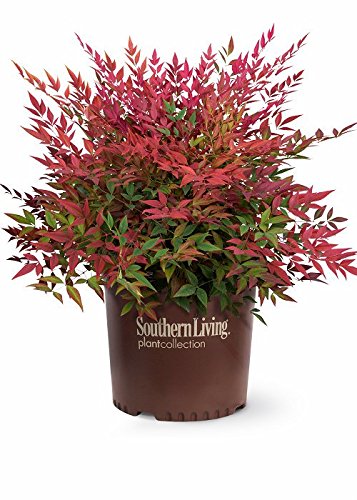
2. Obsession Nandina (2.5 Quart) Multicolor Evergreen Shrub
Red new growth that holds color right through winter — and the deer leave it alone.
Where the spruce gives you green, the Obsession Nandina gives you a color story: fresh red foliage against green that shifts toward burgundy, and it never needs a flower to earn its spot. It’s a compact plant at maturity, reaching 4 feet tall and 3-4 feet wide — half the mature height of the Dwarf Burford Holly’s 8 feet, which makes it far easier to keep in a deck pot.
Two features carry the sales pitch. The plant is listed as deer resistant, and it needs little to no watering once established. It’s rated for zones 6-10 and ships in a 2.5 quart pot with soil, weighing 6 pounds. Planting in spring is the listed window. One catch: it is unavailable in HI and AK, so check your shipping address before you fall for the color.
Owners describe these arriving in good condition and settling in fast. One zone 7 buyer reported it survived a “once in 20-year” winter that killed neighboring bushes, then leafed out again after a hard cutback. Not everything makes it — the occasional plant arrives weak and doesn’t pull through. If yours lands looking limp, water it and repot the next day, which is the recovery move buyers report working.
Why it stands out: year-round leaf color plus deer resistance, on a compact 3-4 foot frame that suits pots as readily as beds.
Fair warning: it’s a warm-to-temperate plant — zones 6-10 only — so a harsh northern site will test it.
Meant for: gardens in zones 6-10 with deer pressure and a spot that gets sun or partial shade.
Not for: cold-climate sites or orders headed to Hawaii or Alaska, where it won’t ship.
3. Dwarf Burford Holly (2.5 Gallon) Compact Evergreen Shrub
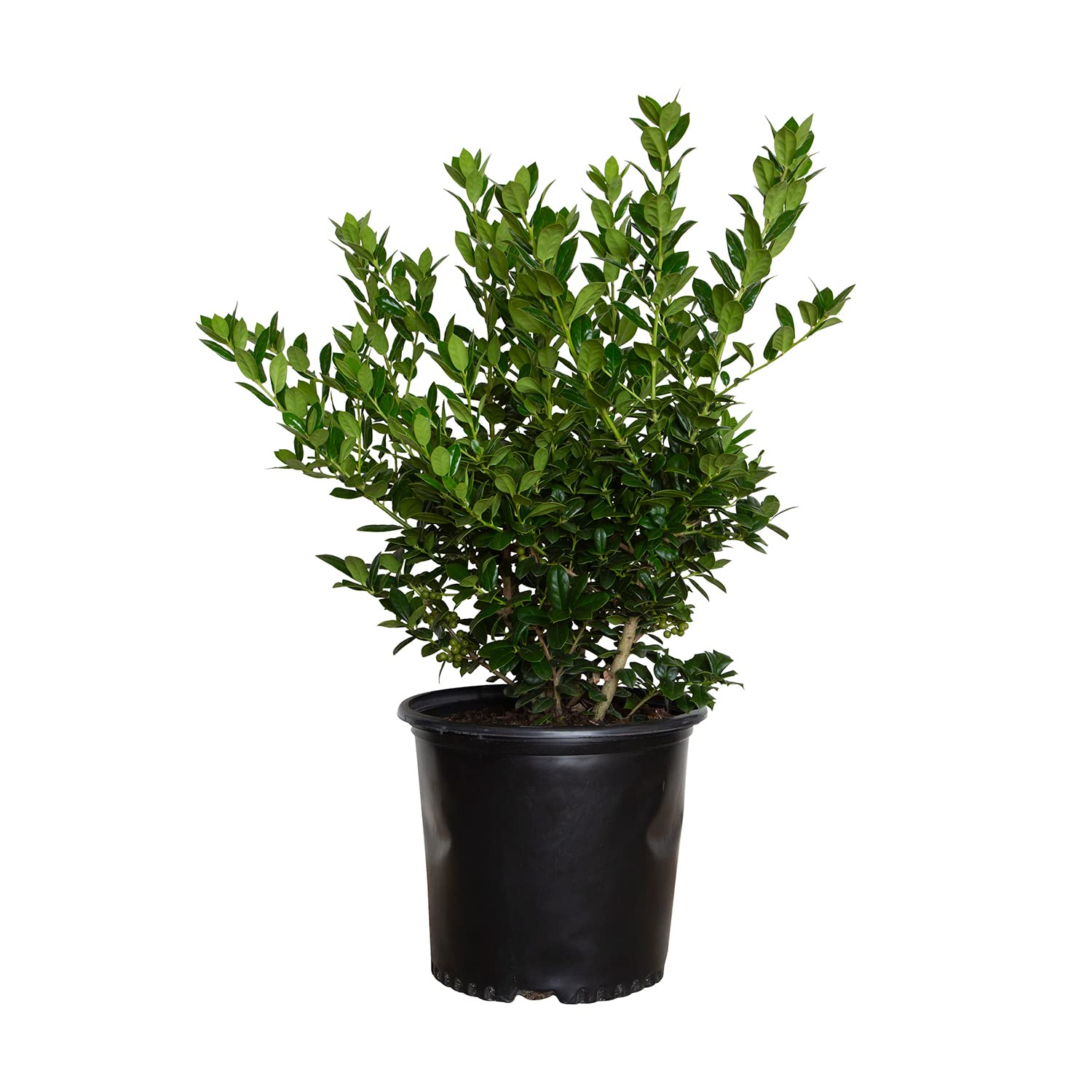
Deep glossy leaves that read as a formal hedge, with the bonus of winter berries on female plants.
The Burford Holly is the biggest plant in this group — 15 pounds of well-rooted shrub in a 2.5 gallon pot, versus the 5 pounds you lift for a #2 spruce or pieris. That weight is the point: you’re buying a substantially sized shrub that fills a hedge line faster than a small quart-size start. It matures at 6-8 feet tall and 8-10 feet wide, so this is the one to plan generous space for.
Berries are a nice touch and come with an asterisk. The listing notes that female plants produce red berries in fall and winter, but shipped plants may arrive as either male or female — so treat the berries as a possible bonus, not a promise. Hardy zones are 7-9, it wants full sun, and it’s flagged as needing little to no watering once settled. Like the nandina, it can’t ship to HI or AK.
What owners describe is healthy stock that travels clean: “They have been in the ground for about 3 weeks now and are looking great.” The plant arrives expertly packed and undamaged, with excellent foliage color. This is a limited-pool pick compared to the spruce and boxwood, so the seasonal stock is worth checking before you commit a full hedge row.
The honest buying read: a weighty, glossy-leaved shrub that makes a real hedge faster than smaller starts, if you have the width for it.
The catch: 8-10 feet of mature spread is not small — this belongs in a bed, not a tight foundation strip against a walkway.
Pull the trigger if: you’re in zone 7-9 and building a dense green hedge or screen.
Think twice if: you want a berry guarantee — sex isn’t determined at shipping.
4. Proven Winners 2 Gallon Sprinter Boxwood
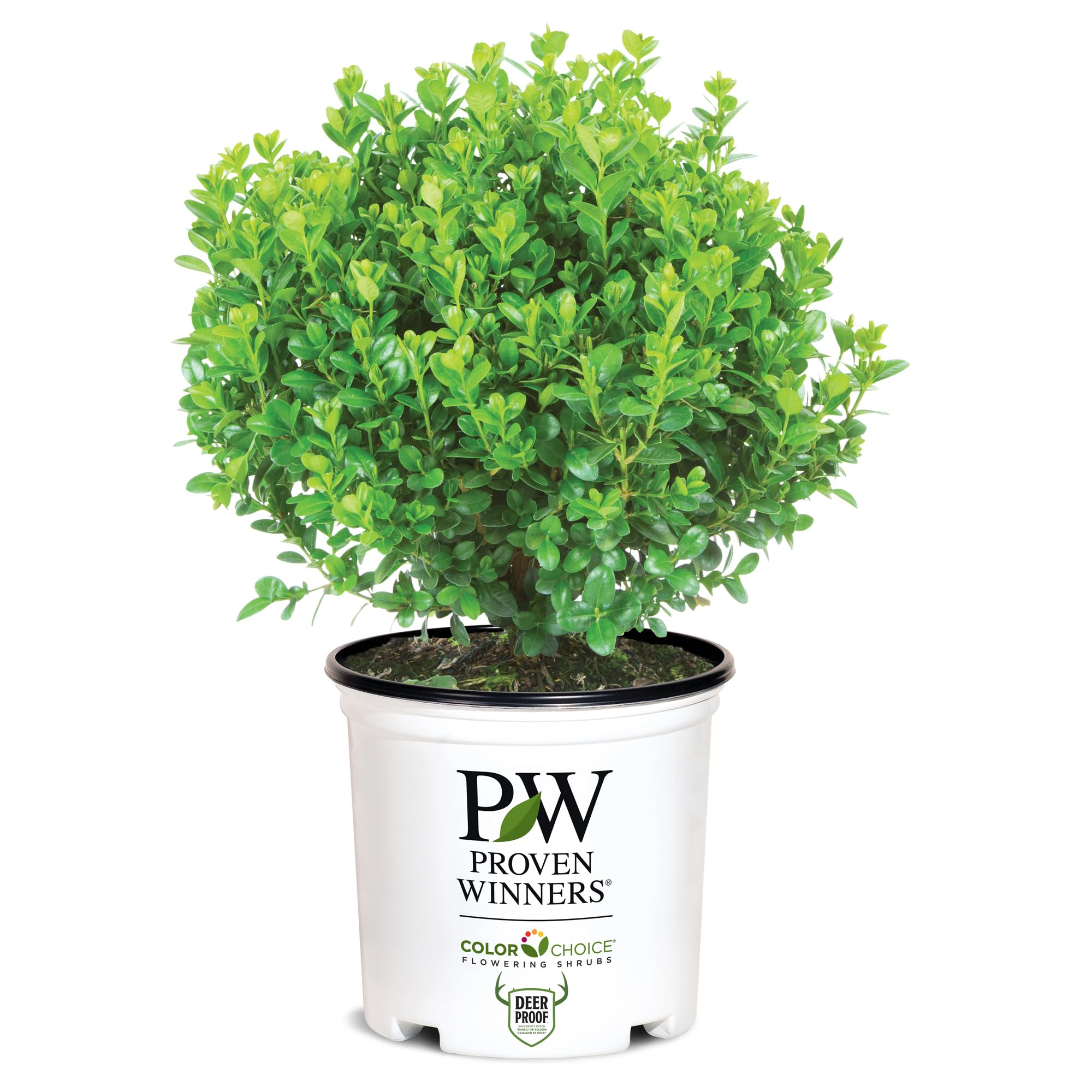
The clipping plant: fast new growth that takes a pair of shears and a tidy edge.
Sprinter boxwood is the pick if you intend to shape. It matures at 24-48 inches tall and 24-48 inches wide, which keeps it manageable, and the recommended spacing is 24 inches for a hedge run. It grows in full shade to part sun, making it one of the few picks that will tolerate a shaded spot the spruce and holly would not.
New growth shows up fast — owners describe shaping them already within weeks of planting, and several report planting 15 at a time for a hedge row. The root ball arrives substantial, in moist mulch inside a Proven Winners container, with no yellowing of the leaves. It’s listed for zones 5-9 and spring-to-fall planting.
The recurring gripe is size honesty. Expect a plant smaller than the photo suggests — that is the trade-off of a 2 gallon pot — and some buyers feel the value is thin for what arrives. Treat the listing’s mature size as the real target and the shipment as the start. As one hedge planter put it, they arrived “packaged unbelievably well” and all 15 settled in.
Why it earns its spot
- Takes full shade to part sun, unlike the sun-hungry holly
- 24-48 in mature frame with a 24 in spacing guideline for hedges
- Fast, tintable new growth that shapes early
What buyers should expect
- Arrives small — the 2 gallon pot is a start, not a finished hedge
- Some owners question the value for the size received
Built for: hedge builders and topiary fans in zones 5-9, including shaded spots.
Pass on it if: you expect a full-size shrub from the start — these are starts.
5. Pieris jap. ‘Cavatine’ #2

A tight two-foot mound that blooms white in April and shrugs off heavy deer traffic.
If your bed sits in partial shade, this is the plant that fits. The Cavatine dwarf andromeda keeps a much tighter growth habit than traditional andromeda, maturing to 2-3 feet with a mature spread of 2-3 feet — the most compact of the #2-container picks here. White bell-like flowers open in April, so you get a bloom moment a plain boxwood never delivers.
Hardiness is the quiet strength. It’s rated for zones 5-8, and the deer resistance is genuine: a zone 7a planting came through a hard NY winter both alive and blooming, and untouched by heavy deer pressure. It’s listed as a moderate-watering plant in a #2 container, fully rooted and ready to plant on arrival. It grows well in partial shade, which is where this plant belongs.
Packaging is the one variable to watch. Most arrive beautifully packed and already pushing new growth, but transit mishaps happen — one box turned up upside down and battered. If yours looks rough on arrival, water it and give it two weeks before calling it. Give it those two weeks and the plant usually pushes new growth.
What wins people over: a compact 2-3 ft habit, April bloom, and deer resistance that holds under real pressure.
One thing to know: it prefers partial shade — a baking full-sun site is the wrong home for it.
Reach for this if: you need a small evergreen for a shady bed or a deer-heavy yard in zones 5-8.
skip it if: you want a plant for full afternoon sun — it’s a partial-shade selection.
6. Buxus micro. ‘Winter Gem’ (Boxwood) Evergreen, #2

A compact boxwood whose leaves slowly shift tone through the year — edging with built-in texture.
Winter Gem is a compact-growing boxwood that suits edging and border lines, maturing at 3-4 feet tall with a 4-5 foot spread. It takes full or partial sun and is rated for zones 5-8. The leaves shift through tones of green across the seasons, which keeps the border from reading flat. It arrives in a fully rooted #2 container and is listed as a moderate-watering plant that favors sandy soil.
One thing owners keep flagging is how the pot is filled. Some #2 containers arrive as several smaller boxwoods planted to look like one larger plant, so the “single plant” expectation doesn’t always match. One buyer’s read: “Disappointed it was three smaller boxwoods planted to look like one larger plant in each #2 container.” It’s a fair account of the size, and buyers who want a single stem should split the pot and plant what’s there.
What arrives is healthy. The plants come big, green and shiny, well packed, and they grow on well after planting. Owners describe them looking great a month in. If your plan is a clipped border, spaced and shaped over a couple of seasons, this boxwood gets the job done.
What stands out
- Compact 3-4 ft by 4-5 ft frame built for edging and borders
- Color-shifting evergreen leaves that keep the border from going flat
- Grows in full or partial sun across zones 5-8
What to know before ordering
- The #2 pot may hold several small plants, not one large one
- Sandy soil is the listed preference; heavy clay may need amending
Right for you if: you’re lining a border or edging a bed in zones 5-8 and don’t mind splitting a pot.
Better elsewhere if: you need a guaranteed single-stem specimen plant.
7. Moonlit Lace Viburnum 3 Gallon

The one here that actually flowers — white spring clusters over glossy green and burgundy stems.
The Moonlit Lace Viburnum is the pick for someone who wants a shrub that earns its place in spring. Rounded clusters of white flowers appear in spring, and the glossy green leaves with burgundy-toned stems keep the color going once the blooms fade.
It’s a substantial nursery-grown plant that arrives established, in a 3 gallon pot, weighing 13 pounds — the heaviest single pot in the group. It grows roughly 3-4 feet tall and 4-5 feet wide with a rounded habit, making it a good fit for borders, foundation beds, mass plantings and accents. It’s rated for zones 7-9 and wants full sun to partial shade with well-drained soil and regular moisture while it establishes.
The catch is shipping coverage. This plant cannot ship to AK, AZ, CA, CO, HI, ID, MT, NM, NV, OR, UT, WA or WY, and orders to those states are cancelled automatically. Check your state before you plan the bed around it. It’s also the newest listing here with the least owner feedback to draw on, so the shipping restriction is the main thing to clear first.
The standout: real white flowers plus extended bloom time on a rounded 3-4 ft shrub that suits foundation beds.
The stop sign: a long list of states it won’t ship to — confirmation first, then order.
Choose this if: you’re in zones 7-9 and want a flowering centerpiece for a border or foundation bed.
Look elsewhere if: you live in one of the excluded shipping states or want an instant hedge.
Know the Specs
USDA hardiness zones
USDA zones are a numbered cold-hardiness scale — a range like 3-8 tells you how cold a winter the plant should survive. A low starting number means cold tolerance. The Alberta spruce spans 3-8, while the holly sits at 7-9. A plant rated for zones warmer than yours will not survive your winter.
Mature height and spread
These are the plant’s estimated size at maturity, not the size of what ships. A dwarf evergreen can still reach 6-8 feet tall and spread 8-10 feet wide, as the Burford Holly does. Measure your bed’s width first, because spread is the figure that decides whether a shrub crowds a path.
Container size and root development
Container size is listed in gallons or quarts and reflects how much soil and root mass arrives. A 2.5 gallon pot holds a larger, heavier plant than a #2 or a 2.5 quart. Bigger containers usually mean a head start, at the cost of a heavier box to carry.
Sun and moisture needs
Full sun, part shade and full shade are different requirements. Boxwood and spruce take full sun to partial shade, while pieris wants partial shade. Moisture needs run from “little to no watering” once established to “moderate” and “regular.” Match both to your site before you buy.
Common Questions
How do I know which dwarf evergreen will survive my winter?
Will the plant I receive be the size shown in the photo?
Can these dwarf evergreens go straight into the ground when they arrive?
Which of these stays small enough for a porch planter?
Do dwarf evergreens really resist deer?
Why can’t some of these shrubs ship to my state?
How long before a small boxwood fills in as a hedge?
Will the holly I order produce red berries?
What if my plant arrives damaged or dead?
How much sun does a dwarf evergreen need?
The Bottom Line
For most yards, the dwarf evergreens winner is the Dwarf Alberta Spruce because it holds a clean cone shape on its own across the widest cold range here, zones 3-8. If you garden in a deer-heavy, warmer zone and want that red foliage, the Obsession Nandina is the color pick. And for a clipped border or topiary in partial shade, reach for the Proven Winners Sprinter Boxwood. Start with the zone range, then narrow by shape and color.
How we choose
We do not accept paid placement. Every pick is matched to a real buyer and a real use-case; we do not hands-on test units.
Sources
Specifications: manufacturer listings and product documentation. Review insights: verified customer reviews, as of October 2026. Pricing: not shown on this page (it changes often); check the current price via the retailer link.
As an Amazon Associate, Aappliancez earns from qualifying purchases. This does not affect which products we feature.