Disclosure: Some links in this post are affiliate links. As an Amazon Associate I earn from qualifying purchases, at no extra cost to you. Learn more
Specs are compiled from manufacturer listings and verified buyer reviews and can change over time — please confirm the key details on the product page before buying.
Afternoon sun is the killer for most hydrangeas, so the answer is simple: stop shopping the big-leaf varieties that wilt by two o’clock and buy a panicle or smooth hydrangea bred for heat. Two types here genuinely handle a west-facing wall — the Little Lime and the Limelight — while the Heart Throb wants shade and the Fire Light splits the difference. If you want one sentence to take to the checkout: pick by species first, bloom colour second, and ignore whatever the tag promises about “part shade” until you have read the plant’s real sun rating.
This guide is built by comparing the manufacturers’ published specifications and the patterns across verified customer reviews, so you get each pick’s real strengths and trade-offs instead of marketing spin.
You will see which shrubs burn in a west-facing bed, which ones shrug it off, and what the shipping box actually delivers. The short version: hydrangea for afternoon sun means a panicle type with a sun tolerance you can trust.
Top Picks

How To Choose The Best Hydrangea for Afternoon Sun
The mistake nearly every first-time buyer makes is treating “hydrangea” as one plant. It is not. Big-leaf hydrangeas — the pink and blue mopheads you see in florist buckets — evolved under woodland canopy and their leaves scorch once direct afternoon light hits them. Panicle hydrangeas (the cone-flowered ones) and smooth hydrangeas come from sunnier ground and take real heat. Buy the wrong species and no amount of watering saves the foliage.
Start with the species, not the flower colour
If your bed gets sun from roughly noon onward, you want a panicle hydrangea. The Fire Light and Limelight here are both panicles, and both carry sun ratings that include full sun. The Little Lime is also a panicle, which is why it can sit in a hotter spot than its mophead cousins. The Heart Throb is a big-leaf type and its own listing says part shade to full shade — that is the honest answer for a shaded porch, not a baking wall.
Read the USDA zone range against your winter
A zone number tells you the coldest winter a plant survives. The Heart Throb covers zones 5-9, the Little Lime covers 3-8, the Limelight covers 3-9, the Fire Light covers 3-9 and the Haas Halo covers 3-9. Wider ranges mean more forgiveness. If you garden where the ground freezes hard, a zone 3 plant is the safer bet than a zone 5 one.
Know what arrives in the box
Mail-order shrubs arrive small. The Heart Throb ships at an average height of 12-18 inches, and the Fire Light arrives in a #3 container fully rooted so it can go straight in the ground. A dormant shrub in late fall or winter looks like bare sticks — that is normal, not dead. The Little Lime listing states plainly that it ships dormant between mid-fall and mid-spring.
Plan for the mature size before you dig
The Limelight reaches 8 feet tall and 6-8 feet wide. The Fire Light tops out at 4-6 feet by 4-6 feet. The Haas Halo sits at 3-5 feet by 3-5 feet. Planting a 8-foot shrub against a low window is a problem you cannot undo easily. Measure the gap first, then pick.
Side-by-Side Comparison
All five rows use the same three measures so you can scan sun tolerance, mature height and hardiness side by side.
| Model | Best For | Sun Rating | Mature Height | USDA Zones | Amazon |
|---|---|---|---|---|---|
| Southern Living Heart Throb Hydrangea★ Best Overall | Shaded beds and north-facing walls | Part shade to full shade | 36 inches H x 36 inches W | 5-9 | Amazon |
| 2 Gal. Little Lime Hydrangea ShrubBest Sun Tolerance | Hot borders that need a matched pair | Full Sun | 36 inches | 3-8 | Amazon |
| Perfect Plants Limelight Hydrangea | A tall sun-tolerant hedge | Full sun to partial shade | 8 feet | 3-9 | Amazon |
| Proven Winners Fire Light Panicle Hydrangea | Colour change plus heat tolerance | Partial to full sun | 4-6 feet H x 4-6 feet W | 3-9 | Amazon |
| American Beauties Haas Halo Smooth Hydrangea | Pollinator borders in mixed light | Sun or shade | 3-5 feet H x 3-5 feet W | 3-9 | Amazon |
Detailed Reviews
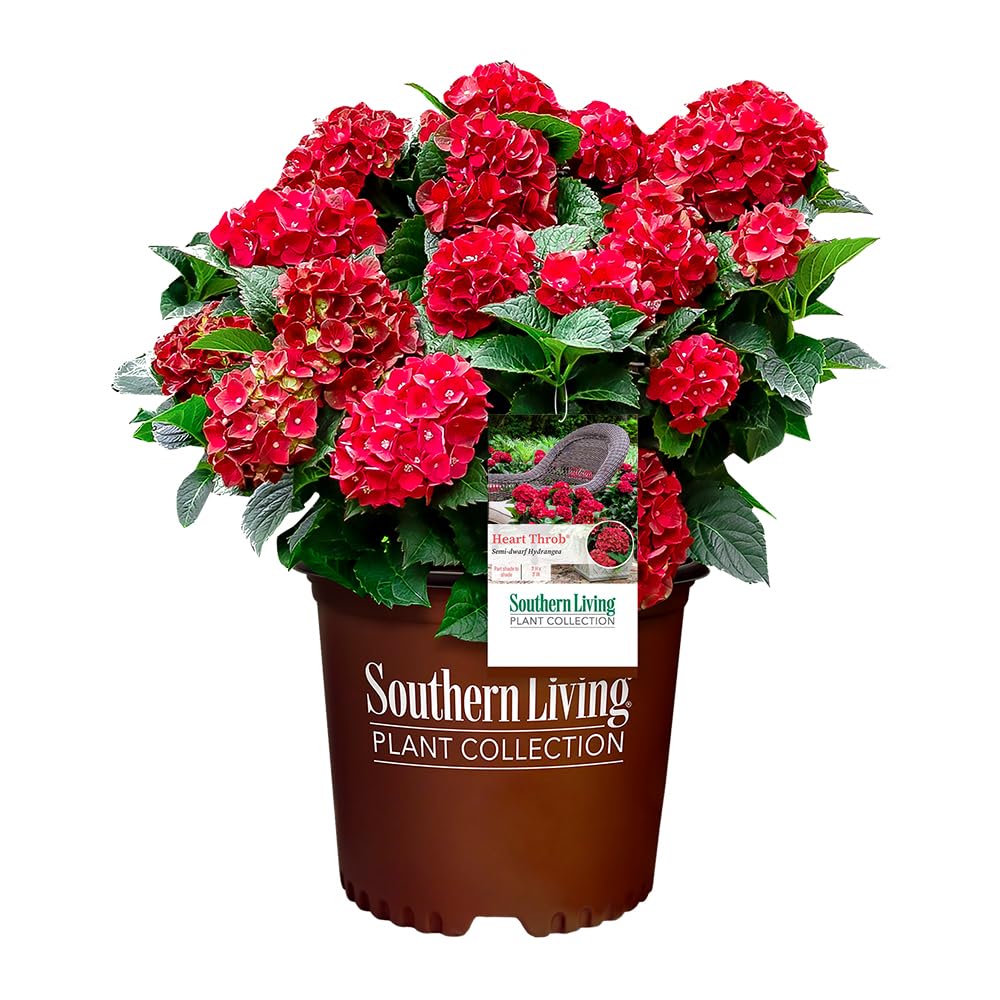
1. Southern Living Heart Throb Hydrangea 2 Gallon
Our pick — 4.0+★ from 100+ verified ratings; the strongest balance of quality and price.
A red-blooming spreader that lands healthy — but it is a shade plant, not a sun plant.
Read the label honestly and this becomes an easy pick: the Heart Throb lists part shade to full shade, so it belongs in the bed that bakes least, not the one that bakes most. It holds a 4.0+ rating across 100+ ratings, and what wins people over is arrival condition — moist soil, green leaves, buds already forming. Buyers report: “High quality. Healthy upon arrival, soil was moist.” That is the whole experience in one line.
The plant grows to 36 inches tall and 36 inches wide, an evenly rounded shrub that suits a low foundation bed rather than a tall backdrop. It ships at an average height of 12-18 inches, so expect a small plant that fills out over its first full season. Its zones run 5-9, which covers most of the country except the coldest pockets. It is deciduous — bare in winter, new growth in spring — and it wants regular watering.
Where it gets complicated is establishment. Germination and leaf feedback both come in mixed, and a handful of plants have died within days of arriving while the rest thrived. That is the reality of live plants shipped through a courier network. Size runs lower here than the Little Lime’s 36-inch expectation on paper, and this one ships as a single plant versus the Little Lime’s two pieces.
Where it earns its place
- Arrives with moist soil and buds already forming rather than bare wood
- Compact 36-inch by 36-inch frame suits a low, shaded foundation bed
- Zones 5-9 covers most gardens and returns from winter with new growth
- Repeated buyers describe the leaves as healthy and the size as expected
Read this before you buy
- Listed for part shade to full shade, so a hot afternoon bed is the wrong home
- Planting period is spring, which narrows when you can put it in the ground
- A few plants do not establish, so the first fortnight is the real test
Go for it when: your bed is shaded by a wall, fence or canopy for most of the afternoon.
Choose the Little Lime instead if: the sun hits from noon onward, because this one’s own listing stops at full shade.
2. 2 Gal. Little Lime Hydrangea Shrub
Two plants, a full-sun rating and green-to-pink cones — the workhorse for a hot border.
Here is the spec that decides it: sunlight exposure reads Full Sun. That is the whole reason this shrub sits near the top of a list built for afternoon light. Pair that with a 4.0+ rating across 200+ ratings and a 36-inch expected height, and you have a plant that stands in the heat and finishes at a manageable size rather than swallowing the bed. It also ships as two pieces — this order carries two plants versus the single plant you get with the Heart Throb — and at 8.8 pounds it is lighter than the Limelight’s 10 pounds.
The colour story is the slow reward. Blooms come in green and age to pink from summer into fall, and the shrub returns each year because it is deciduous. Water it twice a week until it is established, then once a week after that. Zones 3-8 give it one of the wider cold tolerances in this group. Order it between mid-fall and mid-spring and it arrives dormant — bare wood and no leaves, which is normal for the season and not a sign the plant has failed.
Two plants in one order makes matching easier, and the double pack reads as identical pairs so a hedge line looks deliberate. The recurring trouble is overwintering: most gardens report the shrubs thriving, but some plants do not come back in spring, and a winter kill is the risk you carry with any zone-rated shrub. Packaging holds soil in the pot well, which is why so many arrive looking fresh.
What the full-sun rating buys you: a spot in a west-facing border, a driveway strip, or against a wall that radiates heat into the evening.
The winter risk to weigh: dormancy and dead look the same in January, so judge it in spring when the growth either comes or it does not.
The sun-belt pick: a full-sun rating at 36 inches tall with two plants per order, which suits anyone hedging a long, hot run.
Think twice if: you are ordering in deep winter and want to see leaves on arrival — this one ships dormant and looks like sticks.
3. Perfect Plants Limelight Hydrangea 1 Gallon

An eight-foot cone-flower that takes full sun and asks little once it is settled.
The Limelight’s defining number is the mature height — 8 feet, with a matching 6-8 foot spread. That makes it a background plant or a screen, not a front-of-border shrub. Unlike the compact Little Lime at 36 inches, this one is built to fill vertical space. And unlike the Heart Throb, its own listing says it prefers full to partial sun, which is exactly what you want on a hot boundary.
Drought tolerance is the second useful claim, and it comes from the panicle species itself. Limelight is a panicle hydrangea, and the listing names it as an upright variety that handles drier spells in loamy, well-drained soil. Its blooms open midsummer in creamy lime green, hold that colour deep into fall, then turn a deep pink against green foliage. Zones 3-9 cover almost every garden in the country. The plants are grown from cuttings rather than seed, and the listing says that is for quality control.
The honest caveat is condition on arrival. A few plants turn up with dried, brown leaves and do not pull through, and that is a real risk with a one-gallon size shipped bare of much soil. The listing also flags that this is not for indoor growth, and that you should use a slow-release fertilizer each early spring. It weighs 10 pounds, the heaviest single plant in this group.
The 8-foot case: if you need height and heat tolerance together, this is the only pick here that offers both at that scale.
The first-week gamble: a one-gallon plant travels with less soil around the roots, so examine the leaves within a day of unboxing.
Reach for it if: you are screening a fence or filling the back of a sun-baked bed and want the colour shift from lime to pink.
Look elsewhere if: you want a shrub that stays low against a window — 8 feet will tower over it.
4. Proven Winners Fire Light Panicle Hydrangea, #3 Container
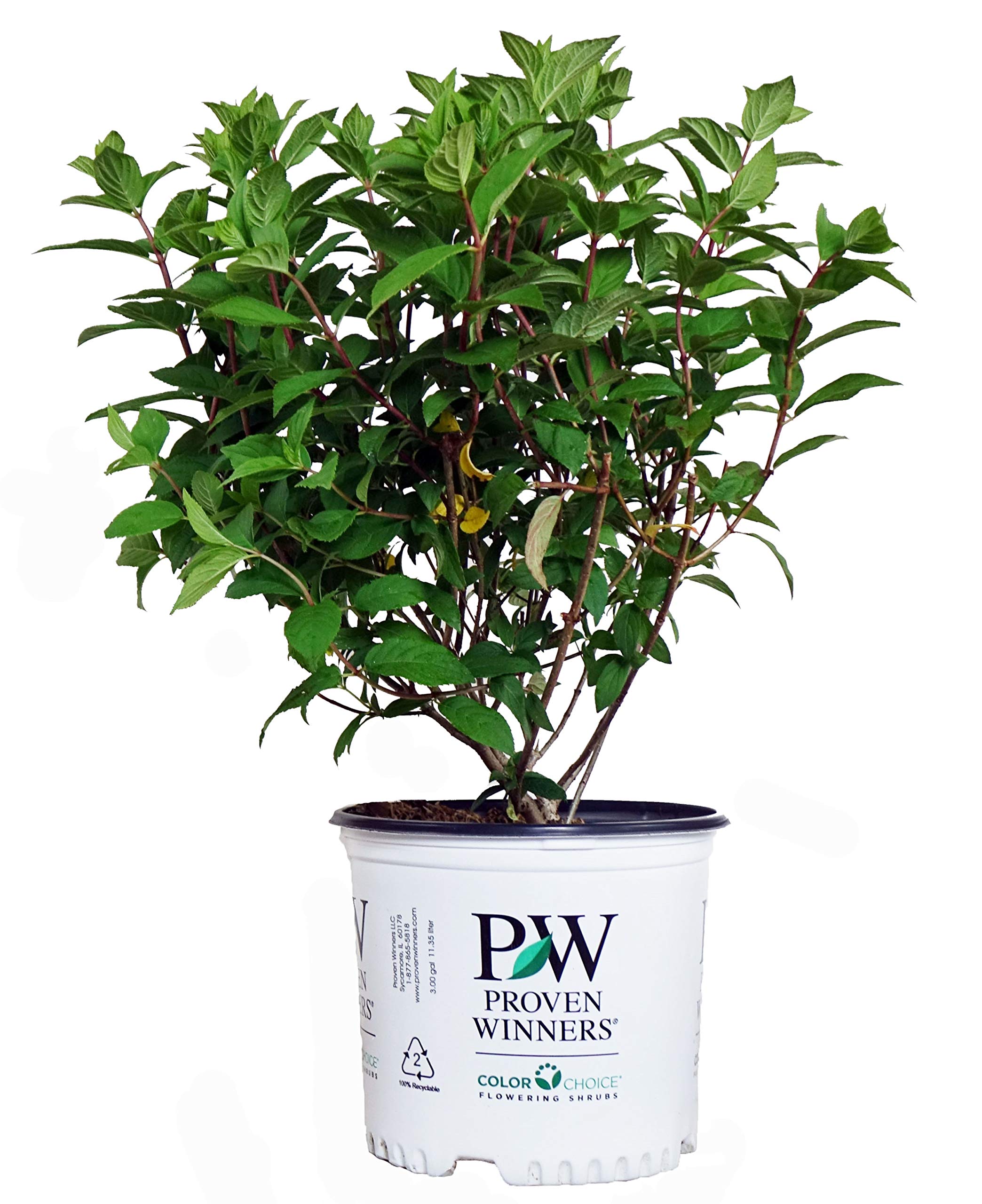
Big cones that start white and burn into deep red as the nights cool.
If the reason you want a hydrangea in afternoon sun is the colour, the Fire Light delivers a show the shade-lovers cannot. Its blooms open white and age into a deep red through the cooler fall months, on a shrub that grows 4-6 feet tall and 4-6 feet wide. It carries a 4.5+ rating, the highest in this article, and it sits comfortably in partial to full sun with zones 3-9. The #3 container arrives fully rooted in soil, so it can go straight in the ground the day it lands, weather permitting.
Owner reports on arrival quality are unusually consistent. Plants turn up well-packed in tall boxes with the pot wrapped in plastic to hold moisture, and only branch tips droop after transit — a night with water and they recover. It is sturdy enough for clay: one gardener put eight in hard clay and had all eight survive and bloom, using root starter and fresh soil to compensate. Another started with thirteen-inch sticks and had a 6-7 foot shrub inside five years.
The catch is timing. Order it late in the year and it arrives dormant with no leaves, which is normal but looks alarming in the box. Planting period is listed as fall, so autumn is the intended window rather than spring. It is a smaller plant than the Limelight at 4-6 feet versus 8 feet, which is the trade-off for fitting it into a mixed border.
Why it stands out
- White blooms age to deep red for a long colour season
- Arrives fully rooted and ready to plant from a #3 container
- Highest rating in this group, with quality the thing that gets praised most
- Handles partial to full sun in zones 3-9
The parts nobody mentions
- Arrives dormant and leafless outside the growing season
- Listed planting period is fall, which limits a spring impulse buy
- At 4-6 feet it will not screen a tall fence the way the Limelight does
The colour-first choice: white-to-red cones on a plant that takes real sun and arrives already rooted.
Wait for autumn if: you want it to arrive with leaves on — order out of season and it comes dormant by design.
5. American Beauties Haas Halo Smooth Hydrangea #3 Container
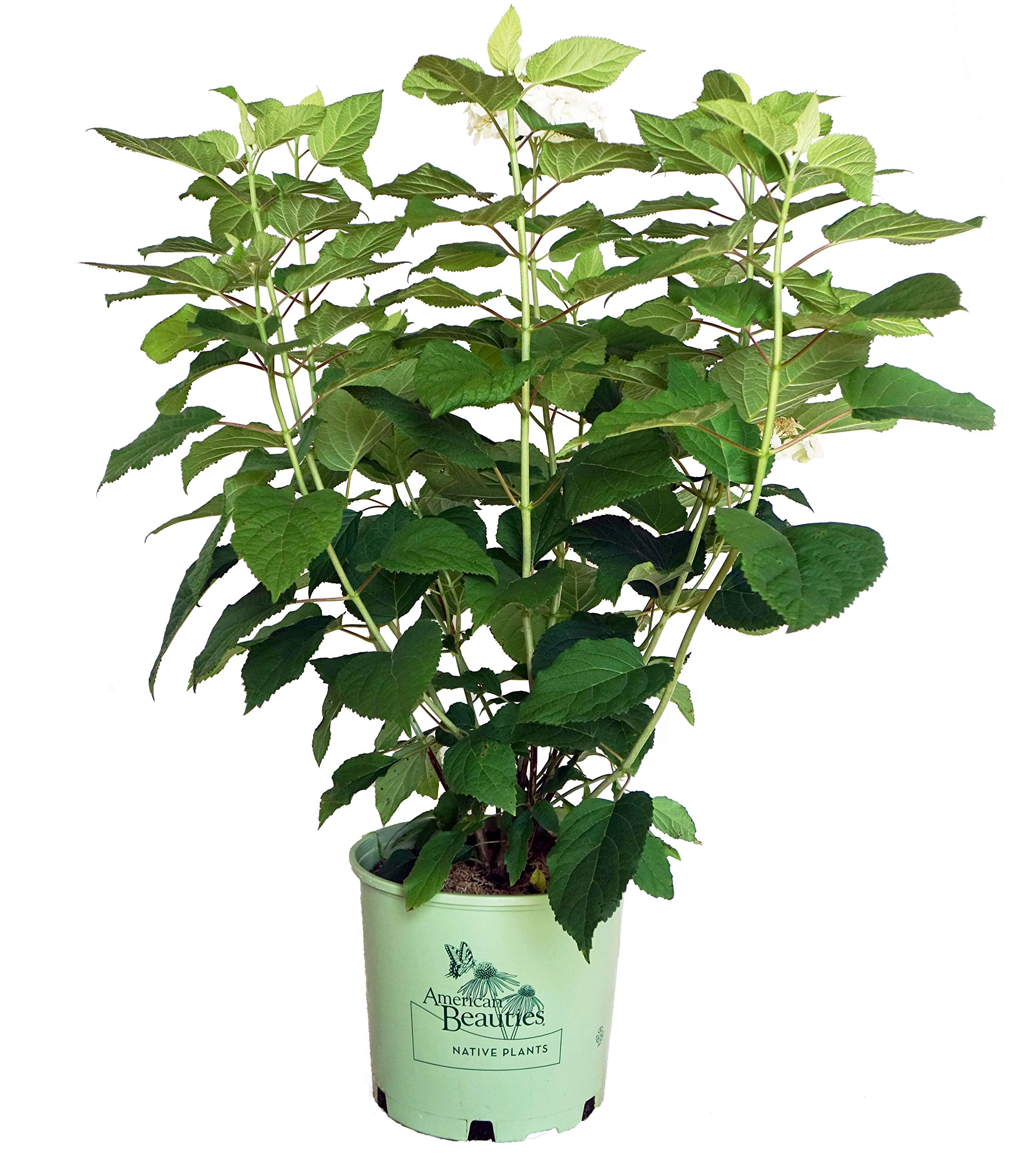
A flat-headed native lacecap whose open flowers feed pollinators rather than just looking pretty.
This is the one to buy for the garden’s wildlife, not just its looks. Haas Halo is a smooth hydrangea with flattened flower heads — big sterile blooms ringing a mass of small fertile flowers in the centre. Those fertile flowers are what the listing says pollinators flock to, and it names butterflies, hummingbirds, native songbirds and the Hydrangea Sphinx Moth as the visitors. It thrives in sun or shade, the most forgiving of the five on light, and covers zones 3-9 at 3-5 feet tall and wide.
Blue-green foliage sits behind masses of small white summer flowers, and the bloom period is long through summer. It works as a foundation planting or grouped into a pollinator border. Established plants have come through a full-afternoon-sun, morning-shade spot — the reverse of the usual advice — which says something about how much heat it will accept. The #3 container arrives fully rooted and ready to plant.
There is a labelling risk worth naming. A few shipments have turned out not to be Haas Halo at all, blooming with full sterile heads and no fertile centre, which removes the pollinator value entirely. The plant still arrived healthy and grew on well, but if the open centre matters to you, confirm it when the flowers open rather than trusting the tag. Growth is the most-praised trait, with plants arriving bigger and fuller than expected on good orders.
Best for wildlife: an open-centred lacecap that feeds insects through summer rather than offering only sterile petals.
The identity check: look for fertile flowers in the centre of each head once it blooms — a full sterile mop means the wrong plant.
Pick this one if: you want a native, pollinator-friendly hydrangea that copes with either sun or shade.
Not for you if: you want guaranteed conical mopheads in red or pink — this makes flat white lacecaps, when it is the right plant at all.
Know the Specs
Panicle vs. big-leaf
A panicle hydrangea grows cone-shaped flower heads on new wood each year, and that growth habit is why it takes sun. The petals are sterile florets on the outside and the plant sets its flowers on fresh stems, so a hard winter does not cost you the bloom. A big-leaf hydrangea sets flowers on the previous year’s stems and its leaves are thinner — they lose water fast under direct afternoon light. For a hot bed, always lean panicle. The Little Lime, Limelight and Fire Light here are all panicles.
Sun rating on the label
“Full sun” means six or more hours of direct light, “part shade” means some sun with protection from the hottest hours, and “full shade” means no direct sun. On a hydrangea, the rating tells you how much afternoon heat the species evolved to take. The Heart Throb stops at full shade for a reason. If the spot gets sun past noon, buy the ones rated for full sun and skip the rest.
USDA zones and dormancy
The zone number is the coldest winter the plant survives. A zone 3 plant takes colder winters than a zone 5 one. Dormancy is the winter rest where a deciduous shrub drops its leaves — mail-order plants ship bare in that state by design. If a box arrives in January and looks dead, it probably is dormant. Judge it in spring when the new growth shows.
Container size and mature spread
Container size tells you how much root mass is in the box at delivery — a #3 pot is a larger, more established plant than a one-gallon. That matters because a bigger root system establishes faster in the ground. Mature height and width are what you plant for, not the size in the box: an 8-foot Limelight needs space from the start, even when the plant in front of you is 18 inches tall.
Common Questions
Can a hydrangea really take full afternoon sun?
Why does my hydrangea arrive with no leaves?
How often should I water a newly planted hydrangea?
What is the difference between a panicle and a smooth hydrangea?
Will the blooms change colour in my soil?
Can I grow a hydrangea in a pot on a sunny patio?
How big will the plant be when it arrives?
What should I do if the plant arrives brown or damaged?
Is a native hydrangea better for bees and butterflies?
Which hydrangea stays smallest?
The Bottom Line
For most gardens facing afternoon sun, the pick here is the 2 Gal. Little Lime Hydrangea — a full sun rating, a 36-inch mature height and two plants per order give you the safest start in a hot bed. If you want height plus that lime-to-pink colour shift, the Limelight reaches 8 feet and still prefers full to partial sun. And if the point of planting is the wildlife, the Haas Halo is the native lacecap built for pollinators.
One honest starting point: both the Little Lime and the Limelight sell on their sun tolerance, and the Fire Light edges both on overall owner satisfaction — so if you are torn between sun rating and colour, the Fire Light’s white-to-red cones give you a reason to split the difference rather than settle.
How we choose
We do not accept paid placement. Every pick is matched to a real buyer and a real use-case; we do not hands-on test units.
Sources
Specifications: manufacturer listings and product documentation. Review insights: verified customer reviews, as of October 2026. Pricing: not shown on this page (it changes often); check the current price via the retailer link.
As an Amazon Associate, Aappliancez earns from qualifying purchases. This does not affect which products we feature.