Disclosure: Some links in this post are affiliate links. As an Amazon Associate I earn from qualifying purchases, at no extra cost to you. Learn more
Specs are compiled from manufacturer listings and verified buyer reviews and can change over time — please confirm the key details on the product page before buying.
The flour you choose decides whether your cinnamon rolls come out pillowy and tall or flat and crumbly — and the difference is almost always protein content, not brand loyalty. A cinnamon roll is an enriched dough, meaning it carries butter, sugar, egg and milk, and that rich load needs a strong gluten network to lift it. Pick a flour with too little strength and the filling weighs the swirl down. Pick one that is strong enough and the roll springs up around the spiral instead of collapsing into it.
This guide is built by comparing the manufacturers’ published specifications and the patterns across verified customer reviews, so you get each pick’s real strengths and trade-offs instead of marketing spin.
Below you’ll find the strength, protein and milling facts that actually matter, plus which bag suits a weekend batch versus a standing weekly bake. Here is how to match protein level and bag size to how often you actually bake.
Top Picks

How To Choose The Best Flour for Cinnamon Rolls
Start with strength. Cinnamon roll dough is enriched, which means the fat and sugar in it tenderize the gluten and slow the rise. A flour that performs fine in a plain loaf can feel slack and soft in a sweet swirl dough. The higher the protein in the bag, the more structure you have to work with.
Protein is the number to read first
Protein is what forms gluten when you add liquid and knead. More protein means a stronger, more elastic dough that can stretch around a cinnamon filling and still climb in the oven. Bread flours sit at the upper end; all-purpose flours sit in the middle and are the workhorse for a softer, more tender roll. Neither is wrong — they make different styles of roll. A chewier, bakery-style swirl wants the stronger bag. A soft, almost cake-like roll often wants all-purpose.
Freshness and bag size both shape the bake
Flour is a fresh product. Once opened, it slowly loses the ability to rise well, so a bag you can finish in a reasonable stretch beats a giant sack that sits in the pantry for months. Bulk bags are cheaper per pound, but only if you bake often enough to work through them. Keep an opened bag sealed and cool, and the dough will behave more predictably every time.
Side-by-Side Comparison
| Model | Best For | Bag Size | Type | Organic | Amazon |
|---|---|---|---|---|---|
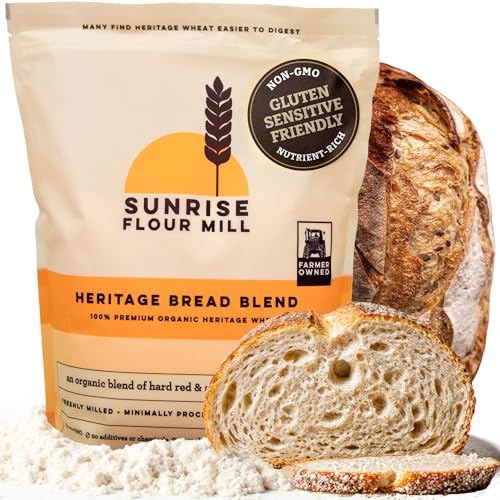
| Sunrise Flour Mill Heritage Organic Bread Flour Blend★ Best Overall | Best Overall for tender, flavorful swirls | 5 lbs (80 oz) | Heritage bread flour blend | USDA Organic | Amazon |
| Central Milling 100% Organic All Purpose Unbleached White Baking FlourTender Crumb Pick | Soft, tender all-purpose rolls | 10 lbs (160 oz) | All-purpose, unbleached | Certified Organic | Amazon |
| Heckers All Purpose Flour Unbleached 25LB | Weekly bakers who go through flour fast | 25 lbs (400 oz) | All-purpose, unbleached | — | Amazon |
| King Arthur Flour Special Patent Flour | Big-batch bakery-style swirls | 50 lbs | Patent (bread) flour | — | Amazon |
| King Arthur Special Flour 50 lb | High-volume sourdough and sweet dough | 50 lbs (800 oz) | Special bread flour | — | Amazon |
Detailed Reviews
1. Sunrise Flour Mill Heritage Organic Bread Flour Blend
Our pick — 4.5+★ from 1,000+ verified ratings; the strongest balance of quality and price.
A heritage-grain blend that gives cinnamon rolls a soft lift and a warm, nutty backbone.
The thing that wins people over here is texture — the flour produces breads owners describe as lofty and airy with a creamy-gold crumb, and that same lift is exactly what makes a cinnamon spiral rise instead of sag. It is a blend milled from Turkey Red and White Sonora heritage wheat, a pairing of older wheat varieties rather than modern high-yield strains. The brand runs it through unifine milling, a single-pass process dating to the 1930’s that leaves the flour super-fine and fluffy. Finer flour hydrates faster, so your dough comes together smoother and rolls out without tearing.
It carries the 100% USDA Organic label, meaning it is milled without chemicals, pesticides or herbicides. Protein runs high, which is the reason the gluten can hold a rich, buttery swirl dough through a long rise. For a sweet roll, that strength is what keeps the spiral from uncoiling in the oven. The bag is 5 lbs / 80 ounces, a size you can realistically finish before freshness fades — a genuine advantage over a huge sack for anyone baking a tray on weekends. The one catch worth naming: this flour costs more per pound than commodity bags, and it is a 5 lb bag, so heavy bakers will refill often. As buyers put it, “One buyer calls this flour great quality and packed with nutrients compared with standard store flour.”
What makes the dough perform
- High-protein blend builds the gluten strength an enriched roll dough needs to rise tall
- Unifine single-pass milling yields a super-fine, fluffy flour that hydrates evenly
- Turkey Red and White Sonora heritage wheat gives a smooth, nutty flavor
- 5 lb / 80 oz bag stays fresh while you work through it
Where it asks more of you
- Premium per-pound cost versus commodity all-purpose bags
- Frequent bakers will go through a 5 lb bag quickly
Best matched to: anyone chasing a soft, tall swirl with real grain flavor and organic sourcing.
Look elsewhere if: you bake several trays a week and need the largest sack you can store.
2. 100% Organic All Purpose Unbleached White Baking Flour
The all-purpose route to a softer, cakier swirl rather than a chewy one.
If your ideal cinnamon roll is tender and almost melting rather than bready, an all-purpose flour is the lever. This one comes from Central Milling, a mill the brand describes as over 150 years old and employee-owned, and it is milled from wheat grown organically in high mountain valleys on family-owned farms. It is unbleached and contains no bromate, a dough conditioner some bakers prefer to avoid. What owners praise most is sheer quality — that is the aspect that dominates feedback — followed closely by taste and texture, with the flour turning out light, fluffy results in everyday baking.
The bag runs 10 lbs / 160 ounces, double the Sunrise bag above, so it lasts through more baking sessions before you restock. It is Certified Organic, GMO-Free, Kosher and Vegan, and the mill positions it for cookies, muffins, brownies, pancakes and quick breads — the softer end of the baking spectrum. For cinnamon rolls, that softer profile is the point: expect a gentler, more yielding crumb. The honest trade-off is structure. An all-purpose flour has less protein than a dedicated bread flour, so a very buttery, heavily enriched swirl dough can benefit from a little extra kneading or a touch of added vital wheat gluten. Buyers report it works beautifully in sourdough and mixed with rye and spelt for bread, and one put it plainly: “One buyer calls it one of the best flours they use for sourdough.”
Where the value sits: a 10 lb certified organic bag with quality, taste and texture all drawing steady positive feedback, which is a strong showing for an everyday all-purpose flour.
The realistic caution: value is the one point reviewers split on — some find it a bargain for organic, others feel the per-pound cost sits high. If you are watching spend, weigh that against the bag size.
Reach for this if: you want a softer, more tender roll and prefer certified organic, unbleached flour.
Think twice if: your dough is very rich and you want maximum rise without adjusting your recipe.
3. Heckers All Purpose Flour Unbleached 25LB

A hefty 25-pound sack built for households that bake through flour steadily.
This is the pick for the person who makes a tray of rolls, a loaf and a batch of pizza dough in the same week. It is unbleached all-purpose flour in a 25 lb / 400 ounce bag — 25.6 pounds on the scale — which is a serious commitment of pantry space. What earns it a place is quality: that is by far the most-discussed aspect in feedback, and versatility follows, with owners running it through sourdough, pizza dough, bagels, ciabatta, muffins and biscuits with consistently good results. The powder-like consistency is a detail that comes up, and it portions cleanly into smaller sealed bags for storage.
Then there is the packaging reality. Bulk flour ships heavy, and the recurring gripe is delivery damage rather than the flour itself — torn bags, leaks, and the occasional substitution of smaller bags for the promised size. The mill’s customer service draws praise for sorting out those problems with refunds. Those are transit problems, not signs of a weak flour. Sized against the Sunrise bag above, this is the flour you buy when volume matters more than heritage grain character.
The volume argument: 25 lbs of quality unbleached flour at a per-pound cost that makes regular cinnamon-roll baking economical, with versatility across everything from sandwich loaves to sweet doughs.
Storage honesty: a 25 lb sack needs a cool, sealed home — split it into smaller airtight containers and it stays fresh far longer.
Built for: frequent bakers with pantry room who want one reliable all-purpose bag doing all the work.
Consider a smaller bag if: you bake occasionally, since a 25 lb sack can outlast its own freshness window.
4. King Arthur Flour Special Patent Flour – 50 Pounds

Fifty pounds of patent flour — the serious bread-baker’s baseline for structured rolls.
Patent flour is a bread-grade flour milled for strength, and this 50 lb bag is aimed squarely at people who bake weekly and want one dependable supply. Quality is the aspect buyers talk about most, far ahead of flavor, effectiveness and texture, and the results speak in the dough: owners describe breads with a perfect rise, a fluffy interior and a chewy crust, and richer high-hydration doughs — the same family as an enriched cinnamon roll — holding their shape with good oven spring. That shape-holding is precisely what stops a swirl from slumping when the butter and sugar load gets heavy.
The bag is genuinely heavy. It ships at 50 pounds, and lifting it onto a counter is a two-hand job for some bakers — pouring it into sealed containers once it is up there makes daily use far easier. On value, opinions split: some call it a fine price for the volume, others find the per-pound cost on the high side. Moving from the Heckers 25 lb sack to this one doubles the volume. It is a step up for anyone baking enough to justify the space. Customers point to the flavor and the workability of the dough as the reasons they keep reordering.
Where it earns its place: bread-grade strength that holds enriched dough shape and delivers oven spring, in a 50 lb bag that keeps a weekly baker supplied.
What to plan around: 50 pounds must be lifted, opened and repackaged into airtight storage — budget the time and a cool spot before it arrives.
Good fit for: households already baking bread most weeks who want strength and a long supply line.
Not the starter bag: if you have never baked a roll from scratch, this volume is a lot to commit to at once.
5. King Arthur Special Flour 50 lb

The all-rounder fifty-pounder for bakers who keep one flour on the shelf.
Where the patent flour above leans into bread structure, this special flour reads as the everyday workhorse — owners mention using it across sourdough, oatmeal cookies, gravies and general all-purpose duties, and it holds up in every one of those roles. Quality again leads feedback by a wide margin, with value for money a clear second, and the texture comes across as silky smooth, which handles nicely in a soft enriched dough. Its draw is covering rolls, loaves and quick breads from one 50 lb bag.
It ships as 50 lbs / 800 ounces. That is the same weight class as the patent bag above, and it carries the same practical demand: a cool, sealed storage plan and a repackaging routine. One thing worth flagging plainly — the listing carries an allergen notice stating that bulk-packaged flour may have come into contact with allergens including wheat, peanuts, tree nuts, eggs, milk, soy, fish or shellfish. If anyone at your table has an allergy concern, that note belongs on your radar before you buy.
What buyers keep coming back for: one flour that covers sourdough, cookies, gravies and sweet doughs without a second purchase, at a value point that rewards buying in bulk.
The honest limit: a 50 lb sack is only economical if you bake through it while it is still fresh — and it needs somewhere cool and dry to live.
Suits you if: you want a single large bag that covers nearly every bake in your kitchen.
Look elsewhere if: allergen cross-contact is a concern, or you bake in small enough batches that freshness would lapse.
Know the Specs
Protein Content and Gluten Strength
Protein is the raw material for gluten, the stretchy web that traps gas and lifts your dough. A high-protein bread flour builds a strong web, which is what holds a rich cinnamon roll swirl together as it rises and bakes. All-purpose flours sit lower in protein — they give you a softer, more tender crumb but less push against a heavy filling. Read the protein number first and match it to the texture you want, then adjust your recipe if the dough feels slack.
Bag Size and Freshness
Flour ages. Once a bag is opened, it gradually loses rising power, and a colossal sack left in a warm pantry will fade before you get through it. So match bag size to your monthly baking volume, not just the per-pound price. A smaller bag keeps you baking with fresh flour; a bulk bag rewards frequent bakers and anyone who repackages the flour into sealed containers. Before you size up, picture how much you actually bake in a month.
Organic and Heritage Milling
Organic labeling tells you the wheat was grown and milled without synthetic chemicals, pesticides or herbicides. Heritage wheat refers to older, pre-hybridized varieties, which the Sunrise blend pairs with a single-pass milling process called unifine milling — it produces a very fine flour that hydrates smoothly. Neither organic nor heritage changes the math of protein, but both shape flavor, and many bakers find the grain taste rounder and less bitter.
Unbleached and Bromate-Free
Bleaching and bromate are treatments aimed at speeding up or conditioning flour. Unbleached, bromate-free bags skip them, leaving the flour closer to its natural state. For cinnamon rolls, this mostly affects how the dough behaves and tastes — many bakers prefer working with untreated flour because the flavor stays cleaner and the aging is left to time rather than chemicals.
Common Questions
Is bread flour or all-purpose flour better for cinnamon rolls?
How much flour do I need for one batch of cinnamon rolls?
Why did my cinnamon rolls turn out dense instead of fluffy?
Can I use the same flour for cinnamon rolls and sourdough?
How should I store a large bag of flour?
Does organic flour taste different in a cinnamon roll?
What is patent flour and can I use it for sweet rolls?
Why do some flour bags arrive torn or leaking?
Is a 50 lb flour bag worth it for home baking?
The Bottom Line
For most home bakers, the strongest flour for cinnamon rolls is the Sunrise Flour Mill Heritage Organic Bread Flour Blend — high protein for a strong, rising swirl, a fine unifine-milled texture, and a 5 lb bag that stays fresh while you bake. If you prefer a softer, more tender crumb and want certified organic all-purpose, reach for the Central Milling Organic All Purpose Flour. And for bakers who plow through flour weekly, the Heckers Unbleached 25LB delivers bulk quality at a per-pound cost that rewards regular baking.
How we choose
We do not accept paid placement. Every pick is matched to a real buyer and a real use-case; we do not hands-on test units.
Sources
Specifications: manufacturer listings and product documentation. Review insights: verified customer reviews, as of October 2026. Pricing: not shown on this page (it changes often); check the current price via the retailer link.
As an Amazon Associate, Aappliancez earns from qualifying purchases. This does not affect which products we feature.