Disclosure: Some links in this post are affiliate links. As an Amazon Associate I earn from qualifying purchases, at no extra cost to you. Learn more
Specs are compiled from manufacturer listings and verified buyer reviews and can change over time — please confirm the key details on the product page before buying.
Hanging a door the old way means chiseling a hinge pocket by hand and praying the depth comes out even. A door hinge jig replaces that guesswork: you clamp a guide to the door, drill or rout through it, and the hinge drops in flat. The trick is knowing which style of jig matches your hinges — concealed cabinet cups and full-size door mortises need different tools entirely.
This guide is built by comparing the manufacturers’ published specifications and the patterns across verified customer reviews, so you get each pick’s real strengths and trade-offs instead of marketing spin.
Cabinet doors need 35mm cup holes while interior doors need 2-1/2″ to 5″ mortises, so the two jobs rarely share one tool. Below you’ll find the door hinge jig that fits your actual project, from a 4.7-star Kreg favorite to an all-metal cup-drilling rig that won’t melt.
Top Picks
How To Choose The Best Door Hinge Jig
The first question is not brand, it is hinge type. A concealed cabinet hinge lives inside a 35mm cup bored into the back of the door, and that cup is a very different hole from the rectangular mortise a butt hinge sits in on a house door. Buy the wrong jig and you own a paperweight.
Concealed cabinet hinges versus door mortises
For kitchen and bathroom cabinets, you want a jig built around a 35mm boring bit — some ship with a Forstner-style bit, some with a carbide-tipped one. For interior and exterior doors, you want a routing template sized for hinge leaves from 2-1/2″ up to 5″ long. Neither tool crosses over cleanly, and no single jig in this list does both jobs well.
Bit type and drill or router requirement
Some jigs work with any hand drill you already own, which keeps the cost down and the setup simple. Others are routing templates, which means you also need a router and a compatible bit — often a bearing-guided bit the manufacturer sells separately. Check what is included before you commit, because a template that assumes you own a router is not the same purchase as a self-contained drilling kit.
Adjustability and hinge offsets
Hinge offset is the measurement that decides how far the door overlaps the cabinet frame. Common values run 2mm through 6mm, and a jig that supports several lets you match existing doors instead of re-drilling. The same logic applies to cup position from the door edge — adjustable stops let you place hinges anywhere from a set distance off the edge to wide spacing for custom layouts.
Side-by-Side Comparison
| Model | Best For | Hinge Style | Power Source | Adjustability | Amazon |
|---|---|---|---|---|---|
| Kreg Concealed Hinge Jig, Cabinet Hinge Jig★ Best Overall | Cabinet doors with European concealed hinges | 35mm concealed cup | Any hand drill | 3mm, 4mm, 5mm, 6mm offsets | Amazon |
| UBEE Door Hinge Jig Template KitBest Value | Re-cutting mortises on mis-hung pre-hung doors | Square and round corner (1/4″, 5/8″ radius) | Hand drill | 2-1/2″ to 5″ hinge lengths | Amazon |
| Milescraft 1342 Euro Hinge Jig | Hobbyist cabinet work on framed and frameless boxes | 35mm concealed cup | Hand drill | Multi-offset with 1/16″ pilot guides | Amazon |
| Gohelper Door Hinge Jig for Router | Routed hinge pockets on doors up to 1-3/4″ thick | Round and square corner mortises | Router | 2-1/2″ to 5″ hinge lengths | Amazon |
| Kreg Door Hinge Routing Jig | Batch-hanging interior doors with a router | Hinge and latch mortises | Router | 2-1/2″ to 5″ hinges, 1-3/8″ and 1-3/4″ doors | Amazon |
| Woodhaven 8545 Door Hinge Jig | Production runs and one-off 4-1/2″ hinge installs | 4-1/2″ hinge mortise | Router | CNC-matched to 4-1/2″ hinges | Amazon |
| GOINGMAKE Metal Concealed Hinge Jig | Full kitchens of soft-close cabinet doors | 35mm concealed cup | Hand drill | 2mm, 3mm, 4mm, 5mm, 6mm offsets | Amazon |
Detailed Reviews
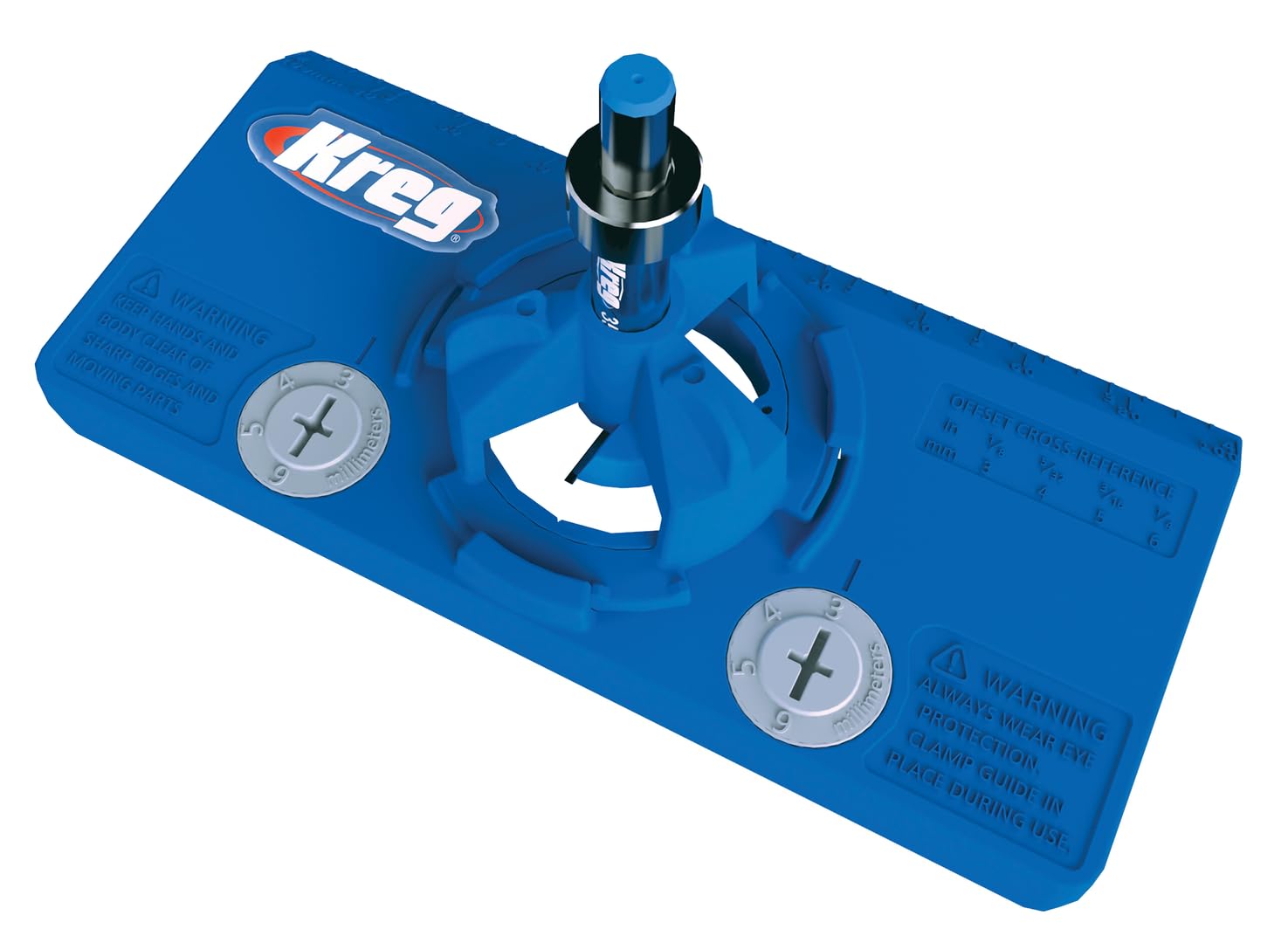
1. Kreg Concealed Hinge Jig, Cabinet Hinge Jig, KHI-HINGE
Our pick — over 4.5★ from 7,500+ verified ratings; the strongest balance of quality and price.
The cabinet-shop staple that turns 63 hinge cups into a single afternoon’s work.
If you are building or refacing cabinet doors with European concealed hinges, this is the tool that ends the hand-chiseling era. It bores 35mm cup holes — the round pocket a hidden hinge clicks into — using any hand drill you already own. The included four-cutter carbide-tipped bit runs with a stop collar, so hole depth stops where you set it instead of wandering into the door face.
Buyers talk about build quality more than anything else in the reviews, with how well it works coming a close second. Owners say it cuts through hardwood and plywood without complaint. One reviewer noted using it on 63 Blum soft-close hinges (a popular brand of cabinet hinges that close gently) on poplar shaker doors, writing: “used for 63 Blum soft-close hinges on Poplar shaker cabinet doors.” The included Forstner bit (a drill bit that bores flat-bottomed holes) lasted the whole job and was still usable afterward. Setup is simple: turn the eccentric cams (off-center dials) to set the hinge setback, clamp the jig to your layout mark, and drill.
Placement flexibility is where it separates from cheaper templates. You can set hinge offsets at 3mm, 4mm, 5mm, or 6mm to match existing doors. You can also position hinges from 2 in (50mm) off the door edge out to unlimited spacing for fully custom layouts. Compare that to the Milescraft 1342 below, which also cuts 35mm cups but leans on a plastic body — the Kreg’s metal frame plus 1/4″-shank-compatible 35mm bit is what earns it the top spot for cabinet work.
Where it pulls ahead
- Adjustable 3mm, 4mm, 5mm, and 6mm hinge offsets match existing cabinet doors
- Four-cutter carbide-tipped bit with stop collar controls bore depth precisely
- Hinges can sit anywhere from 2 in (50mm) off the edge to unlimited spacing
- Metal body clamps to the door without marring finished faces
What to expect going in
- Its durability rating is the one mixed signal — a small share of buyers report the bit guide melting over time
- It only cuts concealed 35mm cabinets cups; it will not route door mortises
- Add a clamp if you do not own one — the jig needs securing before you drill
Worth buying if: you are boring 35mm cup holes for European concealed hinges on cabinet doors and want a metal-bodied jig that matches existing offset spacing.
Look elsewhere if: your project is interior doors with butt hinges — this jig cannot cut a rectangular mortise.
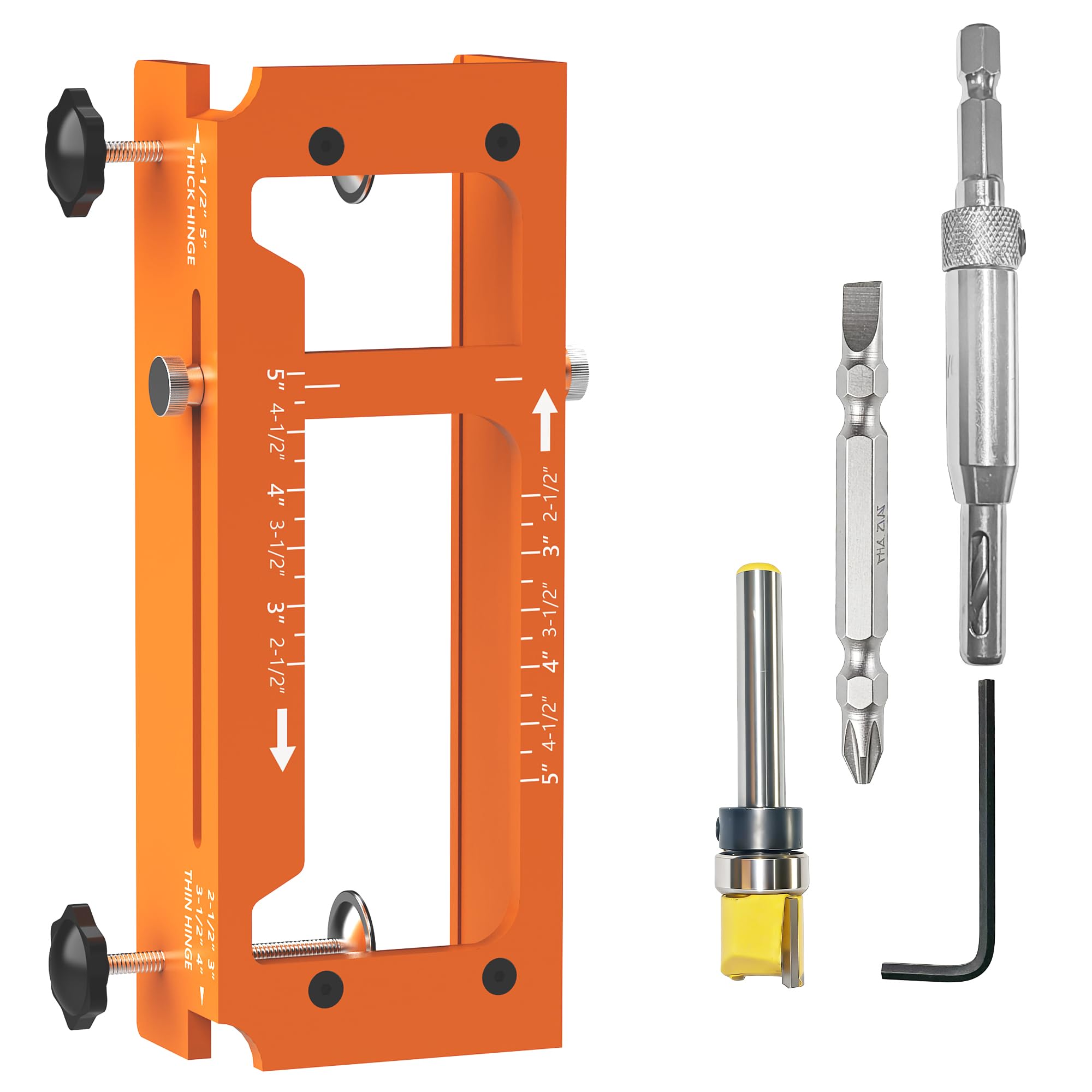
2. UBEE Door Hinge Jig
Built for the door you already hung in the wrong direction.
This jig fixes full-size door hinges, not cabinet cups. It cuts clean mortises (the rectangular recesses that hold hinges) from 2.5″ to 5″ long. If you have ever hung a pre-hung door and then realized it swings the wrong way, this is the tool you want. One verified buyer described exactly that: “I bought a pre hung door that was the wrong direction.” Re-routing the hinge positions gives a cleaner result than trying to chisel new pockets into a finished frame.
The body is aluminum alloy with an anodized surface and non-slip pads underneath, so the jig grips the door or jamb instead of skating across it. It takes both round-corner hinges at 1/4″ and 5/8″ radius and square-corner hinges, and it covers thick leaves at 4-1/2″ and 5″ along with thin ones at 2-1/2″, 3″, 3-1/2″, and 4″. A built-in depth gauge sets your mortise depth, and a self-centering bit keeps the hinge screw holes lined up.
Where it falls short of the Kreg concealed jig above is market feedback. This one is early in its review life, and one buyer flagged a corner arriving scratched but confirmed the performance was unaffected. It also lists no warranty. Still, what it does offer is unusual at this tier — a door hinge template, door knob installation kit, hole saw kit, bits, and a manual in one box. For a homeowner facing one mis-hung door, that completeness is the whole pitch.
The range that matters: square and round-corner hinges from 2.5″ to 5″, so it fits the standard interior door hardware most homeowners already own.
One honest note: anodizing resists wear, but no warranty is listed, so treat it as a homeowner-grade tool rather than a full-time contractor rig.
Choose it when: you need to re-cut hinge mortises on a mis-hung door and want a complete aluminum template kit with a built-in depth gauge.
Pass if: you want a long manufacturer warranty or are buying for daily professional use.
3. Milescraft 1342 Euro Hinge Jig

The part-time cabinet maker’s jig — full Euro cup drilling without the metal-body cost.
Milescraft targets the hobbyist and homeowner who drills a handful of cabinet doors a year. Two edge alignment knobs set the cup hole distance from the door edge, and an edge pin sets how far the hinge sits from the top or bottom. A metal-bushed drill guide locks into the jig body to keep the 35mm Forstner bit running straight, and a 3/8″ depth stop controls how deep you bore.
The extra touches are what make it useful on real cabinetry. Guide bushings built into the body let you pre-drill pilot holes in four common locations, so hinge screws go in square and the door closes true — a 1/16″ diameter pilot bit is included for that. The hinge marking guide detaches from the bottom of the jig, letting you transfer center lines and hinge locations onto the cabinet wall or frame before you ever touch a drill. Everything snaps back into the jig body for storage, so the Allen key and bits do not go missing.
The honest trade-off is the plastic body. The recurring gripe in the review pages is that the bit sleeve galling and the body flexing if you drill at an angle or apply side pressure. Owners who grease the bit shaft, press the guide fully down before locking, and clamp it down report clean results — one noted that Blum mounting holes ran off by.010″-.020″ but the hinges still fit fine. Set against the all-metal GOINGMAKE jig further down, the Milescraft trades longevity for a much lower entry point.
Best for part-time work: a plastic jig with metal bushings is rugged enough for small projects, and it includes the 35mm Forstner bit, 1/16″ pilot bit, edge stop pin, and marking gauge.
The caveat worth knowing: drill straight and lubricate the bit shaft — side pressure deforms the plastic sleeve, and the two standard depth settings run too deep for some hinges, so test on scrap first.
Ideal for: the hobbyist or homeowner installing a few sets of European concealed hinges on a budget.
Not the one for: a pro running production batches who wants zero flex and does not want to think about lubrication.
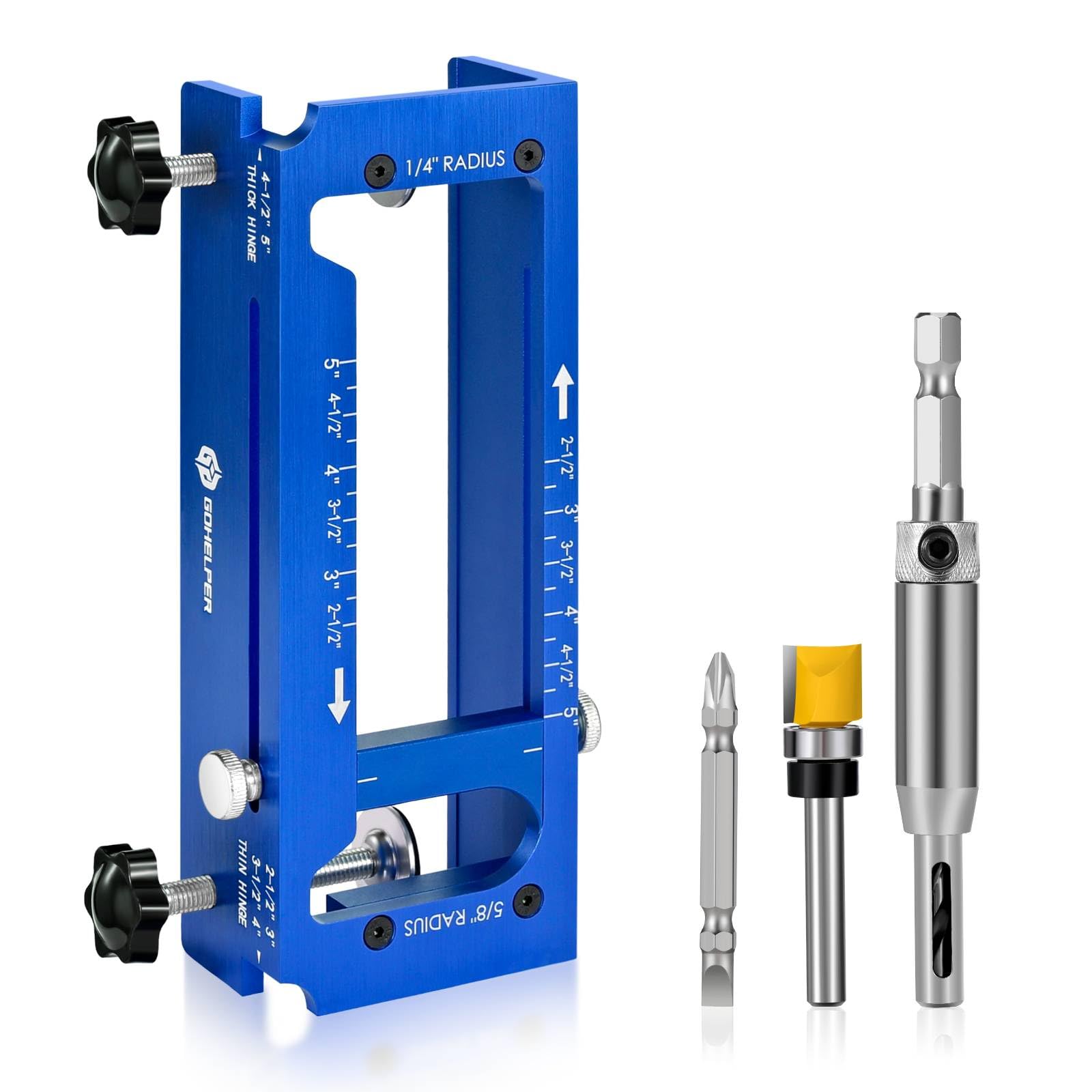
4. Gohelper Door Hinge Jig, Door Hinge Template Kit for Router
A machined aluminum router template for doors, not jambs — read that twice.
Founded on precision-machined 6061 aluminum with an anodized surface, this template is built for routers, not hand drills. It cuts hinge mortises from 2-1/2″ to 5″ long for both round hinges (1/4″ and 5/8″ radius) and square-corner hinges, which need a chisel pass to finish square corners. One important constraint: it is designed for doors up to 1-3/4″ thick and not for door jambs, so it fits standard interior and exterior door slabs rather than frames.
You can bore the hinge screw holes without swapping tools, thanks to the self-centering hinge bit and double-ended screwdriver bit. A built-in depth gauge handles thick hinge leaves at 4-1/2″ and 5″, and thin ones at 2-1/2″, 3″, 3-1/2″, and 4″. Silicone anti-skid pads hold the template steady while you rout, so the finished door face stays protected.
The one caution is fit and finish detail. One buyer suggested recessing the aluminum end blocks by sanding the inner faces for blade clearance, since the router bit had shaved a block, and noted the bolt holes should sit offset by 1-2mm. It is a small tweak, not a dealbreaker, and the rest of the feedback is as short and confident as it gets — owners mention it performing flawlessly once they had the router bit sorted.
Aluminum over plastic: the 6061 body is built to resist deforming under routing heat and pressure, and the anodized finish protects the guide surfaces.
Buyer beware note: this jig routes doors only — it is not designed for door jambs, and a few buyers found the end blocks needed minor sanding for bit clearance.
Right for you if: you own a router, are working with standard doors up to 1-3/4″ thick, and want a machined aluminum template with a self-centering bit included.
Skip consider if: your work involves door jambs, or you do not own a router yet.
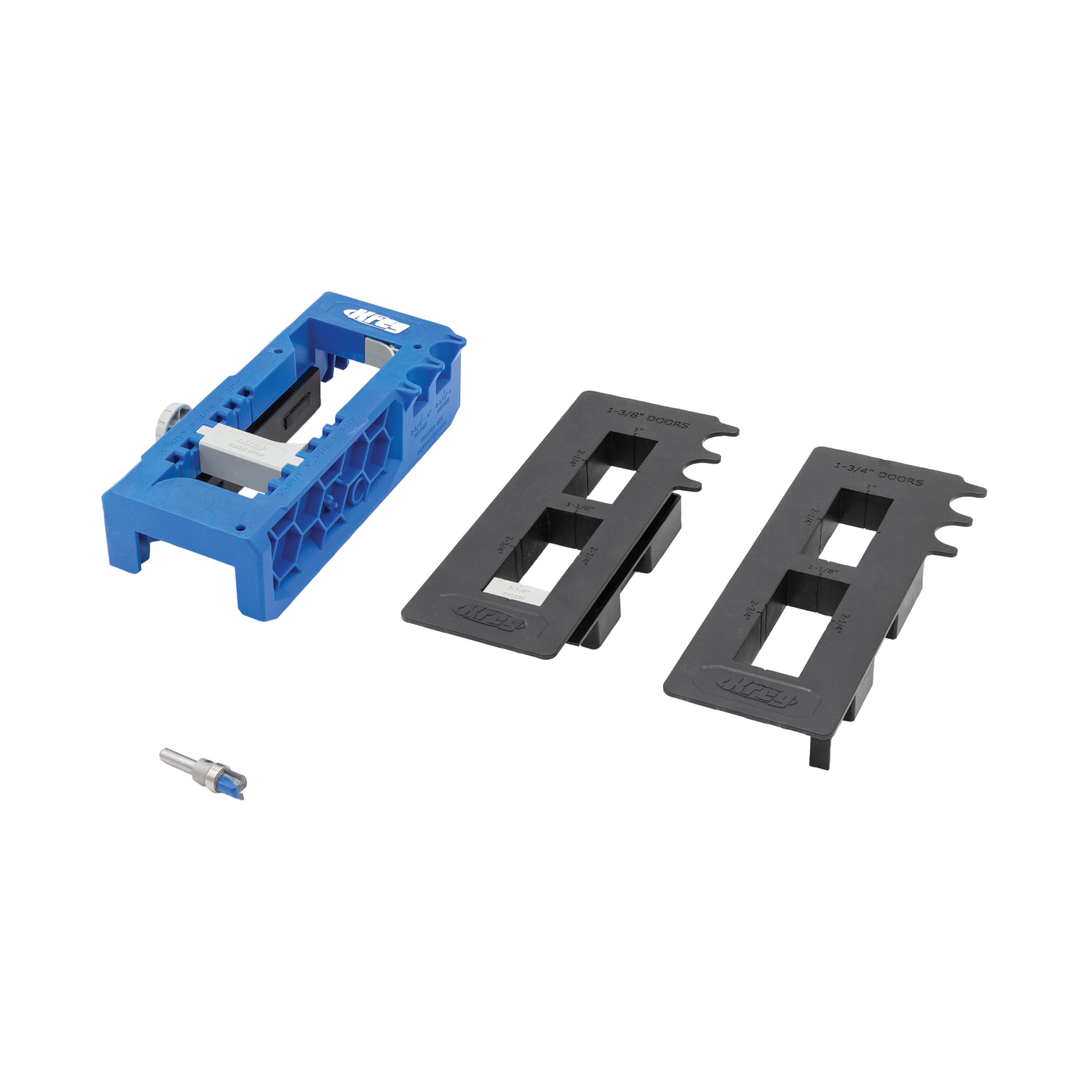
5. Kreg Door Hinge Routing Jig, Door Hinge Mortise Jig
Turns a 20-minute razor-and-chisel door job into a 15-second router pass.
This is Kreg’s door-side counterpart to the cabinet jig at the top of the list. It routes both hinge mortises and the latch, positioning latches accurately for 1-3/8″ and 1-3/4″ doors. The GripMaxx clamp surface is the standout — it holds the jig firm without leaving marks on the door face, which matters when you are working on a finished or prefinished slab. Built-in depth settings deliver consistent mortises, and the one-piece adjustable guide stop plus depth guide make setup quick for hinges from 2-1/2″ to 5″.
The speed numbers come straight from the review pages. One owner knocked out eight interior doors in a single session. Another put the time saving bluntly: “Turned a 20 minute razor and chisel job into a 15 second router job.” That is the core promise of a mortise jig: it may not cut a better hinge pocket than a chisel, but it repeats the same cut door after door in a fraction of the time.
Two things to know before you buy. First, it is designed to run with Kreg’s own router bit — owners warn that the bumper on their bit keeps it from hitting the guide sides, so a third-party bit may not clear. Second, the depth guide does not set itself; a buyer noted you still have to set the depth yourself, and a separate buyer found the jig can shift if you clamp it down fully. That is the honest limit: the jig does the routing, but you still control depth and clamp pressure.
Speed is the whole story: GripMaxx clamping holds on finished doors, and the rail routes hinge and latch mortises in one pass — ideal for anyone hanging a run of doors.
One thing to plan for: use Kreg’s 1/2″ flush trim bit with the 1/4″ shank so the bumper protects the guide, and set your own depth before clamping.
Built for: contractors and serious DIYers routing hinge and latch mortises across multiple interior or exterior doors.
Think twice if: you own a different brand of router bit and do not want to add the Kreg bit.
6. Woodhaven 8545 4-1/2″ Door Hinge Jig, 10mm Phenolic
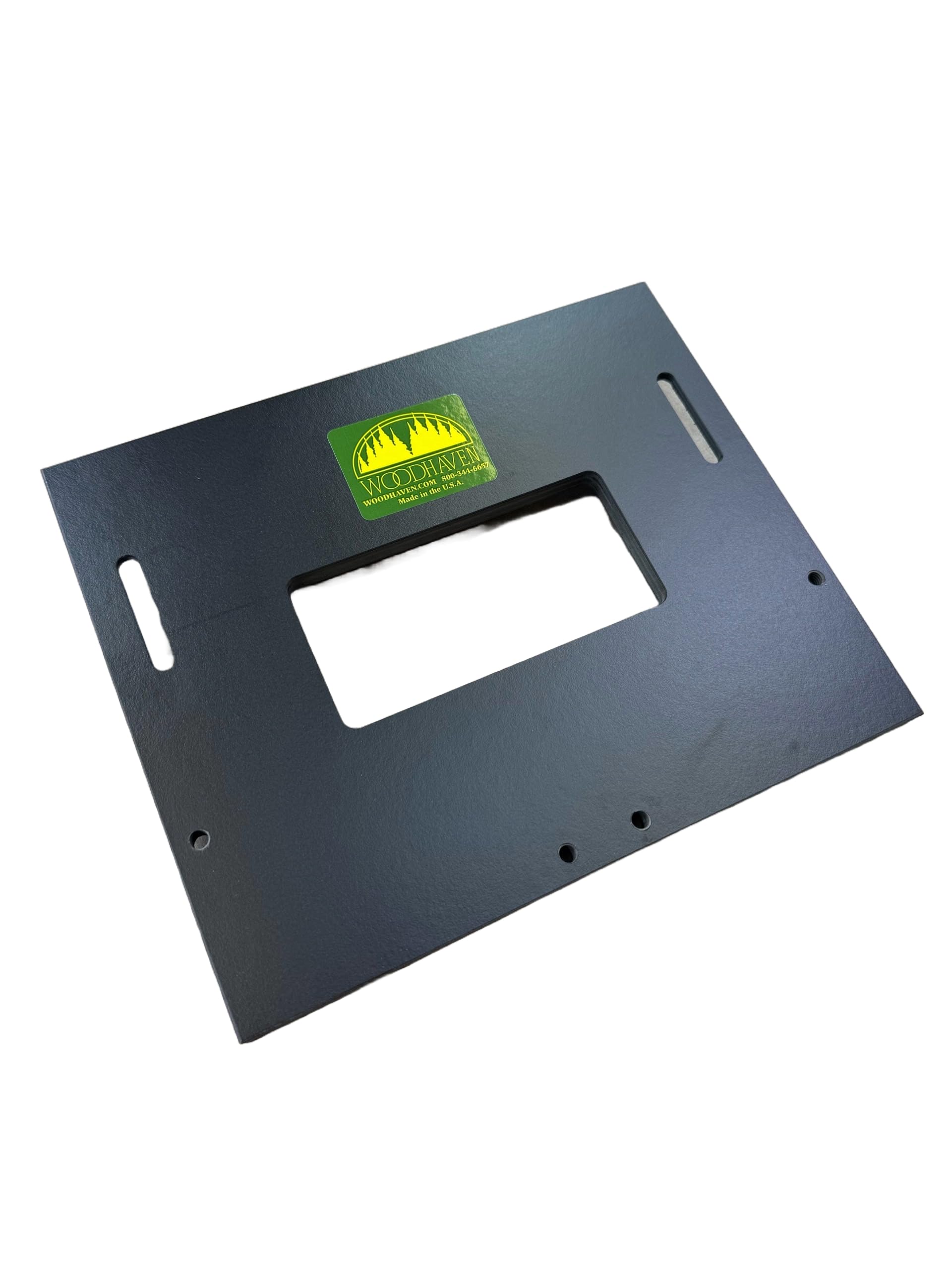
The drill-press-accuracy mortise jig for people who set up once and cut all day.
Woodhaven machines this jig from 10mm (.393″) thick solid phenolic resin, CNC-shaped to match the exact dimensions of 4-1/2″ door hinges. Phenolic is the material high-end router tables are made from — dense, flat, and stable, so it does not flex or deform the way plastic does. The jig clamps directly to the door or jamb, so you do not drill pins or nails into the workpiece and risk marking a prefinished door.
What owners keep coming back to is how well it works and how easy the instructions are to follow. The cutting quality earns particular praise. One buyer described it, “child’s play to create perfect mortises.” That combination of function and simplicity is what makes this the pick for anyone re-cutting hinge mortises on an existing jamb. With a router and a bit, it delivers a mortise that matches your hinge exactly.
The one thing to know is that this is a bare jig with a setup requirement. You supply a 3/4″ wood fence to attach it to, and you need Woodhaven’s own bearing-guided 1/2″ bit or the bushing-plus-bit combination — all sold separately. Some buyers found the included screws have shallow threads that strip in soft wood, so woodworking clamps are a safer bet. The recurring friction is the fence: you are expected to build it, and a jig that came with a pre-threaded fence would save buyers a step.
Durability over convenience: the 10mm (.393″) phenolic body holds shape through repeated routing runs, backed by a lifetime guarantee against defects.
The build-it-yourself catch: it attaches to a 3/4″ wood fence you supply, and the required Woodhaven router bit and bushings are all sold separately.
For you if: you are setting up a production door-hanging operation and want a flat, rigid jig that repeats the same 4-1/2″ mortise every time.
Not ideal if: you want a single-box tool with a bit included — this jig is the platform, not the whole kit.
7. GOINGMAKE Metal Concealed Hinge Jig

The all-metal cabinet jig for anyone done with plastic bushings melting on them.
Where the Milescraft and Kreg cabinet jigs above use plastic bodies, this one is aluminum alloy throughout. That matters most in the boring guide itself — a double-bearing metal guide keeps the 35mm carbide-tipped bit turning true, so cup holes stay round instead of wallowing out. The quick clamp lets you lock the jig onto the workpiece fast, so you spend more time drilling and less time fiddling with setup. Depth sets from 0 to 0.6 inch without measuring, which suits 1/2″ overlay hinges and other overlay styles.
The dust control is this jig’s signature feature, and it is genuinely unusual. A built-in metal bracket accepts a 1-3/8 inch vacuum hose, so you can hose the jig to a dust collector and keep sawdust out of the bore. That combination — metal body, double bearings, and a factory dust port — is why the same buyer who ran a plastic Kreg jig switched over. One reported, “Well designed, well made. Simple to use. And it won’t melt like the plastic one do.”
Offset flexibility matches the Kreg concealed jig at the top of this list — 2mm, 3mm, 4mm, 5mm, and 6mm options, plus 5/64 inch drill guides that space hinge screw holes across four common patterns. The catch is in the details: the vacuum port is worth using, because without it, sawdust jams the bit guide. One owner also reported the pre-drill bit arrived bent and the Forstner bit wears after several holes, so plan to replace the supplied bits over time.
Why it earns the premium: double-bearing metal guide plus a 1-3/8″ dust port means cleaner cup holes and far less cleanup than a plastic jig.
What to plan around: use the vacuum connection or sawdust will jam the guide, and expect to swap the included bits after heavy use.
Matches you if: you are installing soft-close concealed hinges across a whole kitchen and want metal durability plus dust extraction.
Look past if: you are drilling a single set of cabinets and cannot justify the metal-body premium.
Know the Specs
Cup hole diameter and depth
Concealed European hinges sit in a 35mm diameter cup — roughly the size of a large coin. That 35mm figure is the industry standard the jig is built around, so the boring bit and the guide bushing have to match it exactly. Depth is the second half of the equation; a cup that is bored too deep lets the hinge seat below the door face, and a shallow bore leaves the hinge proud. That is why jigs with a stop collar or built-in depth fixture are worth the extra setup — you set the depth once and repeat it.
Hinge offset explained
Offset is how far the hinge sits from the edge of the cabinet door, and it controls how much the door overlaps the frame. Common offset values run from 2mm up to 6mm, and a jig that supports several lets you match a new door to an existing one without re-drilling. A jig with a single fixed offset locks you to one overlay; adjustable jigs let you dial the offset with a knob or cam and lock it in.
Common Questions
Will a cabinet hinge jig work on a standard house door?
What size hole does a 35mm concealed hinge jig actually bore?
Do I need a router or just a hand drill for these jigs?
What is a hinge offset and which one do I need?
Can I use any brand of hinge with these jigs?
How deep should a hinge mortise be cut?
Will a metal jig really outlast a plastic one?
Do these jigs clamp onto the door, or do I need extra clamps?
What is a phenolic jig and why does it stay flat?
Do I need a dust collector to use a concealed hinge jig?
The Bottom Line
For most cabinet projects, the door hinge jig winner is the Kreg Concealed Hinge Jig. It earns that spot with a metal body, adjustable 3mm-to-6mm offsets, and a four-cutter carbide bit that bores clean 35mm cups with any hand drill. If you would rather not deal with plastic bushings at all, the GOINGMAKE Metal Concealed Hinge Jig adds an all-metal double-bearing guide and a 1-3/8″ dust port. And for full-size interior doors, the Kreg Door Hinge Routing Jig is the one to reach for.
One last honest nudge: most buyers coming off a hand-chisel cabinet project end up choosing between two or three finalists. The Kreg and GOINGMAKE jigs above split the cabinet crowd, and picking between them really depends on if you want dust extraction in the box. Buy the one that matches your hinge type and drill setup, and the job gets a lot shorter.
How we choose
We do not accept paid placement. Every pick is matched to a real buyer and a real use-case; we do not hands-on test units.
Sources
Specifications: manufacturer listings and product documentation. Review insights: verified customer reviews, as of October 2026. Pricing: not shown on this page (it changes often); check the current price via the retailer link.
As an Amazon Associate, Aappliancez earns from qualifying purchases. This does not affect which products we feature.