Disclosure: Some links in this post are affiliate links. As an Amazon Associate I earn from qualifying purchases, at no extra cost to you. Learn more
Specs are compiled from manufacturer listings and verified buyer reviews and can change over time — please confirm the key details on the product page before buying.
If you want canned red salmon that actually tastes like red salmon, the answer is simple: buy a can that names sockeye, not a can that only shows a red fish on the label. Red sockeye is the deep-orange, firm, rich species — pink salmon is paler and milder, and swapping one for the other is the single most common disappointment in this aisle. Rubinstein’s is the brand to beat here, and it takes the top spot because it holds the highest score of the group while packing nothing but fish, salt and its own natural juices. Below you get five cans that are all genuinely worth buying, sorted by what each one is actually for: solo eating, everyday cooking, feeding a family, or stocking a shelf.
This guide is built by comparing the manufacturers’ published specifications and the patterns across verified customer reviews, so you get each pick’s real strengths and trade-offs instead of marketing spin.
The picks cover can size, pack count and whether skin and bones stay in, so you can match a can to your kitchen instead of guessing. Every pick below names its species, can size and pack count up front.
Top Picks

How To Choose The Best Canned Red Salmon
Four things decide whether a tin of canned red salmon earns its shelf space in your cupboard: the species named on the label, the size of the can, whether the skin and bones are left in, and what liquid the fish sits in. Get those four right and the rest of the label is just decoration.
Start with the species, not the colour
Red sockeye is the species with the deepest colour and the fullest flavour. Pink salmon is a different fish entirely — paler, softer and milder — and it is often sold in a can with a red-looking fish printed on it. In this group the labels lean on words like “sockeye,” “Alaskan Red Salmon” and “wild caught,” which is what you want to see. If a tin only says “salmon,” assume pink and read the small print before you commit.
Match the can size to how you actually eat it
A 7.5-ounce can is the classic single-serve tin — it makes one generous sandwich or a couple of patties and leaves nothing to store. The larger 14.75-ounce cans hold roughly double, which suits a family meal or a batch of croquettes. Buying in a multi-can pack lowers your cost per tin, but it also means committing to a shelf of fish, so pick the pack size that matches how often salmon lands on your plate.
Decide on skin and bones before you buy
Cans that keep the skin and soft bones are sold as the more nutritious option, and the soft bones are edible — they mash straight into patties. If you would rather not pick through the fish with a fork before cooking, look for a can described as skinless. Skin-on suits patties and nutrient-focused eaters; skinless suits anyone who wants to skip the picking.
Check what the fish is packed in
Some brands add water, oil or fillers to the tin, and some add none at all. A can with no added water or oil gives you pure fish and the natural juices it released during cooking, which is why you often drain it before making patties. Drain a no-added-liquid can before mixing patties, or the fish’s own juice will loosen the bind.
Side-by-Side Comparison
| Model | Best For | Can Size | Total Fish | Skin & Bones | Amazon |
|---|---|---|---|---|---|
| Rubinstein’s Red Salmon (Case of 24)★ Best Overall | Feeding a household all year | 7.5 oz | 180 Ounce (24 cans) | Skin and bones included | Amazon |
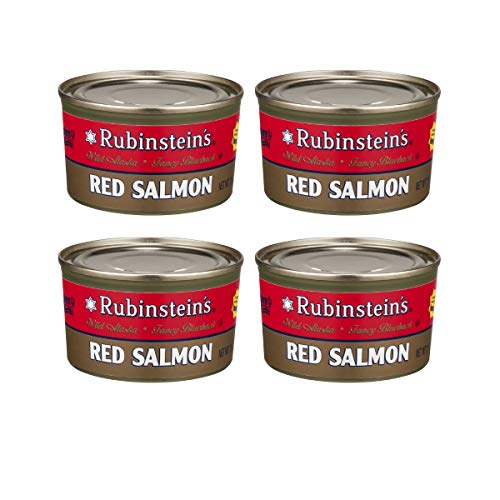
| Rubinsteins Red Salmon, 7.5-Ounce (4 Pack)Best Value | Testing the brand first | 7.5 oz | 30 Ounce (4 cans) | Skin and bones included | Amazon |
| Rubinsteins Salmon Red Sockeye, 7.5 Ounce (Pack of 6) | Everyday lunches and patties | 7.5 oz | 45 Ounce (6 cans) | Skin and bones included | Amazon |
| Bumble Bee Alaska Sockeye Red Salmon | Big cans for croquettes and salads | 14.75 oz | 59 Ounce (4 cans) | — | Amazon |
| Chicken of the Sea Alaskan Red Sockeye Canned Salmon | High-protein meal prep and stocking up | 14.75 oz | 177 Ounce (12 cans) | Skin and bones included | Amazon |
Detailed Reviews
1. Rubinstein’s Red Salmon (Case of 24)
Our pick — over 4.5★ from 200+ verified ratings; the strongest balance of quality and price.
A full case of wild Alaska red salmon that tastes right straight from the tin.
You get 180 ounces of fish across 24 cans, and the whole thing weighs 14.44 pounds at your door. That is the widest commitment on this list — roughly six times the fish in the four-pack below — so this is the pick for the person who already knows they eat salmon weekly and would rather buy once than restock every month. The brand does one thing deliberately: sockeye packed with no added water, oil or fillers, so what you drain off is the fish’s own juice.
What wins people over is the quality of the fish itself. It is sold as all-natural sustainable catch with the skin and soft bones left in, and buyers describe it as sweet, delicate and deep in colour, firm enough to flake apart with a fork. Buyers eat it plain on a plate rather than buried in a recipe. Buyers also point to the protein and the fish oil it delivers, and to the fact that a case lasts long enough to earn its shelf space.
Nothing in the tin works against it: pure sockeye, no fillers, and a flavour that holds up cold. That said, this is a case-sized purchase, and the 13.89-inch width of the carton means it needs a real cupboard shelf rather than a gap between pans. If you have never tried the brand, start with the four-pack below instead — it is the smarter way to find out whether this flavour is yours before you buy 24 cans of it.
What Earns The Top Slot
- Pure sockeye with no added water, oil or fillers
- 180 ounces of fish — the deepest supply in this group
- Eats well cold, straight from the can
The Real Commitment
- Case-sized buy that needs genuine shelf room
- Premium-tier spend for a single purchase
Made for the weekly eater: if salmon is already a routine in your house, this case removes the restocking chore entirely.
Start smaller if: you have never cooked with this brand — the four-pack is the cheaper way to find out.
2. Rubinsteins Red Salmon, 7.5-Ounce (4 Pack)
Four small tins that fit a cupboard shelf and disappear into lunches fast.
At 2.34 pounds for the whole pack, this is the lightest and most compact way to try Rubinstein’s red salmon — a fraction of the case above in both weight and fish. Thirty ounces across four 7.5-ounce cans gives you four meals without dedicating a shelf to them. The recipe most people land on is simple: drain the can, mix the fish with an egg and breadcrumbs into two patties, and fry them in olive oil until crisp.
The colour is the giveaway that you got what you paid for. These are real red sockeye, not pink salmon dressed up on the label, and buyers are emphatic about the difference — the review pages sum it up as: “Definitely red salmon and very happy with purchase.” Flavour comes second only to quality in what people talk about, with the fish described as moist and firm rather than mushy, and versatile enough for salads, croquettes and sandwiches. It is also packed with no added water, oil or fillers, like the rest of the brand’s range.
The caveat is cost: this is a premium tin, and value for money is the one mixed note on the pack. Value for money is the one mixed note on this pack — it is a premium tin, and whether it feels worth it depends on how often you eat it. It is also the smallest-commitment option here, so it works as exactly that: a low-risk way to decide whether the full case above deserves your money.
The honest read: real red sockeye with the skin and soft bones left in, clean and firm enough to flake by hand, and light enough at 2.34 pounds to store anywhere.
Where it bites: the tin itself is the pricey part, not the fish’s reputation.
Reach for this if: you want the brand’s red salmon in the smallest sensible quantity and you eat a tin or two a week.
Look elsewhere if: your household goes through salmon meal after meal — the six-pack and the case bring the cost per tin down.
3. Rubinsteins Salmon Red Sockeye, 7.5 Ounce (Pack of 6)
The middle-sized pack that most kitchens settle on after the tin runs out.
You get 45 ounces across six cans and 3.53 pounds in the box — this is the natural step up from the four-pack, and it is the pack size that people land on when canned salmon has quietly become a weekly habit. Each 7.5-ounce tin is described as making about two and a half servings, so the whole box covers a couple of weeks of lunches. It is precooked, so there is nothing to do but flake it out of the can.
What earns it the spot is consistency: this is the same wild Alaska sockeye as the higher picks, sold as sustainably caught with the skin and soft bones left in for the nutrients that come with them. The bones are soft rather than sharp, and buyers mention them mashing straight into the fish rather than needing to be fished out. The flavour is described as full and rich, good both cold from the tin and cooked into patties, and this is the pack that gets pointed to as the one worth keeping on the shelf.
Two things are worth knowing before it arrives. The skin is the divisive part — plenty of eaters like it, plenty would rather not, so if you are firmly in the second camp, look at the Chicken of the Sea pick below, which draws praise for delivering skinless pieces. And a few tins arrive without a pull tab, so a can opener is not optional here.
Why It Holds Third
- Six tins of the same wild Alaska sockeye as the top picks
- Soft edible bones and skin kept in for the nutrients
- Each 7.5-ounce can makes roughly two and a half servings
Plan Around This
- Skin and bones are in the tin — you flake it yourself
- Some cans need a can opener rather than a pull tab
The easy middle: a six-can box that keeps a salmon lunch going for a fortnight without swallowing your whole cupboard.
Not for you if: you want skinless fish straight from the tin with zero picking through.
4. Bumble Bee Alaska Sockeye Red Salmon

The big family-sized tin that vanished from grocery shelves and went online instead.
Here is the reason this one exists on a list at all. Every other pick in the group is a 7.5-ounce tin — this is a 14.75-ounce can, roughly double the fish in a single open, and 59 ounces across the four-pack. Buyers keep saying the same thing: the large cans stopped showing up in local stores, and this is where they went instead. If a whole salmon dinner or a big batch of patties is your weeknight move, one of these covers what two of the small tins would.
The flavour holds up against the smaller tins. Buyers describe it as superb canned wild sockeye with excellent taste, and the same fondness for the big format runs through the pages — as one review page puts it: “pink salmon isn’t a substitute!” The versatility is what people keep using it for: salads, croquettes fried or baked, and sandwiches. This is also the pick for anyone who eats salmon for omega-3s, since sockeye is the species that carries them.
The catch is worth stating plainly: this can is the one where arriving in good shape matters most. The larger format means more chance of a dented tin in transit, and it drew the most mixed feedback of the group. If you order it, check the cans when they land — and if the label does not look right, that is a returns conversation, not a reason to write off the fish. Size and condition are the two things to weigh before you buy four of them.
What the big can buys you: 14.75 ounces of wild Alaska sockeye in one open — double what a standard tin gives you, which is exactly what croquette and chowder nights want.
Built for: family-sized cooking, when you want one can to do the work of two and you already know you like the larger format.
Think twice if: you only ever eat a single-serve portion — a 14.75-ounce can is more fish than one sitting needs.
5. Chicken of the Sea Alaskan Red Sockeye Canned Salmon
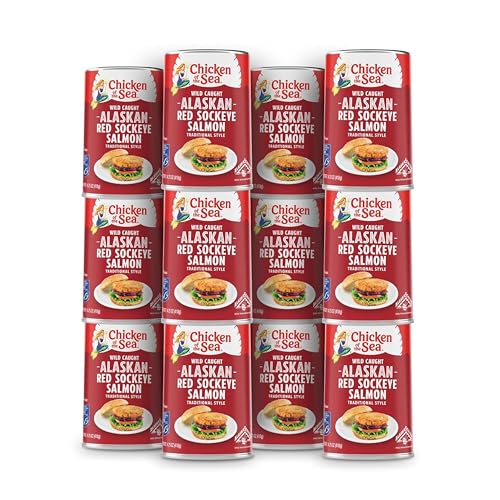
Twelve big cans of red sockeye built around a high-protein, low-carb plate.
The headline here is protein, and it is right on the label: 19 grams of lean protein per serving, 0 grams of carbs and 4 grams of fat, which is why this is the can that ends up in keto, paleo and Mediterranean meal plans. Twelve 14.75-ounce cans is 177 ounces of fish in total — the largest supply in this group, and the one that keeps a high-protein kitchen running without a restock. It is described as richer and meatier than pink salmon, seasoned with just a hint of salt.
What people come back for is the quality of the sockeye and how far one can stretches. The meat is a deep red, meatier than pink, and it gets put to work across pasta, rice, salads, tacos and patties. The wild-caught sourcing is note for anyone who checks certifications — the maker states the fish in its cans are Marine Stewardship Council certified and responsibly sourced, and the brand has been in business since 1914. It also contains no preservatives and is gluten-free.
The honest catch is salt. Taste is the one mixed note on this product: some tins come out of the can seasoned just right, and a few land noticeably saltier than the rest, so the very first bite from a new can tells you how to use it. That variability is a batch-level annoyance, not a reason to skip the product — just taste before you season. Buyers also note the skin situation runs inconsistently can to can, with some pieces skinless and some not.
Why it earns a place: 19 grams of protein, 0 grams of carbs and 4 grams of fat per serving, with the skin and bones left in for the nutrients that come with them.
The one wobble: saltiness varies tin to tin, so taste each can before you build a recipe around it.
Best match for: anyone tracking protein who eats salmon several times a week and wants the largest supply in one order.
skip it if: you want a tin with a reliably identical salt level every single time.
Know the Specs
Sockeye Versus Pink
Sockeye and pink are two different fish, and the name on the front of the can is the whole story. Sockeye is the deeper, redder, fuller-flavoured one — the type the “red salmon” label is meant to signal. Pink is paler and milder, and it is often what you get when a can only says “salmon.” If colour and richness are what you are after, look for the word sockeye rather than trusting the picture on the label.
Skin, Bones and Added Liquid
Cans that keep the skin and soft bones are the ones sold as the more nutritious option, and the bones are soft enough to mash straight into the fish. Some brands go further and add no water, oil or fillers at all, so the only liquid in the tin is what the fish released while cooking. That matters in the kitchen: a can packed in its own juice drains clean, which keeps patties and croquettes from turning wet.
Can Size and Servings
The can size sets how many meals you actually get. A 7.5-ounce tin is the single-serve size — a sandwich and a couple of patties — while a 14.75-ounce can holds roughly double and suits a family dinner or a batch cook. Sizing up cuts the number of cans you open but leaves more fish to store once the tin is opened, so match the size to how many people are eating.
Protein and Omega-3s
Canned salmon is a lean, high-protein food, and the nutrition panel is where that shows. One brand here lists 19 grams of lean protein per serving with 0 grams of carbs and 4 grams of fat, which is what puts it in meal-prep plans. Sockeye is the species that carries the omega-3s people are after, so the species and the nutrition panel usually point the same direction.
Common Questions
Is red sockeye salmon better than pink salmon in a can?
Can I eat canned red salmon straight from the tin?
Are the bones in canned red salmon safe to eat?
How many servings are in a 7.5-ounce can of red salmon?
Do I need a can opener for these tins?
Why does canned red salmon taste saltier in some cans than others?
Should I drain the liquid before making salmon patties?
Is canned red salmon packed in water or in its own juice?
How should I store a case of canned red salmon?
Does the can size affect how I cook with red salmon?
The Bottom Line
For most kitchens, the canned red salmon winner is the Rubinstein’s Red Salmon Case of 24 — pure wild Alaska sockeye with no added water or fillers, and 180 ounces of it, which is why it holds the top score of the group at 4.7 stars across 200+ ratings. If you would rather not commit to a whole case before you have tried the fish, the Rubinsteins Salmon Red Sockeye six-pack gives you the same sockeye in a size that fits a normal cupboard. And if protein is the reason you are buying salmon at all, the Chicken of the Sea 12-count puts 19 grams of lean protein per serving in the largest supply on this list.
How we choose
We do not accept paid placement. Every pick is matched to a real buyer and a real use-case; we do not hands-on test units.
Sources
Specifications: manufacturer listings and product documentation. Review insights: verified customer reviews, as of October 2026. Pricing: not shown on this page (it changes often); check the current price via the retailer link.
As an Amazon Associate, Aappliancez earns from qualifying purchases. This does not affect which products we feature.