Disclosure: Some links in this post are affiliate links. As an Amazon Associate I earn from qualifying purchases, at no extra cost to you. Learn more
Specs are compiled from manufacturer listings and verified buyer reviews and can change over time — please confirm the key details on the product page before buying.
If your tadka splutters, smokes, and leaves a bitter aftertaste in the dal, the oil is usually the culprit — not your technique. The right cooking oil for Indian cooking has to survive high heat for tempering mustard seeds and frying puris, yet still taste like the food you grew up with. This guide covers five oils and fats that real home cooks rely on, from pungent kachi ghani mustard oil to unrefined coconut oil and grass-fed ghee, so you can match the fat to the dish instead of guessing at the supermarket shelf.
This guide is built by comparing the manufacturers’ published specifications and the patterns across verified customer reviews, so you get each pick’s real strengths and trade-offs instead of marketing spin.
You will see how smoke point, extraction method, and flavor intensity change what each oil does in a kadai. Viva Naturals Organic Coconut Oil leads the list on owner satisfaction, and every pick below earns its spot with a specific job in the kitchen. cooking oil for indian cooking starts with knowing which fat belongs in which pan.
Top Picks
How To Choose The Best Cooking Oil for Indian Cooking
Indian cooking asks more of a fat than most cuisines do. You heat oil until a mustard seed pops the instant it hits the surface, you fry at a rolling temperature for pakoras, and you let a curry simmer for an hour. One oil rarely handles all three well. The fix is to think about what each dish actually needs from the fat, then keep two or three oils on the shelf instead of searching for a single universal bottle.
Smoke point decides which oil can take the heat
Smoke point is the temperature at which an oil starts to break down and turn acrid. Push past it and the oil tastes burnt, and so does everything cooked in it. Unrefined coconut oil lists a naturally high smoke point of 350°F, which covers baking, frying, and sautéing comfortably. Ghee and mustard oil both handle high heat well, which is exactly why tempering and deep frying have leaned on them for generations.
Extraction method shapes flavor and aroma
Cold-pressed means the oil was extracted without heat, which keeps more of the natural coconut scent and flavor intact. Kachi ghani is the traditional Indian method for mustard oil — the seeds are crushed slowly at low temperature, which preserves that sharp, pungent kick that defines Bengali and North Indian cooking. Refined oils are neutral and cheaper, but they lose the aroma that makes a dish taste like home.
Match the fat to the dish, not the label
Mustard oil belongs in curries, pickles, marinades, and tempering, where its pungency mellows as it cooks. Coconut oil suits South Indian curries, baking, and frying where you want a light coconut note. Ghee is the finishing fat — spoon it over dal, brush it on rotis, or use it to carry whole spices deep into a biryani. Buy the oil that matches your most-cooked dishes first, then expand.
Side-by-Side Comparison
| Model | Best For | Capacity | Extraction | Certifications | Amazon |
|---|---|---|---|---|---|
| Viva Naturals Organic Coconut Oil★ Best Overall | All-round cooking, hair and skin | 54 fl oz | Cold-pressed, unrefined | USDA Organic, Non-GMO | Amazon |
| Rani Mustard Oil (Kachi Ghani)Most Authentic | Curries, pickles, tempering | 33.8 fl oz | Kachi ghani | Non-GMO, Gluten Free, Vegan, Kosher | Amazon |
| Ancient Organics Ghee | Finishing dal, rotis, biryani | 9 oz | Artisan made, grass fed | USDA, CCOF, Kosher | Amazon |
| Earth Circle Organics Extra Virgin Coconut Oil | Baking, sautéing, skin care | 32 fl oz | Cold-pressed, unrefined | USDA Organic, Kosher, Gluten Free | Amazon |
| BetterBody Foods Unrefined Coconut Oil | Big-batch cooking and baking | 56 fl oz | Unrefined | Organic, Non-GMO | Amazon |
Detailed Reviews
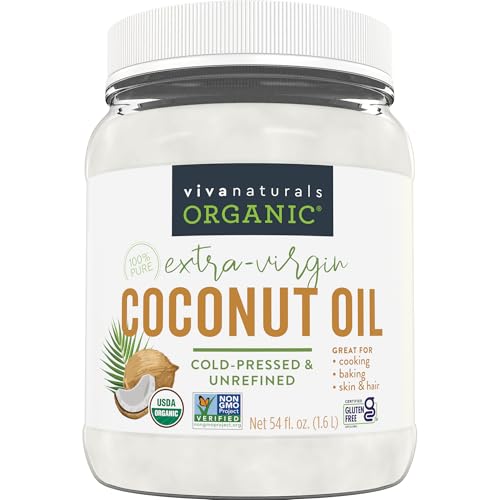
1. Viva Naturals Organic Coconut Oil, 54 fl oz
Our pick — over 4.5★ from 117,000+ verified ratings; the strongest balance of quality and price.
The 54-ounce jar that does your tadka, your baking, and your hair oil without flinching.
Start with the number that decides whether one jar can carry your whole kitchen: 54 fluid ounces. If you cook South Indian food several times a week and also use coconut oil for skin and hair, that gap means far fewer reorder clicks over a year.
It is a cold-pressed, unrefined extra virgin coconut oil with a naturally high smoke point of 350°F, so it holds up for baking, frying, and sautéing without turning bitter. Unrefined means no heat or chemicals were used to extract it, which is why the coconut aroma and flavor survive intact. It is USDA-Certified Organic, Non-GMO Project Verified, and certified gluten free — labels that matter if you avoid additives.
What wins people over is the quality of the oil itself, by a wide margin over every other trait they notice. Owners describe a clean, mild coconut taste and creamy texture, and use it in the pan, on the scalp, and on the skin. One owner’s line captures the practical appeal best: “You get A TON for the value!” The recurring complaint is minor and familiar with any large jar of coconut oil — the lid can arrive slightly loose, and in warm weather the oil melts in transit and solidifies again once it cools, which changes nothing about how it cooks.
What Earns It The Top Slot
- 54 fl oz — the biggest jar on this list, so you restock far less often
- Naturally high 350°F smoke point covers baking, frying, and sautéing
- USDA-Certified Organic, Non-GMO Project Verified, and certified gluten free
- Creamy texture and mild coconut flavor work for both cooking and skin care
What To Expect Before You Buy
- In hot weather it can arrive melted and re-solidify later — harmless, just surprising
- Unrefined coconut flavor may not suit dishes where you want a neutral oil
Buy this if: you want one large jar that handles frying, baking, hair, and skin, and you like a real coconut note in the pan.
Think twice if: you fry almost exclusively North Indian curries and want a pungent, savory fat instead.
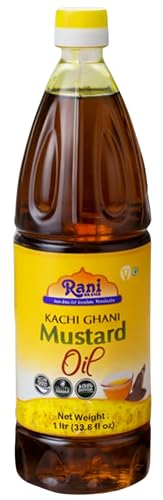
2. Rani Mustard Oil (Kachi Ghani), 33.8 fl oz
The pungent, kachi ghani mustard oil that makes a Bengali fish curry taste like Bengal.
If dal, pickles, and achari dishes are your benchmark, this is the fat that defines them. It is pressed the kachi ghani way — seeds crushed slowly at low temperature — which is why the sharp, mustardy bite survives, then mellows as it cooks. In curries, marinades, and tempering, that pungency is the flavor, not a flaw. It is Non-GMO, gluten free, vegan, and now Kosher.
The size is a deliberate trade-off. Mustard oil is a cooking-only fat, so you go through it more slowly than a multi-purpose jar. The quality of the oil is what most owners praise first, with flavor close behind — the two traits that decide whether a bottle gets reordered.
One detail deserves your attention before you buy: check that the bottle you receive is labeled for culinary use. Buyers report receiving a bottle marked “for external use only,” which left them confused about a product advertised for cooking. It is worth a quick look at the label when it lands. The aroma also splits opinion — great to some noses, harsh to others — so if you are new to mustard oil, start with a small quantity in a curry before committing to a big batch.
Where it wins: Nothing else on this list brings that authentic kachi ghani pungency, which is exactly what pickles, tempering, and traditional curries need.
The catch: The strong aroma when heated is real, and every so often a labeling mix-up sends a bottle marked for external use — inspect the label on arrival.
Reach for this if: you cook North Indian or Bengali food regularly and want the true mustard bite in your tempering and pickles.
Look elsewhere if: you want one neutral fat for everything, or you prefer a mild, scent-free oil in the kitchen.
3. Ancient Organics Ghee, 9 oz
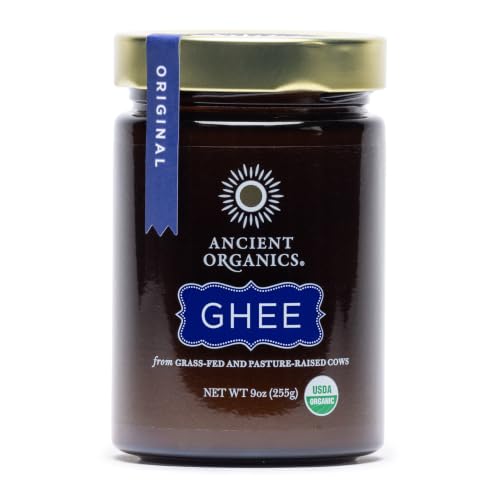
A small, rich jar of grass-fed ghee that turns plain dal into something worth a second helping.
Ghee is the finishing fat of Indian cooking — the spoonful over dal, the brush on hot rotis, the medium that carries whole spices deep into a biryani. This one is artisan made from grass-fed cows, with very low trace amounts of lactose and casein, and it is Gluten Free, USDA, CCOF, and Kosher Certified. It supplies Omega 3 and Omega 9 fatty acids plus vitamins A, D, E, and K.
The size tells you how to use it. At 9 ounces this jar is deliberately small — around one-third the capacity of the 32-ounce Earth Circle Organics coconut oil elsewhere on this list — so it is a flavoring fat, not a frying vat. A little goes a long way. Owners describe a slightly nutty flavor and a smooth, creamy texture, and report it cooks without the odor or smoke of ordinary butter.
The taste is what earns this jar its reputation, and it earns it decisively. Owners are clear that it tastes fresher than supermarket ghee, and one buyer’s reasoning sums up the value case: “After throwing away store bought ghee multiple times I decided to try this… The cost evens out because I end up throwing away the cheaper stuff anyway.” The honest catch is the price per ounce — this is the most premium-per-ounce buy on the list, and the jar empties quickly if you use ghee daily.
This one is for you if: you use ghee as a finishing touch and want a fresh, nutty flavor that supermarket jars rarely match.
Pass it over if: you go through ghee by the cup for frying — the small 9-ounce jar will not last long at that pace.
4. Earth Circle Organics Extra Virgin Coconut Oil, 32 fl oz
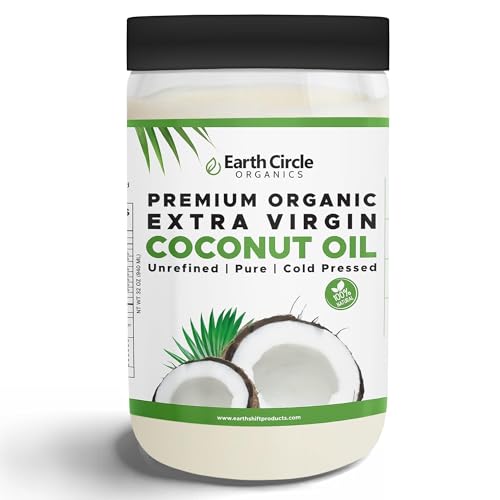
Cold-pressed coconut oil with a strong tropical scent that shines in bakes and on toast.
This one pressed from fresh green coconuts is the pick for cooks who treat coconut oil as a flavor, not just a fat. It is cold pressed and extra virgin, USDA Organic, Kosher, and gluten free, and it works across baking, cooking, deep frying, and sautéing. Owners who bake with it report a distinct coconut aroma that carries into the finished dish.
Capacity sits in the middle of this group at 32 fluid ounces — smaller than the Viva Naturals 54-ounce jar and the BetterBody 56-ounce tub, but generous enough for regular use. If you spread it on muffins or toast as a butter alternative, that jar lasts a while. The texture is another point owners keep coming back to: it arrives solid at room temperature, melts when warmed, and feels creamy on contact rather than greasy.
The coconut aroma is the leading thing people notice after quality, so know what you are buying — this is a scented, tropical-tasting fat that changes the character of a dish, unlike a neutral refined oil. The strong scent that makes it ideal in bakes can feel overpowering in a savory curry where you want the spices front and center. In warm weather the jar may arrive thawed, which is normal for coconut oil and does not affect the quality.
Best suited to: bakers, toast-and-butter swaps, and anyone who wants a coconut note to carry through the dish.
skip it if: you need a neutral fat — the floral coconut aroma is a feature in bakes and a distraction in spicy curries.
Worth it for: the 32-ounce jar and its bold tropical aroma make this the natural choice for baking and breakfast spreads.
Consider the bigger jars if: you cook daily and want the largest capacity before restocking.
5. BetterBody Foods Unrefined Coconut Oil, 56 fl oz
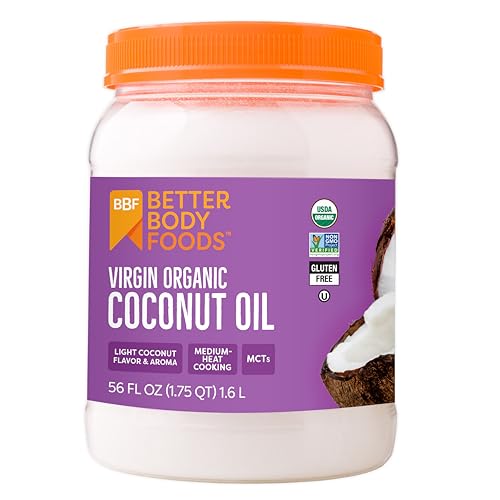
The 56-ounce tub that keeps a big household cooking, frying, and baking for months.
When one jar has to feed a busy kitchen, size wins. This 56-ounce tub edges out the Viva Naturals 54-ounce jar as the largest option here. Owners open it and are struck by the volume — “Omg, it’s so big,” the review pages read. It is unrefined, Organic, and Non-GMO, and it is 60% Medium Chain Triglycerides, which the maker presents as a plant-based energy source.
The flavor is mild, which suits people who cook and bake across cuisines and do not want a heavy coconut taste in every dish. Owners also use it as a skin oil, makeup remover, and lip balm. Longtime owners mention steady quality and keep reordering it.
Where it stands out from the other coconut jars here is the combination of size and mildness — you get the biggest tub without the punchier aroma of the Earth Circle Organics oil. The honest note is the smell. It is not for everyone, and coconut oil is a dense fat, so measure rather than free-pour if you are watching how much you use. In cool weather it sets solid, so a quick warm-up of the jar loosens it.
The buy for: big households and anyone who cooks, bakes, and moisturizes with the same jar and wants the largest capacity on the shelf.
Not the pick if: you dislike a noticeable coconut scent or you only cook in small batches.
Know the Specs
Smoke Point
The smoke point is the temperature at which a cooking fat starts to break down and turn acrid. Below it, an oil fries cleanly; above it, both the oil and the food take on a burnt, bitter taste. This is why the same oil can be perfect for one technique and wrong for another. Unrefined coconut oil, for example, lists a naturally high smoke point of 350°F — high enough for baking, frying, and sautéing. For high-heat tempering and deep frying, ghee and mustard oil are the traditional choices precisely because they tolerate hard heat. Check the smoke point before you decide which oil gets used for the tadka and which is saved for lower-heat cooking.
Cold-Pressed and Kachi Ghani
These two terms describe how the oil was pulled out of the seed or fruit. Cold-pressed means no heat was used during extraction, which keeps more of the natural flavor and aroma intact — the reason unrefined coconut oil still smells like coconut. Kachi ghani is the traditional Indian method for mustard oil: seeds are crushed slowly at low temperature, preserving the sharp, pungent character that defines regional Indian cooking. Both methods produce a fuller-flavored oil than refining does. In practice, extraction method tells you more about how an oil will taste in your pan than any marketing word on the front of the jar.
Common Questions
Why does coconut oil turn solid in my kitchen and is that normal?
Can I use mustard oil for frying and tempering or is it for something else?
Is ghee or coconut oil better for high-heat Indian cooking?
How long does an unrefined coconut oil jar last once opened?
What does cold-pressed actually change about how the oil cooks?
Is grass-fed ghee different from ordinary butter or store-bought ghee?
Can I substitute coconut oil for mustard oil in a traditional recipe?
Why do some coconut oil jars arrive melted in the mail?
How do I know whether an oil label is for cooking or for external use only?
Which oil should I keep on hand if I only want to stock one for Indian cooking?
The Bottom Line
For most kitchens, the cooking oil for indian cooking winner is the Viva Naturals Organic Coconut Oil because its 54-ounce jar, 350°F smoke point, and cold-pressed unrefined quality cover baking, frying, and sautéing in one buy. If your cooking leans North Indian and you want that authentic pungent kick, grab the Rani Mustard Oil (Kachi Ghani) for your curries, pickles, and tempering. And for finishing dal, rotis, and biryani with a nutty, fresh flavor, the Ancient Organics Ghee is the one to reach for. If you want a neutral, mild option in the biggest tub available, the BetterBody Foods Unrefined Coconut Oil and the Earth Circle Organics Coconut Oil round out the shelf nicely. Start with the oil that matches your most-cooked dishes, and let your kadai tell you when to add the next one.
How we choose
We do not accept paid placement. Every pick is matched to a real buyer and a real use-case; we do not hands-on test units.
Sources
Specifications: manufacturer listings and product documentation. Review insights: verified customer reviews, as of October 2026. Pricing: not shown on this page (it changes often); check the current price via the retailer link.
As an Amazon Associate, Aappliancez earns from qualifying purchases. This does not affect which products we feature.