Disclosure: Some links in this post are affiliate links. As an Amazon Associate I earn from qualifying purchases, at no extra cost to you. Learn more
Specs are compiled from manufacturer listings and verified buyer reviews and can change over time — please confirm the key details on the product page before buying.
If you want one straight answer: a true beeswax product protects wood by sealing moisture in and keeping stains out, and the one that does it best for most kitchens is the John Boos 5 oz Board Cream — 4.8 stars from 6,000+ buyers. But “beeswax” on a label can mean a lot of things. Some tins are mostly solvent (a liquid that evaporates) with a spoonful of wax; others are pure wax blocks you have to melt yourself. This guide sorts the eleven worth buying and tells you exactly which surface each one suits.
This guide is built by comparing the manufacturers’ published specifications and the patterns across verified customer reviews, so you get each pick’s real strengths and trade-offs instead of marketing spin.
The trick is matching the formula to the surface — a cutting board wants one thing, an heirloom dresser wants another, and chalk paint wants a third, which is why the picks below cover the full range of beeswax for wood.
Top Picks


How To Choose The Best Beeswax for Wood
Two waxes can both say “beeswax” on the tin and behave nothing alike. The difference depends on what the wax is blended with, how hard it sets, and whether the maker added a solvent (a liquid that evaporates) to make it spread faster — a solvent that then evaporates and leaves you with less protection than you paid for. Work through the four questions below and you will land on the right tin on the first try.
Read the ingredient line before the label art
A polish built on beeswax plus a carrier oil — mineral oil, flaxseed oil, coconut oil — feeds the wood and seals it at the same time. A polish built on beeswax plus a petroleum solvent spreads easily but disappears within weeks. Pure blocks contain nothing but wax, which means you supply the heat and the carrier yourself. Food-contact claims on the label are also a real signal: a maker confident enough to state its formula is safe for food surfaces has usually built it from edible ingredients.
Match the wax to the surface hardness
A soft, spreadable cream suits a cutting board you re-oil monthly, because it sinks into the fibers and leaves no tacky film where you slice. A harder furniture wax — one buffed to a satin or matte sheen — suits cabinets, tabletops, and antiques where you want a protective layer sitting on top of the finish rather than soaking in. Chalk-painted pieces need a sealing wax specifically, because the paint is porous and will mark without one.
Decide how much labor you actually want
Wipe-on creams take minutes; blocks of pure wax ask you to shave or melt them and blend your own mixture. Thin coats buffed properly always beat one thick sloppy layer — wax that goes on too heavy turns gummy and collects dust. If a piece of wood is bare and thirsty, oil it first and wax over the top; that two-step routine is what keeps a board or countertop alive for years.
Side-by-Side Comparison
| Model | Best For | Form | Size | Food Safe | Amazon |
|---|---|---|---|---|---|
| John Boos Board Cream★ Best Overall | Everyday cutting board care | Cream | 5 oz | Yes | Amazon |
| Furniture Clinic Beeswax PolishBest for Antiques | Antiques and veneers | Paste polish | 6.35 oz | — | Amazon |
| Renapur Premium Beeswax PolishBest for Scratch Hiding | Scratch-hiding on furniture | Solid wax | 6.7 fl oz | Yes | Amazon |
| Daddy Van’s Beeswax & Lavender | Antiques and chalk paint | Wax | 6 oz | Yes | Amazon |
| Ziruma Non-Toxic Wood Wax | Mineral-oil-free kitchens | Paste wax | 7 oz | Yes | Amazon |
| Howard Feed-N-Wax Kit | Dirty cabinets and floors | Wax plus cleaner | — | — | Amazon |
| RETER Mineral Oil & Bee Wax Kit | Woodworking projects | Two-part kit | 250 ml | Yes | Amazon |
| Virginia Boys Kitchens Wood Wax | Board owners who want a pad | Wax plus pad | 4 oz | Yes | Amazon |
| The Beeswax Co. Texas Block | DIY blends and candle work | Pure block | 1 lb | Yes | Amazon |
| Walrus Oil Wood Wax | High-volume board work | Wax | 14 oz | Yes | Amazon |
| Odie’s Wood Butter | Fine furniture and turnings | Butter | 9 oz | Yes | Amazon |
Detailed Reviews
1. John Boos 5 oz Board Cream with Beeswax and Mineral Oil
Our pick — over 4.5★ from 6,500+ verified ratings; the strongest balance of quality and price.
The butcher-block staple that turns a dry, grey board back into deep, warm timber.
If your cutting board or countertop is the thing you actually cook on, this is the tin to start with. It comes as a cream — a soft blend of unbleached beeswax and food-grade mineral oil (a refined oil safe for food contact) — so you rub it in with a cloth and let it sit overnight while the oil seeps into the fibers and the wax cures on top. That dual action is why a 5 oz jar covers a lot of real estate: you need only a thin smear per board.
The maker recommends applying it once a month, and more often in dry or arid climates. That schedule matters because wood loses moisture constantly, and a board left bare will crack along the end grain. Owners consistently say the cream brings the grain back to life and leaves boards looking new rather than greasy — the finish dries to a soft sheen you can slice straight on.
There is a reason this outsells almost everything else here: it is the least fussy food-safe option for anyone who just wants their wood cared for. On the flip side, it is a maintenance cream, not a permanent finish — if you want a longer-lasting barrier on furniture you never want to think about again, a two-part oil-and-wax kit or a hard furniture wax will outlast it between coats. And the mineral oil base means anyone deliberately avoiding petroleum-derived ingredients should look at the Ziruma or Virginia Boys Kitchens tins instead.
The case for it
- Food-grade beeswax and mineral oil formula is safe on surfaces you actually eat off.
- A 5 oz jar stretches across multiple boards — a thin monthly coat is all it takes.
- Restores faded grain and leaves a soft sheen instead of a greasy film.
- Buyers report a thin coat revives a full butcher block, so the 5 oz jar lasts months.
Where it asks more of you
- Needs a monthly reapplication to keep boards sealed, more often in dry climates.
- Oil-based cream, so it is not the pick if you are avoiding mineral oil entirely.
- A cream, not a hard furniture wax — cabinets and tabletops want a different product.
The everyday answer: Buy this if you own one cutting board or butcher block and want it protected with the least possible fuss.
Look elsewhere if: you need a hard, durable film for a tabletop or you are steering clear of mineral oil.
2. Furniture Clinic Beeswax Furniture Polish
The polish that hides scuffs on old oak and turns a tired dresser matte, not glossy.
This one is built for furniture rather than food surfaces. It is a beeswax polish designed for modern and antique interior woods, including wooden veneers, and it works across beech, mahogany, oak, pine, teak, and walnut. The method is simple: clean and dust the surface, rub the wax into a cloth, work it along the grain, leave it for 3–4 minutes, then buff. Add coat two if the wood is bare.
What sells this polish is how natural the result looks — it preserves the wood’s appearance rather than coating it in a synthetic sheen. At 6.35 ounces it is a solid working tin, and it is lighter than the Renapur jar below, which weighs 6.7 ounces, if that matters to you for tight cupboard storage.
The honest caveat: the odor lands as mixed in owner feedback, and durability is the other split point — it is softer than a polyurethane or varnish (a hard, film-forming finish) and will not survive heavy daily wear the way a film finish does. The recurring gripe traces back to application, not the wax: the buyers who get a satin finish layer thin coats over small areas and buff thoroughly. Read the method before you start and this becomes a very good natural polish.
Why the finish wins: it feeds, protects, and deepens the shine of both natural and finished wood without altering the color — which is the whole point when you are polishing inherited antiques.
One thing to know: you are buying a wax, not a lacquer. It is a matte, natural-looking finish that wants reapplying over time, so treat that softness as the price of the low-sheen look you came for.
Reach for it if: you polish real wood furniture — cabinets, tables, bookcases — and want a clean matte finish that respects the original grain.
Think twice if: you need a hard protective film for a surface that takes a daily beating, or you are sensitive to a strong wax odor.
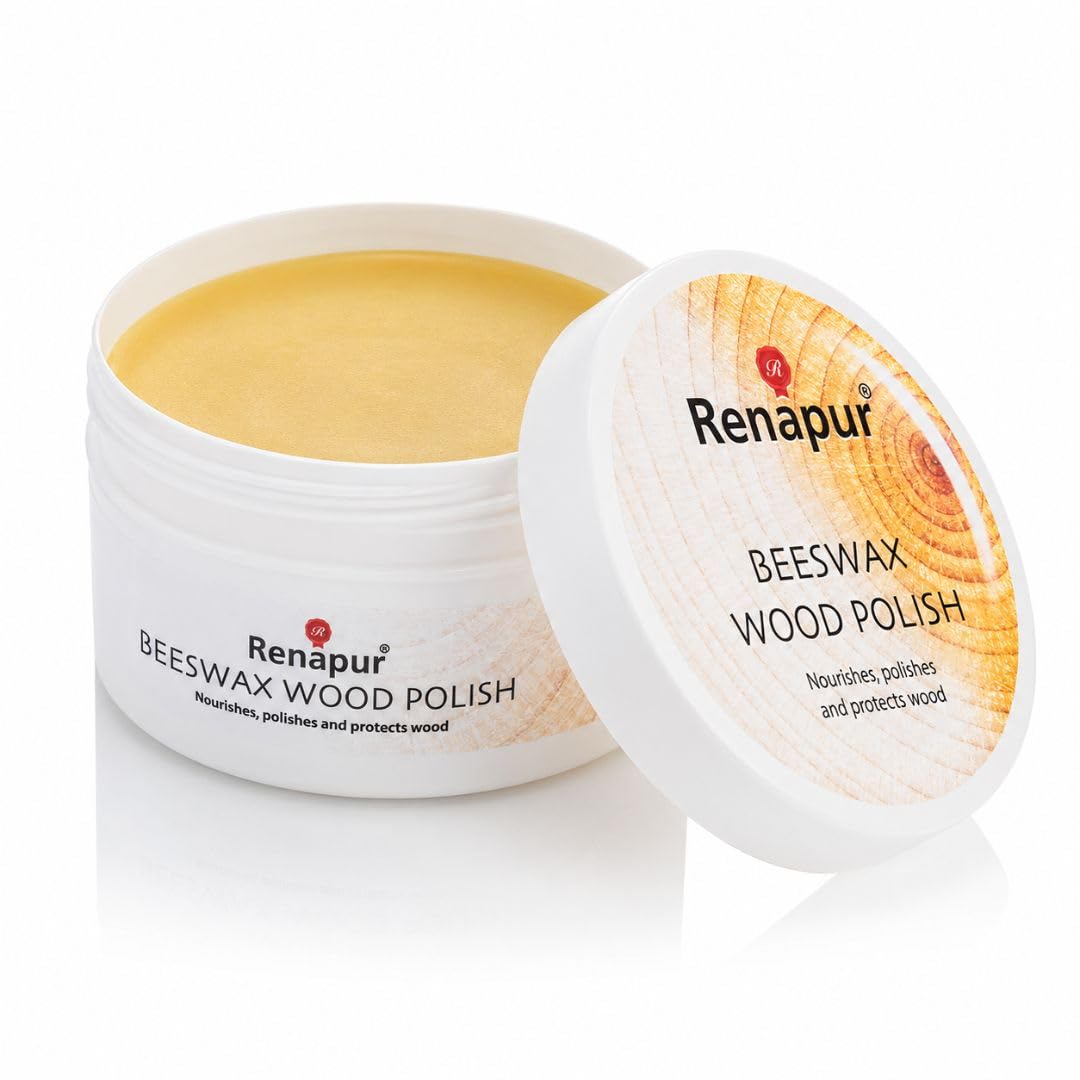
3. Renapur Premium Beeswax Wood Polish
The solid wax that quietly erases minor scratches and brings faded timber back to life.
Renapur’s formula is the most interesting ingredient list in this group: high-quality beeswax, carnauba wax, and food-grade mineral oil, with no solvents or added chemicals. That combination does two jobs at once — the wax seals, and the carnauba adds a harder, longer-lasting shine than beeswax alone. It is a compact tin at 3.54 x 3.54 x 1.97 inches, so it takes up barely any shelf space.
Its real talent is rescuing tired wood. Owners mention reviving a water-damaged, scratched oak mudroom bench “with the most minimal effort,” blending invisibly with the surrounding untreated wood. Nearly odorless in use, it spreads easily even as a solid, and the recommended method — apply, wait a few minutes, buff dry, add another coat for extra protection — is straightforward.
Worth being realistic: this is not a filler, so deep gouges that have cut through the fibers still show; it handles minor surface scratches and dullness, not structural damage. It also comes in a smaller tin than several options here, which is fine for occasional furniture touch-ups but adds up if you are waxing a lot of square footage.
What owners rave about: the instant visual lift — wood that looked faded and dry comes back to a rich, protected shine with a clean cloth and almost no pressure.
Set your expectations: it works on minor scratches and dullness, not deep damage, and the small tin means frequent users will go through it faster than the bigger jars.
Best suited to: anyone with faded, scuffed furniture that needs reviving, including oak, dressers, and tables.
Not the one if: you are filling deep gouges or waxing large floors where a bigger jar makes more sense.
4. Daddy Van’s All Natural Beeswax & Lavender Furniture Polish

A lavender-scented conditioning wax that makes polishing day something to look forward to.
Daddy Van’s is the pick for anyone who dreads the smell of furniture polish. It is a non-hazardous sealing wax that is petroleum free, chemical free, and solvent free, with lavender essential oil carrying the scent instead of a synthetic fragrance. It is also a USDA Certified 100% Biobased Furniture Polish, which is a formal designation rather than a marketing line.
Beyond furniture, it doubles as a finishing wax for chalk and milk paint, creating a durable matte finish over porous paint. The application is circular-motion rubbing with a soft cloth, then a buff with a dry cotton cloth. The maker’s own slogan — a little goes a long way — holds up in owner reports, and the deep glow it pulls out of both finished and unfinished wood is exactly what people buy it for.
Two honest notes. The lavender scent is the star of the show and lingers for roughly a day, which delighted most people but is worth knowing if you dislike lavender or want a truly neutral product. And it is a conditioning and sealing wax, not a waterproof barrier — wood that has been waxed with it will bead water but still mark if liquid sits on it long enough.
What stands out
- USDA Certified 100% Biobased — a formal label, not a claim.
- Petroleum-free, chemical-free, solvent-free formulation.
- Lavender essential oil scent turns a chore into something pleasant.
- Doubles as a chalk and milk paint finishing wax with a durable matte result.
- A little product covers a lot of surface.
Worth knowing first
- The lavender fragrance lasts about a day — fine if you like it, noticeable if you do not.
- Water-resistant, not waterproof; standing liquid can still leave a mark.
- Frequent polishers will work through a 6 oz tin relatively quickly.
Your pick if: you are finishing a chalk-painted piece or conditioning antiques and want a natural, good-smelling wax with a proper biobased certification.
Pass if: you want zero fragrance or need a finish that survives standing water on a countertop.
5. Non-Toxic Wood Wax 7 oz

For kitchens that want beeswax protection without a drop of petroleum-based oil.
Most food-safe board waxes rely on mineral oil as the carrier. This one deliberately does not. The formula is beeswax, flaxseed oil, and lemon oil — natural ingredients, no petroleum-based mineral oil, no harmful solvents, and it is biodegradable. That makes it the pick for anyone who has decided mineral oil is off the table for their kitchen.
Functionally, the flaxseed oil does the same job mineral oil would: it soaks into the fibers and nourishes them, while the beeswax seals the surface and helps repel moisture. The company positions it for cutting boards, countertops, furniture, floors, cabinetry, and even wooden tools, so one tin can cover most of a household. It arrives as a 7 oz paste with a light lemon aroma rather than a chemical smell.
The one practical quirk owners mention is the texture on top of the paste — it can develop a hard waxy skin that you need to cut through to reach the soft wax underneath. That is normal for a natural paste and takes seconds to deal with. Otherwise it goes on clean and mess-free, and because it is food-safe once cured, there is no worry about coating a board you cut on daily.
The standout: a genuinely mineral-oil-free, biodegradable formula that still protects kitchen wood — the reason people choose it over the usual petroleum-based board creams.
Small quirk: a firm skin can form on top of the paste between uses, so you will cut through it before the first application of each session.
Made for: cooks who want a food-safe wax on cutting boards and utensils but avoid mineral oil on principle.
Rather not if: you want the softest possible spread or prefer a scented, richer finish with a heavier lavender or orange note.
6. Howard Feed N Wax Wood Restorer

Clean first, wax second — the two-step routine for cabinets that have collected decades of grime.
This bundle pairs Howard’s Feed-N-Wax beeswax polish with Clean-A-Finish wood soap, and the pairing is the whole point. Feed-N-Wax alone is a conditioner; the soap is what strips away the buildup that makes a cabinet door look dull before you wax it. Customers note one coat restored twenty-year-old birch cabinets to a deep shine, buffing out easily even on worn handle areas.
The soap does require elbow grease — this is not a spray-and-wipe product. Where the finish is really loaded up, using more of the cleaner made the job go faster, and the feed-n-wax is recommended for extra coats on bare or worn wood. If you have a front door that has weathered for years, this kit cleans it well and shines it nicely, though a surface that far gone may still ultimately want sanding and a new stain.
The recurring frustration in owner feedback is the packaging, not the product — some orders arrive without the microfiber towel shown, and the cleaner may come as a bottle rather than a spray, so you can end up buying those separately. Everything that does arrive works, which is why the product itself keeps its endorsement.
What it delivers: a cleaning stage and a waxing stage in one box, so you can revive heavily used cabinets, floors, and furniture that a polish-only product cannot handle.
The catch to plan for: the kit sometimes ships missing the towel or with the cleaner in a plain bottle rather than a sprayer, so check what you receive against the description.
For you if: your cabinets, floors, or antiques are grimy as well as dull and need cleaning before the wax goes down.
Overkill if: your wood is already clean and you just want a quick conditioning polish.
7. Wood Finish – Kit of Mineral Oil & Bee Wax for Wood Finish
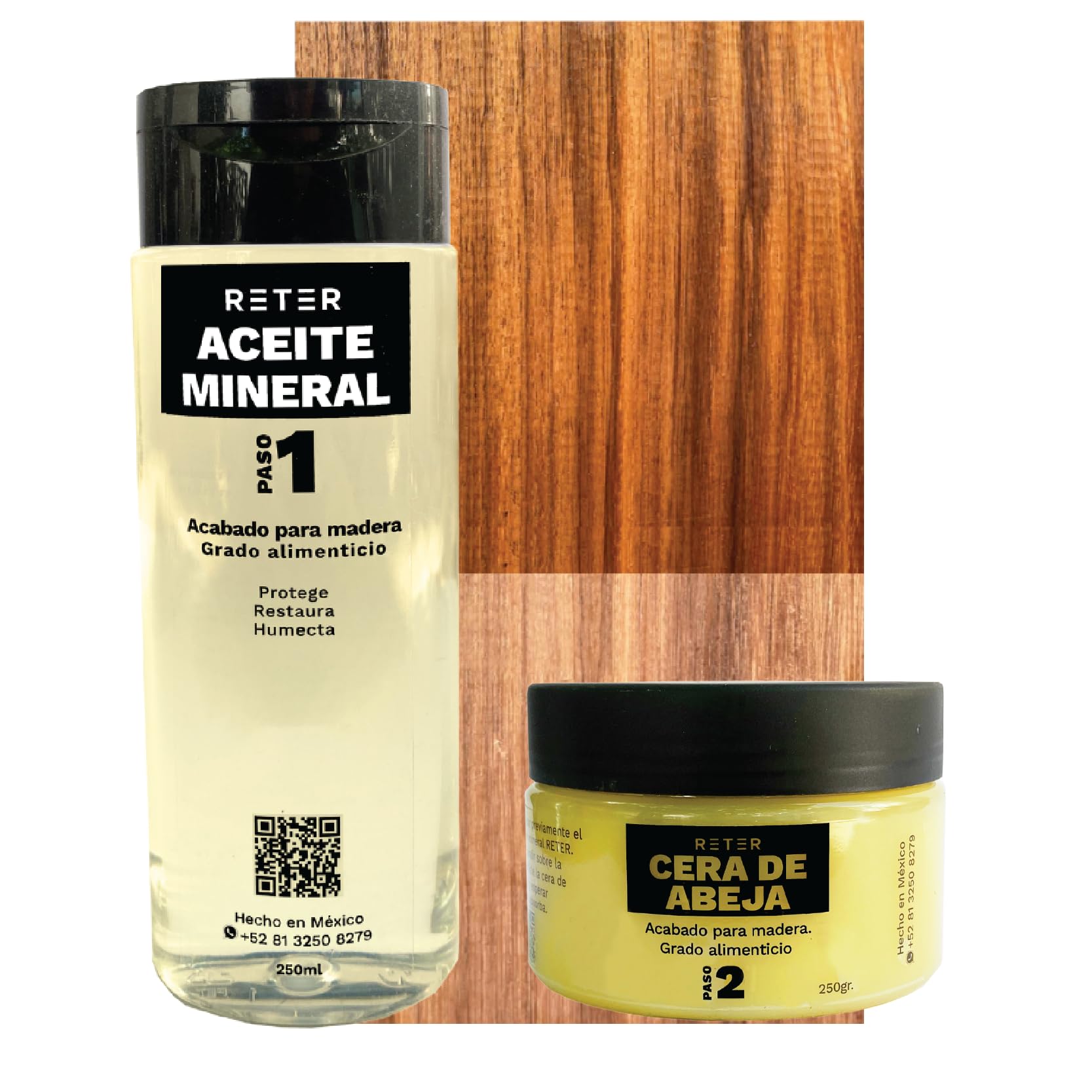
A two-bottle system that separates the job ordinary waxes try to do at once.
This RETER kit treats oiling and waxing as two distinct steps, which is how serious woodworkers actually finish a piece. Step one is mineral oil, made of molecules small enough to seep into the wood and enrich its color from the inside. Step two is a concentrated beeswax that does not penetrate — it sits on the surface and forms a barrier that stops the wood oxidizing.
That division of labor is what makes the result look so good. The mineral oil does the deepening and moisturizing while the wax locks it in. Because the wax is concentrated, you spread only a little across the surface, and the kit comes with a QR code linking to instruction videos, which owners call genuinely useful for getting the application right the first time. The finish is colorless, odorless, and food safe, and the total liquid volume is 250 ml.
It is a builder’s product, which cuts both ways. Buyers get noticeably better results once they follow the wait-for-absorption step between the oil and the wax, so it rewards a little patience. If you want a single tin you can grab and wipe on in thirty seconds, one of the pre-mixed creams will feel simpler — but the two-step approach is why this one produces a finish people describe as making furniture look new.
Where it earns its place: a separate oil and wax that each do one job properly beats a blended product for anyone finishing or restoring real furniture, with a food-safe, odorless result.
Try the honest trade-off: it takes two stages and a pause between them, so it is slower than a one-jar cream.
Pick this one if: you finish furniture or projects and want the oil-deepens-then-wax-protects method with a food-safe result.
Skip the kit if: you want the fastest possible single-step application for a cutting board.
8. Wood Wax Applicator included

The small tin that comes with its own buffing pad and smells faintly of orange.
Coconut oil is the carrier here instead of mineral oil, and it does a different job: it sinks deep into the fibers to rehydrate and restore, while the beeswax seals the surface to keep out odor, stains, and moisture. The ingredients list is short — organic coconut oil, beeswax, and orange essential oil, with no GMOs (genetically modified organisms), paraffins (petroleum waxes), or mystery additives. A premium microfiber cotton buffing pad comes in the box.
Because it stores neatly with the tin, owners never find themselves hunting for a cloth at the moment they decide to wax a board. A tiny amount goes a long way — One user covered a large board with a few dips of wax, and the coating held for a week without reapplication.
The one soft spot is value perception: this is a small 4 oz tin, and while most buyers find it more than worth the money, a portion consider it on the pricier side for the amount you get. If you wax a lot of boards regularly, the bigger Walrus Oil jar below will stretch further; if you want a complete kit with the pad in one neat package, this is the tidier buy.
Why it earns the spot
- All-natural coconut oil, beeswax, and orange oil — no GMOs or paraffins.
- Includes a microfiber buffing pad that stores with the tin.
- A little product covers a surprising amount of surface.
- Orange scent leaves the kitchen smelling clean.
Trade-offs to weigh
- 4 oz is the smallest tin here, so heavy users pay more per application.
- Some buyers feel the price is steep for the amount included.
- Coconut oil formula has a distinct scent, unlike unscented options.
Great choice for: a one-board kitchen that wants an all-in-one wax-and-pad package with a fresh orange scent.
Not for you if: you wax often and want the largest possible container for your money.
9. The Beeswax Co. 100% Pure Texas Beeswax Block, 1 lb
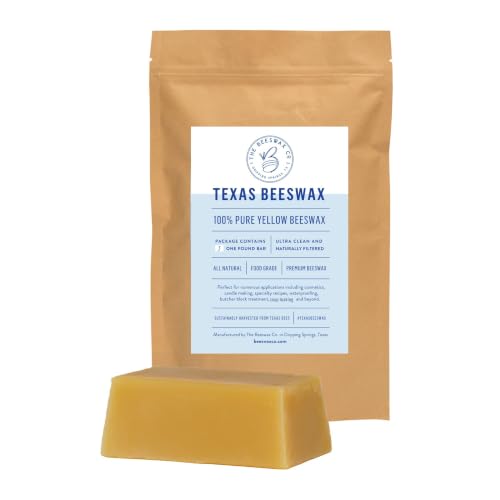
Raw material rather than finished polish — the block you blend, melt, and apply yourself.
This is the blank-slate option. It is a one-pound bar — 5.25 x 2 inches — of 100% natural Texas beeswax, clarified to siphon off impurities down to the size of a grain of pollen. It is certified food-grade, which is the higher standard in bulk beeswax: most blocks sold in quantity are only cosmetic grade, and this one is cleared for butcher blocks and any application that touches food.
Because there is no oil or solvent blended in, you decide how you want it. Some people shave it and melt it into their own board butter; others use it whole for candle making, waterproofing, or sealing porous pottery. It carries a natural honey scent and a clean burn, and the bar is large enough to serve several projects at once rather than being a single-use purchase.
The trade-off is that it takes work. You supply the carrier oil and the heat, so this is not a wipe-on product straight from the start. The texture also draws mixed feedback — some find the consistency perfect for their blends while others find it softer than expected as a standalone finish. If you would rather not mix your own, the blended creams and butters above will do the work for you; if you enjoy making your own board butter, this is the purest starting point on the list.
What makes it special: certified food-grade purity in a full one-pound bar, with a honey scent and clean melt that make it a versatile base for homemade blends.
The honest limit: it is raw wax, not a ready-to-use polish, so you have to melt and blend it before it protects anything.
Right for you if: you mix your own board butter or use beeswax for candles, salves, and sealing — and want a certified food-grade block to start from.
Wrong fit if: you want to open a tin and start wiping immediately.
10. Walrus Oil – Wood Wax, 14 oz Jar, FDA Food-Contact Safe
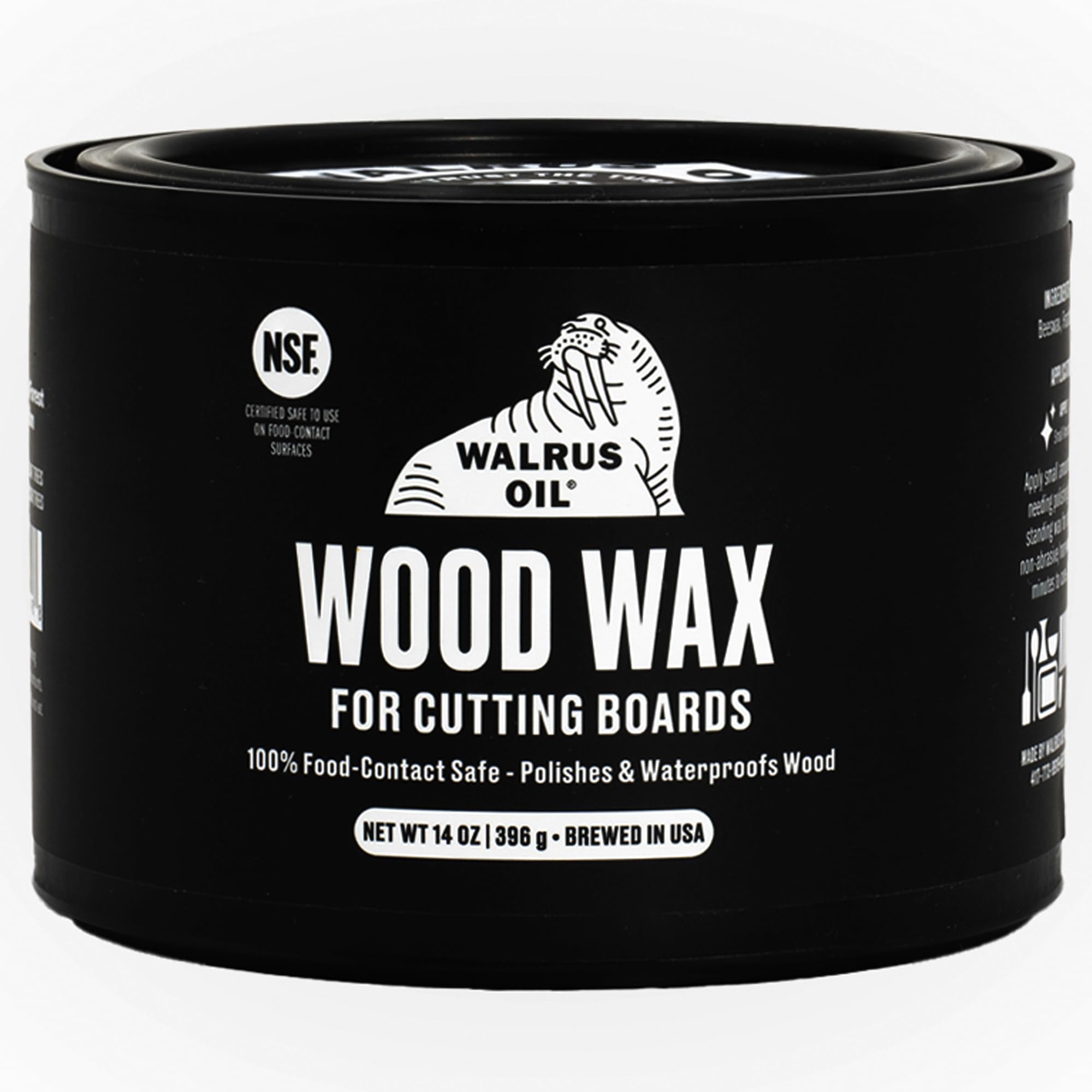
The big-batch answer for woodworkers who wax cutting boards by the dozen.
At 14 ounces this is the largest jar in the group, and the formula is deliberately plain: coconut oil, beeswax, mineral oil, and vitamin E. It is FDA Compliant and safe for food-contact surfaces, brewed in the USA, and the application is a single step — take a pinch of wax, rub it in, and buff it off. No oiling stage, no waiting.
The efficiency is the point. Woodworking-business owners call it their go-to for finished products, and one reports it covers a surprising number of boards per application while bringing out the grain. One buyer reports a treated custom cutting board stays water-resistant for weeks between coats. It does ask you to let the wax soak in for about 20 minutes before buffing, which is a small but real part of getting the best result.
There is one thing to know about the quantity: the label states a one-year shelf life, though reviewers point out that older wax remains perfectly usable past that. So if you are buying the big jar, you are buying volume you intend to work through — a sensible move for a workshop, an over-large one for a single cutting board in a home kitchen.
What’s working here
- 14 oz jar is the largest container in the lineup — real value for frequent waxers.
- FDA Compliant and safe for food-contact surfaces.
- One-step application: pinch, rub in, buff off.
- Simple ingredient list of coconut oil, beeswax, mineral oil, and vitamin E.
- Favored by woodworkers for protecting finished boards in volume.
Points to consider
- Needs a roughly 20-minute soak before buffing for the best finish.
- Label lists a one-year shelf life — buy the big jar if you will use it.
- Mineral oil is an ingredient, so it does not suit mineral-oil-free kitchens.
The bulk buy: woodworkers and heavy board users who want the largest jar and the fastest one-step application.
Look elsewhere if: you only own one board or you avoid mineral oil.
11. Odie’s Wood Butter in a 9 ounce Glass Jar
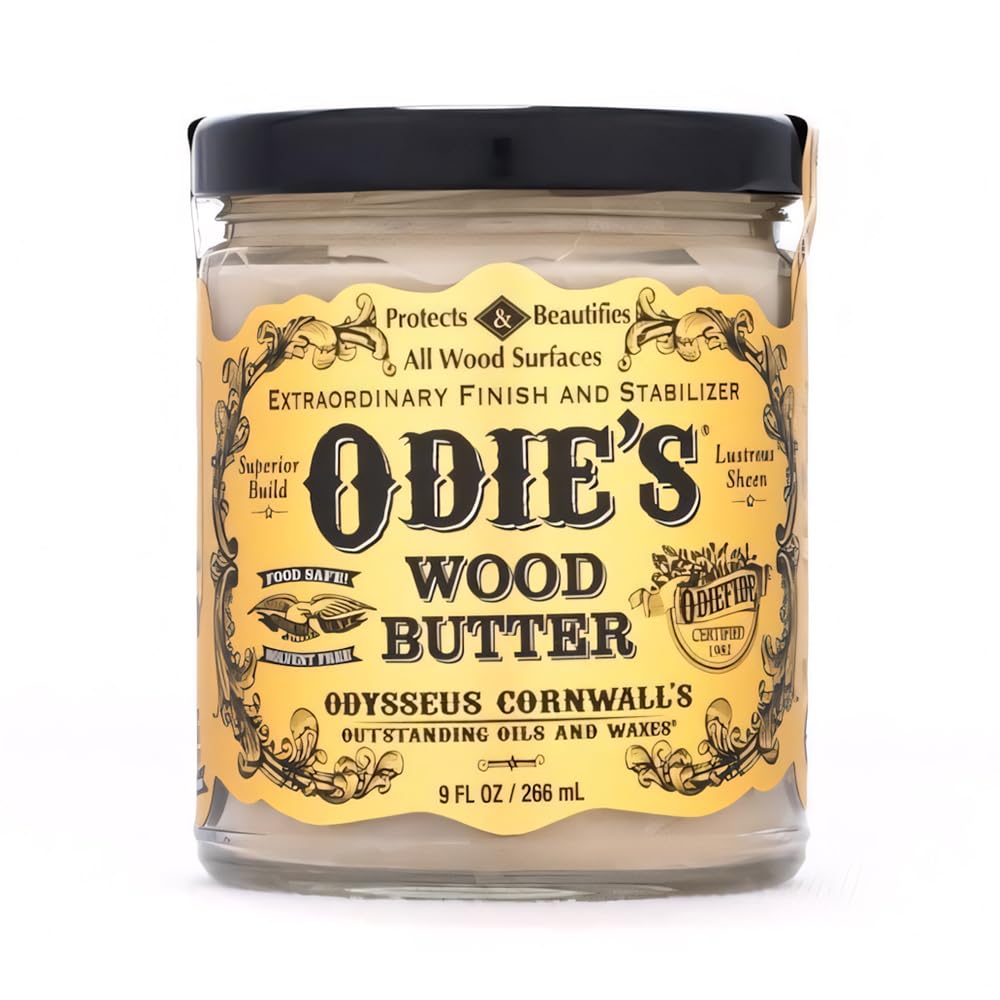
A finish-and-stabilizer in one that woodworkers reach for when the piece really matters.
Odie’s Wood Butter is the top of this ladder. It is a food-safe, solvent-free, non-toxic wood finish that can be used alone or combined with other Odie’s Oil products, and it contains no driers or toxic chemicals. Because there are no solvents, almost nothing evaporates — what you put on the wood stays in the wood, which is why a 9 oz glass jar covers far more area per coat than a conventional thinned finish.
It behaves like a soft wax but adds the benefits of an oil, boosting sheen and durability in a single coat. It is formulated for every species of wood, exotic and domestic, and works even on oily woods that reject other finishes. Skilled turners use it as a friction polish, and it is suitable for cutting boards, fine furniture, boats, boats’ brightwork, doors, floors, bowls, and toys — with natural UV inhibitors doing some protective work on exterior pieces. It is made by hand in small batches in the USA.
The honest catch is cost and pace of use. It is the priciest option here, and while a little does go a long way, this is a product people buy with intention rather than as a casual impulse. Owners who use it treat it as a lifetime finish on the pieces they care about most — One buyer whose charcuterie board maker recommended it says it is worth it to keep the piece in great condition, and a long-time woodworker calls it a new go-to. For the right project, that is a fair exchange.
Why it’s the top tier
- Food-safe, solvent-free, non-toxic finish with no driers.
- Acts as both wax and oil — sheen and protection in one coat.
- Works on all wood species, including oily and exotic woods.
- Natural UV inhibitors help protect exterior and sun-exposed pieces.
- Very high coverage per coat because nothing evaporates.
What to weigh
- It is the most expensive option in this group.
- Overkill for a basic cutting-board touch-up.
- Sold in small hand-made batches, so it is a considered purchase.
For the piece you care about: fine furniture, turnings, and heirloom projects where you want one finish that does it all.
Probably too much if: you just want a quick monthly wipe on a workhorse countertop.
Know the Specs
Beeswax vs mineral oil — why labels list both
Mineral oil is a light, food-grade oil with molecules small enough to soak into wood fibers, so it rehydrates a dry board from the inside and deepens its color. Beeswax sits on the surface instead, forming a seal that keeps moisture in and stains out. A product with both gives you feeding and sealing in one pass, which is why board creams are so common. A pure wax block has no carrier oil — you add one yourself before it will penetrate anything.
Solvents and why they change the finish
Some furniture polishes contain a petroleum-based solvent that makes the wax spread easily and evaporate quickly. The trade-off is that much of what you applied disappears, leaving less protective wax on the wood than a solvent-free product would. Solvent-free formulas behave differently: with little to nothing to evaporate, nearly all of what you apply stays on the surface, which is why they tend to cover more area per jar and last longer between coats.
Common Questions
Can I use beeswax on a cutting board I actually cut meat on?
How often should I wax my wooden cutting board?
What is the difference between beeswax and mineral oil for wood?
How do I tell whether a beeswax polish is good quality?
Will beeswax fix deep scratches in my furniture?
Is beeswax safe around children and pets?
Can I use the same beeswax on chalk paint and on bare wood?
How do I apply beeswax without leaving streaks or a sticky film?
Does beeswax protect wood against water and stains?
Is a beeswax block better than a ready-made polish?
How long does a jar or tin of beeswax last?
The Bottom Line
For most homes, the beeswax for wood pick is the John Boos 5 oz Board Cream because it feeds and seals a cutting board or butcher block in a single food-grade step, applied once a month. If your priority is reviving scratched furniture, grab the Renapur Premium Beeswax Wood Polish, whose beeswax, carnauba wax, and food-grade mineral oil formula hides minor scratches and restores faded shine. And for a chalk-painted piece or an antique that wants a genuinely pleasant scent, the Daddy Van’s Beeswax & Lavender Polish is the one to reach for, with its USDA Certified 100% Biobased formula.
If you cook on wood every day and want the crowd favorite, the John Boos cream holds the higher score at 4.8 stars across 6,000+ ratings — a fair nudge toward the tin most kitchens end up keeping on the shelf.
How we choose
We do not accept paid placement. Every pick is matched to a real buyer and a real use-case; we do not hands-on test units.
Sources
Specifications: manufacturer listings and product documentation. Review insights: verified customer reviews, as of October 2026. Pricing: not shown on this page (it changes often); check the current price via the retailer link.
As an Amazon Associate, Aappliancez earns from qualifying purchases. This does not affect which products we feature.