Disclosure: Some links in this post are affiliate links. As an Amazon Associate I earn from qualifying purchases, at no extra cost to you. Learn more
Specs are compiled from manufacturer listings and verified buyer reviews and can change over time — please confirm the key details on the product page before buying.
The hard part about driving after sunset is not the darkness — it is that wall of white LED headlights coming straight at you. Blue light blocking glasses for night driving work by tinting and filtering the harshest blue-rich wavelengths so oncoming beams land softer and you keep more of the road in view. Below are five pairs that owners actually keep in the car, sorted by what each one does best.
This guide is built by comparing the manufacturers’ published specifications and the patterns across verified customer reviews, so you get each pick’s real strengths and trade-offs instead of marketing spin.
Amber and yellow tints cut the glare, the frame weight decides whether they stay on your nose for a long haul, and lens clarity matters more than any label — and this breakdown of the blue light blocking glasses for night driving covers every spec that actually matters.
Top Picks


How To Choose The Best Blue Light Blocking Glasses for Night Driving
Night driving glasses are not sunglasses with a fancy name. They are a specific tool: a tinted lens that pulls down the most painful part of a headlight beam — the bright blue-white core — so your eyes stop flinching every time a car passes. Here is what actually separates a pair that helps from a pair that just looks dark.
Tint color decides how much glare disappears
Yellow and amber tints are the workhorses here, because they physically filter the blue-rich light that LED headlights throw out. The stronger the amber, the more the beam softens — but the more colors around you shift. A deep amber lens will make a white street sign look yellow, and that trade is real. Clear lenses sold as “blue light blocking” for computer use cannot do this job on the road; they let the headlight’s harsh core straight through. If your goal is oncoming traffic, you want visible tint in the lens, not glass that looks clear.
Weight and nose fit decide whether you keep them on
A pair that slides down your nose at sixty miles an hour is a pair you will stop wearing. Frame weight matters here more than in almost any other eyewear category, because you are wearing them in low light for long stretches. Lightweight metal frames and flexible plastic frames both work; the deciding factor is how the nose pads and arm tips sit against your face. Look for adjustable or softly shaped pads, and pay attention to whether the arms press behind your ears on a long drive.
Polarization and UV protection are separate features
Polarization cuts the flat, mirrored sheen that bounces off wet asphalt and car hoods — the reason a rainy highway looks like a sheet of glare. UV400 protection is a separate spec entirely: it blocks the ultraviolet part of sunlight and headlight spill that you cannot see but your eyes still absorb. Plenty of night glasses have one and not the other, so read the spec line rather than assuming. Some makers ship a small test card so you can check the lens yourself.
Side-by-Side Comparison
| Model | Best For | Lens Tint | Weight | Protection | Amazon |
|---|---|---|---|---|---|
| Spectra479 Amber Glasses★ Best Overall | Night driving plus evening screen time | Strong amber | 1 ounce | Blocks 450–510nm blue range | Amazon |
| Myiaur Polarized Night Driving GlassesBest for Rain | Rain and fog driving, women’s frame | Yellow | 2.4 ounces | Polarized plus UV blocking | Amazon |
| livho DreamGaze | Sleep onset and Kindle reading at night | Light blue-light tint | — | Blue light filtering | Amazon |
| livho High Tech Night Driving | All-day screen work plus night roads | Yellow with anti-glare coat | 2.82 ounces | UV400 | Amazon |
| IBOANN Blue Light Glasses for Men | Desktop and gaming, long wear | Clear | — | Blue light blocking | Amazon |
Detailed Reviews
1. Spectra479 99.9% Blue Light Blocking Amber Glasses
Our pick — over 4.5★ from 600+ verified ratings; the strongest balance of quality and price.
One ounce of amber lens that turns a headlight beam soft instead of blinding.
If you want one pair for evening screens and the drive home, start here. The lens is built to block the 450–510 nanometer range — that is the long blue and cyan band that sits right in the middle of what LED headlights and phone screens throw at you. Clear and yellow lenses barely dent that band, which is exactly why this amber tint does more on the road than the “blue light” glasses sitting on most desks.
Buyers report the fit stays put without constant adjusting, and the amber tone holds up in rain, on two-lane roads, and against the worst of oncoming traffic — the review pages sum it up: “They actually work better than expected. They cut down on the glare of the LED lights and street lights, especially when its raining.”
The catch is color. Anything this strong an amber shifts how the world looks, so if you need true color for artwork, photo editing, or matching paint, this lens is the wrong tool and a clear pair is the right one. Size is medium adult, and the glasses come with a pouch and a small visual test so you can see the blocking for yourself.
What earns it the top slot
- Amber lens targets the 450–510nm blue range that headlights and screens actually emit, not just the visible white glare
- One-ounce frame — the lightest of the five here — so it stays comfortable on a long drive
- Ships with a pouch and a visual test card so you can confirm the blocking yourself
- Medium adult sizing with a fit that holds without readjusting
The trade-off to know going in
- Strong amber tint distorts color — a poor match for artwork or any color-critical work
- Medium size only, so a very small or very large face may want to measure first
Reach for this if: your evening is computer, phone, then car, and you want one tinted pair that covers all three.
Pass it by if: you need accurate color on screen — the amber shift is the price of the glare control.
2. Myiaur Polarized Night Driving Glasses for Women
The pair that flattens wet-road glare, in a frame cut for a woman’s face.
Where this one separates from the amber pack is polarization. A polarized lens kills the flat, mirrored sheen that bounces off wet asphalt, fog, and hoods — the exact glare that makes a rainy night drive feel dangerous. The yellow tint takes on the headlight side, and the lenses also carry UV blocking, so you can wear them in bright daylight just as well. The maker includes a polarization test card so you can confirm the lens is doing what it claims.
Weight is the honest trade here. At 2.4 ounces it is the heaviest pair on this list — more than double the Spectra479’s one ounce — and some of that heft comes from the added lens layer that does the polarizing. Most people will not notice the extra weight on a short commute, but on a multi-hour drive it is worth knowing about before you commit. The frame is designated for women and earns its best feedback on looks, with buyers calling the styling sharp.
Be clear-eyed about what it can and cannot do. Reviews on the glare side run mixed — some drivers find real relief from oncoming beams, others find it does nothing for headlight glare specifically. What buyers consistently praise is using it for wet-weather and daytime glare, which is where a polarized lens has the clearest edge. If your single problem is blinding headlights at night, the amber pair above is the purer answer; if your problem is the glare off a soaked road, this is the one built for it.
Where it beats the pack: Polarization is the standout, and it is the only pair here that flattens wet-road and fog sheen rather than just tinting it. The included test card lets you verify the polarization yourself before you trust it on a commute.
Where it asks something back: At 2.4 ounces it is the heaviest lens-and-frame combo listed, so plan on a heavier feel than the one-ounce Spectra479. And the glare-relief feedback is genuinely mixed — this is a fit-issue product, not a universal fix for every bright beam you meet.
Best for: the driver whose worst nights are rainy or foggy, and who wants UV blocking for daytime wear in the same pair.
Think twice if: your only complaint is oncoming headlights — the amber pick handles that more directly.
3. livho DreamGaze Blue Light Blocking Glasses for Better Sleep
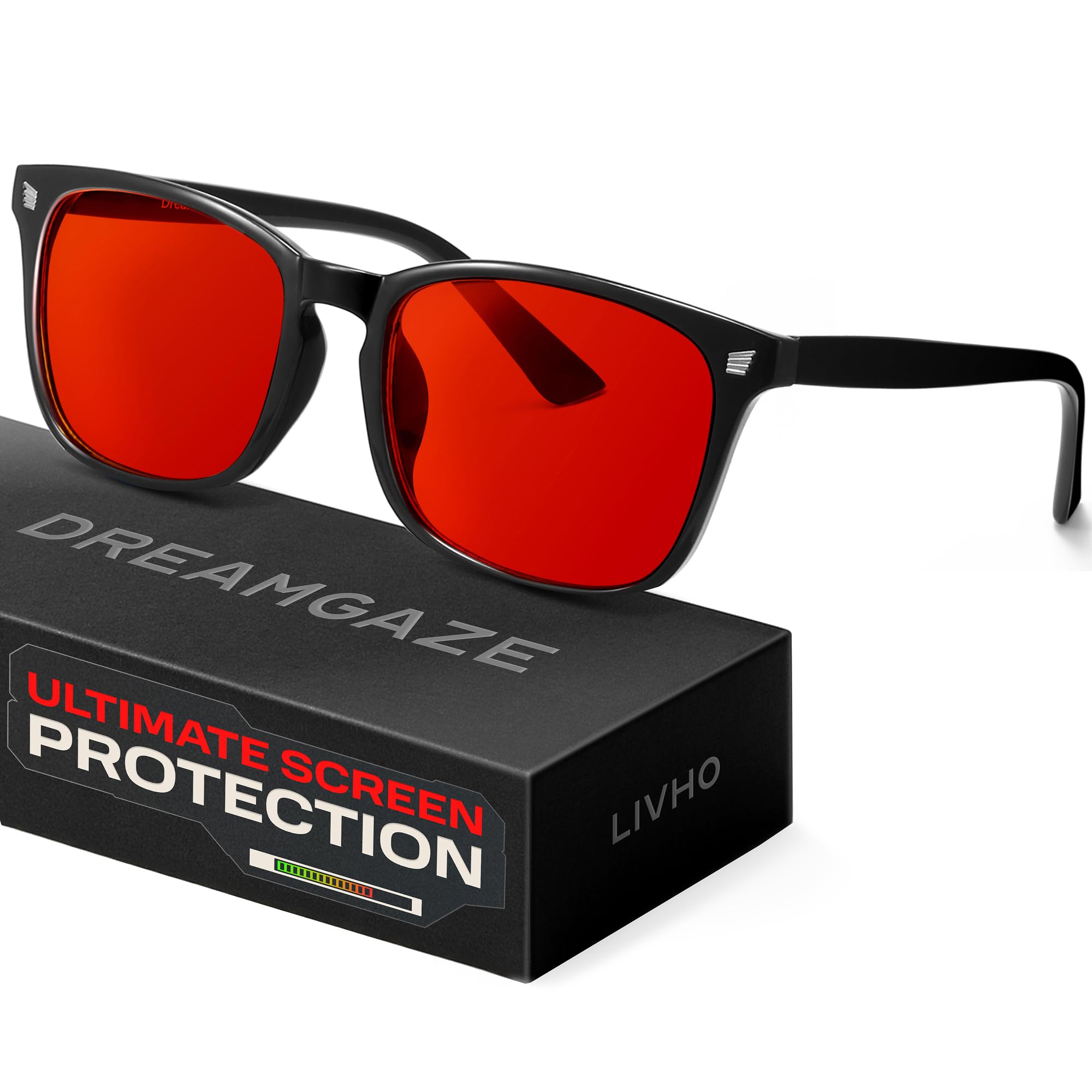
A light-touch blocker for winding down before bed, not a headlight fighter.
Buy this one for the hour before sleep, not for the highway. The tint filters blue light without dragging the whole screen into a yellow haze, which is why owners describe the lens quality matching what they get in prescription glasses. The lens is clear enough to wear indoors without looking like a welder, so it slots into a normal evening routine — read, watch, unwind — without the color shift that a heavy amber lens forces on you.
The sleep case is the strongest thing owners mention: reading a Kindle at night, one owner reported nodding off within 5–10 minutes of putting them on. It is also comfortable for hours of screen work, and owners praise the tint for avoiding the over-yellow look. If you want a pair you can leave on from dinner through bedtime without strange looks, this handles that job cleanly.
Here is the honest limit: durability is the recurring gripe. Multiple owners describe the frames breaking easily, so treat these as a delicate pair rather than something to toss loose in a bag. Fit also runs a touch tight for some wearers. For a rugged, throw-it-in-the-glovebox night-driving lens, the IBOANN or the Spectra479 will outlast this one; for a comfortable, low-tint screen pair for the wind-down hour, it does exactly what it is built for.
The sleep-hour specialist: Light tint, no heavy yellow wash, comfortable enough to forget you have them on — which is why it earns its place for evening screen time rather than road glare.
Treat it gently: Owners repeatedly flag that the frames break easily, and the fit runs a little tight for some faces. This is a desk-and-bedside pair, not a glovebox pair.
Buy it for: the pre-bed screen hour, when you want blue light dialed down without everything turning amber.
Skip it for: night driving glare — it was not built to fight a headlight beam, and it was not built to survive a rough-and-tumble commute.
4. livho High Tech Blue Light Blocking Night Driving Glasses
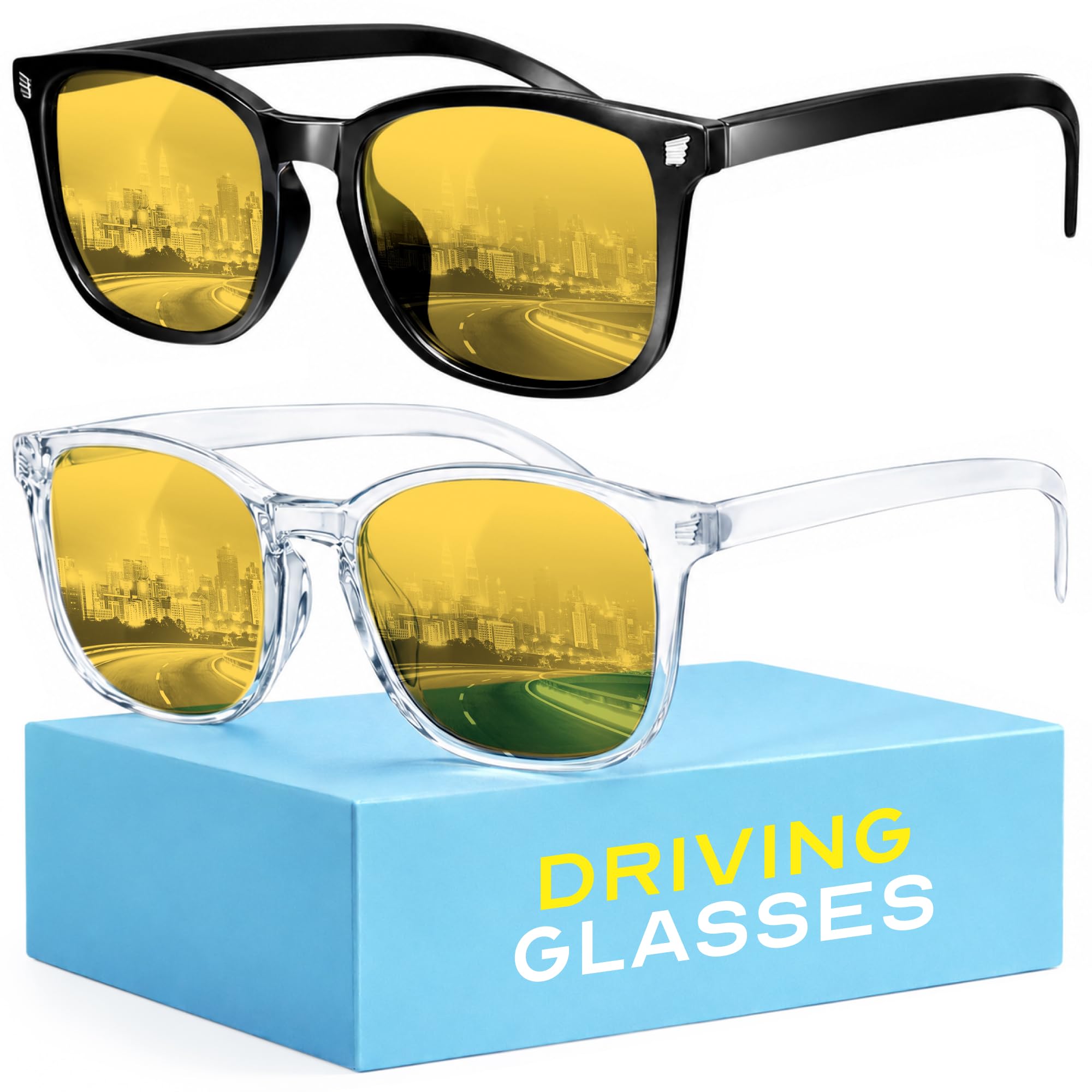
A true all-day pair: computer in the afternoon, yellow lens on the road at night.
This is the pair to reach for if you want one set of glasses for the whole day. The yellow-tinted lens with an anti-glare coating softens headlights and streetlights while lifting contrast, which is precisely the job you want done on a dark two-lane road. The UV400 rating blocks the ultraviolet side of that light too, and the claim of high-transmittance lenses is what keeps your eyes relaxed rather than strained through a long evening.
Two things make it the sharper all-rounder. First, the polycarbonate HD lens is anti-reflective and restores true color — a meaningful edge over the deep-amber Spectra479 if you spend daylight hours switching between screens and windows. Second, the polycarbonate lens resists impact far better than a plain plastic lens, which matters for a pair that lives in a bag or on a car seat. Owners lean on it for computer work, driving, reading, and TV, and describe the lightweight frame as comfortable around the ears through long days.
The honest caveat is that a clear or lightly tinted lens cannot block every blue wavelength — some wavelengths pass through any lens short of a dark amber one, and these do not distort color the way amber does. You are choosing color accuracy over maximum blocking, and that is a fair trade if you wear them all day. Frame sizing runs unisex, so fit is more forgiving than the women-specific Myiaur.
The all-day argument: Yellow anti-glare tint handles the road, and the anti-reflective HD lens restores true color so you are not stuck with amber distortion at your desk. UV400 protection covers the invisible side.
What you give up: A lighter tint blocks less of the blue spectrum than a heavy amber lens, so if maximum blocking at 450–510nm is your goal, the Spectra479 goes further. This pair trades a little blocking for a lot of everyday versatility.
Choose it when: you want one pair that goes from a screen-heavy workday straight onto a dark road without a swap.
Look elsewhere if: your eyes want the deepest blue filtering available — a strong amber lens out-blocks it.
5. IBOANN Blue Light Glasses for Men
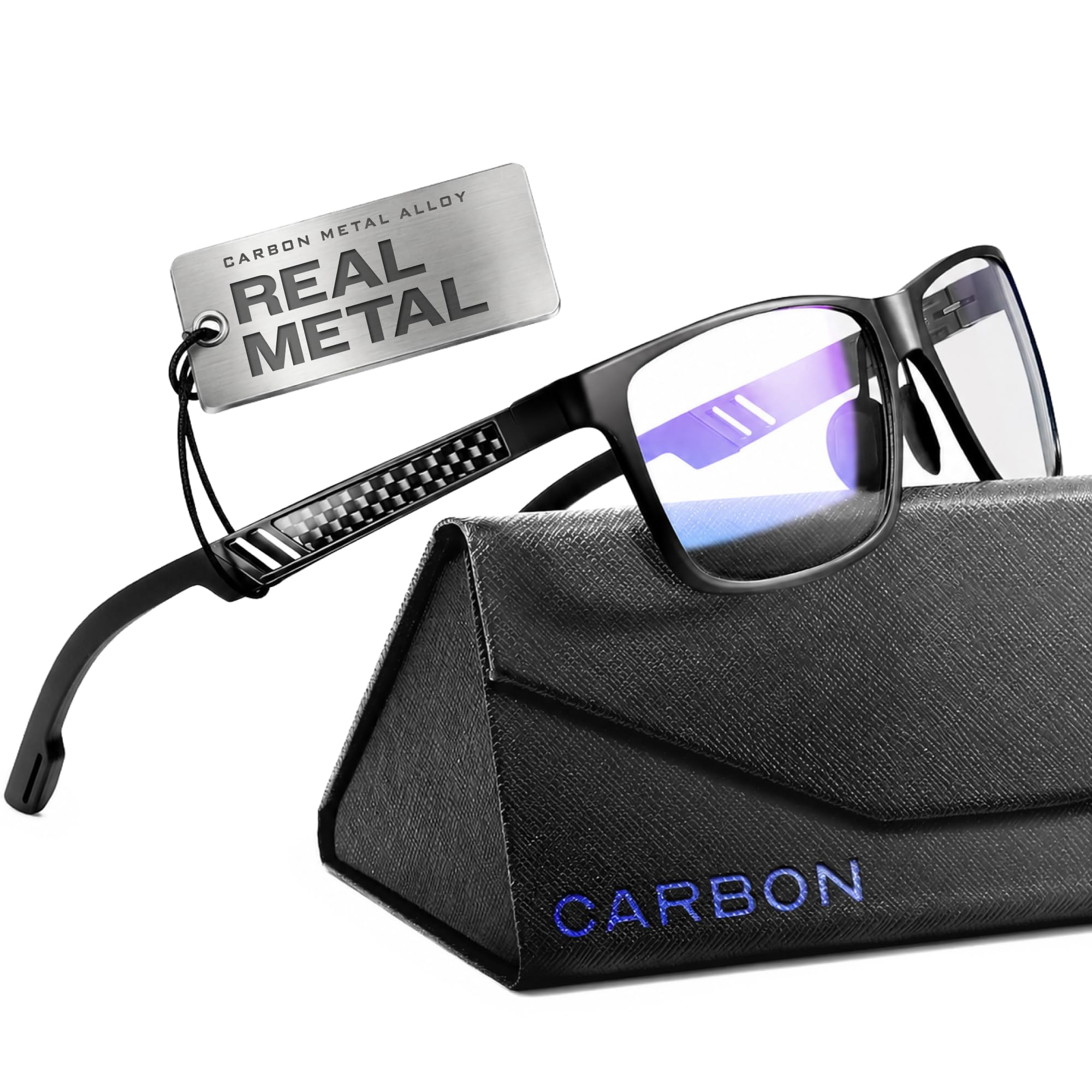
A metal-frame, non-tinted pair built for the desk, not the driver’s seat.
If your blue light problem is the monitor rather than the road, this is the sturdiest-feeling daily wearer of the five. The frame is made from an Al-Mg metal — that is an aluminum-magnesium alloy, a lightweight metal blend — which keeps it light while staying rigid. The lens is clear, so it does the computer-side job of filtering blue light without the yellow or amber shift, and it stays comfortable through an all-day shift. This is the pair for all-day screen work and for surviving a bag or a car seat.
Design is the strong suit. The minimalist, non-bulky look is the thing that keeps getting singled out, and it reads as a normal pair of glasses rather than a tinted gadget. Owners describe the frame as sturdy and elegant, and the carbon-fiber frame on the lens build is called out as both light and durable. Reviews note it surviving real abuse without breaking — one describes a pair taking a kick to the face and coming through fine — far tougher than the fragile DreamGaze.
Two fit notes worth flagging. The nose pads sit sharp enough for some wearers to feel pressure or leave small marks on the sides of the nose, and one describes needing to test the lens before committing to a higher-quality pair. Sizing is designated for men. The lens is clear rather than tinted, so it will not soften a headlight beam the way the amber and yellow pairs do — this one is a screen pair, and a durable one at that.
Standout strengths
- Al-Mg metal frame — an aluminum-magnesium alloy — keeps it light without feeling flimsy
- Clear lens filters blue light with no yellow or amber color shift, so it stays wearable all day
- Customers note it surviving heavy abuse without breaking, unlike the more delicate DreamGaze
- Non-bulky, minimalist look that reads as ordinary eyewear rather than a tinted gadget
Fit notes to weigh
- Nose pads can feel sharp and leave small marks on the sides of the nose for some wearers
- Clear lens means no headlight-glare reduction on the road
- Designed for men, so sizing may not suit everyone
Pick it for: a screen-heavy workday where you want the glasses to feel solid and last, with no color tint getting in the way.
Not the one if: you need oncoming headlights softened — the clear lens will not do that, and the nose pads may need a break-in.
Know the Specs
Tint strength and blocking range
The tint color tells you how much of the harshest light the lens will physically stop. A strong amber lens targets the 450–510 nanometer band — the long blue and cyan wavelengths that sit at the center of what LED headlights and backlit screens emit — and that is why it softens a bright beam so noticeably. A light or clear tint filters less of that band but leaves your colors alone. The trade runs one direction: the deeper the amber, the calmer your eyes and the more the world shifts toward yellow. Pick your tint strength by which of those two you care about more on the road.
Polarization and UV400
Polarization and UV protection are two separate jobs, and a pair can have one without the other. A polarized lens cancels the flat, horizontal glare that mirrors off wet asphalt and hoods — the reason a soaked highway looks like a sheet of light. UV400 marks a lens that blocks the ultraviolet part of the light reaching your eyes, which you cannot see but still absorb. Night glasses often advertise one and skip the other, so check the spec line rather than assuming. Some makers ship a test card so you can confirm the polarization or the blocking yourself before you rely on it.
Common Questions
Do blue light blocking glasses actually help with night driving glare?
Are amber and yellow lenses better than clear ones for night driving?
What does the 450 to 510 nanometer range mean on these glasses?
Can I wear night driving glasses during the day too?
Will a polarized lens reduce glare from wet roads at night?
How much do the glasses weigh, and does it matter?
Do these glasses work over prescription glasses?
Do the yellow and amber tints distort colors badly?
How long do blue light blocking glasses usually last?
Should I wear them an hour before bed or only while driving?
The Bottom Line
For the driver who wants one pair that covers screens and the road, the Spectra479 Amber Glasses are the pick — the amber lens targets the exact 450–510nm band that headlights and monitors throw at you, and the one-ounce frame is the lightest here, so it stays put on a long night drive. If you want a rugged, all-day wearer that survives being carried around, the IBOANN is the one to reach for. And for rainy or foggy nights where wet-road glare is the real enemy, the polarized Myiaur earns its spot. Start with the amber pair — 4.6 stars across 600+ owners — and one commute will tell you if you need a second, task-specific pair.
How we choose
We do not accept paid placement. Every pick is matched to a real buyer and a real use-case; we do not hands-on test units.
Sources
Specifications: manufacturer listings and product documentation. Review insights: verified customer reviews, as of October 2026. Pricing: not shown on this page (it changes often); check the current price via the retailer link.
As an Amazon Associate, Aappliancez earns from qualifying purchases. This does not affect which products we feature.