Disclosure: Some links in this post are affiliate links. As an Amazon Associate I earn from qualifying purchases, at no extra cost to you. Learn more
Specs are compiled from manufacturer listings and verified buyer reviews and can change over time — please confirm the key details on the product page before buying.
You want a swimsuit that snaps back after every lap, doesn’t go see-through in the water, and survives a summer of chlorine — and the fabric you cut it from decides all three. The short answer: look for a nylon-spandex blend with 4-way stretch and enough grams per square meter to stay opaque when wet, then check whether the color holds up in the wash. This guide breaks down five real swimwear-ready fabrics, what each one is genuinely good at, and where the honest trade-offs sit.
This guide is built by comparing the manufacturers’ published specifications and the patterns across verified customer reviews, so you get each pick’s real strengths and trade-offs instead of marketing spin.
Five fabrics here cover the projects from competition bikinis to quick compression-short repairs, and the difference between a suit that lasts a season and one that lasts years starts on the bolt. Here is how to pick the right fabric for swimwear without wasting a yard.
Top Picks

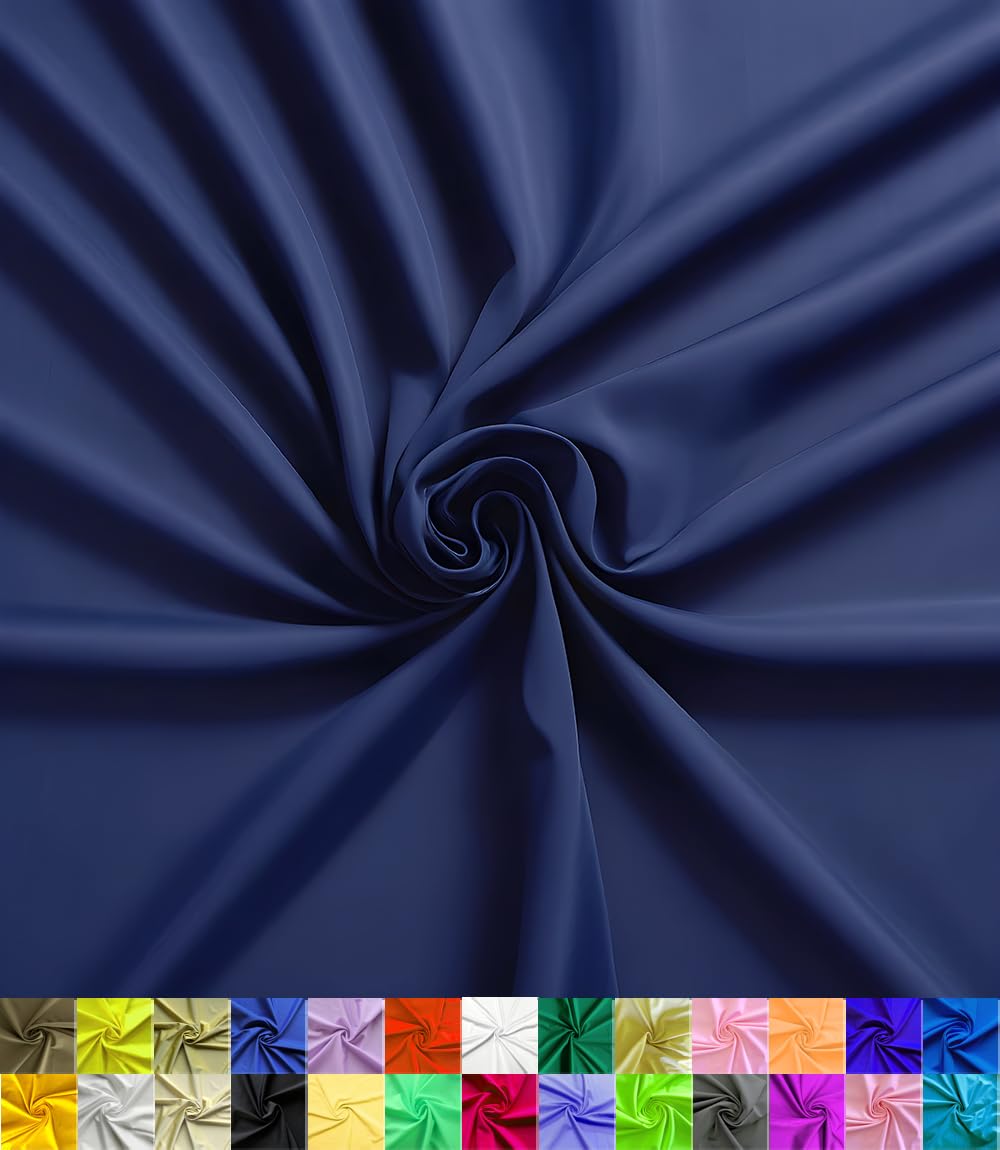
How To Choose The Best Fabric for Swimwear
Swimwear does not ask much of ordinary fabric, and chemistry is the reason. Pool chlorine, salt water, sunscreen, and body oils all attack elastic fibers, so the material has to resist all four and still spring back into shape when you move. A swimsuit fabric has to get four things right: fiber blend, stretch direction, weight, and colorfastness. Nail all four and the suit fits without gaping and survives a full season of chlorine.
Start with the fiber blend
Most swimwear fabric is a mix of nylon and spandex (spandex is the stretchy fiber that snaps back after it stretches). The nylon provides strength and a smooth hand; the spandex provides the elastic recovery. A blend in the range of 80% nylon to 20% spandex gives a snug but flexible fabric that works well for suits, bikinis, and rash guards. A higher spandex content also means the fabric holds its shape longer instead of bagging out at the seat and straps. Some satin-finish fabrics use polyester in place of nylon, which gives a shiny look but behaves differently in water — more on that below.
4-way stretch versus 2-way stretch
4-way stretch means the fabric moves both up-and-down and side-to-side, while 2-way stretch only moves in one direction. For swimwear, 4-way is the more useful choice because it lets the suit follow every movement without pulling at the seams or gaping at the leg openings. When the fabric is labeled 4-way, check that the product listing actually says so, because a shiny satin labeled as stretch does not always deliver it. A suit that only stretches in one direction can feel tight in one spot and loose in another, especially once it is wet.
Fabric weight and wet opacity
Fabric weight is measured in grams per square meter (GSM), and it directly affects how the suit hangs and stays covered when wet. A lightweight stretch fabric can go see-through in water, so many swimsuit makers line the front and seat for coverage. If you are buying fabric by the yard, look for a weight that is substantial enough to lay flat without clinging, and plan to line the garment, or double it, if the fabric feels thin. Thick fabric also tends to drape better and resist transparent spots at the bust and backside.
Color lasting and cold-water care
A vibrant color is only a win if it stays that way after a few rinses. Some dyes bleed in the wash, especially dark and saturated shades, and can tint other fabrics in the same load. Look for a color-fast claim in the product description, hand-wash in cold water with a mild detergent, avoid fabric softener (it coats the fibers and reduces stretch recovery), and line-dry out of direct sunlight. Cold hand washing and air drying are what keep spandex from pilling and bagging at the seat.
Side-by-Side Comparison
| Model | Best For | Fiber Blend | Stretch | Weight per Yard | Amazon |
|---|---|---|---|---|---|
| FabricLA Nylon Spandex★ Best Overall | All-round swimwear sewing | 80% nylon / 20% spandex | 4-way | 0.33 kg | Amazon |
| Barcelonetta Nylon Spandex (Navy)Lining Favorite | Lined competition and skating pieces | 80% nylon / 20% spandex | 4-way | 4 ounces | Amazon |
| Barcelonetta Nylon Spandex (Yellow) | Bright costume and activewear color | 80% nylon / 20% spandex | 4-way | 0.25 kg | Amazon |
| Ice Fabrics Silky Spandex Satin | Shiny dance and costume pieces | 80% polyester / 20% stretch | 4-way (mixed reports) | 14.88 ounces | Amazon |
| Ice Fabrics Nylon Spandex (Baby Blue) | Swim and activewear with coverage | 82% nylon / 18% spandex | 4-way | 6.4 ounces | Amazon |
Detailed Reviews
1. FabricLA Nylon Spandex Fabric
Our pick — 4.5+★ from 600+ verified ratings; the strongest balance of quality and price.
The all-rounder bolt that handles a full bathing suit without fighting back.
The FabricLA is the crowd favorite here, and the numbers back it — 4.5+ stars across 600+ owners, the strongest score of the five. For a home sewer building a real swimsuit, the practical draw is fabric weight: each yard comes in at 0.33 kg, meaningfully more material per cut than the Barcelonetta navy roll at 0.25 kg, so the finished garment drapes with a bit more body instead of clinging. The 80% nylon and 20% spandex blend moves evenly in both directions (4-way stretch), and the color is a solid beige that pairs with almost any lining you already have on hand.
What wins people over is the hand of the fabric itself — it feels like cloth, not a shiny synthetic sheet. Take the multi-direction stretch a step further: it is what lets a suit fit cleanly at the leg openings and straps without pulling gaps. Buyers report “Really nice weight fabric for making a bathing suit. Outstanding multi direction stretch capability will make the perfect suit fit easily.” The fabric arrives by the yard as a pre-cut piece (each quantity ships as a separate piece), which means you plan your layout in yards rather than one continuous bolt.
The one catch is thickness. Some projects expect a heavier hand than this delivers, and it pays to lay out your pattern first and confirm you have enough coverage before cutting a one-piece. A linen lining is a smart safeguard on pale panel areas. Stick to hand washing and line drying, and the beige stays bright rather than fading.
Where it pulls ahead
- 80% nylon / 20% spandex — a structured blend that holds shape at the seams and seat.
- 0.33 kg per yard for a more substantial drape than lighter bolts.
- 4-way stretch in both directions for clean leg openings and straps.
- Solid beige pairs easily with most lining colors.
The honest trade-offs
- Ships as separate yard pieces, not one continuous length.
- Some buyers find it thinner than expected; test opacity before cutting.
- The beige can read slightly flat next to a swatch on screen.
Go for it: The safe pick if you are sewing a first swimsuit, need a neutral color, and want the weight to work with you.
Hold off if: You want a bright, statement color or need a single continuous cut.
2. Nylon Spandex Fabric Navy
The navy workhorse that shrugs off sunscreen and body oils.
For a suit that gets worn hard in the water, this Barcelonetta navy is the smart, low-fuss choice. Its 80% nylon and 20% spandex blend is specifically described as resisting oils, lotions, and body perspiration — the everyday stuff a swimsuit soaks up. At 4 ounces per yard it is a lighter hand than the FabricLA above, which actually makes it a strong pick for lining and inner panels where a slimmer profile suits better. Owners find the surface soft, with a stretch that feels like the material a store-bought bathing suit uses.
Where this fabric earns extra points is repair duty. The stretchy knit conforms to curved seams and worn spots, so it is not only for full garments. Owners mention “Cut pieces of this and RTV them in place on ‘curiously’ worn parts of my running compression shorts and tights to extend their usable life (I run 60mi / week and am hard on my gear). Works well and the 20% spandex conforms mostly to the original fabrics.” That 20% spandex is also what lets a finished suit stretch through a stroke instead of straining the seams.
The caveat worth knowing: navy in a thin stretch knit can go sheer in the water, especially over darker tones underneath. Plan on lining or doubling any front or seat panels. Care is hand wash only — a gentle cold cycle is fine, but avoid bleach, fabric softener, and rough surfaces, then air dry to keep the elastic lively.
What wins people over: The real draw is that it resists sunscreen and body oils, which are what break down the spandex that makes a suit snap back. The softness and color come up repeatedly, and the navy works well as a lining under lighter panels.
The catch: It can turn see-through once wet, so build in a lining rather than trusting the fabric alone.
Reach for this if: You are lining a suit, building a modest-profile piece, or repairing stretch activewear.
Look elsewhere if: You want a single-layer garment with guaranteed coverage in deep water.
3. Nylon Spandex Fabric Yellow

A sunshine-yellow stretch knit for costumes that need to pop under stage light.
The yellow Barcelonetta brings the same 80% nylon / 20% spandex base as the navy roll, but swaps in a color that is genuinely bright. That matters for dance, cosplay, and competition pieces where the fabric has to read boldly from a distance. It measures 0.25 kg per yard — the identical weight as the navy, lighter than the FabricLA by a noticeable margin — and the 4-way stretch moves cleanly in both directions, so a snug bodysuit or swimsuit pulls on without fighting you.
What owners single out here is the stretch and the softness — the knit feels smooth to the touch and cuts easily. The same oil and lotion resistance built into this blend helps protect the color and elastic through repeated wear. If you are stitching a costume that has to survive an event schedule, this yellow holds up better than a standard fabric-shop knit would.
The honest caveat is the same as its navy sibling: this is a lighter knit, so on its own it can turn sheer in deep water or under bright stage light. Line or double the panels where coverage matters, and wash by hand in cold water to keep the yellow from muddying. Avoid bleach and fabric softener altogether.
Best used for: Costumes, dancewear, and bold-colored suits that need to stand out — the bright yellow and clean 4-way stretch are the sell.
What to plan around: It runs light, so treat it as a layering fabric rather than a single-layer swim piece.
Worth grabbing for: Anyone sewing a bright costume, show piece, or swimsuit with a solid lining plan.
Skip if: You need a single-layer suit that stays fully opaque in the water.
4. Ice Fabrics Silky Spandex Satin Fabric
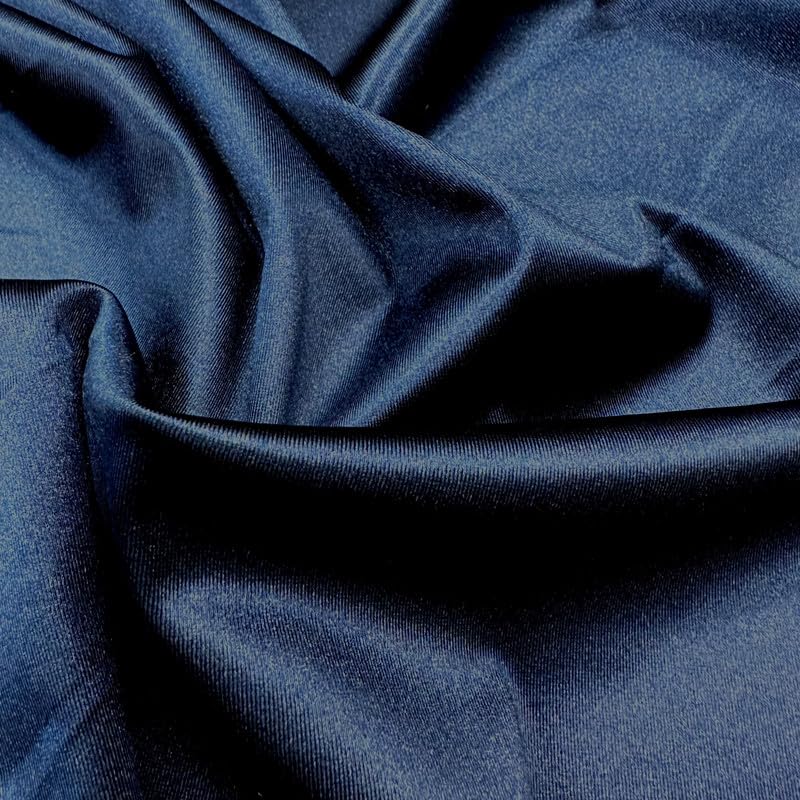
A shiny satin spandex that brings the sparkle to competition bikinis and dance costumes.
It is a noticeably heavier cut — 14.88 ounces per yard — with a 60-inch width, so you get a lot of coverage per length. The look is silky and the sheen is bright, which is exactly why it shows up in bodybuilding competition bikinis and stage costumes. Fabric quality is the thing the project crowd keeps coming back to, and it earns its keep on that measure.
Where this one needs a closer read is the stretch claim. It is sold as 4-way, but the sales page describes it as 80% polyester and 20% stretch fabric, and a fair share of the feedback says the stretch behaves closer to 2-way in practice. That gap is worth knowing before you cut a garment that depends on multidirectional recovery. One buyer’s honest read: “It’s not as stretchy as I expected, but it still worked very well for a bodysuit.”
For swimwear specifically, treat this as a trim fabric, a fashion overlay, or a costume panel rather than the main body of a lap suit. The saturated navy and the satin sheen are the payoff. Hand wash and line dry, and it stays wrinkle-free and vivid. Buy it for a kids’ skirt, a competition bikini, or a shiny bodysuit; for a suit that lives in the pool, the nylon-spandex rolls above are the better body fabric.
The draw: Satin sheen, true saturated color, and a heavy 14.88-ounce hand make it look and feel substantial — clearly not a cheap satin substitute.
The fit note: The stretch runs tighter than a true 4-way knit, so size patterns a little generously on any garment that needs to move a lot.
Choose this for: Competition bikinis, dance looks, and costume panels where shine and weight win over maximum stretch.
Pass on this for: A daily lap suit that needs multidirectional give; go with a dedicated nylon-spandex knit.
5. Ice Fabrics Nylon Spandex Fabric
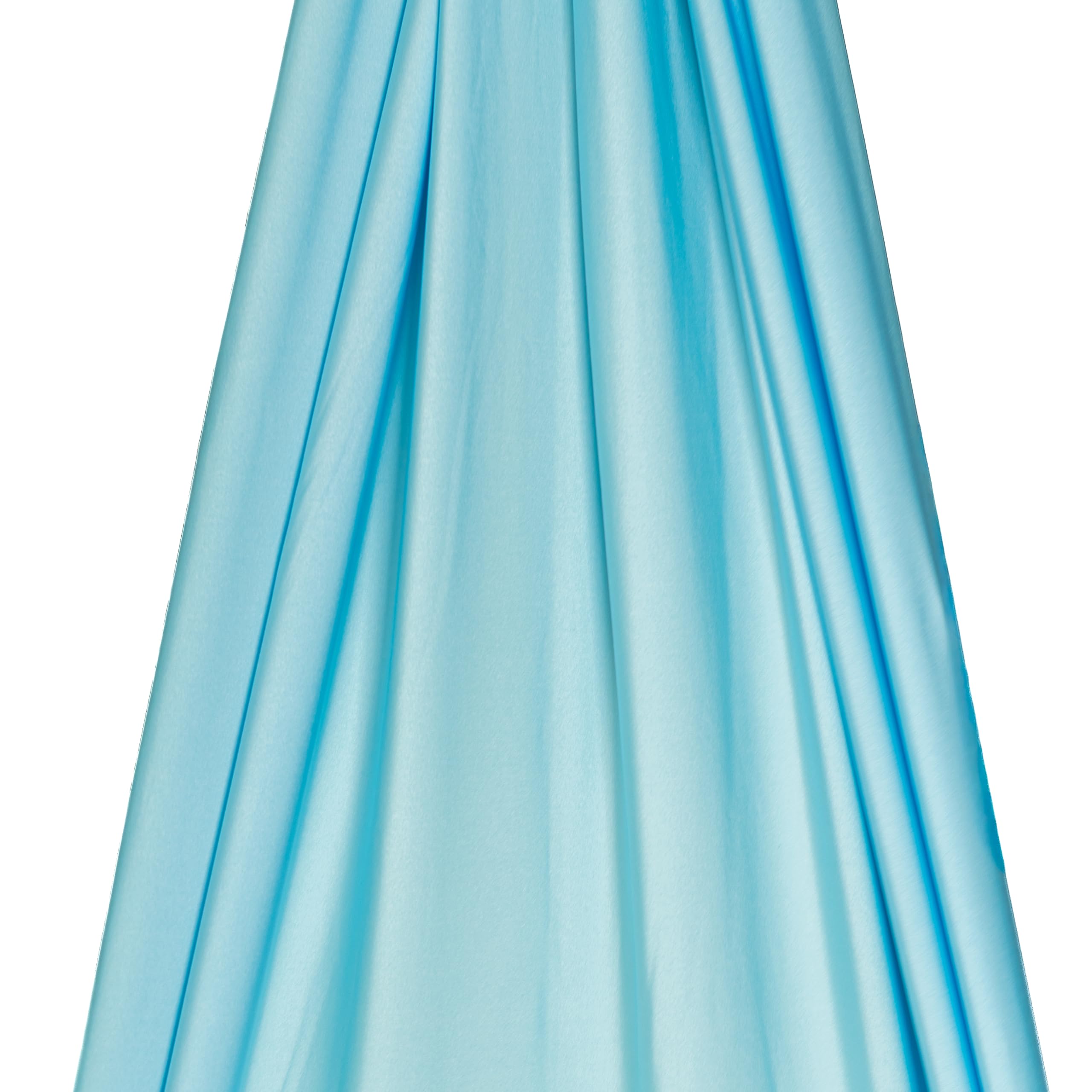
The purpose-built swim knit with a 210 GSM body behind it.
This is the one that wears the swimwear label most literally. Ice Fabrics builds it from 82% nylon and 18% spandex in a 210 GSM tricot (tricot is a close-knit, smooth-faced fabric weight that holds its shape). That slightly higher nylon share gives the knit more structural grip than the Barcelonetta rolls, and the 210 GSM body is what keeps the fabric from going sheer at the bust or seat. It measures 6.4 ounces per yard — a middle ground between the heavier FabricLA and the lighter navy — and it moves four ways during activity.
The color note runs both directions: the solid baby blue reads true in official photos, and its appearance earns an enthusiastic response from the crafting crowd. The coverage claim is backed up in the feedback too: “It’s soft, has a pretty good stretch, a deep color and shine, and it’s good at not being see-through.” That is the sentence a swimsuit sewer wants to read before cutting. It also handles non-swim jobs, from dance company outfits to prop builds.
Be aware on the dye front. A saturated baby blue can bleed in the wash and tint other garments in the same load, so wash it separately the first few cycles and keep it away from light-colored linens. Hand-wash cold and line-dry out of direct sun for the longest life. If you want a swim knit that stays opaque wet and can live with a separate first wash, this 210 GSM roll is the one to buy.
Why it earns the top swim label: 82% nylon / 18% spandex at 210 GSM gives the opacity and structure a wet suit needs, and the 60-inch width leaves room for full-front panel cutting.
The catch: The vivid dye can run on early washes — test a swatch and wash separately.
Best for: Sewers building an actual swimsuit who want real opacity and a purpose-made swim knit.
Not for: Anyone who wants a wash-and-wear fabric with zero dye-before-use caution.
Know the Specs
Nylon vs. Polyester Base
Swim fabric usually starts with either nylon or polyester as the main fiber, and the choice changes how the suit behaves. Nylon feels smoother and takes dye more richly, which is why bold competition colors and soft lining panels lean on it. Polyester, used in the satin spandex above, gives a heavier, shinier hand and a sturdier drape, but it does less well as a multidirectional stretch body. For a pure swim piece, the nylon-spandex blends are the more reliable starting point; the polyester satin is a better trim or statement panel.
Fabric Weight and Wet Coverage
Fabric weight, listed either in ounces or kilograms per yard or in GSM (grams per square meter), is your best guide to whether a suit stays opaque wet. A heavier bolt — think the 14.88-ounce satin or the 0.33 kg FabricLA — drapes with more body and covers more reliably. Lighter knits, such as the 0.25 kg Barcelonetta or the 4-ounce navy, can go sheer in deep water, especially over darker tones. Rule of thumb: the lighter the fabric, the more important a lining becomes.
Common Questions
What is the best fabric blend for sewing a swimsuit?
Will 4-way stretch fabric actually stretch in all directions?
Does swimwear fabric go see-through when wet?
Can I use satin spandex for a swimsuit?
How do I stop swimwear fabric from bleeding color in the wash?
Is hand washing really required for nylon spandex fabric?
How much fabric do I need for a one-piece swimsuit?
What is GSM and why does it matter for swimwear?
Will the fabric hold its shape after multiple wears in chlorinated water?
Can I mix these fabrics in one garment, say a nylon body with satin trim?
The Bottom Line
For most sewers building a real swimsuit, the fabric for swimwear winner is the FabricLA Nylon Spandex because its 80% nylon / 20% spandex blend and 0.33 kg yard weight give the drape and shape recovery a swimsuit needs, at the strongest owner satisfaction of the group. If coverage in the water is your top priority, grab the Ice Fabrics Nylon Spandex in Baby Blue for its 210 GSM tricot body. And for costumes, competition bikinis, or bright statement pieces, the Ice Fabrics Silky Spandex Satin is the one to reach for — just plan your stretch test and lining first, and you will get a suit that looks as good as it holds.
How we choose
We do not accept paid placement. Every pick is matched to a real buyer and a real use-case; we do not hands-on test units.
Sources
Specifications: manufacturer listings and product documentation. Review insights: verified customer reviews, as of October 2026. Pricing: not shown on this page (it changes often); check the current price via the retailer link.
As an Amazon Associate, Aappliancez earns from qualifying purchases. This does not affect which products we feature.