Disclosure: Some links in this post are affiliate links. As an Amazon Associate I earn from qualifying purchases, at no extra cost to you. Learn more
Specs are compiled from manufacturer listings and verified buyer reviews and can change over time — please confirm the key details on the product page before buying.
If your breakfast leaves you hungry again by ten, the sugar hiding in your cereal is usually the reason. This guide cuts straight to the low sugar cereal options that actually hold you until lunch, ranked by what real buyers reach for again and again. You will see which picks keep the crunch, which ones keep the ingredient list short, and which ones fit a keto or gluten-free plate without tasting like cardboard.
This guide is built by comparing the manufacturers’ published specifications and the patterns across verified customer reviews, so you get each pick’s real strengths and trade-offs instead of marketing spin.
A low-sugar cereal only earns its shelf space if the first spoonful tastes like breakfast, not a punishment. That balance of clean ingredients and real flavor is exactly what separates the winners here, and it is the whole test behind this look at the low sugar cereal aisle.
Top Picks
How To Choose The Best Low Sugar Cereal
The word “low sugar” on a box tells you almost nothing on its own. What matters is where the sweetness comes from, how much fiber rides along with it, and whether the cereal still tastes like something you want to eat on a Tuesday. Get those three things right and the rest sorts itself out.
Added sugar versus natural sugar
Added sugar is the sweetener a manufacturer pours in — cane sugar, honey, malt syrup, or a syrup you cannot pronounce. Natural sugar is the kind that arrives inside the fruit itself. A cereal sweetened only with dried fruit reads as no-sugar-added even though the fruit brings its own sweetness. For a truly sugar-free bowl, you want a sweetener like allulose or monk fruit, or nothing at all.
Fiber and protein per serving
Fiber slows digestion, so a bowl’s energy releases gradually instead of all at once. A cereal with 5g of fiber per serving tends to hold you longer than one with almost none. Protein from beans, nuts, or grains does the same job and adds staying power. Together they decide whether a bowl carries you to lunch or leaves you raiding the pantry by ten.
Crunch, texture, and how it holds in milk
A low-sugar cereal can be perfectly healthy and still get tossed if it turns to mush the second milk hits it. Crunch is a real buying decision, not a nice-to-have. Oven-roasted flakes, toasted oats, and nut-heavy granola all tend to keep their bite longer than soft puffed grains, so check what the base grain actually is.
Side-by-Side Comparison
| Model | Best For | Added Sugar | Package Size | Key Quality | Amazon |
|---|---|---|---|---|---|
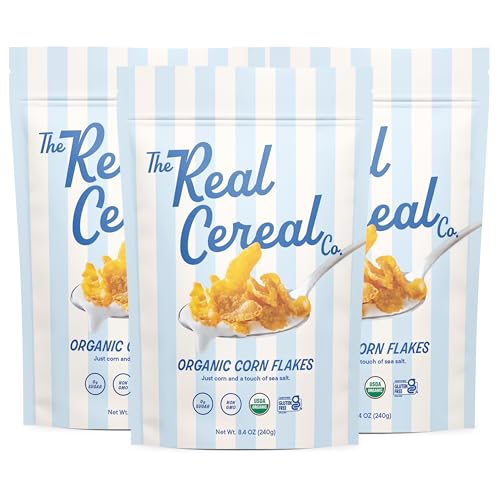
| The Real Cereal Company Organic Corn Flakes 3-Pack★ Best Overall | Cleanest label and best taste | 0g | 25.2 Ounce (3-pack) | USDA Organic, 2 ingredients | Amazon |
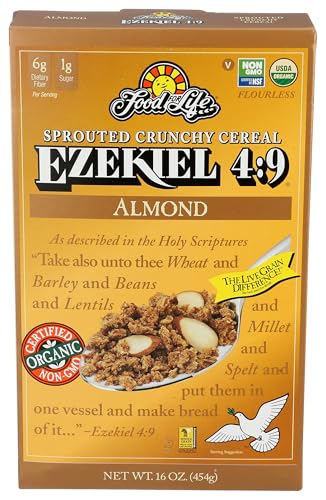
| Food for Life Organic Almond CerealBest Whole Grain | Versatile whole-grain base | — | 16 Ounce | Organic whole grain | Amazon |
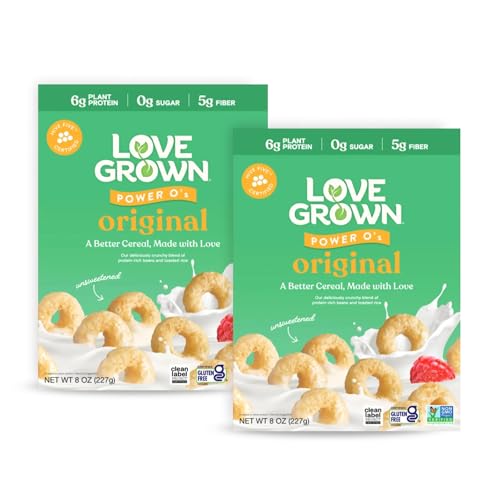
| Love Grown Power O’s Original | Protein-packed plant-based bowl | 0g added | 16 Ounce (2-pack) | Gluten-free, vegan, high fiber | Amazon |
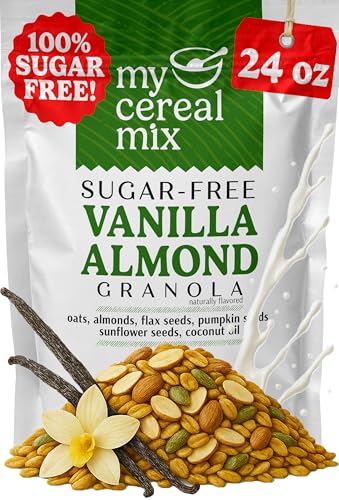
| MyCerealMix Sugar Free Granola, Vanilla Almond | Keto and diabetic-friendly crunch | 0g | 24 Ounce | Allulose and monk fruit sweetened | Amazon |
| Alpen Muesli Cereal No Sugar Added | Hearty oat-and-fruit muesli | None added | 42 Ounce (3-pack) | Whole grain oats, wheat flakes, nuts, raisins | Amazon |
Detailed Reviews
1. Real Cereal Organic Corn Flakes 3-Pack
Our pick — over 4.5★ from 400+ verified ratings; the strongest balance of quality and price.
Two ingredients, zero sugar, and a crunch that survives the milk
Start with the label, because there is almost nothing on it. This box lists organic corn grits and sea salt — that is the entire ingredient statement. There is no cane sugar, no malt syrup, no B vitamins baked back in, and no artificial sweetener standing in for the sugar that got removed. For anyone who reads ingredient panels before buying, that short list is the whole pitch.
Each serving carries 0g of sugar and the recipe is Certified USDA Organic, gluten-free, and Non-GMO. The flakes are oven-roasted rather than extruded, which is why they hold their bite instead of collapsing into paste once the milk goes in. Owners describe the flavor as toasty and genuinely corn-forward, and the crunch is what keeps people coming back bowl after bowl.
What wins people over is the taste — it is the most-praised quality in the entire review record for this cereal. Buyers report using it far beyond breakfast: one describes coating chicken tenders and ground chicken patties with it for crunch, and the same crushed flakes work as a breading substitute. A three-pack runs 25.2 ounces total, and the pouches are made from post-consumer recycled materials.
Where it earns the top spot
- Two ingredients, both of them real food: organic corn grits and sea salt
- 0g sugar with no artificial or natural sugar substitutes standing in
- USDA Organic, gluten-free, and Non-GMO on the same box
- Toasty corn flavor and a crunch that holds up in liquid
- Doubles as a crispy breading for chicken and more
What to weigh before you buy
- Value is the one genuinely split topic — plenty call it worth it, others find it expensive
- Sold as a three-pack, so you commit to three pouches at once
- Plain corn-flake character means no fruit or sweetness to lean on
Who this suits: Anyone chasing the shortest possible ingredient list, plus FODMAP-conscious eaters and households that want one cereal to cover breakfast and cooking.
The honest trade-off: The price tag draws the only real pushback, so budget-minded buyers may want to treat this as a treat-yourself staple rather than a daily pour.
2. Food for Life Organic Almond Cereal, 16 OZ
The everyday whole-grain bowl that earns its place at the table
This is the pick for the family that eats the same thing every morning and never gets bored of it. Organic, whole grain, and minimally processed, it is built as a flexible base rather than a flavor showcase. One buyer’s routine says it all — adding 2 tbsp chia, 3 tbsp hemp, 1 tsp ground flax, 1/4 cup walnuts, about 1/2 cup soy milk, blueberries, and strawberries to build up the protein and calories in the bowl.
Nutrition is the quality that carries the heaviest weight in the review record here, followed by texture. The crunch is described as sturdy, which is why it holds up under milk, yogurt, and fruit without turning soggy. It also stretches beyond the breakfast bowl — owners use it as a snack, a topping, and even as a breadcrumb substitute in cooking.
The catch is the taste, and it is a real one to plan around. Opinions genuinely split: some households call it the only cereal they keep in the house, while others find it bland on its own. It is a cereal that rewards what you put on it. The other honest note is freshness — the packaging and sealing come in for criticism, and an occasional box arrives stale or damaged.
The size math matters: A 16-ounce box next to the three-pack corn flakes is a smaller pour by comparison, so plan on restocking more often if this becomes the daily driver.
Grab it if: You want one organic whole-grain cereal to keep on hand for fruit, yogurt, and topping duty, and you are happy to sweeten the bowl yourself.
Might not land if: You want flavor straight from the start — this one leans on whatever you add, and a flat plain bowl is the trade-off.
3. Love Grown Power O’s Original 2 Pack
Kid-friendly O’s built on beans instead of wheat and filler grains
Here is the cereal for a household that has one picky eater and one label-reader at the same table. It is a crisp O made with plant-based protein from beans and brown rice, with 0g of added sugar, high fiber, and a recipe that is vegan, certified gluten-free, certified Non-GMO, and seed-oil free. The sweetness comes from a measured touch of real sugar plus color from vegetables, not artificial flavor or preservative shortcuts.
Taste is what carries this one, and the record is unusually consistent on that front — it is the top praise point by a wide margin, with ingredient content right behind it. Parents describe kids eating it dry straight from the bowl, and the frozen-fruit-plus-almond-milk combo comes up repeatedly as the way to serve it. For adults, it works as a Cheerios stand-in that skips the wheat, milk, sugar, and additives in one move.
Be straight with yourself about the flavor when it is plain. A few find it flat without help, so berries or a splash of vanilla almond milk do real work here. This box comes as a two-pack, 8 ounces each, and carries a Clean Label Project certification with testing for over 300 environmental and industrial contaminants.
Why parents relax: Beans supply the protein and fiber with 0g added sugar, so a kid’s bowl comes without a sugar spike.
The recurring gripe: Cost is the one steady complaint — this sits at the upper end of the low sugar cereal shelf, and a two-pack empties fast in a hungry house.
Built for: Families who want a gluten-free, vegan, protein-forward O that kids will actually finish, especially when berries and almond milk are on standby.
Think twice if: You eat cereal plain and want the flavor to lead — this one wants a topping, and the price per bowl runs higher than the oat-based picks.
4. MyCerealMix Sugar Free Granola 24 oz
Granola that keeps its crunch without a gram of cane sugar
Granola is where low-sugar cereals usually fall apart, because the oats need something sticky to cluster. This one solves that with allulose and monk fruit instead of cane sugar, then builds the flavor on natural vanilla and roasted almonds. Each serving lands at 0g of sugar with 5g of fiber, and the whole recipe is low-carb, low-glycemic, plant-based, gluten-free, and Non-GMO.
The crunch and the sugar content are the two things that separate this from a typical granola — it is the taste that leads the praise here, with the sugar choice right behind it. It is filling in a way a light flake cereal is not, which makes a small handful over yogurt or cottage cheese go a long way. For anyone managing carbs or blood sugar, its 0g sugar and 5g fiber per serving fit that plate.
One flavor note deserves a heads-up. Coconut oil is in the recipe, so a faint coconut taste rides along with the vanilla-almond profile, and if you are not a coconut person that comes through. Freshness is the other thing to watch — a few bags arrive past their prime, so it is worth checking the date when the pouch lands.
What makes it stand out
- Sweetened with allulose and monk fruit, never cane sugar
- 0g sugar and 5g fiber per serving for steady morning energy
- Keto-friendly, low-glycemic, plant-based, gluten-free, Non-GMO
- 24-ounce resealable pouch with a full 1.5 pounds inside
- Crunchy enough for yogurt, oatmilk, or straight from the bag
Small things to know
- Coconut oil leaves a faint coconut note alongside the vanilla and almond
- Some bags show up less than fresh, so check the pouch on arrival
- Granola is calorie-dense, so a little goes further than a flake cereal
Right for you if: You want a sugar-free granola that still crunches, works as a yogurt topper, and fits a keto or low-glycemic routine.
Skip over if: You dislike even a hint of coconut, or you prefer a light flake you can fill a whole bowl with for the same calories.
5. Alpen Muesli Cereal No Sugar Added, 3 Pack of 14 Ounce Boxes
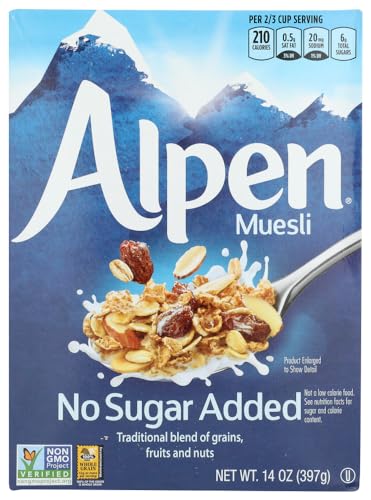
Muesli for the breakfast bowl that has to go the distance
Muesli is the original low-sugar cereal, and this one leans on that heritage. Whole grain oats, wheat flakes, nuts, and raisins make up the mix, sweetened only by the dried fruit rather than any added sugar. It is high in fiber, vegetarian friendly, and versatile enough to eat cold with milk, spooned over yogurt or kefir, stirred into a warm bowl, or blended with other cereals to stretch a box.
The value here is volume: a three-pack of 14-ounce boxes gives you 42 ounces total, the largest pour in this lineup by a comfortable margin. Owners who grew up on this style call it a nutritious step up from sugary boxed cereals, and the fiber is what makes it hold you until lunch. It also plays nicely with kefir and yogurt, so it works as a base you build on.
Two honest notes for anyone considering the switch. The flavor runs mild, and some find a plain bowl fairly bland without fruit or a sweetener added. There is also a recipe-change thread worth knowing about — a minority report the mix leaning heavily toward oats, with far fewer nuts and raisins than they expected, so it is worth a quick look at your box before you commit to a subscription.
Why it stretches: 42 ounces across three boxes is the most cereal per order in this group, which suits anyone feeding a busy kitchen every morning.
Best for: Households that want the biggest box, the most fiber, and a muesli they can dress up with fruit or warm milk.
Look elsewhere if: You want a bold, sweet-forward bowl from the start — this one is mild by nature, and the oat-heavy texture is the trade-off.
Know the Specs
Added sugar versus total sugar
Added sugar is what a maker stirs in; total sugar counts that plus what the fruit brings. A no-sugar-added muesli gets its sweetness from raisins, while a zero-sugar flake or granola gets it from allulose or monk fruit — or from nothing at all. Read for the added-sugar line if you are watching your intake closely.
Fiber and protein per serving
Fiber and protein are what keep a bowl from turning into a quick sugar rush. A serving with 5g of fiber, or protein from beans and nuts, digests more slowly and holds you longer. That is why a bean-based O or an almond-and-oat granola tends to outlast a light puffed flake at the same bowl size.
Sweetener type: allulose, monk fruit, and dried fruit
Allulose and monk fruit are low-glycemic sweeteners used when a cereal wants sweetness without cane sugar. Dried fruit is the old-fashioned route — it sweetens naturally but still counts toward total sugar. Each changes the flavor footprint, so taste the trade-off before you buy a bulk pack.
Certifications that matter on a box
USDA Organic, Non-GMO, gluten-free, and vegan are the labels buyers scan first, and each means something specific. Certified gluten-free matters most for anyone avoiding wheat, while a Clean Label Project mark signals testing for contaminants. Match the certification to your own diet rather than chasing every badge.
Common Questions
Is 0g sugar cereal actually sugar-free or just low sugar?
Which low sugar cereal keeps me full the longest?
Are allulose and monk fruit safe sweeteners for a low sugar cereal?
Can a diabetic eat these low sugar cereals?
Do gluten-free low sugar cereals taste different?
How long does a box of low sugar cereal stay fresh after opening?
Is muesli better than granola for low sugar breakfasts?
Can I use a plain low sugar flake cereal for cooking and baking?
What is the difference between no sugar added and sugar free on a cereal label?
Do these low sugar cereals work with almond milk or oat milk?
The Bottom Line
For most people, the low sugar cereal worth starting with is The Real Cereal Company Organic Corn Flakes 3-Pack, because two ingredients, 0g of sugar, and a crunch that survives the milk are hard to argue with. If you want a protein-forward plant-based bowl that kids will finish, reach for the Love Grown Power O’s. And when the goal is a sugar-free granola for yogurt or a keto plate, the MyCerealMix Sugar Free Granola is the one to grab. The corn flakes are the crowd favorite at 4.7 stars from 400+ owners, so start there if you are unsure.
How we choose
We do not accept paid placement. Every pick is matched to a real buyer and a real use-case; we do not hands-on test units.
Sources
Specifications: manufacturer listings and product documentation. Review insights: verified customer reviews, as of October 2026. Pricing: not shown on this page (it changes often); check the current price via the retailer link.
As an Amazon Associate, Aappliancez earns from qualifying purchases. This does not affect which products we feature.