Disclosure: Some links in this post are affiliate links. As an Amazon Associate I earn from qualifying purchases, at no extra cost to you. Learn more
Specs are compiled from manufacturer listings and verified buyer reviews and can change over time — please confirm the key details on the product page before buying.
Maine Coon kittens do not grow like ordinary kittens, and the food you pick in the first year is what builds that frame. They are the gentle giants of the cat world, and their rapid bone and muscle growth means they need dense protein, plenty of DHA, and kibble small enough for their jaws to manage. This guide breaks down five kitten foods that big-breed owners keep coming back to, so you can match your growing cat with the right bag or case.
This guide is built by comparing the manufacturers’ published specifications and the patterns across verified customer reviews, so you get each pick’s real strengths and trade-offs instead of marketing spin.
If you are raising a Maine Coon, you already know the stakes of every meal. This rundown covers the top kibble and wet options so you can confidently pick the kitten food for maine coon that matches your cat and your routine.
Top Picks

How To Choose The Right Kitten Food for Maine Coon
Maine Coons are one of the largest domestic cat breeds, and their growth curve is longer and taller than the average cat. That means the food you choose needs to hold up through a longer growth window, not just the first few months. Here is what to weigh before you commit to a bag or case.
Protein And DHA Content
Growing muscle and bone need real animal protein. Look for chicken, fish, or herring listed as the first ingredient, and check that DHA (an omega-3 fatty acid that supports brain and eye development) appears on the label. A high-protein recipe matters more for a Maine Coon than for a smaller breed because the bone and muscle demands are higher.
Kibble Size And Texture
Small kibble is not just a convenience — it is a fit issue for kittens still working with baby teeth. A smaller, softer piece is easier for a young Maine Coon to chew and digest. If you feed wet food, paté texture with plenty of moisture helps with hydration, which matters equally for a breed prone to large frame growth.
Wet, Dry, Or Both
Many large-breed owners feed dry kibble during the day and wet food at night. Dry food adds convenience and helps with free-feeding; wet food adds moisture and variety. Mixing the two can also help if your kitten is a picky eater, since you can use wet food as a topper on dry kibble to encourage eating.
Side-by-Side Comparison
| Model | Best For | Form | Primary Protein | Weight | Amazon |
|---|---|---|---|---|---|
| Hill’s Science Diet Kitten Formula Dry★ Best Overall | Overall best growth support | Dry kibble | Ocean Fish & Brown Rice | 7 pounds | Amazon |
| Stella & Chewy’s Raw Coated KibblePremium Pick | High-protein raw-coated nutrition | Dry kibble | Cage-Free Chicken | 5 pounds | Amazon |
| Blue Buffalo Baby Blue Kitten Paté | Wet food with high moisture | Wet paté | Chicken | 4.5 pounds | Amazon |
| ACANA First Feast Chicken and Fish | Grain-free whole-prey kibble | Dry kibble | Chicken & Fish | 7 pounds | Amazon |
| Hill’s Science Diet Kitten Formula Wet | Easy-to-serve wet pouches | Wet food pouch | Chicken Stew | 4.2 pounds | Amazon |
Detailed Reviews
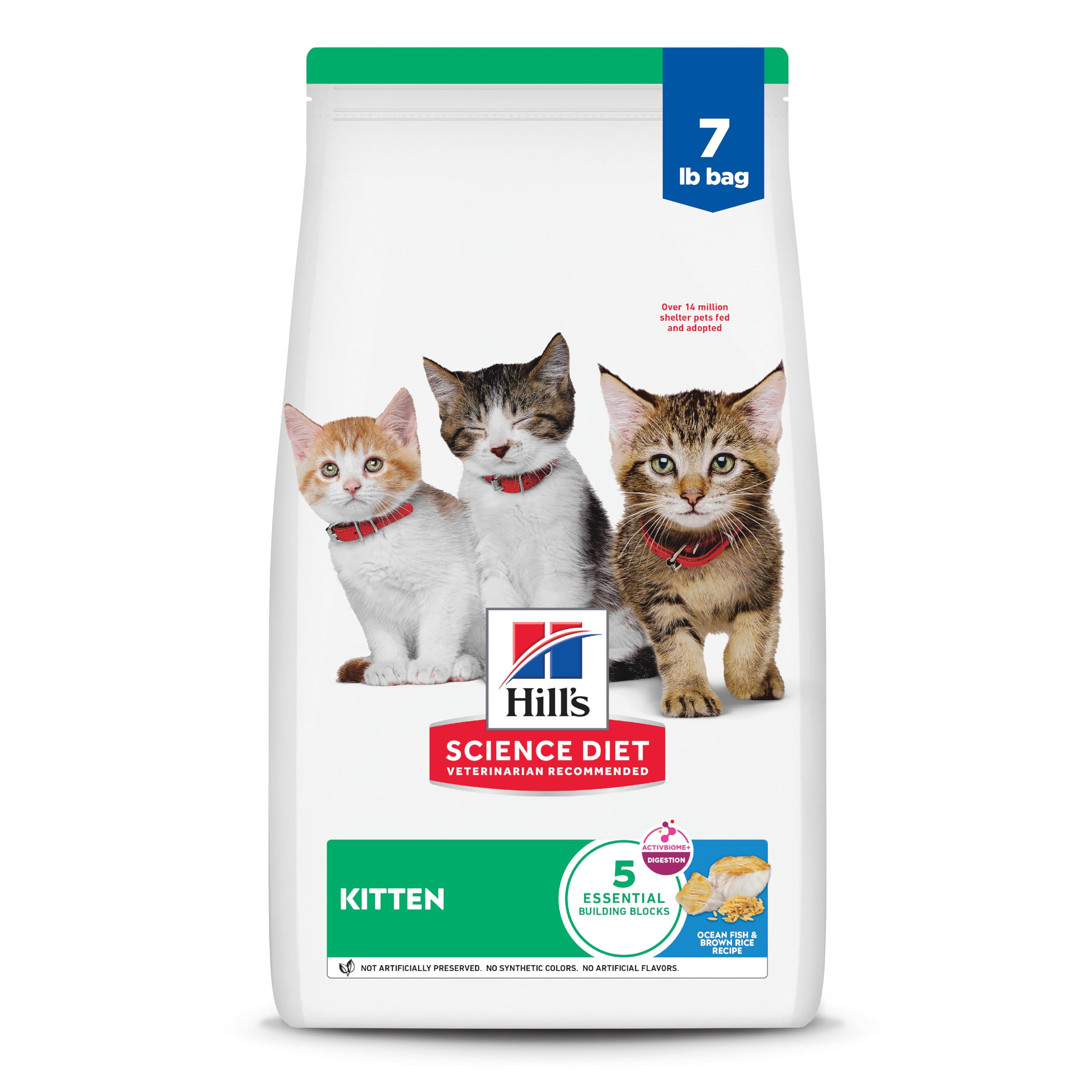
1. Hill’s Science Diet Kitten Formula Dry Cat Food
Our pick — over 4.5★ from 850+ verified ratings; the strongest balance of quality and price.
Vet-backed kibble with small pieces sized for a Maine Coon kitten’s jaw.
Hill’s Science Diet is the brand vets recommend most, and this dry kitten formula pairs fish-oil DHA for brain and eye growth with balanced minerals for bones and teeth. That matters more for a fast-growing breed like the Maine Coon, where skeletal and brain development both depend on what is in the bowl.
The kibble is notably small, and that is among the most-commented-on features. Buyers report that even cats with tiny teeth or picky eating habits dig into these little pieces. Owners of breeds notorious for nibbling around larger kibble say this one gets eaten to the bottom of the dish, and the palatability is what keeps repeat buyers.
At 7 pounds, this bag outweighs the Blue Buffalo wet case’s 4.5 pounds, so you get more food mass for the same shelf space — a meaningful difference if your Maine Coon is eating multiple times a day. Owners also report a shinier coat after switching, and one long-time customer moved a runt kitten off cheaper food onto this and saw it gain weight and perk up quickly.
What works well
- DHA from fish oil supports brain and eye development in growing kittens
- Small kibble size suits kittens with tiny teeth or picky chewing habits
- 7-pound bag outlasts the 4.5-pound Blue Buffalo wet case
- Balanced minerals for growing bones and teeth
Where it falls short
- Value for money is the most-disputed point among buyers — some find it pricier than standard kibble
- If your Maine Coon prefers wet food, this alone will not cover hydration needs
Start here if: you want a vet-endorsed dry kibble that covers brain, bone, and coat growth in one 7-pound bag.
Pair it with: a wet food for hydration, since dry kibble alone leaves moisture gaps in a growing Maine Coon’s diet.
2. Stella & Chewy’s Raw Coated Premium Kibble Cat & Kitten Food
Raw-coated kibble that brings wild-prey protein to a Maine Coon’s bowl.
Cage-free chicken leads the ingredient list, and the recipe runs 65-70% animal protein with a freeze-dried raw coating on every piece. For a Maine Coon that needs dense protein to build that oversized frame, this is the most protein-forward dry option in this guide. It also skips corn, potatoes, wheat, soy, and by-product meals entirely.
What wins people over here is the taste — owners describe cats abandoning other brands the moment this hits the dish. Owners mention their cats clean the bowl and that a single 5-pound bag lasts about a month in a one-kitten home. The raw coating seems to do the heavy lifting on palatability, and the DHA content supports the same brain and eye development that growing kittens need.
The honest catch sits at the bag itself: some customers note the kibble pieces coming through a bit larger than they used to, and for a Maine Coon kitten with a small mouth that can slow eating down. One long-time buyer with a Maine Coon says the cat still loves the food but flagged the bigger kibble size as a reason they might switch. That is a texture complaint rather than a nutrition one, and the vast majority of buyers do not run into it at all.
Protein powerhouse: 65-70% animal protein with cage-free chicken first is the highest animal-protein load in this lineup, and the raw coating keeps cats coming back.
Kibble size watch: a handful of owners have seen bigger pieces in recent bags, so if your Maine Coon is a slow or picky chewer, check the bag when it arrives.
Reach for this if: you want maximum animal protein and a raw-coated texture your cat will actually finish.
Look elsewhere if: your Maine Coon refuses food when kibble runs on the larger side.
3. Blue Buffalo Baby Blue Chicken Kitten Paté Wet Cat Food
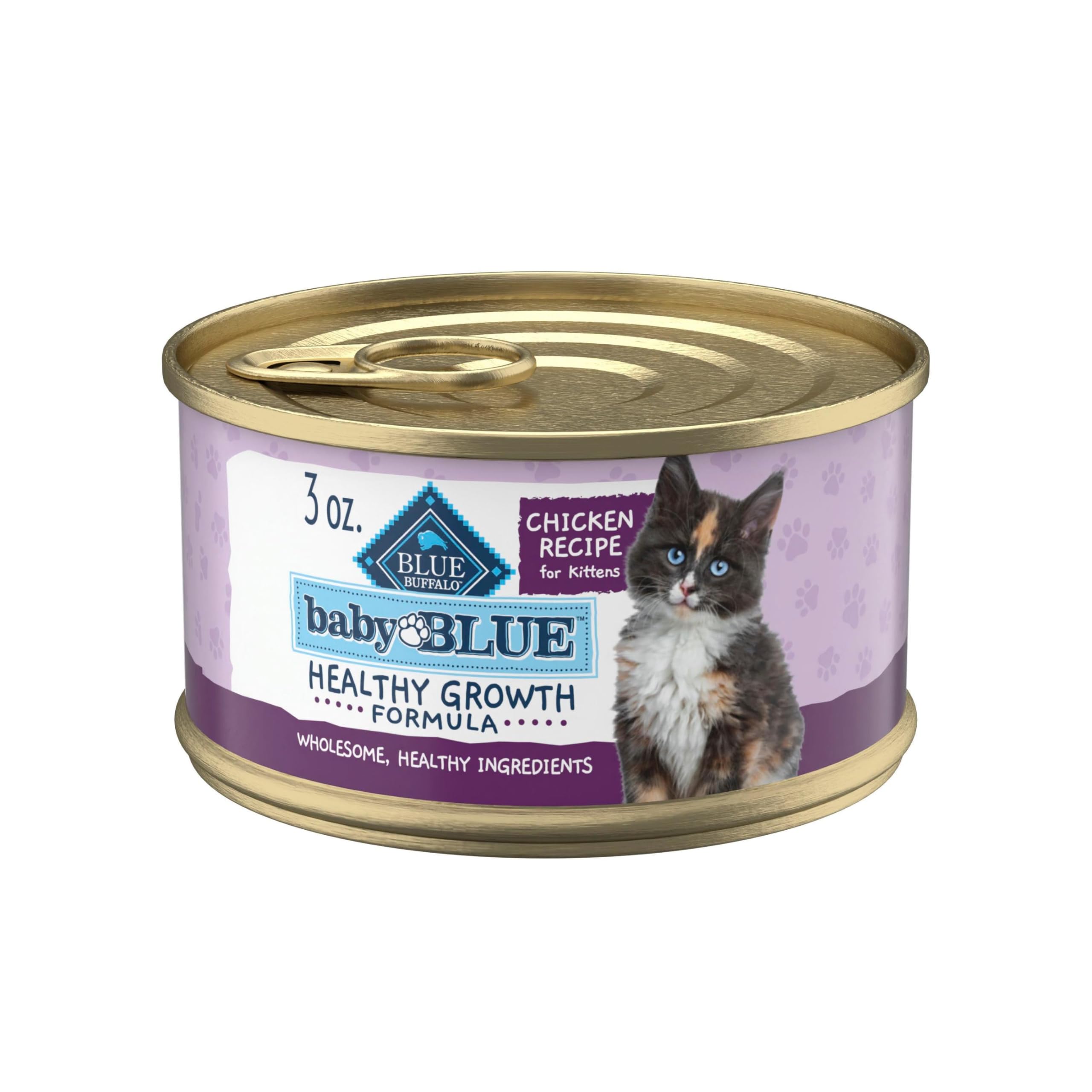
Twenty-four cans of chicken-first wet food that owners say earns the Maine Coon head-bump.
Chicken is the very first ingredient in this paté, and it comes in twenty-four 3-ounce cans — enough to build a serious wet-food rotation. The high moisture content is the reason this matters for a Maine Coon: wet food adds hydration that dry kibble simply cannot. That combination with a dry food is what most large-breed owners end up doing.
Owners describe this as a food their cat actually loves rather than tolerates. One Maine Coon owner tried several similar brands and says their cat strongly prefers this brand’s taste and texture over all the others. Another says the kitten does a happy dance at mealtime and that combining the wet and dry formulas keeps everything running smoothly.
The catch here is texture. A few owners have found that this paté runs drier than their previous brand, and some picky kittens turn their nose up at it at first. Adding a little warm water or an omega oil on top can help briefly, though a couple of reviewers point out the appeal fades after a couple of months. Most cats, however, scarf it down — one Maine Coon owner reports being firmly in the “approves” camp. At 4.5 pounds total against the Hill’s dry bag’s 7 pounds, this case is lighter and more compact to store.
Hydration edge: chicken is the #1 ingredient and the high moisture level makes this an easy way to add water content alongside any dry kibble.
Texture sensitivity: some dry-leaning cats refuse paté texture, so if your Maine Coon has never eaten wet food, buy a couple cans first before committing to the full case.
Best for: Maine Coon owners who want a wet-food rotation with real chicken first and enough cans to last a while.
Skip the full case if: your kitten has already refused paté-style textures in the past.
4. ACANA Dry Cat Food for Kittens First Feast
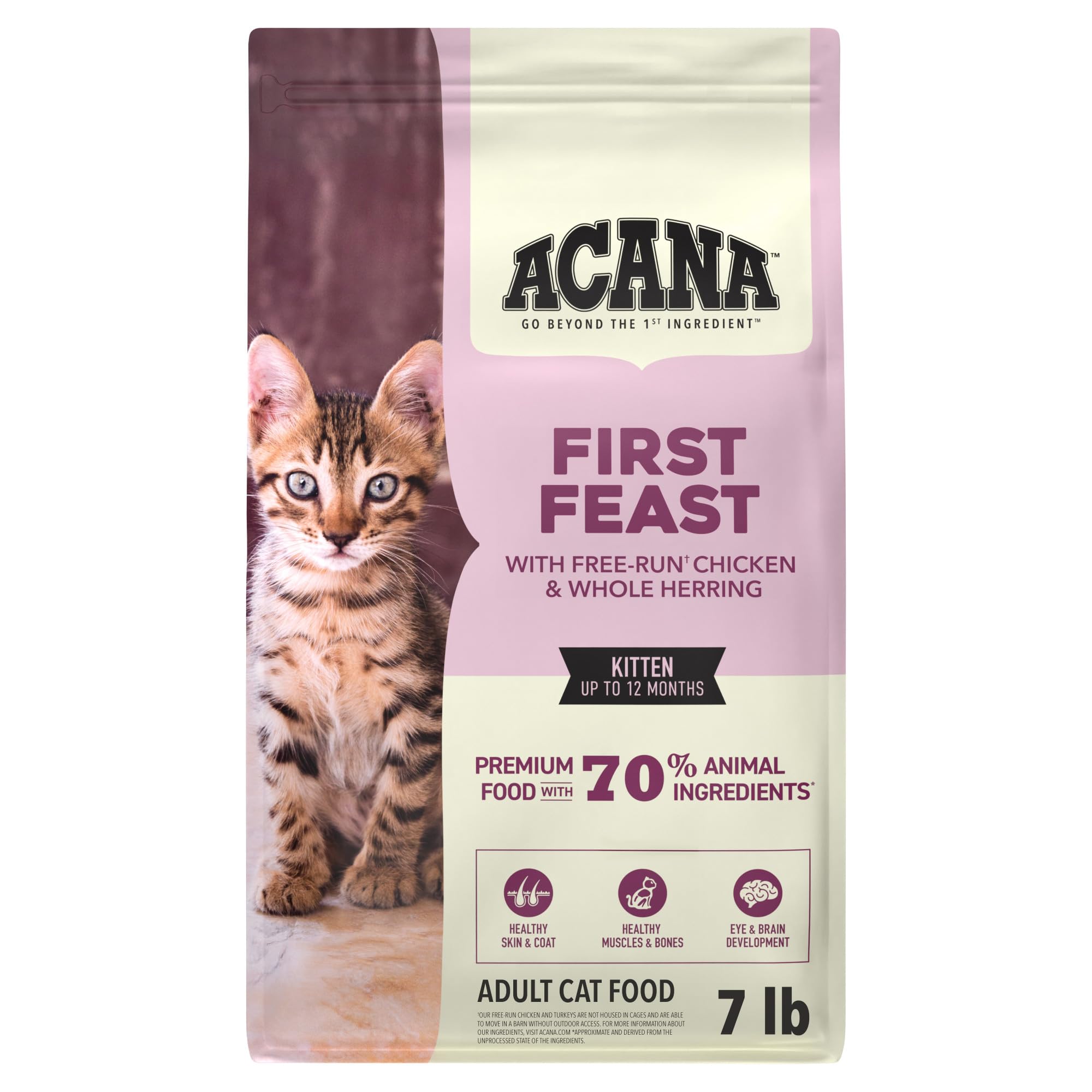
Seventy percent animal ingredients in a triangular kibble built for growing jaws.
This is the recipe that goes hardest on whole-prey composition: 70% animal ingredients with free-run chicken and whole herring as the anchor, plus taurine, EPA, and DHA for eye and heart health. The kibble itself is shaped as a small triangle, and that geometry seems to help kittens pick up the pieces more easily than round kibble does.
What owners talk about is how palatable it is — picky eaters who turned their nose up at other foods eat this one consistently. One long-time customer has fed Acana from six weeks through adulthood and reports almost no vomiting and better intake than previous foods. The omega-3 and omega-6 blend shows up as a noticeably shinier coat over time.
The 7-pound bag matches the Hill’s dry bag on weight, so this is one of the larger bags in this comparison. The catch: some kittens simply do not take to the taste at first, and the price point sits higher than everyday grocery brands. For most Maine Coon owners it is a straight trade — pay more, get 70% animal ingredients and a coat you can see.
Reasons owners stick with it
- 70% animal ingredients with free-run chicken and whole herring
- Small triangular kibble shape that kittens pick up easily
- Omega-3 and omega-6 support a visibly shinier coat
- 7-pound bag matches the largest size in this comparison
Where it runs into friction
- Not every kitten takes to the taste on the first bag — transition slowly
- Sits higher in cost than standard grocery-store kitten kibble
Take this home if: you want a whole-prey-style kibble with 70% animal ingredients and a coat-boosting omega blend.
Think twice if: your Maine Coon is a stubborn picky eater who needs a taste trial before committing to a full 7-pound bag.
5. Hill’s Science Diet Kitten Formula Wet Cat Food
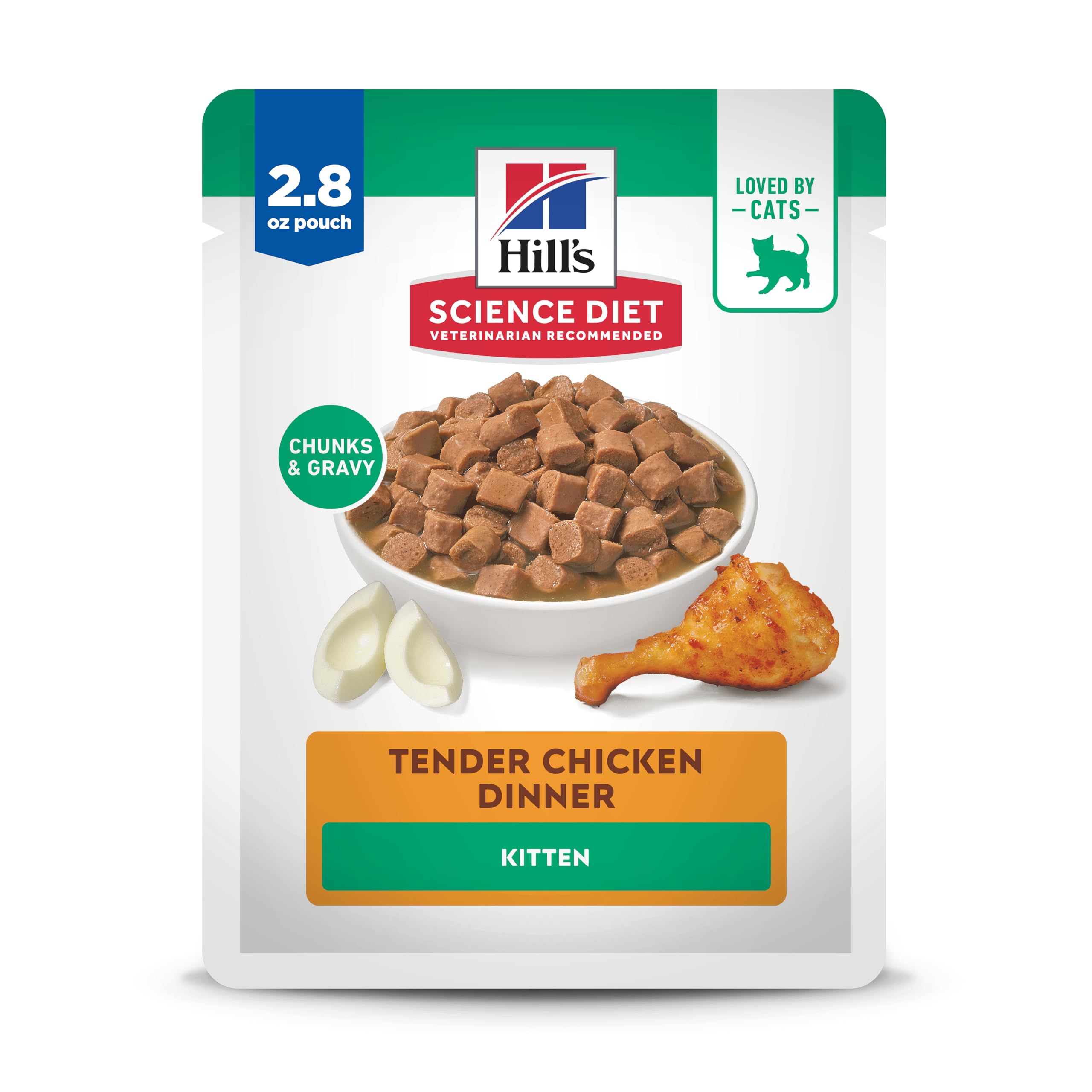
Chicken stew pouches from the vet-recommended brand, portioned for one-kitten meals.
Hill’s is the brand vets recommend most, and this wet formula comes in an easy-to-open pouch. Natural ingredients with added vitamins, minerals, and amino acids, plus a chicken stew flavor that kittens tend to lap up. The mini meatball shape inside seems to reduce mess compared with shredded-in-gravy textures.
The pouch format is the standout here. Owners say the packets store compactly and are simpler to serve than cans, and that the gravy gets eaten first before the kitten works through the solid pieces. One owner specifically noted less cleanup with these mini balls than with shredded-in-gravy options they had tried. Combined with the wet-food moisture angle, it does more hydration work than dry kibble alone.
Two honest limits. First is shelf life of enthusiasm — a handful of shoppers say their kittens loved the pouches for about a week and then lost interest, which can happen with any single-flavor wet food. Second is the packaging volume; some owners prefer cans because they are recyclable, and one reviewer noted they switched brands over cost. That said, for a Maine Coon owner who wants pouches that make mealtime easy, this is the version to grab.
Pouch convenience: easy-to-open packets and mini meatball texture reduce prep time and cleanup versus shredded wet foods.
Flavor fatigue: some kittens lose interest after a week, so rotating flavors helps keep mealtime interesting for a growing Maine Coon.
Pick this up if: you want vet-recommended wet food in pouches that are fast to serve and easy to store.
Consider a different option if: you prefer recyclable packaging or your kitten bores quickly with a single flavor.
Know the Specs
Protein & DHA Levels
Protein is the building block for a Maine Coon’s muscle and bone, and DHA is an omega-3 fatty acid that supports brain and eye development during the rapid growth phase. Recipes that list chicken or fish as the first ingredient and call out DHA on the label tend to be the more growth-focused choices for a large breed. This is why dry recipes like Stella & Chewy’s raw-coated kibble with its 65-70% animal protein and Hill’s dry formula with fish-oil DHA both make the shortlist.
Form, Size, and Moisture
Wet food delivers moisture that dry kibble simply cannot, which matters for hydration in a growing kitten. Kibble size and shape matter too — a small, easy-to-pick-up piece helps young Maine Coons who are still working through baby teeth. Most large-breed owners end up feeding a mix: dry kibble for the day, wet food as a topper or evening meal.
Common Questions
How much should I feed my Maine Coon kitten each day?
Can I feed dry and wet kitten food together?
Is grain-free kitten food better for a Maine Coon?
How long does a 7-pound bag of kitten kibble last?
Will my Maine Coon kitten eat the same food as an adult Maine Coon?
Why does my kitten suddenly stop eating a food it used to love?
Is small kibble really necessary for a Maine Coon kitten?
Should I transition to new kitten food slowly?
Is wet food better than dry food for Maine Coon kitten hydration?
Can I use kitten food as a Maine Coon treat or topper?
The Bottom Line
For most Maine Coon homes, the kitten food for maine coon winner is the Hill’s Science Diet Kitten Formula Dry because it combines DHA from fish oil, small kibble that young jaws can manage, and a formula from the vet-recommended brand. If you want maximum animal protein with a raw coating that keeps cats coming back, grab the Stella & Chewy’s Raw Coated Kibble. And for hydration with a chicken-first paté owners describe as a mealtime favorite, the Blue Buffalo Baby Blue Kitten Paté is the one to reach for. Whichever route you take, start slowly, watch your kitten’s coat and energy, and rotate flavors so mealtime stays interesting through the growth years.
How we choose
We do not accept paid placement. Every pick is matched to a real buyer and a real use-case; we do not hands-on test units.
Sources
Specifications: manufacturer listings and product documentation. Review insights: verified customer reviews, as of October 2026. Pricing: not shown on this page (it changes often); check the current price via the retailer link.
As an Amazon Associate, Aappliancez earns from qualifying purchases. This does not affect which products we feature.