Disclosure: Some links in this post are affiliate links. As an Amazon Associate I earn from qualifying purchases, at no extra cost to you. Learn more
Specs are compiled from manufacturer listings and verified buyer reviews and can change over time — please confirm the key details on the product page before buying.
You want frankincense that smells like resin and tree sap, not perfume, and you don’t want to waste money on a bottle that disappoints. A genuine Boswellia carterii oil should smell green, balsamic, and faintly lemony, not sweet. The five bottles below are worth your attention if that’s what you’re after.
This guide is built by comparing the manufacturers’ published specifications and the patterns across verified customer reviews, so you get each pick’s real strengths and trade-offs instead of marketing spin.
Some buyers diffuse it for meditation, some blend it into a carrier oil for skin, and some just want the room to smell like an old church. To keep you from buying blind, this guide breaks down each bottle’s purity claims, bottle size, and how owners describe the aroma in practice while hunting for the frankincense essential oil that fits your routine.
Top Picks

How To Choose The Best Frankincense Essential Oil
Buying frankincense is not like buying a candle. You’re paying for plant material distilled into a bottle, and that bottle can be stretched, blended, or swapped for a cheaper species without the front label ever admitting it. So the deciding factors are narrower than they look — species, testing, bottle size, and how the oil behaves once it’s in the air.
Species first, brand second
Frankincense comes from tree resin, and not every tree produces the same scent. Boswellia carterii is the species most diffuser users mean when they say “frankincense” — it reads green, balsamic, and a little lemony. Boswellia serrata leans more terpeney and pine-like. If the front label only says “frankincense” with no species name, you genuinely don’t know which one you’re getting, and the aroma can land somewhere you didn’t expect.
What third-party testing actually tells you
A GC-MS test is a lab analysis that breaks the oil into its chemical parts, so a dishonest filler shows up as an unexplained peak. Batches that get tested and published give you something a fragrance description never can: a paper trail. This matters most if you plan to dilute and apply the oil to your skin — you want to know there’s nothing in there you didn’t order.
Bottle size and dropper style
A 10 mL bottle of pure frankincense holds a surprisingly long supply, because most routines call for a couple of drops at a time. Bigger bottles — 30 mL and up — make more sense if you’re blending regularly or topping up a diffuser every night. Glass type matters too: dark amber glass blocks light, and light is what turns a good oil flat over time. A euro-style dropper, the kind with a small hole in the insert, gives you drop-by-drop control so you’re not dumping oil into your blend by accident.
What “therapeutic grade” does and doesn’t mean
It is not a regulated certification — no agency issues it. In practice, brands use it to signal that the oil is undiluted and tested, which is worth something, but it’s a marketing phrase, not a standard. The stronger signals are a named species, a stated country or region of origin, and a test report you can actually look at.
Side-by-Side Comparison
| Model | Best For | Bottle Size | Species | Testing Claim | Amazon |
|---|---|---|---|---|---|
| Plant Therapy Frankincense Carterii★ Best Overall | All-round diffusing and blending | 10 mL (1/3 oz) | Boswellia carterii | GC-MS tested by third-party labs | Amazon |
| Prime Natural Organic FrankincenseBest Value | Big-bottle value and everyday skincare | 30 mL / 1 oz | Frankincense (organic) | — | Amazon |
| Revive Frankincense Boswellia Carterii | Scent-first buyers who want it strong | 10 mL | Boswellia carterii | No fillers, carrier oils, or synthetics | Amazon |
| Aura Cacia Frankincense | Long-time brand loyalists and office sachets | 0.5 fl oz | Frankincense | — | Amazon |
| Plant Therapy Organic Frankincense Carterii | USDA Organic buyers who want paperwork | 10 mL | Boswellia carterii | USDA Organic; batch-specific GC-MS reports | Amazon |
Detailed Reviews
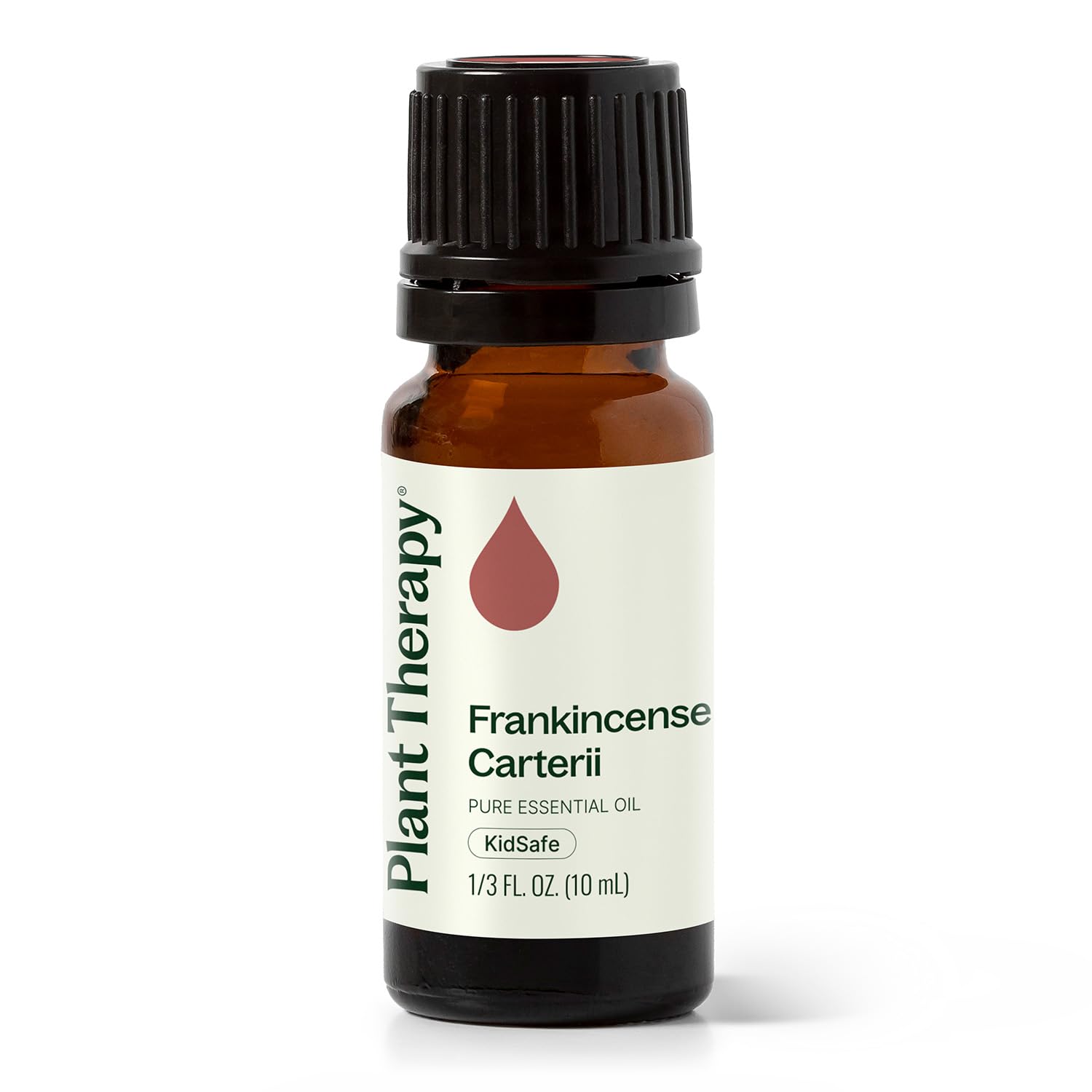
1. Plant Therapy Frankincense Carterii Essential Oil 10 mL
Our pick — over 4.5★ from 1,500+ verified ratings; the strongest balance of quality and price.
The bottle diffuser users stop shopping around for
If you want one frankincense that handles diffusing, blending, and a diluted massage without argument, this is the safest place to start. It’s a 100% pure, undiluted Boswellia carterii oil with no additives or fillers, drawn from the species whose aroma most people picture when they picture frankincense at all. Roughly a third of an ounce doesn’t sound like much, but since each session takes a couple of drops, it covers months of regular use.
The aroma is where this one earns its keep. It lands green and balsamic with a resinous center and a piney top note that fades into something warmer and more ancient underneath. What wins people over across the review pages is exactly that balance — potent without being overpowering, and it plays nicely alongside lavender, chamomile, and cedarwood in a blend. Diluted in a carrier oil, it’s the blend reviewers keep returning to for achy joints and tight muscles.
The quality case rests on documentation. Every bottle runs through organoleptic testing (a trained nose-and-eye check of the oil itself) plus multiple rounds of GC-MS testing by several third-party laboratories, and the brand keeps certified aromatherapists on staff to field questions. Practically, that means if you’re the type who reads a test report before trusting a bottle, you’re well served here. One routine note before you decide: the earthy sharpness at the open is the whole point of carterii, so if you want a soft, sweet, perfumey frankincense this one will not be your favorite.
What earns it the top spot
- 100% pure, undiluted Boswellia carterii with no additives or fillers
- Multiple rounds of third-party GC-MS testing on every batch, plus organoleptic testing
- Certified aromatherapists available to answer usage questions
- Blends cleanly with lavender, chamomile, and cedarwood for diffuser and massage blends
Where it asks patience
- The 10 mL (1/3 oz) bottle means frequent rebuying if you diffuse nightly
- The green, resinous opening note is a taste you acquire — it is not a soft or sweet scent
Reach for this if: you want a species-named carterii oil with testing behind it and you’re fine rebuying a small bottle to keep it fresh.
Look elsewhere if: you plan to blend every single evening and would rather not keep restocking a 10 mL bottle.
2. Prime Natural Organic Frankincense Essential Oil 30ml
Three times the oil of a standard bottle, sized for people who blend nightly
The size is the headline here — this is a 30 mL / 1 oz bottle against the 10 mL you get from Plant Therapy or Revive, so it pours out to three times the volume. Weight tells the same story: at 2.89 ounces it’s roughly six times the heft of the Aura Cacia bottle at 0.48 ounces. If your routine means a diffuser every night plus a diluted blend on the weekends, that gap is the difference between reordering constantly and just having oil on the shelf.
It’s a dark amber glass bottle with a euro-style dropper and a tamper-proof seal cap, which gives you drop-at-a-time control instead of a free pour. The label positions it for the usual trio of jobs: aromatherapy for winding down, DIY skincare mixed into a carrier oil, and a drop added to moisturizer. Owners broadly agree it’s a good-quality oil at a fair price, and the skincare use runs through the review pages with people applying it diluted to the face and body.
Here’s the honest catch, and it’s a scent one rather than a quality one. Some buyers describe the aroma as pure, while others find it doesn’t smell the way they expected frankincense to smell — which is worth knowing if you’re buying blind and have a very particular nose in mind. The 30 mL format also means more oil sitting in the bottle over time, so store it somewhere dark and cool to keep it at its best.
Editor’s read on the size math: You get three times the oil with 30 mL versus 10 mL, and the bottle weighs roughly six times more at 2.89 ounces versus 0.48 ounces. This is the bottle for a heavy daily user, not a sampler.
Not the one for: a first-timer who wants to test whether they even like frankincense before committing to an ounce of it.
Best for: nightly diffusers and DIY skincare blenders who want an ounce of oil on hand instead of a third of one.
Skip if: you’re still figuring out whether you like the resinous profile at all.
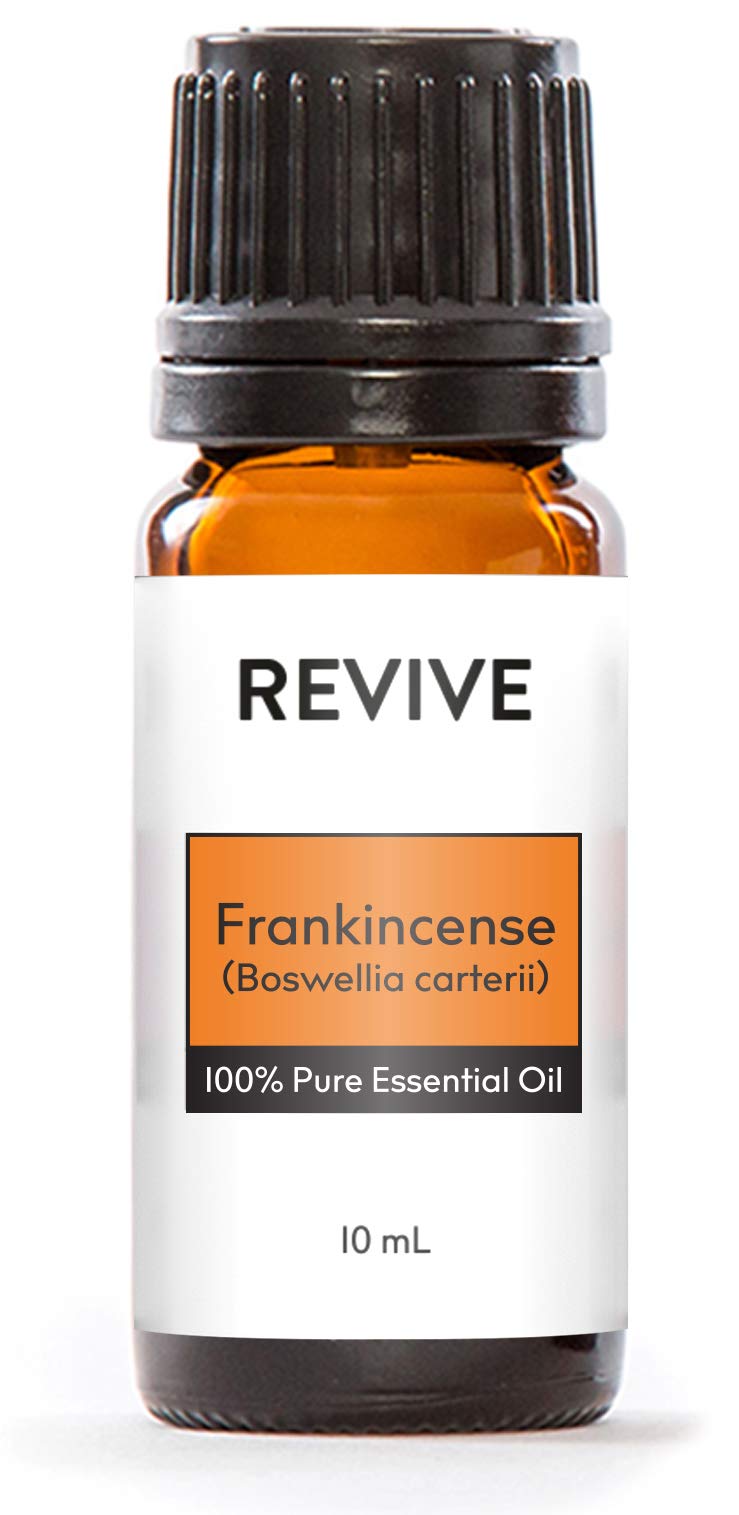
3. Frankincense Boswellia Carterii 10mL Essential Oil
The one scent-first buyers reach for
If you’ve been disappointed by a thin, faint frankincense that disappears ten minutes after you diffuse it, this bottle is the counterargument. It’s a Boswellia carterii oil with no fillers, carrier oils, or synthetics, and the way owners describe it is the giveaway — a long-lasting, high-quality scent rather than a quick bloom that vanishes. Blended with myrrh, that warm woodsy profile reads as authentic church incense.
Revive sources its oils from the regions where each species grows best, not from wherever supply is cheapest that season. The company sells direct to you, cutting out distributors and uplines, which is how it offers the same quality oil for less. This is a 10 mL bottle, the same size as the Plant Therapy pick, so your choice depends on aroma preference, not volume.
Reviewers also mix a drop into jojoba oil for a face blend. The people who love this bottle tend to be the ones who want a bigger, bolder scent footprint in the room — this is not a whisper of frankincense. One practical note: cruelty-free and unrefined are stated on the label, but there’s no published GC-MS report to read here, so if lab paperwork is non-negotiable for you, the Plant Therapy bottles are the stronger fit.
Why diffusers rate it: a carterii oil with no fillers that holds its scent rather than fading off quickly — and it doubles as a skincare addition with jojoba.
The trade-off: no published batch GC-MS reports, so buy it for the scent and the sourcing story rather than for a test document.
Who should grab it: scent-first buyers who want frankincense that stays present in the room and don’t need a lab report in hand.
Who should pass: anyone who won’t buy an oil without third-party testing documentation.
4. Aura Cacia, Oil Essential Frankincese, 0.5 Fl Oz

Half an ounce of the scent office visitors ask about
The half-ounce bottle is the biggest format in this lineup, and the way it earns its keep is by being a workhorse rather than a showpiece. Aura Cacia describes the aroma as spicy, balsamic, green, lemon-like and peppery — a sharper, more citrus-edged frankincense than the carterii bottles above, and one that cuts through a room rather than settling quietly into it.
People consistently notice how far this aroma reaches. It diffuses alone or in a blend, and a few drops in a desk-drawer sachet scent the whole office. The brand has loyal repeat buyers who won’t use anything else for frankincense, which is a strong signal for a scent product.
Two practical details separate this bottle from the rest. First, it ships with a child-resistant safety cap, which matters if there are small hands in the house and the oil lives anywhere reachable. Second, this is a Frontier Co-op brand, and the sourcing positioning reflects that: responsible to people and plant, with the company noting a Whole Planet Foundation fund membership supporting microentrepreneurs. On the flip side, this listing doesn’t name the Boswellia species the way the Plant Therapy picks do, so if species certainty is your priority, look to those instead.
Why it holds its own
- 0.5 fl oz — the largest bottle in this lineup for heavy use
- Child-resistant safety cap, a real consideration in a house with kids
- Sharp, spicy, lemon-peppery aroma that carries across a room
- Frontier Co-op brand with stated responsible-sourcing commitments
What to weigh
- No Boswellia species named on the listing, unlike the Plant Therapy and Revive picks
- The peppery, lemon-leaning profile is further from classic church incense than the carterii oils
Go this way for: a big bottle with a safety cap and a bright, spicy frankincense that reaches the far side of a room.
Think twice for: a species-specific carterii aroma — this one sits in a sharper, citrus-leaning register.
5. Plant Therapy Organic Frankincense Carterii Essential Oil 10 mL

The USDA Organic bottle with batch-specific GC-MS reports
Same 10 mL size, same Boswellia carterii species, same brand as the top pick — what you’re paying the extra for here is the word Organic, in USDA form. This is a 100% certified pure, therapeutic-grade carterii oil with no fillers or additives, and the batch-specific GC-MS reports are published so you can trace what’s in the specific bottle you’re holding rather than trusting a generic claim.
The aroma is green, balsamic, and lemon-wood—a slightly brighter opening than standard carterii—and it relaxes a room fast when diffused. Diluted in jojoba or almond oil, it works the same as the standard bottle in DIY balms for achy joints. The 10 mL bottle has the same 0.94 x 0.94 x 2.5-inch footprint as the non-organic version, so size isn’t a factor—the choice depends on whether organic certification matters to you.
Be cautious with anything you plan to take internally. You get plant-materials sourcing and certified aromatherapist support, but there’s only one bottle size, so heavy users will need to reorder. Also, organic certification is a farming and handling standard, not a promise about how the oil will work for you. If you’re diffusing and blending, it’s straightforward; for more involved uses, talk to the brand’s staff.
The upgrade you’re paying for: USDA Organic certification plus batch-specific GC-MS reports published per bottle, on the same carterii oil the standard version uses.
Cost of admission: 10 mL only, so anyone diffusing nightly will be reordering this as often as its non-organic twin.
Suits you if: USDA Organic is a hard requirement and you want a test report matched to your exact batch.
Not your bottle if: organic certification doesn’t change your decision — the standard Plant Therapy carterii gives you the same species for less.
Know the Specs
Species: Why Carterii On The Label Changes Everything
Frankincense isn’t a single plant; it’s a group of Boswellia trees, and the species determines the aroma you get in the bottle. Boswellia carterii is the profile most diffuser users picture — green, balsamic, lemon-wood, resinous at heart. Other species run woodier, pine-forward, or sharper. When a listing names no species at all, you’re buying on trust rather than on information, and the scent may land well outside what you expected. Naming the species is one of the simplest honesty signals a brand can give, and it costs them nothing to do.
Bottle Size, Amber Glass, and Dropper Control
A 10 mL bottle holds roughly a third of an ounce, so it’s not much oil—but a typical diffuser session only needs a few drops, so a small bottle still lasts a long while. A 30 mL bottle gives you three times that volume for nightly routines. Dark amber glass blocks the light that turns frankincense flat over months. And a euro-style dropper (an insert with a small hole) gives you drop-by-drop control so you don’t over-pour into a blend or diffuser reservoir.
Testing: GC-MS, Organoleptic, and What They Prove
A GC-MS test separates the oil into its chemical components so any unexpected additive would show up as a stray peak. Organoleptic testing is the trained nose-and-eye check that confirms the oil looks and smells the way that batch should. Together they give you something a fragrance adjective can’t: evidence. Third-party labs are the meaningful version — an in-house test is still a test, but independent labs remove the conflict of interest. For oils you intend to dilute onto skin, that paper trail is worth prioritizing.
Dilution and Carrier Oils: The Rule You Shouldn’t Skip
Essential oils are concentrated plant extracts, not massage oils. Before frankincense touches your skin, it gets blended into a carrier oil — a plain, unscented oil like jojoba, almond, or a lotion base — so the concentration is gentle rather than neat. That’s how the DIY balms and face blends in these reviews actually work: a few drops of frankincense, a measured amount of carrier, combined. Diffusing needs no carrier at all; the oil goes straight into the water or onto the diffuser pad.
Common Questions
What is the difference between Boswellia carterii and other frankincense oils?
Can I put frankincense essential oil directly on my skin?
How many drops of frankincense go in a diffuser?
Do I need a frankincense oil with a GC-MS report?
Is a 10 mL bottle or a 30 mL bottle the better buy for frankincense?
How long does a 10 mL bottle of frankincense actually last?
Is frankincense essential oil safe to use around children?
What does frankincense essential oil smell like when it is the real thing?
What is the difference between the two Plant Therapy frankincense bottles?
Can I mix frankincense with other essential oils in a diffuser?
The Bottom Line
For most routines, the frankincense essential oil to buy is the Plant Therapy Frankincense Carterii, because it names the species, publishes third-party GC-MS testing, and holds a 4.7 rating across more than 1,500 owners on a shelf where many bottles won’t tell you what’s inside. If you want the scent to linger and don’t need lab paperwork, the Revive Boswellia Carterii is the one buyers describe as long-lasting. And for a bigger bottle that stretches across nightly diffusing, the Prime Natural 30 mL gives you an ounce of oil to work with. Whichever you choose, store it in dark glass away from light and dilute it in a carrier before it touches skin.
How we choose
We do not accept paid placement. Every pick is matched to a real buyer and a real use-case; we do not hands-on test units.
Sources
Specifications: manufacturer listings and product documentation. Review insights: verified customer reviews, as of October 2026. Pricing: not shown on this page (it changes often); check the current price via the retailer link.
As an Amazon Associate, Aappliancez earns from qualifying purchases. This does not affect which products we feature.