Disclosure: Some links in this post are affiliate links. As an Amazon Associate I earn from qualifying purchases, at no extra cost to you. Learn more
Specs are compiled from manufacturer listings and verified buyer reviews and can change over time — please confirm the key details on the product page before buying.
If your heel lifts out of the shoe with every step, the fix is not a new pair of shoes — it is the right insert. A shoe that is a half size too long, too wide, or cut for a foot shape that is not yours can be made wearable with a heel pad, a full-length insole, or a toe filler. The trick is matching the insert to the loose spot: a slipping heel, a sliding foot, or empty space at the toe.
This guide is built by comparing the manufacturers’ published specifications and the patterns across verified customer reviews, so you get each pick’s real strengths and trade-offs instead of marketing spin.
The best insert for a shoe that is too big takes up the gap without crushing your toes, and it has to survive a full day on its feet. That is the whole test, and it is exactly what these inserts for shoes too big were judged on.
Top Picks
How To Choose The Best Inserts for Shoes Too Big
Start by naming where the shoe is loose. A heel that pops out is a different problem from a toe box with an inch of dead space, and the insert that fixes one usually makes the other worse. Match the insert to the gap, not to the shoe size on the box.
Identify the loose spot before you buy
Walk a few steps and watch your heel. If it lifts, you want a heel grip or a heel cup that fills the back of the shoe. If the whole shoe feels roomy and your foot slides forward, you want a full-length insole that runs the length of the footbed. If the front of your shoe is empty — after a partial-foot amputation or with a very long toe box — you want a toe filler that sits in the empty space.
Thickness and height change the fit in two directions
An insert that is too thin will not stop the slip; one that is too thick can push your heel up and make the shoe tight across the instep. A full-length insole adds height under the whole foot, so it can cramp a shoe that was already snug. A heel pad adds material only at the back. Pick the thinnest insert that stops the slip.
Check trimming, adhesion, and weight limits
Trim-to-fit insoles let you cut to your shoe size, but a sloppy cut can leave the insert bunched at the toe. Size-specific insoles skip the scissors. Heel pads rely on an adhesive backing, and leather linings are slicker than fabric, so plan for that. If you are a heavier person or on your feet all day, look for an insert rated for a higher weight and built with a supportive heel cup.
Side-by-Side Comparison
| Model | Best For | Type | Fit Method | Weight | Amazon |
|---|---|---|---|---|---|
| Dr. Scholl’s Heavy Duty Support Insole Orthotics, Big & Tall★ Best Overall | Heavier feet and tall frames in work boots | Full-length insole | Trim-to-fit | 14.4 ounces | Amazon |
| Professional Heavy Duty Support Pain Relief OrthoticsTop Performer | Work boots and shoes that need no trimming | Full-length insole | Size-specific | 5.93 ounces | Amazon |
| Ballotte Premium Silicone Heel Pads (8-Pack) | Heels that slip out of flats and pumps | Heel pad | Self-adhesive | 6.74 ounces | Amazon |
| Shoolex ToeLuxe Amputee Toe Filler | Empty toe space after partial-foot amputation | Toe filler | Trim-to-fit foam | 2.4 ounces | Amazon |
| Dr. Scholl’s Advanced Pain Relief Plantar Fasciitis Orthotic Insoles | Long standing shifts and plantar fasciitis pain | Full-length insole | Size-specific, no trimming | 9.17 ounces | Amazon |
Detailed Reviews
1. Dr. Scholl’s Heavy Duty Support Insole
Our pick — 4.0+★ from 87,500+ verified ratings; the strongest balance of quality and price.
Built for the buyer over 200 pounds who needs the shoe to stop moving underfoot.
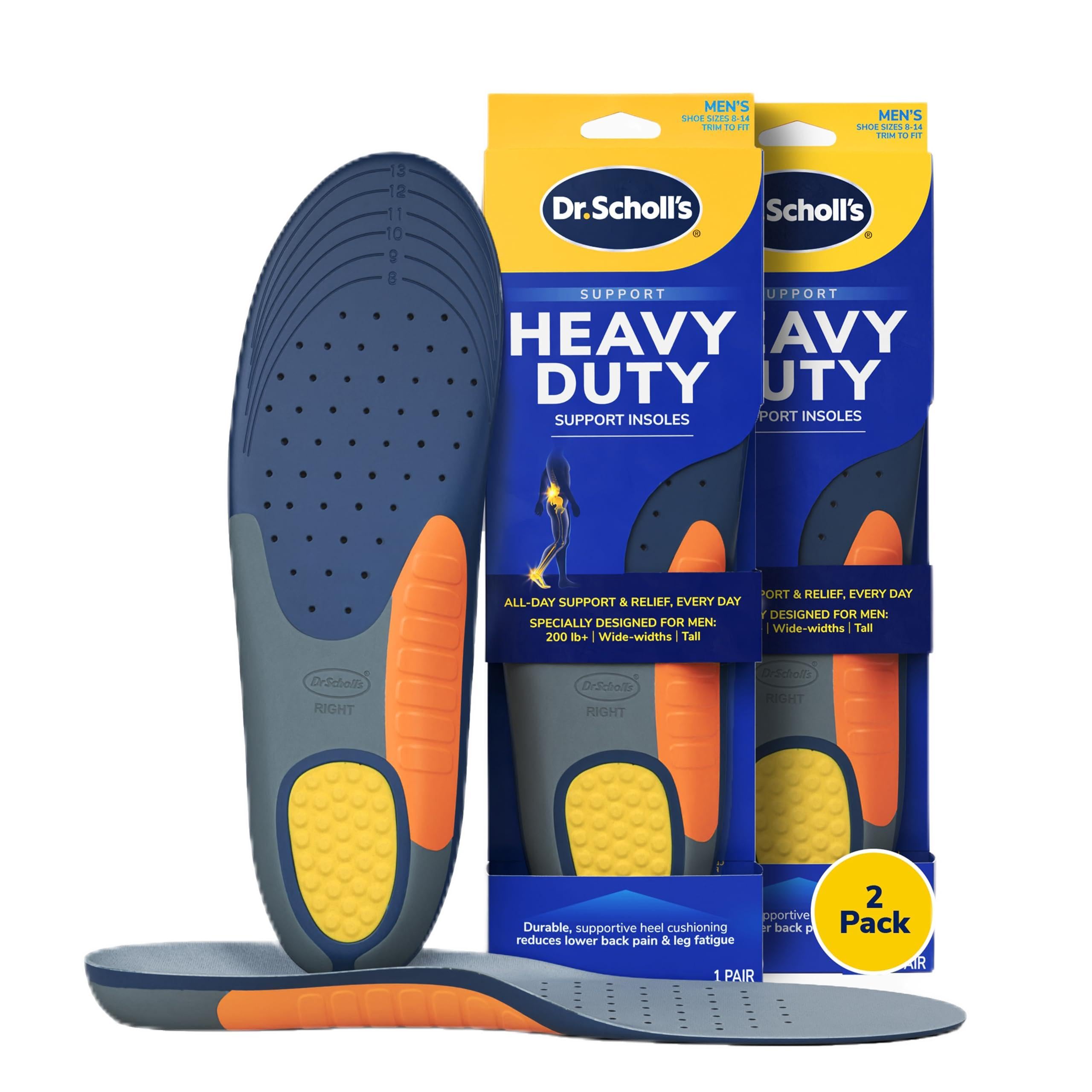
This is the pick for a heavier man, a tall frame, or wide feet stuffed into a shoe that was never cut for them. Dr. Scholl’s designed it for people over 200 lbs, tall stature, or wide feet, and it fits any arch type including high and fallen arches. The full-length pad is 14.17 inches long and 4.37 inches wide, which gives it real coverage from heel to ball of the foot rather than a patch at the back.
It earns its keep at the crash zone, the part of the shoe that takes the impact. The foam absorbs shock, and extra padding sits in the heel cup (the back pocket that cradles your heel) — the exact spot a loose shoe rubs you raw. Buyers report trimming it down to a size 8 even for a size 11 shoe. The trim lines are molded in, so one insert covers a wide range of shoe sizes. If your shoe size sits at the edge of the chart, this is the most forgiving pick here.
The catch is bulk. At 14.4 ounces it is 8.47 ounces heavier than the Professional Heavy Duty orthotics below, and all that foam eats vertical room. A shoe that was only slightly big can end up feeling snug across the top of your foot. The other honest note is the squeak — a few pairs make noise against certain shoe linings, and slipping a thin cut-to-size dryer sheet between the shoe and the insert is the low-cost fix buyers have shared.
What holds up under real wear
- Built for over 200 lbs, tall frames, and wide feet
- 14.17 x 4.37 inch footprint covers the whole footbed
- Trim lines let you cut down several shoe sizes
- Extra heel cushioning takes the sting out of a slipping shoe
Where it pushes back
- 14.4 ounces of foam can tighten an already-snug shoe
- Squeaking in some shoe linings until you add a barrier layer
- Arch support and fit draw split opinions in the reviews
Worth reaching for when: your weight, height, or foot width is the reason the shoe feels loose, and you want one insert to absorb the slack.
Measure first if: your shoes are only a touch roomy — the thickness can crowd the top of the foot.
2. Professional Heavy Duty Support Orthotics
The work-boot insert that skips the scissors and still holds the heel in place.
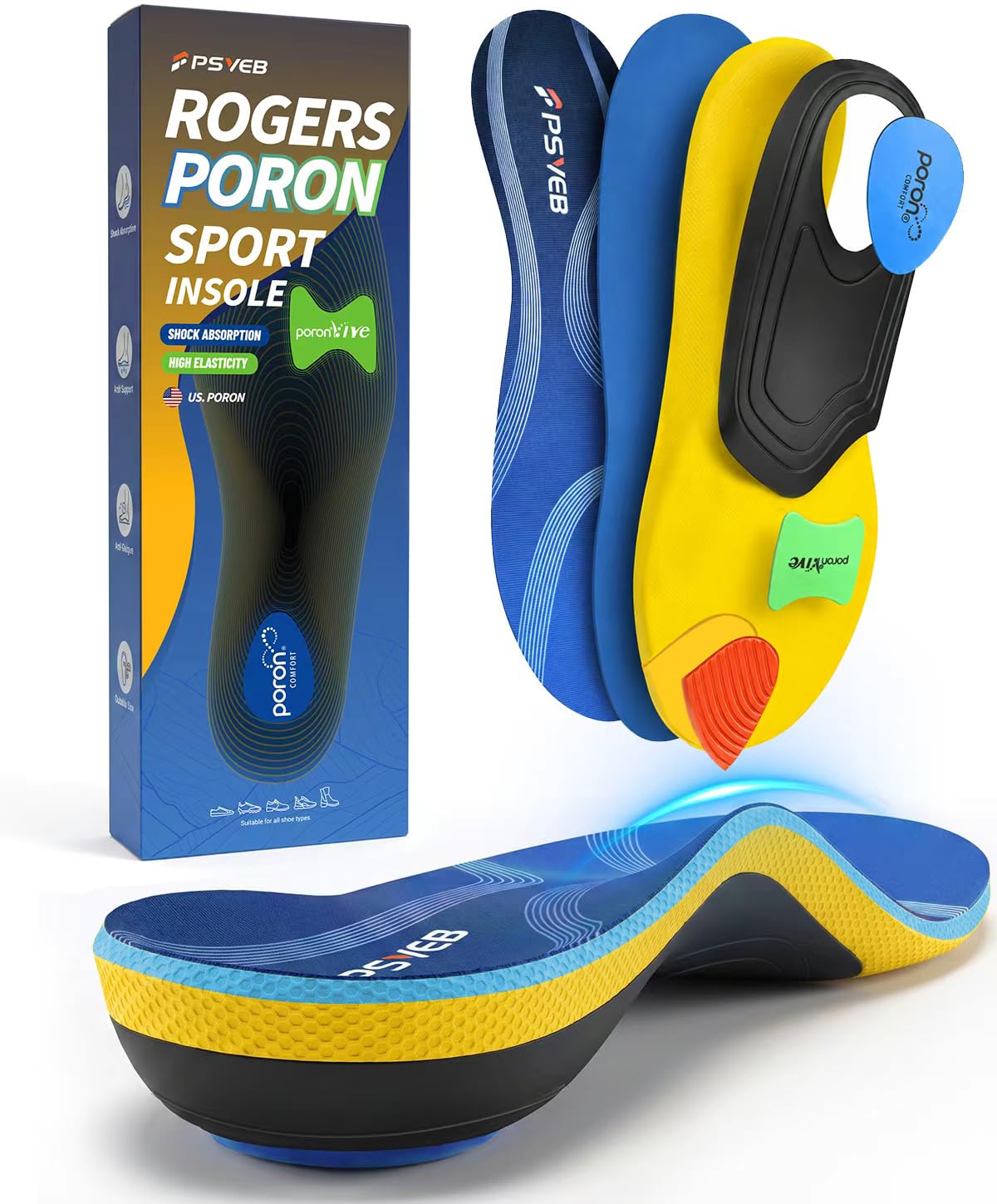
If you dread trimming an insole and getting it wrong, this one drops in as sold. It is a size-specific insert at 12.2 inches long, and it weighs 5.93 ounces — 8.47 ounces lighter than the Dr. Scholl’s Big & Tall above, so it steals far less room from an already-loose shoe. The deep U-shaped heel cup is the part that matters for a shoe that runs big: it surrounds the heel instead of just sitting under it, so your foot has less room to skate sideways.
Owners put these in work boots and notice the change right away. The heel cushioning is the detail that keeps coming up in the reviews, and the firm feel is what most people describe rather than a soft squish. The double PORON cushioning layer — a shock-absorbing foam that springs back — is what handles the impact when you are standing on concrete for a shift. Three-point support under the forefoot, arch, and heel keeps the whole footbed from collapsing into the gap.
The thickness is the honest split. These run thicker than some buyers expect, which is exactly what you want in a roomy shoe but can be too much if the shoe barely fits. The sweatproof fabric top is a small comfort win on long days, and the insert is removable for washing and air drying. For a boot that has always been a half size too roomy, this is the low-drama choice.
What wins people over: the firm, planted feel in the heel, combined with a fit that needs no cutting. Owners mention the difference the moment they drop them into work boots.
Know before you buy: the thick profile is the recurring gripe. In a shoe with zero spare room, it will press on the top of your foot.
Reach for this if: you want a firm, supportive insert for boots and do not want to touch a pair of scissors.
Look elsewhere if: your shoe is a half-size-too-big rather than a full size — the thickness needs somewhere to go.
3. Ballotte Silicone Heel Pads
A 0.1-inch silicone pad that pulls a loose heel back into the shoe.
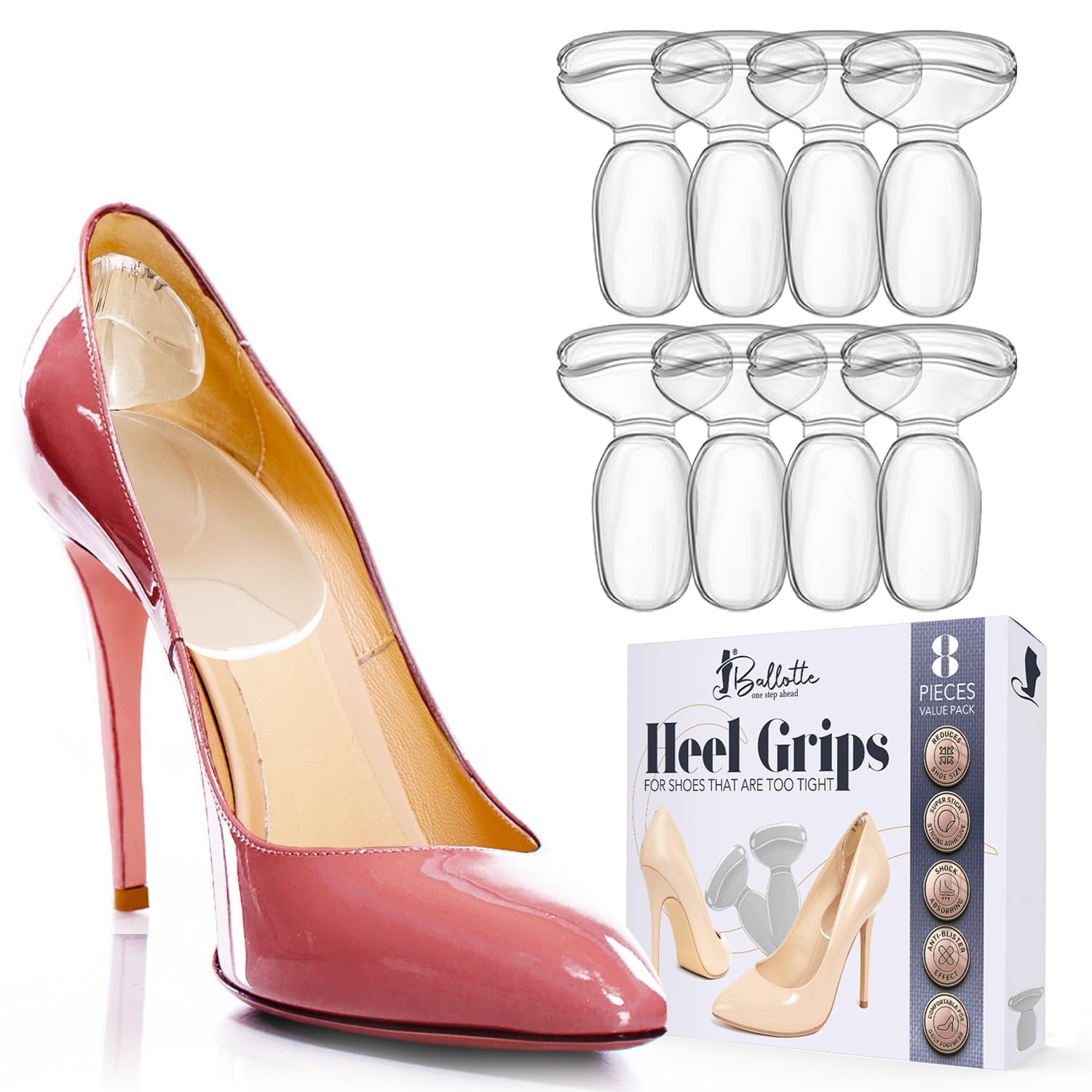
Some shoes do not need more length or width — they just need the heel to stop lifting. That is the job here, and the entire pad is 0.1 inches thick. Compare that to a full-length insole at 2.72 inches tall and you can see the whole philosophy: this is a scalpel, not a sledgehammer. The manufacturer says it takes up roughly a quarter size — enough to fix a shoe that is a half size loose without crushing your foot.
Six of these pads come in the pack, so you can treat several pairs of flats, pumps, or boots at once. They are molded to follow the shape of the heel section inside the shoe, and the gel is what stops the foot from sliding up and down. For blister prevention in new shoes, or for a pair you love that never quite fit, the difference is immediate.
Now the honest part. The adhesive backing is the weak link, especially against leather linings where the silicone has less to grab. Customers note reinforcing with double-sided tape when the pad starts to peel. And at 0.1 inches, a shoe that is genuinely a full size too big will still slip out — one shopper found them too thin to solve the problem alone. For that shoe, layer a pad with a full-length insole or step up to a thicker heel grip.
The fit fix that costs little: a quarter-size adjustment with gel cushioning, and enough pads in the pack to kit out every tight or loose pair in the closet.
The limitation to plan around: adhesion to slick leather needs help, and 0.1 inches will not rescue a shoe that is a full size too big.
Best for: shoes that are just slightly loose at the heel and slip up and down as you walk.
Not enough if: the shoe is a full size too big — go thicker or pair it with a full-length insert.
4. Shoolex ToeLuxe Amputee Toe Filler

For the shoe with an empty toe box, not a loose heel.
A partial-foot or transmetatarsal amputation (loss of the front of the foot) leaves a gap at the front of the shoe, and no heel pad or insole fills that. ToeLuxe does. At 2.4 ounces it is the lightest insert in this guide. The soft PU foam (a cushioned, low-density foam) is shaped to sit in the empty space and stop the shoe from bending where your foot no longer reaches. It fits closed shoes, including sneakers, boots, and dress shoes.
What the whole product hinges on is the trim. You cut the foam with ordinary scissors to match your exact foot shape, and the maker points to a sizing chart and a Small or Large starting point. Reviewers point out getting a confident stride back after custom fillers stopped working, with no rubbing at the front of the foot. One owner noticed the shoe no longer bends in front and found the balance improved.
Two things to weigh. The sizing chart matters more here than on any other insert, because foam you cut too far cannot be added back — buyers who overshot on width had to dial the fit in with more trimming. And the feel runs firmer at first; the weight takes a day or two to get used to. It is also built for a specific need, so it is the wrong tool if your issue is simply a shoe that is one size too long.
Why it fills a gap nothing else does
- Soft PU foam fills the empty front of a partial-foot shoe
- 2.4 ounces keeps the shoe light on your stride
- Trim-to-fit with scissors for a custom shape without a clinic visit
- Works in sneakers, boots, and dress shoes
The trade-offs to plan for
- You cut once — sizing errors are hard to undo
- Feels firmer than expected for the first day or two
- Only worth it for real toe-box gaps, not general looseness
Made for: anyone whose shoe is empty at the front after a TMA or partial-foot amputation.
skip it if: your shoe is simply too long overall — a full-length insole solves that instead.
5. Dr. Scholl’s Advanced Pain Relief Plantar Fasciitis Orthotic Insoles
Full-foot support with no trimming, built for shoes that need stability, not just filler.
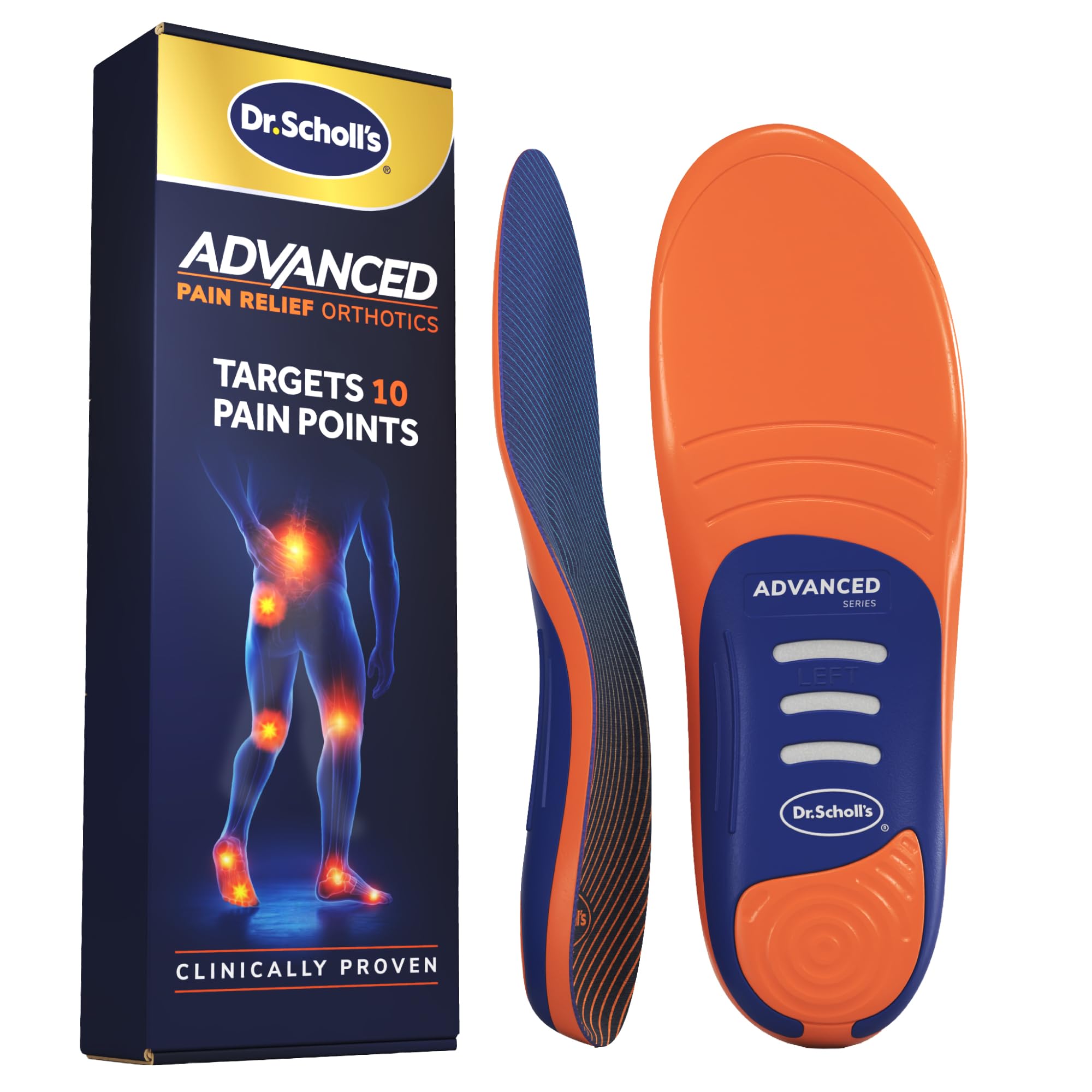
Here is the premium option, and the difference is in the fit method. These come in a specific size and need no measuring or cutting, which solves the biggest headache of a loose shoe: getting the insert to match it exactly. The maker claims 91% felt pain relief on day one, and the insert is rated to 340 lbs for people who stand all day. At 9.17 ounces it sits between the lighter orthotics and the Big & Tall foam.
The triple-layer cushioning absorbs shock, and a soft top cloth wicks moisture away to keep feet dry and control odor through a long shift. That top layer is why these are good in work shoes and sneakers you wear eight hours at a stretch. Targeted arch support works across flat, standard, and high arches, so you do not have to know your arch type before you order. The energy return is what keeps your feet from dragging by the end of the day.
The honest trade-off is height. Because the insert is full-length and built up, it adds volume and can make a snug shoe feel tight — buyers have solved it by pulling out the factory insole and wearing thinner socks. The value question is split in the reviews, with some feeling it is not worth the premium price. But for a shoe that is too big and a foot that needs real support, it is the most complete package here.
The reason it costs more: no trimming, size-specific fit, and a three-layer build rated for feet up to 340 lbs with moisture control.
The honest catch: the built-up profile adds height and can tighten a shoe, so plan to swap out the factory insole if your shoes run snug.
Pick these when: you are on your feet all day and want a supportive, no-cut insert that fills a roomy shoe.
Think twice when: your shoes are tight and you have no room to remove the factory insole.
Know the Specs
Trim-to-fit vs size-specific
A trim-to-fit insert has molded cut lines you follow with scissors to match your shoe size. The upside is coverage — one insert spans several sizes, so it works if your shoe size sits between standard sizes. The downside is user error: a sloppy cut can leave the insert bunched at the toe. A size-specific insert skips the scissors and drops in as bought. It is faster and more precise, but it is less forgiving if you guessed your size wrong.
Insert thickness and how much room it eats
Every insert adds material between your foot and the shoe, and that material has to go somewhere. A heel pad at 0.1 inches barely changes the fit; a full-length insole carrying foam and a heel cup takes up far more vertical room. That is why a thick insert fixes a loose shoe but can cramp a snug one. If your shoe was already tight, remove the factory insole first so the new insert has somewhere to sit.
Weight ratings and heel support
Inserts built for heavier users carry a weight rating, and it matters most for people on their feet all day. A rated insole uses denser foam and a deeper heel cup so the foot does not bottom out. If you are over 200 lbs or standing on concrete for a shift, a heavier-rated insert absorbs the impact better than a thin gel pad, which will compress and stop doing its job.
Adhesion and staying put
Heel pads rely on a sticky backing to stay in place. Fabric-lined shoes give the adhesive more to grip; leather linings are slicker and pads slide or peel sooner. If the pad starts to lift, washing it with warm soapy water and letting it air dry — not in direct sun — restores the tack. A short strip of double-sided tape is a reliable backup fix when the backing weakens.
Common Questions
Will an insole stop my heel from slipping out of a shoe that is too big?
Can I use a heel pad and a full-length insole at the same time?
How do I choose between a trim-to-fit insole and a size-specific one?
Will a thick insole make my shoe too tight?
Which insert works best in a work boot that runs big?
How long do these inserts last before I need to replace them?
Are these inserts safe for diabetic or sensitive feet?
Do I need an insert if only the toe box is empty and nothing else is loose?
Can I cut a trim-to-fit insole down to a much smaller shoe size?
What if the heel pad will not stay stuck inside my leather shoes?
The Bottom Line
Your right pick depends on where your shoe is loose. If your weight, height, or foot width is why the shoe never fit, buy the Dr. Scholl’s Big & Tall. It is the crowd favorite at 4.0+ stars across 87,000+ owners, and it is rated for feet over 200 lbs. If you want a firm insert for work boots that needs no trimming, the Professional Heavy Duty orthotics drop right in and hold the heel. And if the loose spot is just the heel in a pair of flats, the Ballotte silicone pads are the quarter-size fix that costs the least.
How we choose
We do not accept paid placement. Every pick is matched to a real buyer and a real use-case; we do not hands-on test units.
Sources
Specifications: manufacturer listings and product documentation. Review insights: verified customer reviews, as of October 2026. Pricing: not shown on this page (it changes often); check the current price via the retailer link.
As an Amazon Associate, Aappliancez earns from qualifying purchases. This does not affect which products we feature.