Disclosure: Some links in this post are affiliate links. As an Amazon Associate I earn from qualifying purchases, at no extra cost to you. Learn more
Specs are compiled from manufacturer listings and verified buyer reviews and can change over time — please confirm the key details on the product page before buying.
Upper back pain usually has one of two sources: tight, hunched muscles that need to be stretched open, or a slouch you keep re-creating all day and need to be reminded out of. Those two problems want two different tools, and that is exactly how this shortlist splits. If your pain sits between the shoulder blades and eases when you arch back over something, go with the stretcher. If your shoulders roll forward at a desk and you need a physical cue to sit up, go with a rod brace.
This guide is built by comparing the manufacturers’ published specifications and the patterns across verified customer reviews, so you get each pick’s real strengths and trade-offs instead of marketing spin.
Below you will find the three designs that hold up under real owner use, plus the honest trade-offs on firmness, fit, and underarm pressure. Read on for the best back brace for upper back pain for your specific kind of ache.
Top Picks
How To Choose The Best Back Brace for Upper Back Pain
Your first decision is not brand or size. It is if you need something that pushes your spine into a stretch or something that holds your shoulders in place while you work. Get that wrong and even a well-made brace will sit in a drawer.
Stretcher or brace: match the tool to the ache
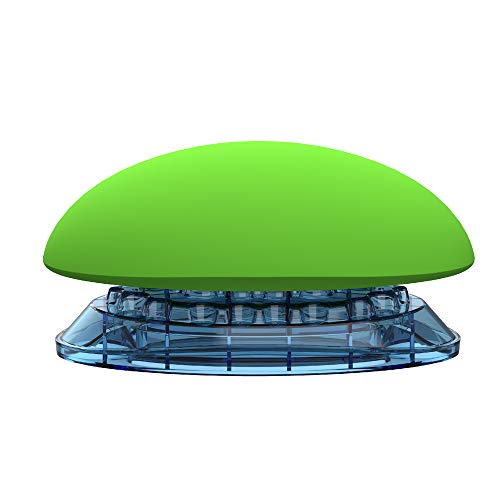
A spinal stretcher is a firm arched surface you lie back over. The BEIBYE uses a polycarbonate core wrapped in silicone, and the arch opens your chest and pulls your spine into extension (arching backward) so tight muscles between the shoulder blades get lengthened. It is an active session, not an all-day wear.
A posture brace goes on your body and stays there. The Kepwaa runs 5 flexible ABS support rods along your back, and the babaka wraps your upper and lower back in a 360-degree band. Both work by reminding your shoulders to stay back.
What firmness and support really feel like
Firm is good for muscular backs and rough on bony ones. Owners of the BEIBYE with dense back muscles describe the arch as firm in a useful way, while smaller-framed buyers report laying a towel over it for the first sessions. That is not a defect, it is a dial you tune with padding.
On the soft side, comfort under the arm matters more than anything. The babaka uses a 43% CHINLON and 57% Spandex blend to keep pressure low, while a fixed-rod brace can press harder if the straps are over-tightened.
Side-by-Side Comparison
| Model | Best For | Design Type | Support Structure | Fit Note | Amazon |
|---|---|---|---|---|---|
| BEIBYE Back Stretcher & Posture Corrector★ Best Overall | Stretching a tight, hunched upper back | Arched spinal stretcher | Silicone over polycarbonate core | One size; firm against the spine | Amazon |
| Kepwaa Posture Corrector with 5 Rods | Desk workers who slouch forward | Wearable rod brace | 5 flexible ABS support rods | 3 sizes; size up if between | Amazon |
| babaka Posture Corrector for Women | Low-profile daily wear under clothes | Soft wrap brace | 360-degree wrap, no rods | Medium; some find it runs large | Amazon |
Detailed Reviews
1. BEIBYE Upper Back & Headache Relief Back Stretcher
Our pick — 4.0+★ from 750+ verified ratings; the strongest balance of quality and price.
The arched stretcher that opens a hunched chest and reaches the muscles a flat brace never touches.
If your upper back pain comes from a rounded, hunched posture — the kind built by long hours over a phone or a keyboard — a stretch beats a strap. The BEIBYE is a 367 g arched device with a polycarbonate core under a silicone surface, and you lie back over it so your chest opens and your spine arches into extension. The whole point is to lengthen the tight tissue between the shoulder blades rather than just hold it in place.
This pick earns Best Overall because it works on the cause, not just the symptom. One reviewer with 4+ years of costochondritis (chest-wall inflammation that makes breathing and movement painful) ran 3 miles pain-free. That turnaround is why owners praise its effectiveness more than any other aspect, by a wide margin. Most braces in this category just hold you in place; this one asks you to do a little work and gives something back.
The catch sits right where your spine rests. The silicone skin is firm, and a few owners with thinner frames find it too firm to lay weight directly over. The fix is simple and well documented — a folded towel or pillow over the arch for the first week. One buyer summed it up bluntly, “too hard to be useful”, while another at 6’2″ and 200 lb called the same firmness ideal for dense back muscles. Same product, different backs. The manufacturer also notes results can take days for some and arrive faster for others, so consistency matters more than any single session.
Where it pulls ahead
- Arches the spine into extension so tight upper-back muscles get lengthened, not just held
- Polycarbonate core with a silicone surface gives just enough give to stay comfortable on muscle
- Owners with long-standing rib and chest-wall pain report daily improvement
- Works at home, with a written user guide, no clinic visits needed
Where you will want to adjust
- Firm against the spine — thin or bony backs need a towel on top at first
- It is an active session, not something you wear at a desk, so it needs a floor and a few minutes
- A few owners find it easy to overdo early and feel soreness the next day
Pick it if: your pain is a tight, hunched upper back that eases when you arch backward, and you will commit to short, regular stretch sessions.
Think twice if: you want something you can strap on and forget while working — a wearable brace is a better fit for that.
2. Kepwaa Posture Corrector with 5 Full Back Support Rods
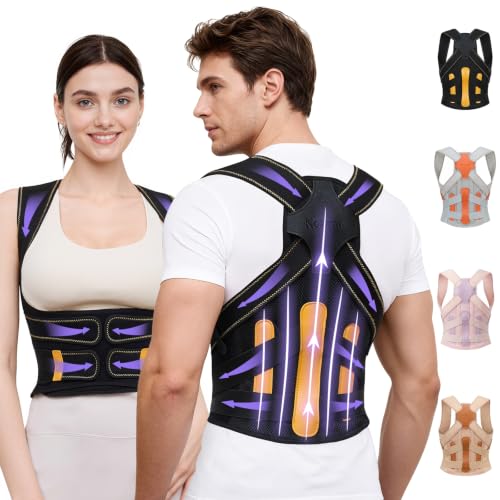
Five flexible rods that straighten your spine while you sit, stand, and even bend to work.
The Kepwaa is for the buyer whose upper back pain comes from a slouch that returns the second they stop thinking about it. It straps on with adjustable hook-and-loop closures and runs 5 flexible ABS support rods up the back, which hold your spine straighter and pull your shoulders back. The midriff band is wide, so it supports the lower back while it pulls the upper back into line — a two-for-one that a thin strap cannot do.
Posture support is the thing that earns the most praise among owners, and the second most-cited strength is build quality. What makes it the premium pick is the fit engineering: the band is designed to sit clear of your armpits, and polyester mesh keeps it lighter and more breathable than a solid foam brace. Wear it over a thin T-shirt if you have sensitive skin. Kepwaa suggests 1–2 hours a day for 28 consecutive days to build muscle memory, and owners who keep at it find their posture holds even after they take it off.
Two honest snags for the right buyer. The straps are generous, so smaller frames tend to need a size down — a 5’1″ owner needed the XS. And the mesh breathes, but not perfectly: a few warm-bodied owners find it sweaty in winter. Neither undermines the core job. One 5’8″, 135 lb owner with five spinal surgeries found the size Small fit comfortably and relieved pain instantly.
Rods do the heavy lifting: 5 flexible ABS support rods hold your spine straighter while the wide midriff section protects the lower back, so one brace covers two zones. The armpit-friendly cut keeps pressure off the tender spot under the arm.
Set your expectations on fit: the straps are built long, so measure your waist at the belly button and follow Kepwaa’s size chart — between sizes, size up. And plan to wear it over a thin shirt if sweat is a concern.
The right call if: you sit at a desk, slouch without noticing, and want a rigid reminder that pulls your shoulders back while you work.
Not the one for: anyone who wants a fully invisible-layer brace — the rods add structure you can feel.
3. babaka Posture Corrector for Women
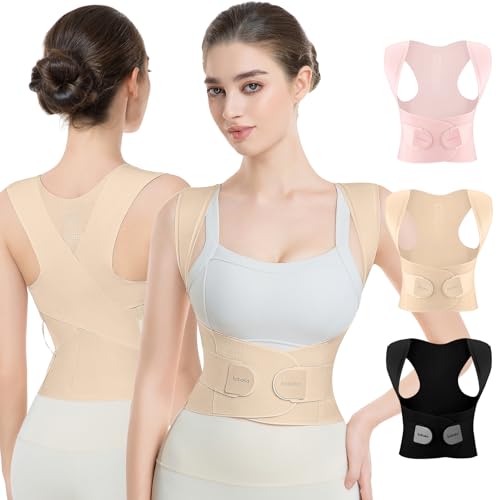
The low-profile wrap that disappears under a shirt and quietly pulls your shoulders back all day.
Some upper-back pain is really a posture habit, and the babaka attacks that with a soft 360-degree wrap rather than stiff rods. The frame is contoured to the female body and made from a 43% CHINLON, 57% Spandex blend in a breathable mesh, so it sits flat under a coat, a top, or workout wear. No rigid panels, no thick padding. It closes with hook-and-loop straps and is meant to be hand washed.
Quality and support lead the way with this one — the two things owners talk about most — and the wearability is the real story. The straps tighten to a snug, adjustable fit, and the wrap gently holds your shoulders back without locking you into one position. What buyers who stick with it notice is posture awareness: you start catching your own slouch even on the days you skip it. It is the pick for someone who wants to build a habit, not strap a rigid frame to their spine.
Know two limits before you buy. This wrap is gentle, so if your goal is to force your shoulders back, it may feel too soft — a couple of wearers found it compresses the waist without really pulling the shoulders, and that is a real fit limit. Sizing also runs generous, so check the chart before you order. For many wearers it is a quiet win, though. As one owner described it, the brace fits well and “definitely supports my upper back” while helping her posture throughout the day.
Why it earns a place
- Vanishes under clothing, so nothing stops you wearing it to work, training, or out
- Soft stretch blend and breathable mesh stay light through a long day
- Adjustable hook-and-loop straps let you dial the pull and the fit
- Wide, non-slip straps resist rolling up at the desk
Word to the wise
- The support is gentle — it reminds more than it forces, so heavy slouchers may want more structure
- Fit runs generous, and a few wearers feel pressure under the arm after about an hour
- Hand wash only, so no tossing it in the machine
Reach for this if: you want a soft, invisible-under-clothes brace that builds posture awareness and carries you through a workday.
Look elsewhere if: you need a rigid, firm pull to hold your shoulders back — the rod-based Kepwaa does that harder job.
Know the Specs
Support Structure: Rods vs. Arch
A brace with rods runs stiff supports up your back to hold your spine and shoulders in line. The Kepwaa uses 5 flexible ABS support rods, which push a sloucher upright while you sit or stand. An arched stretcher, like the BEIBYE with its polycarbonate core, works differently — you lie over it to push your spine into extension and stretch tight muscles. Rods correct; an arch lengthens. That is the difference to hold in your head when you decide which you need.
Material and Breathability
The material decides how long you can keep a brace on. The babaka uses a 43% CHINLON, 57% Spandex blend that stretches and breathes, so it can sit under clothes for hours. The Kepwaa uses polyester mesh, which holds up to daily wear and dries fast. The BEIBYE pairs silicone with a polycarbonate core for stiffness against the spine. Softer material means less fighting with fit; stiffer material means more direct push where you need relief.
Fit and Sizing
Sizing is where posture braces succeed or fail. Kepwaa sizes by waist circumference, measured at the belly button, and offers 3 sizes, recommending the larger size if you are between two. babaka lists itself at Medium but tends to run generous. The BEIBYE is a single-count device, so your frame sets the fit, not a size chart. If a brace presses under the arm or rides up, a different size is usually the answer, not a different brace.
Daily Wear and Results
Results take repetition. Kepwaa suggests 1–2 hours a day for 28 consecutive days to build muscle memory. The BEIBYE’s manufacturer notes some people feel results in days while others take longer. The babaka builds posture awareness with gentle, self-adjusting hook-and-loop straps. None of these are overnight fixes — every one of them rewards the person who wears or uses it consistently. Skip a week and the slouch comes back.
Common Questions
Should I get a back stretcher or a posture brace for upper back pain?
How long does it take to feel relief from a posture brace?
Is a posture brace uncomfortable under the arms?
Can I wear a posture corrector under my clothes all day?
How do I choose the right size posture brace?
Will a back stretcher help costochondritis or rib pain?
Is a firm stretcher too hard on my spine?
Which posture brace is best for relieving neck and shoulder pressure?
Can I sleep in a posture corrector?
How do I care for my posture brace so it lasts?
The Bottom Line
If your upper back is tight and hunched, the back brace for upper back pain winner is the BEIBYE Back Stretcher. It lengthens the tight muscles that a strap only holds in place, and owners with long-standing rib and chest-wall pain report real improvement. If you slouch at a desk and want a rigid reminder to sit up, grab the Kepwaa Posture Corrector and its 5 ABS support rods (stiff plastic strips that hold your shoulders back). For soft, invisible wear under clothes that builds posture awareness, reach for the babaka Posture Corrector. Whichever you pick, daily use is what turns a brace into relief.
How we choose
We do not accept paid placement. Every pick is matched to a real buyer and a real use-case; we do not hands-on test units.
Sources
Specifications: manufacturer listings and product documentation. Review insights: verified customer reviews, as of October 2026. Pricing: not shown on this page (it changes often); check the current price via the retailer link.
As an Amazon Associate, Aappliancez earns from qualifying purchases. This does not affect which products we feature.