Disclosure: Some links in this post are affiliate links. As an Amazon Associate I earn from qualifying purchases, at no extra cost to you. Learn more
Specs are compiled from manufacturer listings and verified buyer reviews and can change over time — please confirm the key details on the product page before buying.
If you have a fire ant mound in the yard, the wrong product wastes a week while the colony rebuilds. The right pick depends on one thing: whether the ants carry the poison back to the queen or just die on the surface. The picks below split cleanly along that line, so you can match the product to the mound instead of guessing.
This guide is built by comparing the manufacturers’ published specifications and the patterns across verified customer reviews, so you get each pick’s real strengths and trade-offs instead of marketing spin.
You will see which granules need watering, which work without it, and which ones leave a smell behind. Every entry below earns its spot for a different mound problem, and that is exactly how to read a ant hill killer list without wasting a season on the wrong granule.
Top Picks
How To Choose The Best Ant Hill Killer
The single decision that matters most is bait versus contact kill. A bait granule is food the workers carry down into the colony, and that is how the queen dies. A contact granule kills whatever it touches, which clears the surface fast but can miss the queen entirely. Pick the wrong type and you get a week of quiet followed by a fresh mound two feet away.
Match the granule type to what you see
For a classic dome-shaped fire ant mound, a bait granule is usually the smarter call because the workers do the delivery for you. For a perimeter strip along a foundation, a contact granule that kills on touch is often the faster route. If you are treating a vegetable bed or a flower border, check the label for listed plants and fruits before you shake anything out.
Read the application rate before you buy
Every granule product is dosed differently, and that dose decides how far one container stretches. Some labels call for a few shakes around a single mound, while others specify a rate per 250 sq. ft. for broadcast coverage. A big bag with a tiny per-mound dose goes a long way; a small bag with a heavy rate disappears fast on a large lawn.
Plan around the ants, not your schedule
Bait granules only work if foraging ants pick them up. That means applying in early morning or late evening when ants are active and the ground is not baking. Sprinkling on top of the mound itself can also backfire, because ants read it as an attack and refuse the granules. Put the bait around the openings and let them carry it in.
Side-by-Side Comparison
| Model | Best For | Form | Weight | Coverage Style | Amazon |
|---|---|---|---|---|---|
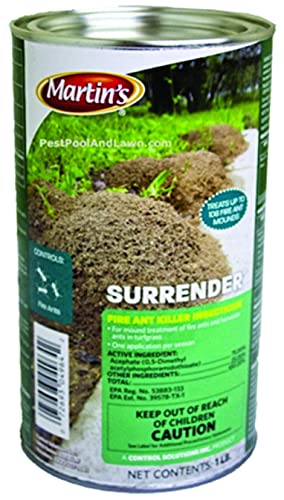
| Surrender Fire Ant 1lb★ Best Overall | Fast mound knockdown | Granules | 1 lb | Spot mound treatment | Amazon |
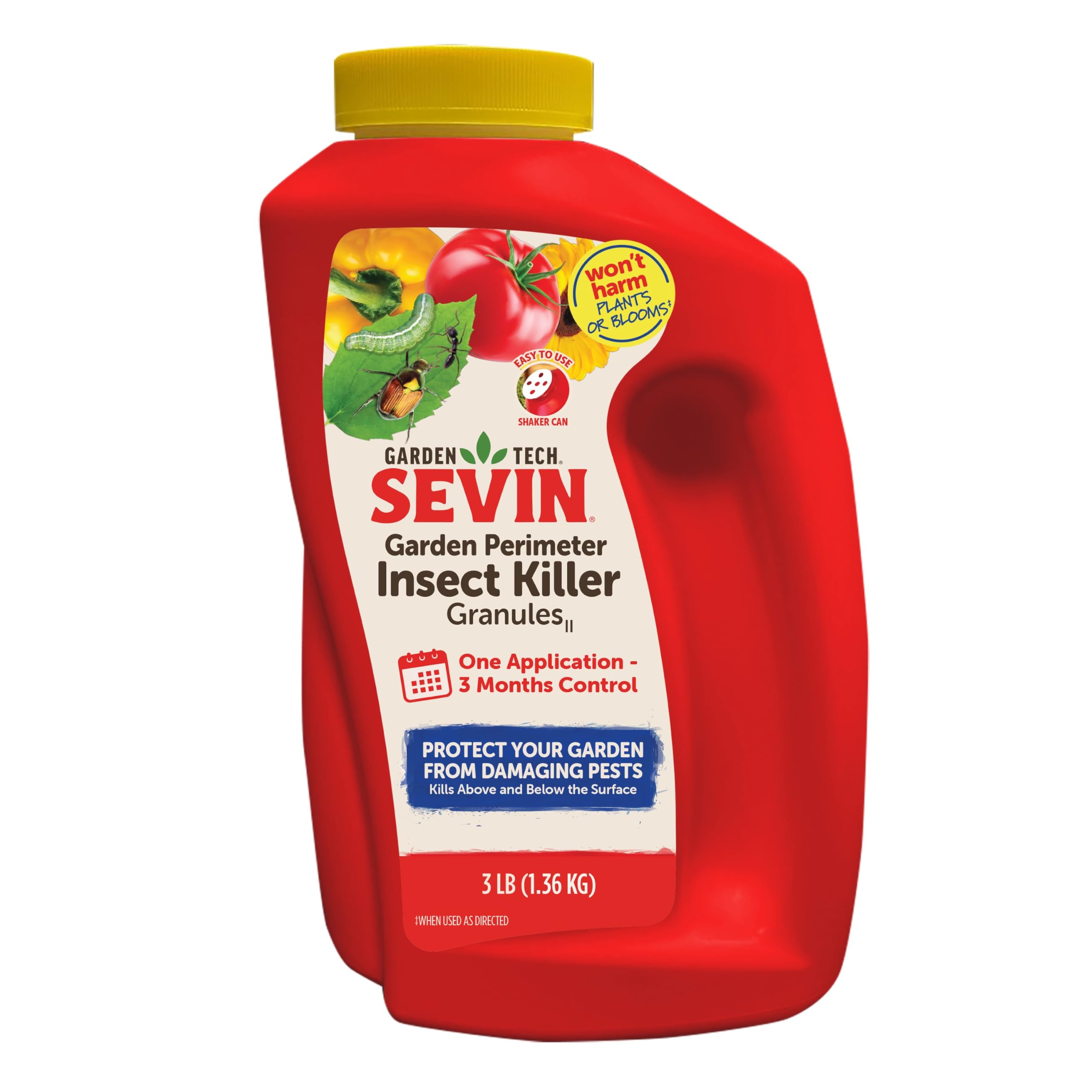
| Sevin Garden Perimeter Insect Killer Granules IIBest for Gardens | Garden and lawn perimeter | Granules | 3 pounds | Broadcast, 3 months of control | Amazon |
| Spectracide One-Shot Fire Ant Killer Granules | Fire ant mounds on sand | Granules (bait) | 1.9 pounds | Mound bait, no watering | Amazon |
| Terro T901-2 Ant Killer Plus (2-Pack) | Foundation and lawn bands | Granules | 2 shaker bags | Band or spot, resealable bags | Amazon |
| Hi-Yield (33033) Fire Ant Control with Acephate | Full-season mound control | Granule insecticide | 8 oz. | Teaspoon dose per mound | Amazon |
Detailed Reviews
1. Surrender Fire Ant 1lb
Our pick — 4.5+★ from 600+ verified ratings; the strongest balance of quality and price.
A one-pound granule that turns a fire ant mound quiet in a single sprinkle.
The reason this one takes the top spot is the dose-to-result ratio. You shake a light dusting over a mound and walk away, and the ants stop coming back to that spot. One pound of granules treats a lot of individual mounds at that rate. The crowd favorite here sits at 4.5+ stars across 600+ owners, and the pattern in those reviews is consistent: minimum product, real knockdown.
What wins people over is speed. Owners describe mounds going quiet fast rather than slowly thinning out, and the phrase “doesn’t take much” comes up again and again in different words. That low usage rate is the whole value story — a small container keeps working through a season of mound patrol because each hill needs so little.
Here is the catch, and it is a big one for indoor storage: the smell. This is a granule with a sharp odor that lingers even with the lid back on. Keep it in smell-proof bags inside a sealed container, away from living space, and that problem disappears. Buyers report it plainly — “We’ve fought cutter ants for 40+ years on our acreage. This is the first product to really push back.” For a mound-by-mound approach, that is the trade you are making.
What earns it the top slot
- A light sprinkle per mound goes a long way, so one 1 lb container covers plenty of hills
- Owners describe fast knockdown rather than a slow fade
- Sprinkle-and-walk-away application with no watering step
- Holds its own against cutter ants as well as fire ants
Where it asks patience
- The odor is strong and travels — store it sealed and far from rooms you use
- Granule form means you are dosing by eye, not by a measured spreader
Reach for this if: you want a small, hard-working container for knocking down individual fire ant mounds one at a time.
Look elsewhere if: the container has to live indoors near living space — the smell is the sticking point.
2. Sevin Garden Perimeter Insect Killer Granules II
The heavy bag for anyone drawing an ant-free line around a vegetable bed.
At 3 pounds, this is the biggest container on the list — and it dwarfs the 1.5 lb Spectracide One-Shot bag and the 1.9 lb Spectracide unit placed alongside it. More granules per container matters when your target is a whole garden perimeter rather than one mound. The label rate runs 1/4 to 1 LB per 250 sq. ft., so a full bag reaches a real garden bed, not just a doorstep.
What it brings that the mound-only picks do not is reach: one application is rated for 3 months of control, and the label lists over 100 insects killed by contact plus over 175 fruits and vegetables. It kills above and below the surface, which is the phrase that matters for ants tunneling under a planting bed. Effectiveness is the thing that gets praised most here, far ahead of anything else owners talk about.
The honest wrinkle is consistency. Value for money draws mixed feelings, and not every garden falls in line — one disappointed report describes using it as instructed and still losing plants to bugs. That is a minority note against a strong body of positive garden results, but it is worth knowing before you commit a whole bed to it. Owners mention “Got rid of all the ants that were targeting my plants. No effect to the plants.”
Where it shines: the shaker can makes perimeter work simple, and the three-month control window means one pass per season for most beds. The 3-pound bag gives you room to treat the edges and still have granules left for spot duty.
Best fit: gardeners who need a perimeter barrier around fruits, vegetables, and ornamentals rather than a single mound hit.
Worth knowing: results can be uneven on stubborn garden bugs, and the value side draws mixed feedback.
3. Spectracide One-Shot Fire Ant Killer Granules 1.5 Lb

A bait granule built to reach the queen, not just the ants you can see.
This is the pick for anyone tired of surface kills. The active ingredient is designed to kill worker ants slowly, so they have time to carry the bait back to the colony, and the label claims it kills the fire ant queen and colony in as little as 48 hours. That slow-kill design is the entire point — a fast kill on the surface just tells the colony to move.
The container is the second win. Four tablespoons, or about four shakes, goes around each mound, and no watering is needed afterward. Owners who have tried the powder route single out how much less messy these granules are. Effectiveness is what the reviews talk about most by a wide margin, and the recurring story is mounds in sandy spots like driveways going quiet within a day or two.
Two honest notes. First, do not sprinkle on the mound itself — ants treat that as an attack and refuse the bait, so ring the openings instead. Second, the value side draws mixed feelings, with some calling it pricey for the amount. Customers note “This Fire Anyt killer is great! It got rid of my fire ant problem in about 3 days.” One 1.5 lb bag runs 1.9 pounds shipped — enough for a batch of mounds, not a whole acre.
The bait advantage
- Slow-kill bait design lets workers carry it back to the queen
- Label rates 3 months of fire ant control per application
- No watering step — shake and move on
- Granules are tidier than powders around a driveway or walk
What to plan around
- Applying on the mound instead of around the openings can waste the dose
- Some find the value side thin for the container size
Pick this one when: you want the colony dead, not just the surface cleared, and you are willing to apply at the right time of day.
Think twice if: you expect one big bag to blanket a large property — this is a mound-dose container.
4. Terro T901-2 Ant Killer 2-Pack

Two resealable shaker bags that handle the foundation, the lawn, and the hill.
What makes this the most flexible option on the list is the format. You get two shaker bags, no spreader required, and each one reseals. That means you can band the foundation on Saturday, spot-treat ant hills on Sunday, and store the rest without a plastic tub. The granules are rated to kill ants, fire ants, cockroaches, fleas and other insects in 24 hours.
The breadth is the draw here — this is not a fire-ant-only product like the Surrender or Spectracide picks above it. It goes on as a band around house foundations, on lawns, or as a spot treatment on ant hills, which makes it the one container that covers the whole property. Ant reduction is what gets praised most, and the recurring theme is a yard that stays clear for a while after a pass.
Set expectations on the tougher colonies. House ants can be a harder target than yard ants, and at least one report describes easy application that still did not clear the ants completely. Used twice a year around a yard in an ant-heavy neighborhood, though, it holds up. Reviewers point out “This stuff is great, it works within a day or two and you wouldn’t have an ant problem for a while.”
Why the two-pack wins: one bag for the foundation line, one for the lawn and hills, both resealable so nothing goes stale between passes. That split is what makes it the practical pick for a whole-property routine.
Set your expectation: the 24-hour kill covers the surface fast, but stubborn indoor ant trails may need a repeat pass or a different approach.
Reach for this if: you want one product for foundations, lawns, and hills, and you like being able to reseal what you do not use.
Look elsewhere if: your problem is inside the house — this is built for outdoor banding and spot work.
5. Hi-Yield (33033) Fire Ant Control with Acephate (8 oz.)
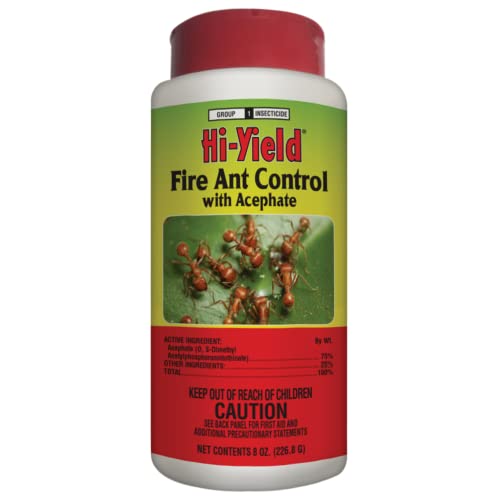
The premium dose: a few teaspoons per mound, and the label says a full season.
This is the pick for anyone who would rather treat a mound once and be done. The label rates a full season of fire ant control from one application, and the dose is tiny — 1 to 2 teaspoons spread evenly over the mound. An 8 oz. container at that rate is a long-haul supply, not a one-weekend bag.
It is a granule insecticide built around acephate, aimed at residential turf, recreational turf, and commercial turf as well as non-crop areas. And this is a product with a strong smell, so it belongs outside only — keep it away from indoor use entirely.
The trade-off is in the container. Some arrive with the cap loose and a portion spilled in transit, so check the seal the moment it lands. It also carries real label restrictions — do not let livestock graze treated areas or feed treated grass to livestock. For a homeowner with a few stubborn mounds and a long season ahead, the tiny dose and the season-long rating are the whole argument.
Why it sits in the premium tier
- Label rates a full season of fire ant control from one application
- A 1 to 2 teaspoon dose per mound stretches an 8 oz. container a long way
- Built for turf and non-crop areas, not just a single hill
- Acephate active ingredient targets turf and non-crop areas
The fine print
- Strong smell — outdoor use only, no exceptions
- Spills in transit happen when the cap works loose
- Livestock restrictions apply to treated grass
The right call if: you want a full season of mound control from a few teaspoons and you keep your treatments outdoors.
Not for you if: you need something to use near animals or you want a no-smell formula.
Know the Specs
Bait vs. Contact Granules
A bait granule is a slow-acting food the workers pick up and carry down to the colony, which is how the queen gets killed. A contact granule kills on touch, which clears the surface fast but can leave the queen alive. Both have a place — bait for mounds, contact for perimeter strips and foundations. The label wording is your clue: “kills the queen” signals a bait; “kills by contact” signals a surface killer.
Weight and Application Rate
Bag weight alone does not tell you how far a container stretches. What matters is the dose per mound or per square foot. A 1.5 lb bag dosed at four tablespoons per mound covers a batch of hills; a 3 lb bag dosed at 1/4 to 1 LB per 250 sq. ft. covers a garden perimeter. Compare the rate on the label, not just the number on the bag.
Control Duration
Some labels rate control for 3 months, others for a full season. That duration tells you how often you need to re-treat — a season-long product means one pass, while a 3-month product means a couple of applications across the year. Plan the schedule around the rated window, not around when you happen to see ants again.
Timing and Method
Bait only works if ants are foraging. Early morning or late evening is when they are active and the ground is not too hot. Ringing the mound openings rather than dumping on the dome itself keeps ants from treating the granules as an attack. Get those two habits right and most products on this list behave the way the label promises.
Common Questions
Should I sprinkle ant killer on the mound or around it?
How long before a fire ant mound goes quiet after treatment?
Do I need to water in the granules after applying them?
Why do fire ants sometimes come back after a treatment?
Is a granule safer around pets than a spray?
Can I use a fire ant product on other kinds of ants?
Will a garden granule hurt my vegetables or flowers?
How much product do I actually need for a large lawn?
Why does my ant killer smell so strong?
When is the best time of day to apply ant granules?
The Bottom Line
For most yards, the ant hill killer worth reaching for first is the Surrender Fire Ant 1lb — a light sprinkle does the job, and the 4.5+ star record across 600+ owners backs it up. If your problem is garden beds and perimeters rather than single mounds, the Sevin Garden Perimeter Granules II gives you 3 pounds and 3 months of control in one pass. And if you want the colony dead rather than just the surface, the Spectracide One-Shot bait is built to reach the queen. Whichever you pick, apply it early morning or late evening and ring the mound openings — that one habit is what turns a good granule into a dead colony.
How we choose
We do not accept paid placement. Every pick is matched to a real buyer and a real use-case; we do not hands-on test units.
Sources
Specifications: manufacturer listings and product documentation. Review insights: verified customer reviews, as of October 2026. Pricing: not shown on this page (it changes often); check the current price via the retailer link.
As an Amazon Associate, Aappliancez earns from qualifying purchases. This does not affect which products we feature.