Disclosure: Some links in this post are affiliate links. As an Amazon Associate I earn from qualifying purchases, at no extra cost to you. Learn more
Specs are compiled from manufacturer listings and verified buyer reviews and can change over time — please confirm the key details on the product page before buying.
Homemade yogurt goes wrong for one plain reason: your jar never held a steady warm temperature, so the bacteria stalled and you poured out milk. The good news is that the fix is not a new appliance — it is picking the right freeze-dried starter culture and holding your heat in one narrow range. Below are five starters that set reliably, each one suited to a slightly different kitchen and a different style of yogurt.
This guide is built by comparing the manufacturers’ published specifications and the patterns across verified customer reviews, so you get each pick’s real strengths and trade-offs instead of marketing spin.
Read on for the non-dairy yogurt with probiotics starters that actually set firm.
Top Picks

How To Choose The Best Non-Dairy Yogurt With Probiotics
Every starter you will read about here is a freeze-dried powder — live bacteria that have been dried into a dormant state (like a sleeping seed) so they survive on the shelf for months. You add the powder to warm milk, hold it warm, and the bacteria wake up and turn that milk thick and tart. Choosing well is really about three things: which strains are in the packet, how many batches one packet covers, and whether your kitchen can hold a steady temperature for the full ferment.
Look at the strain list, not the label slogan
A starter like this usually contains thermophilic bacteria (heat-loving species such as Streptococcus thermophilus and Lactobacillus delbrueckii subsp. bulgaricus) that do the actual thickening. The probiotic species — Lactobacillus rhamnosus, Lactobacillus gasseri, Bifidobacterium longum and friends — are the ones you are chasing for the “with probiotics” part. A packet that lists both groups is doing two jobs at once. A packet that names only one group is a narrower tool, not a faulty one.
Match the sachet to your jar size
This is where most first batches fail. One brand’s 3 g sachet makes one liter, another brand’s sachet is specified for between one and three liters, and a third claims a single packet can be re-cultured up to seven times. If you pour a sachet meant for a liter into a gallon, you under-dose the milk and get something closer to drinkable milk than yogurt. Read the ratio first, then buy the volume that matches your pot.
Plan for temperature control before you buy
Your culture has a working band — too hot kills it, too cold stalls it, and buyers report everything from success in a ceramic pot to failure in an oven with uneven heat. An Instant Pot on its yogurt setting, a dedicated yogurt maker, or an oven with the light left on all get mentioned as workable. Decide which one you own before the culture arrives, because the packet will not fix an uneven heat source.
Side-by-Side Comparison
| Model | Best For | Packet Count | Yield Per Sachet | Starter Weight | Amazon |
|---|---|---|---|---|---|
| Yogourmet Probiotic Yogurt Starter★ Best Overall | Mild everyday set yogurt | 6 Count | 1 Liter (1 Quart) | 1 ounce | Amazon |
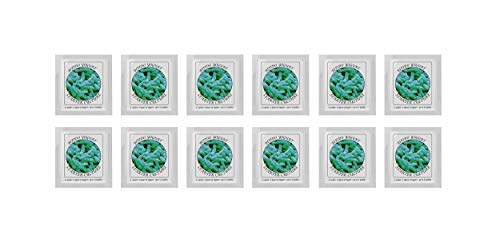
| Yogurt Starter Cultures — Pack of 12 Bifido YogurtBest Value | Stretching one packet across many batches | 12 Count | 1 quart, then re-cultured | 2.4 ounces | Amazon |
| Yogurt Starter for Lactobacillus Rhamnosus and L. Gasseri | Sensitive systems and 24-hour ferments | 12 Sachet Pack | 1–3 liters | 2.15 ounces | Amazon |
| Cutting Edge Cultures Yogurt Plus | High-volume re-culturing | 4 Packets | 1.25 quarts | 1.6 ounces | Amazon |
| VIVO Probiotic Yogurt Starter Natural | Plant and lactose-free milks | 10 Bottles (5 boxes) | Up to 3 quarts | 6.74 ounces | Amazon |
Detailed Reviews
1. Yogourmet Probiotic Yogurt, Freeze-Dried Starter, 1oz
Our pick — 4.5★ from 400+ verified ratings; the strongest balance of quality and price.
Six sachets, each sized to one liter, that deliver a reliably tart set
If you want the shortest path from warm milk to a firm, spoonable jar, this is the one to start with. The pack holds 6 sachets and each 3 g sachet makes 1 liter (1 quart) of yogurt with probiotics — a clean one-to-one ratio that leaves no guesswork about how much powder goes into your pot.
The culture itself brings 4 additional probiotic strains on top of the yogurt-making bacteria, and the whole thing is certified Halal, Kosher, gluten free and Non GMO, with no GMO ingredients, preservatives or coloring agents. The stated shelf life is 24 months from production, and the maker says the sachets stay usable past 24 months. That matters if you ferment in bursts rather than weekly — unlike the Yogurt Starter for Lactobacillus Rhamnosus and L. Gasseri, whose 2.15-ounce pack is lighter but whose freshness questions come up in its own reviews, this one is built to sit patiently in a cupboard.
What wins people over is plain quality — it is the trait praised most heavily in the feedback, and the tart, creamy result shows up again and again. Buyers also run it at fairly serious volumes: one reported using a 60W bulb in an oven held at about 105°F to make 2 gallons of milk at a time, heating to 180°F, cooling to 105°F, adding the culture and incubating, noting that a single packet was sufficient and that half or a quarter would likely do.
The case for the Yogourmet pack
- One 3 g sachet per liter removes all dosing guesswork
- Stated 24-month shelf life, usable beyond it per the maker
- Certified Halal, Kosher, gluten free and Non GMO
- Tart flavor and creamy texture are the two most consistent wins
Where it asks a little patience
- Value for money is its weakest area — the same note across the reviews is that it costs more than buyers expected
- The directions are printed small, and the manufacturer itself notes cultures can die off after being reused many times, shifting flavor and texture
Buy it if: you want a small, dependable starter with the cleanest dosing ratio on this list and a long shelf life to match.
Look elsewhere if: you plan to re-culture the same batch endlessly or want the widest strain count for a single ferment.
2. Yogurt Starter Cultures Pack of 12
Twelve sachets of Bifido-heavy culture built to be stretched batch after batch
Twelve sachets against the Yogourmet pack’s 6 is a straightforward doubling. The pack weighs 2.4 ounces against that 1-ounce competitor. If you are dosing six liters at a time, or simply hate reordering, that headroom is the whole argument.
The formula blends live active bacteria including Bifidobacterium bifidum, Bifidobacterium infantis and Bifidobacterium longum alongside Lactobacillus delbrueckii subsp. bulgaricus and Streptococcus thermophilus. One sachet makes 1 quart of plain, mild yogurt and can be re-cultured afterwards. Reviews push the math further — one reviewer noted reaching up to 10 batches, or 2.5 gallons of milk, from a single packet. Another settled on a method worth copying: 2.5 quarts from 2 packets using powdered milk plus cream, heated to 180°F, cooled to 113°F, then cultured for 24 hours to land a lower-carb, sharper-tasting result.
The honest catch is consistency. The reviews on effectiveness, texture and thickness are mixed rather than uniformly glowing — some batches come out great, and the pattern behind the misses is a ferment that runs too thin, which usually traces back to temperature drift or a culture that has been reused too many times. Read the re-culture advice before you push a sachet past its third generation.
Where it earns its place: flavor is the second strongest point of praise, with a pleasant sweetness called out specifically, and the texture can come out velvety when the temperature holds. If your pot holds steady heat, this is a lot of culture for the money.
What to watch: the mixed reports on thickness are the recurring theme, so test your first batch small before committing a whole gallon of milk.
Right call for volume: anyone who ferments weekly and wants re-culturing built into the routine rather than treated as an experiment.
Not the fit for: anyone whose kitchen temperature wanders, since this culture is the least forgiving of the three here when heat drifts.
3. Yogurt Starter Lactobacillus Rhamnosus 12 Sachet Pack

A two-strain probiotic starter aimed squarely at 24-hour, low-lactose ferments
This is the pick for the 24-hour ferment. One sachet covers between 1 and 3 liters of plain yogurt and can be re-cultured many times, so a single sachet flexes to whatever pot you own — a much wider range than the Yogourmet pack’s fixed 1-liter sachet.
The headline names are Lactobacillus rhamnosus and Lactobacillus gasseri, with Lactobacillus bulgaricus and Streptococcus thermophilus doing the setting work. The blend is made in a laboratory environment free of additives, maltodextrin, gluten and GMO. A long ferment is the intended method here: run it 24 hours and the result comes out “sour, creamy, lactose-free-like” — the lactose has been consumed, which is exactly what a dairy-free or sensitive-system eater is after.
What people come back to is how well it behaves for tricky guts. One bought it specifically because it suited a sensitive system with food and chemical allergies and had no additives; another ran it through a yogurt machine with organic half-and-half and tapioca starch instead of inulin and ended up with creamy yogurt. Effectiveness is the trait praised most, and texture follows close behind.
On the consistency question: consistency is the single most-discussed topic in the feedback here, and it is genuinely mixed. Some describe the texture as the best of the starters they have tried — solid, sweet and non-tart rather than runny — while others report a batch that never set. One packet arrived solidified and produced milk rather than yogurt, which raises a freshness question with a freeze-dried product.
The practical takeaway: inspect each sachet for caking before you commit a full batch, and keep your ferment in a proper yogurt maker or appliance rather than an improvised heat source.
Reach for this if: your goal is a 24-hour, low-lactose-style ferment and a sachet that scales from a small jar to a 3-liter pot.
Look past it if: you prefer a fixed, predictable dose size — the variable 1-to-3-liter range asks you to measure your own milk.
4. Cutting Edge Cultures Yogurt Plus Probiotic Starter 4 Packets

Four packets that claim up to 40 quarts through repeated re-culturing
For anyone who wants to stop buying starter at all, the math here is the attraction. The box holds 4 packets, each packet makes 1.25 quarts, and each of those can be re-cultured up to 7 times — the maker puts the box’s total ceiling at up to 40 quarts. Four packets sounds light next to the 12-sachet packs, and it is, but the re-culture allowance is where the volume actually lives.
The blend carries 5 species — S. thermophilus, L. delbrueckii, L. plantarum, L. reuteri and B. longum — and it is dairy-free, non-GMO and vegan, which puts it on the short list for anyone building a plant-based or dairy-free batch. By making your own, you control the ingredient list entirely; this starter has no added sugars or artificial flavors, and the maker notes homemade live probiotic yogurt can hold more probiotics than store-bought versions.
Temperature is the make-or-break. Reports describe the first two batches failing in an oven with inconsistent heat, then the third succeeding once the ferment moved to a ceramic pot that retained warmth — too hot kills the culture, too cold stops fermentation. One owner stretches a packet across six or seven batches before the yogurt turns tangier than they like, mixed with half and half.
On results and how thick it gets: a thick Greek-style set is achievable when strained, and holding back a half cup lets you build a whole gallon of yogurt again. That said, this is the one to buy with a thermometer in hand.
The caveat worth knowing: the range of reported outcomes is the widest on this list, with a few purchases yielding a bland, curdled set. With only 4 packets in the box, a failed batch costs you more of your supply than a failure from a 12-sachet pack.
Built for: the committed fermenter who already owns a temperature-controlled setup and wants dairy-free, vegan re-culturing with a very high ceiling.
Skip past it if: your heat source is unreliable — this culture punishes guesswork harder than the others here.
5. VIVO Probiotic Yogurt Starter Natural, 5 Boxes, 10 Bottles

Ten bottles, ten culture types, and a milk list that reaches beyond dairy
Here is the only starter on this list that names soy milk and lactose-free cow milk in the same breath as goat and sheep milk, which is the whole reason it takes the plant-milk slot. The pack runs 5 boxes holding 10 bottles total and is specified to make up to 30 quarts. At 6.74 ounces it is also by far the heaviest package here, next to the 1-ounce Yogourmet box.
Inside the bottles is a 10-type blend: Streptococcus thermophilus, Lactobacillus delbrueckii subsp. bulgaricus, Lactobacillus acidophilus (2 strains), Bifidobacterium lactis (2 strains), Lactobacillus casei, Lactobacillus rhamnosus, Lactobacillus paracasei and Bifidobacterium infantis. The maker describes these 10 strains as enhancing each other’s actions, and the freeze-dried format keeps them dormant until they hit warm milk. The box text also recommends the culture for digestive and metabolic concerns and daily nutrition — manufacturer positioning, not a guarantee.
Effectiveness is the clear standout in the feedback, and the flavor follows it closely — mild rather than sharp is the word that keeps appearing, with buyers noting it is not too sweet.
The thickness question is the one to size honestly. Some batches come out thick enough to scoop with an ice cream scoop, while other reports land on the thinner side — the variable is almost always your milk choice and your heat, not the culture itself.
The strain argument: no other pick here packs 10 types into one bottle, and the fact that it runs in lactose-free milk, goat milk, sheep milk and soy milk makes it the flexible option for a household with mixed diets or a plant-based fermenter.
What to weigh: it is a premium-priced multi-bottle box, so buy in if you ferment regularly enough to use 10 bottles before they age out.
The fit for: dairy-free and plant-milk fermenters who want the widest strain list and the most flexible milk compatibility in one box.
Think twice if: you ferment only occasionally — ten bottles is a genuine commitment.
Know the Specs
Sachet yield (liters or quarts per packet)
This is the number that decides how much milk you warm up. One brand’s 3 g sachet is built for 1 liter (1 quart), another sachet covers between 1 and 3 liters, a third makes 1 quart and can be re-cultured, and a fourth is specified at 1.25 quarts per packet. Match the yield to your pot before you buy, because under-dosing a big batch is the most common reason a first ferment comes out thin. As a rule for the category, a sachet sized for a liter will not set a gallon.
Strain list (thermophilic plus probiotic species)
Read the packet to see who is doing what. Thermophilic species such as Streptococcus thermophilus and Lactobacillus delbrueckii subsp. bulgaricus are the ones that thicken the milk. The probiotic names — Lactobacillus rhamnosus, Lactobacillus gasseri, Bifidobacterium longum, Lactobacillus reuteri, Lactobacillus plantarum — are the ones buyers seek out in a “with probiotics” starter. A blend carrying both groups is doing the setting and the probiotic job in a single jar, which is why the widest strain lists tend to suit households with different needs.
Common Questions
Can I make yogurt from soy milk or other non-dairy milk with these starters?
What temperature should I hold the yogurt at for the culture to set?
How many batches can I get out of a single sachet or packet?
Why did my batch come out thin instead of thick?
Do I need a yogurt maker, or can I use what I already have?
How long do freeze-dried starter cultures last in storage?
Is homemade probiotic yogurt better than store-bought?
Can I re-culture forever from one batch, like a sourdough starter?
Which starter is best if I want a mild flavor rather than a sharp one?
What is the difference between the 6-sachet and 12-sachet packs here?
The Bottom Line
For the cleanest start, reach for the Yogourmet Probiotic Yogurt Starter — one 3 g sachet per liter, a 24-month shelf life, and a tart, creamy set that buyers keep coming back to. It carries the most ratings on this list: 4.5 stars across 400+ owners. If you want to stretch a single packet across many batches, the Bifido Yogurt Starter Cultures pack of 12 is the volume play. And if plant milks or a 24-hour low-lactose ferment is the goal, the VIVO Probiotic Yogurt Starter is the flexible choice. Whichever you pick, buy a thermometer — temperature, not brand, is what turns milk into yogurt.
How we choose
We do not accept paid placement. Every pick is matched to a real buyer and a real use-case; we do not hands-on test units.
Sources
Specifications: manufacturer listings and product documentation. Review insights: verified customer reviews, as of October 2026. Pricing: not shown on this page (it changes often); check the current price via the retailer link.
As an Amazon Associate, Aappliancez earns from qualifying purchases. This does not affect which products we feature.