Disclosure: Some links in this post are affiliate links. As an Amazon Associate I earn from qualifying purchases, at no extra cost to you. Learn more
Specs are compiled from manufacturer listings and verified buyer reviews and can change over time — please confirm the key details on the product page before buying.
If your ears ring, throb, or go foggy after wearing regular earbuds, the fix is simpler than you think: pick a pair that never goes inside your ear canal. Every pick below either vibrates sound through your cheekbone or clips gently over the outside of your ear, so nothing presses on the drum. The best headphones for vertigo keep your ears fully open, and the SHOKZ OpenRun leads the list.
This guide is built by comparing the manufacturers’ published specifications and the patterns across verified customer reviews, so you get each pick’s real strengths and trade-offs instead of marketing spin.
You will see which designs leave your ears pressure-free, which ones stay put during a wobbly day, and what each model really delivers in the ear. Read on for the best headphones for vertigo that keep sound outside your ear canal.
Top Picks

How To Choose The Best Headphones for Vertigo
The first thing to understand is that no headphone can treat dizziness. What you can control is whether a pair presses into your ear canal all day. Many people with sensitive ears describe that in-ear pressure as the trigger for ringing, fullness, and discomfort. Outside-the-ear designs avoid that pressure entirely.
Open-ear vs. bone conduction: what actually changes
Bone conduction headphones rest on your cheekbone and send sound through vibration, so your ear canal stays completely clear. Open-ear clip models sit over the outside of your ear and let room sound in the same way. Both let you hear traffic, a doorbell, or a conversation while audio plays.
Fit stability matters more than you think
A pair that shifts or falls out forces you to keep adjusting it, which is the last thing you want on a day when you already feel unsteady. Look at the frame style: a wraparound band holds tension around your head, while memory-titanium clips mold to your ear shape. Check the listed weight and any mention of staying put during movement.
Battery rating and charging style
An 8-hour rating covers a full workday; a 28-hour figure usually combines bud time with a charging case. Watch the charging connector too — some models use a proprietary magnetic cable, while others take a standard Type-C. A magnetic cable that keeps a moisture-proof seal is safer around sweat, but it is one more cord to keep track of.
Side-by-Side Comparison
| Model | Best For | Fit Style | Battery Rating | Water Rating | Amazon |
|---|---|---|---|---|---|
| SHOKZ OpenRun★ Best Overall | All-day open-ear listening | Wraparound headband | 8 hours | IP67 | Amazon |
| Soundcore C50iTop Performer | Running and gym sessions | Memory titanium clip | 28 hours with case | IP55 | Amazon |
| Raycon Bone Conduction | Adjustable awareness on the move | Bone conduction frame | 2-hour charge time | IP68 | Amazon |
| Ogogrs Bone Conduction | Budget wraparound listening | Bone conduction, titanium frame | 10 hours | IP55 | Amazon |
| Boytond Open Ear Earbuds | Light clip-on wear around the house | Ear clip | 10 hours plus case | Waterproof build | Amazon |
| Symphonized Wooden Air Tube | Wired, no-battery listening | In-ear with air tube | — | — | Amazon |
Detailed Reviews
1. SHOKZ OpenRun Bone Conduction Headphones
Our pick — 4.5+★ from 27,000+ verified ratings; the strongest balance of quality and price.
The cheekbone-vibration pair that leaves your ear canal completely clear from morning to night.
If you want to stop putting anything into your ears, this is the pair to start with. The SHOKZ OpenRun sits on your cheekbone and sends sound through vibration instead of pressing a tip into your canal — your ears stay open the whole time. The full wraparound frame stays put rather than clipping to the side of your ear, which is the more secure of the two styles for a day when you already feel unsteady.
The one standout number here is the 8-hour battery rating, which covers a full workday of music, calls and podcasts. A 10-minute quick charge gives you up to 1.5 hours of playback, handy when you forgot to plug in overnight. The IP67 rating means it survives sweat and rain completely, and it is built for running and workouts. It is not suitable for swimming — the maker says so directly.
The thing owners praise most is the sound. It reveals detail in familiar recordings without sealing you off, and people who could never wear earbuds report no ear fatigue here. The honest catch is reliability. Some units have stopped working, and there is a note in the reviews about overnight charging possibly harming the battery with no overcharge protection. A corded magnetic charger is the only option, which some buyers find fussy and work around with USB-C adapters.
Why it stays at the top
- Bone conduction keeps the ear canal fully open — no in-ear pressure at all.
- 8-hour rating with a 10-minute charge for up to 1.5 hours.
- IP67 sweat-and-rain rating built for hard workouts.
- Wraparound frame holds steady, even for larger heads.
What to plan around
- Some units have stopped working, and charging care matters — overnight charging is flagged as a risk.
- Proprietary magnetic charger; adapter needed for USB-C convenience.
- Audiobooks can be hard to hear on a noisy train.
The right call for: anyone who wants a pressure-free, secure open-ear fit for a whole workday, with real sweat protection.
Think about it first if: you want standard USB-C charging or need to hear spoken word clearly in loud transit.
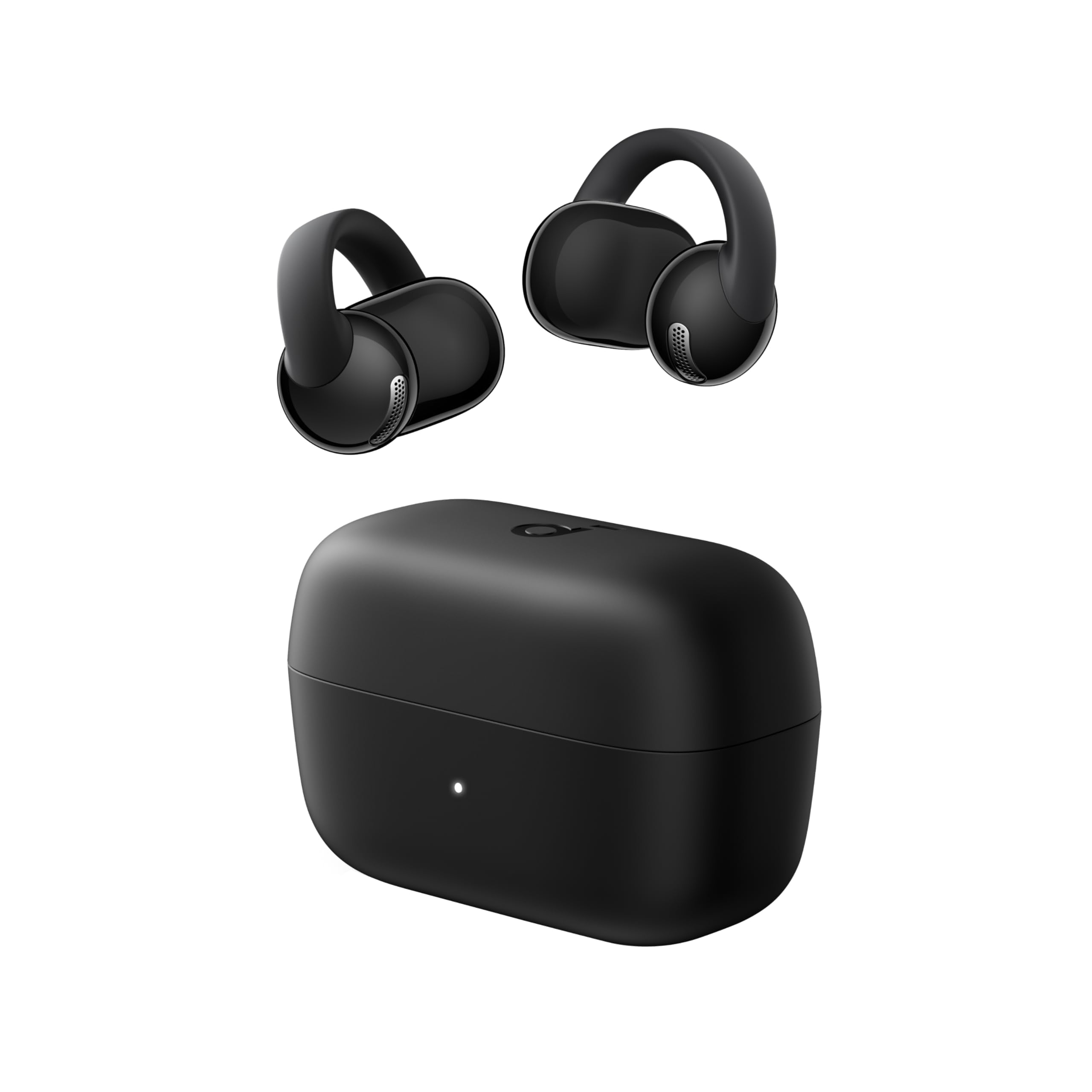
2. Soundcore C50i Open Ear Earbuds
The clip-on that never enters your canal and still brings real bass.
Some people prefer a small clip to a headband, and the Soundcore C50i is the clip to beat. It uses a memory titanium FlexiClip that molds to your ear shape, and it sits completely outside the ear canal. That matters because the sound you get is punchier than bone conduction: 12mm drivers push deep bass with an 86dB max output.
Battery is the other headline — 7 hours on a single charge and 28 hours with the case, which takes about 2 hours to recharge the buds. The case holds a 580 milliamp-hour battery (the small cell that tops the buds back up), so a work trip or a long training block rarely ends in silence. The IP55 rating handles sweat and rain, and Bluetooth 6.0 keeps the link stable. The soundcore app adds EQ modes, HearID and spatial audio, all adjustable.
What wins people over is the sound, with build and fit close behind — people who could never wear in-ear buds say these stay comfortable through head-shake tests and long hours. The mixed notes center on the case and connection: buds have stayed connected to a device while sitting in the case, and there are occasional random disconnects on walks. A few buyers wanting a longer single-charge window than the 7 hours listed.
Where it shines
- 12mm drivers with 86dB max output for genuine low-end.
- 28 hours total with the case; 580 milliamp-hour case battery.
- Memory titanium FlexiClip adapts to your ear shape.
- IP55 rating and Bluetooth 6.0.
The trade-offs to weigh
- 7 hours per charge is the figure to plan around — swap out on long shifts.
- Some disconnect issues and case-connection quirks in feedback.
- No active noise cancellation, as expected for an open design.
Reach for this if: you want a clip that stays off your ear canal and delivers strong bass for workouts and calls.
Look elsewhere if: you need more than 7 hours without a trip back to the case.
3. Raycon Bone Conduction Headphones
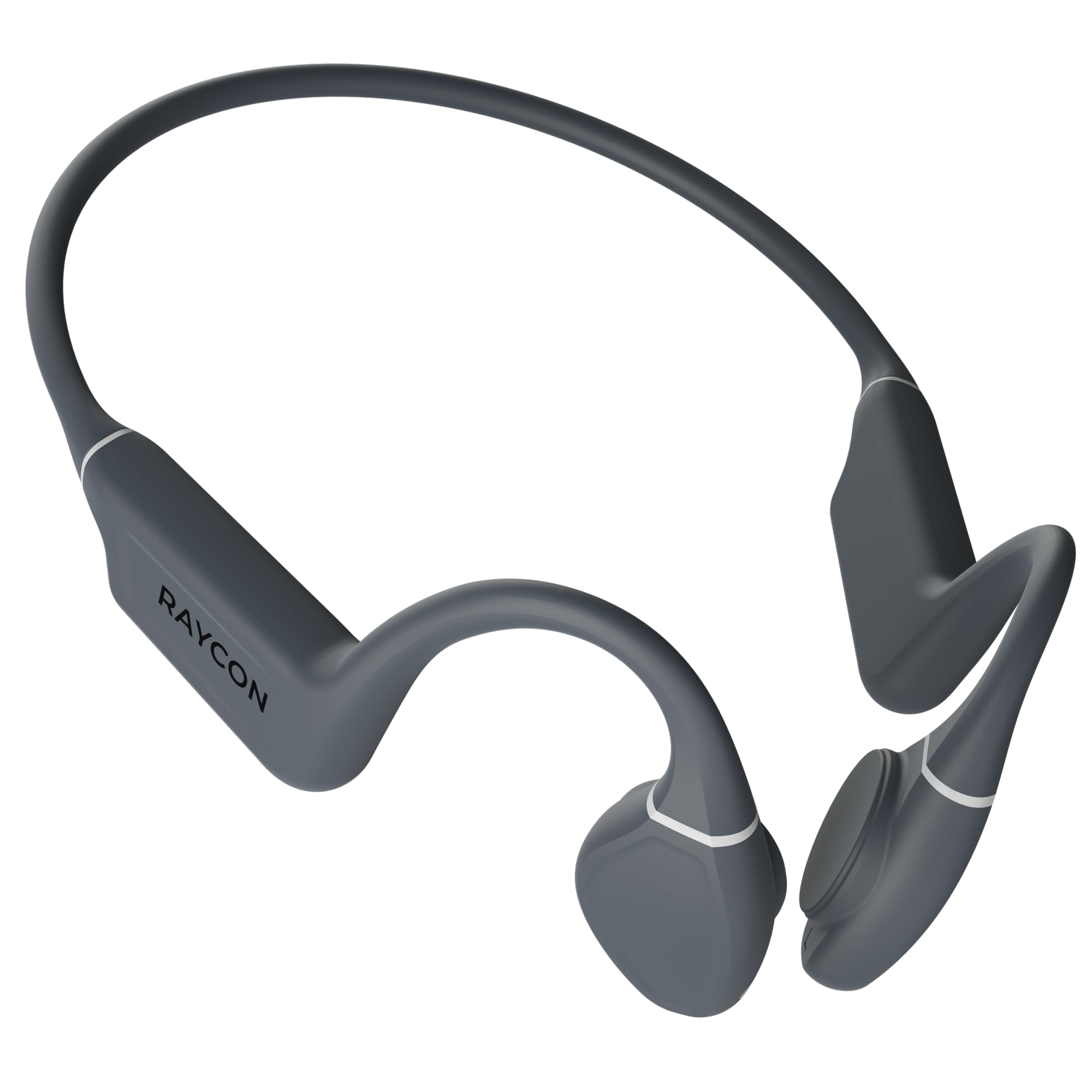
Slide the vibration pad to dial in how much of the room you let back in.
The Raycon’s clever trick is adjustability. You can slide the bone conduction earbuds closer to your cheekbone for louder sound or pull them back to increase awareness of what is around you. On a day when you want more or less of the room in your ears, that control is the point. The frame uses 16mm drivers and comes in with an IP68 rating — the highest water protection on this list, so rain, sweat and spills are covered, and the magnetic charging cable seals tight against moisture.
Where the Black SHOKZ relies on a fixed band, this pair lets you move the sound source. Owners also mention it feels louder than expected, with clear audio and no static, and it holds up through sweat during runs and gym sessions. Bluetooth 5.3 keeps the connection and the frame is built for commuting, workouts and daily wear.
It is not the pair for quiet listening. Bone conduction leaks vibration and sound, so at high volume people nearby may hear it, and the vibration can feel sharp on heavy bass. Some find the frame does not hug snugly against the head, and multipoint (switching between two devices) has been finicky for a few. It is also priced above the clip options here, so it makes most sense if adjustability during activity is exactly what you are after.
Best at awareness: the sliding pads and the IP68 rating make this the most weather-proof, most controllable pair for running, skiing, or a crowded gym floor.
The honest catch: open-air designs leak sound, so on a quiet commute someone sitting next to you may hear what you hear — and the vibration is noticeable on bass-heavy tracks.
Choose this when: you want to fine-tune how much of the world you hear and need the strongest water protection available here.
Pass on it when: you want sealed, private listening or a very snug clamp on your head.
4. Ogogrs Bone Conduction Headphones
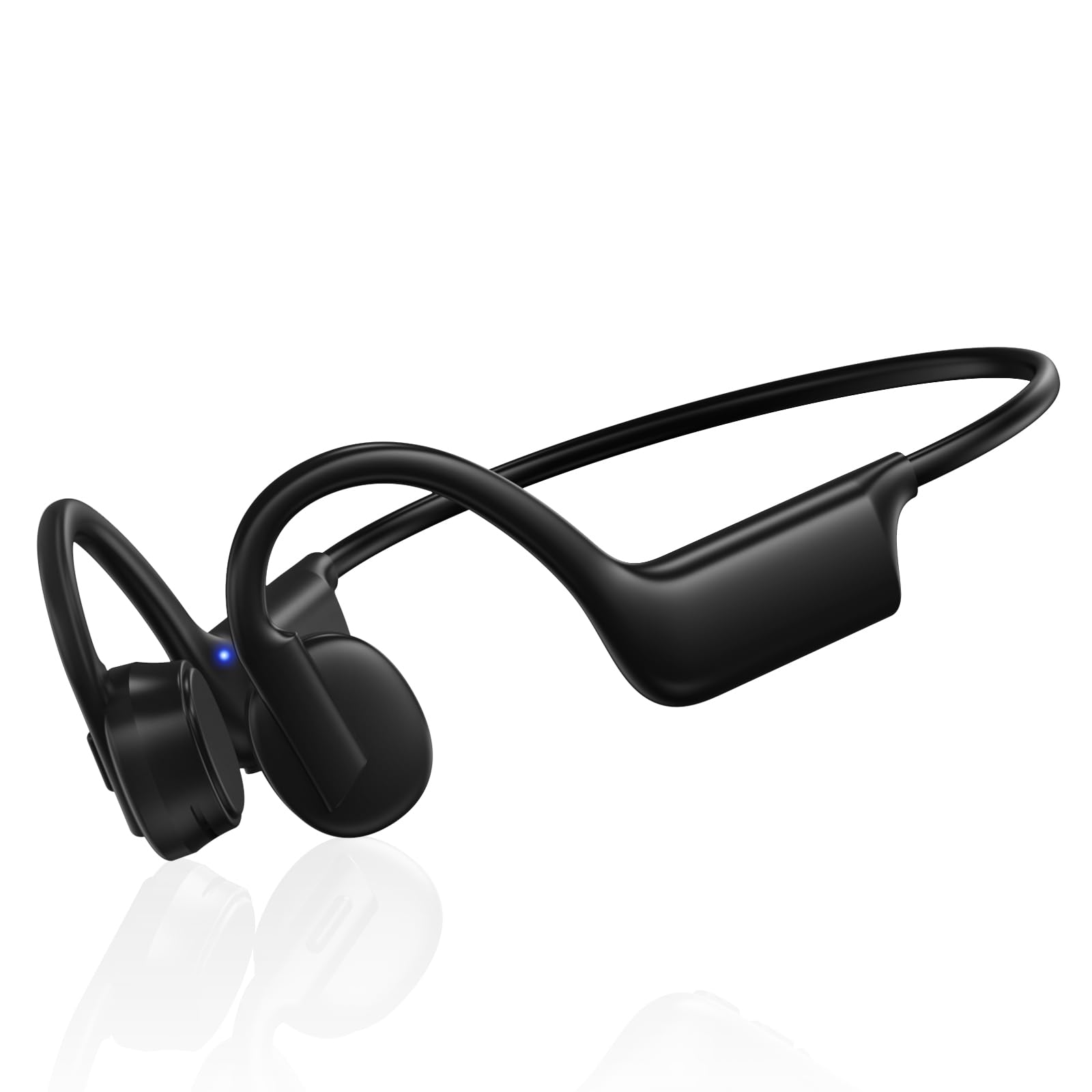
The light-touch way to try bone conduction without committing big.
If you are curious about the whole cheekbone idea and want a low-risk entry, the Ogogrs is the natural first step. The titanium frame bends freely, and the maker says it stays stable during high-intensity training.
The IP55 rating handles sweat and splashes for running, cycling or hiking. It pairs over Bluetooth 5.3 with a 33-foot range, and the box includes earplugs for those who want a sealed listen. On paper this covers the basics at the entry level.
The reviews tell you what to expect at this tier. It fits some heads as if custom-made, but the band runs large for others and slides down toward the neck. Sweat can interfere with the play/pause control during hard workouts. Some units did not last — a couple lasted months, then failed or kept entering pairing mode on their own. If you want a first taste of open-ear sound on a budget, it delivers; if you need long-term certainty, spend up.
Why it earns a spot: 10 hours of playtime, Type-C charging, and an IP55 build for a beginner-friendly bone conduction experience.
What to keep in mind: the band fits larger heads loosely for some buyers, and a handful of units have failed in the first months — buy it knowing you may be replacing it.
The fit for: budget shoppers who want open-ear, outside-the-canal listening for workouts and calls without overcommitting.
Not the one if: you have a smaller head or expect years of service from a single pair.
5. Boytond Ultra Open Ear Earbuds

A feather-light clip that keeps your ears open and your glasses unaffected.
The Boytond is the lightest-footed option here: small ear clips that hook over the outside of the ear and never seal the canal. The 16.3mm drivers do the sound work, and Bluetooth 5.4 is the newest wireless version on this list — older than the Black SHOKZ’s 5.1, so you get the more current pairing tech. On paper it lists up to 10 hours on a charge plus a further 40 hours with the case, and a 5-minute top-up is rated at 1 hour of playback.
Where it really earns its keep is for anyone sensitive to pressure on the ear. The open design keeps air moving, and it does not fight with glasses or earrings. One buyer with sensory sensitivities found the open-ear fit and tap-to-pause controls a genuine relief, and the clips stayed put during a sweaty physical job.
The catch is consistency. Some units only run one earbud at a time, and the clips can need effort to seat at first and cause soreness during long wear. The charging case also lasts roughly a workday plus a half for heavy listeners, below the headline figure. Treat it as a comfortable, affordable entry into clip-on listening rather than a pair that lasts all day at full volume.
Comfort-first pick: the clip-on shape leaves the canal open and coexists with glasses and earrings, which is the whole reason to choose this style.
Keep expectations in check: the promise of 40 hours in the case is generous — real-world case life runs closer to a full workday for many buyers, and a few units have pairing issues.
Pick it for: a light, glasses-friendly clip that stays outside your ear canal at the cheapest entry point.
skip it if: you need guaranteed all-day case life or bulletproof connection stability.
6. Symphonized Wooden Air Tube Headphones
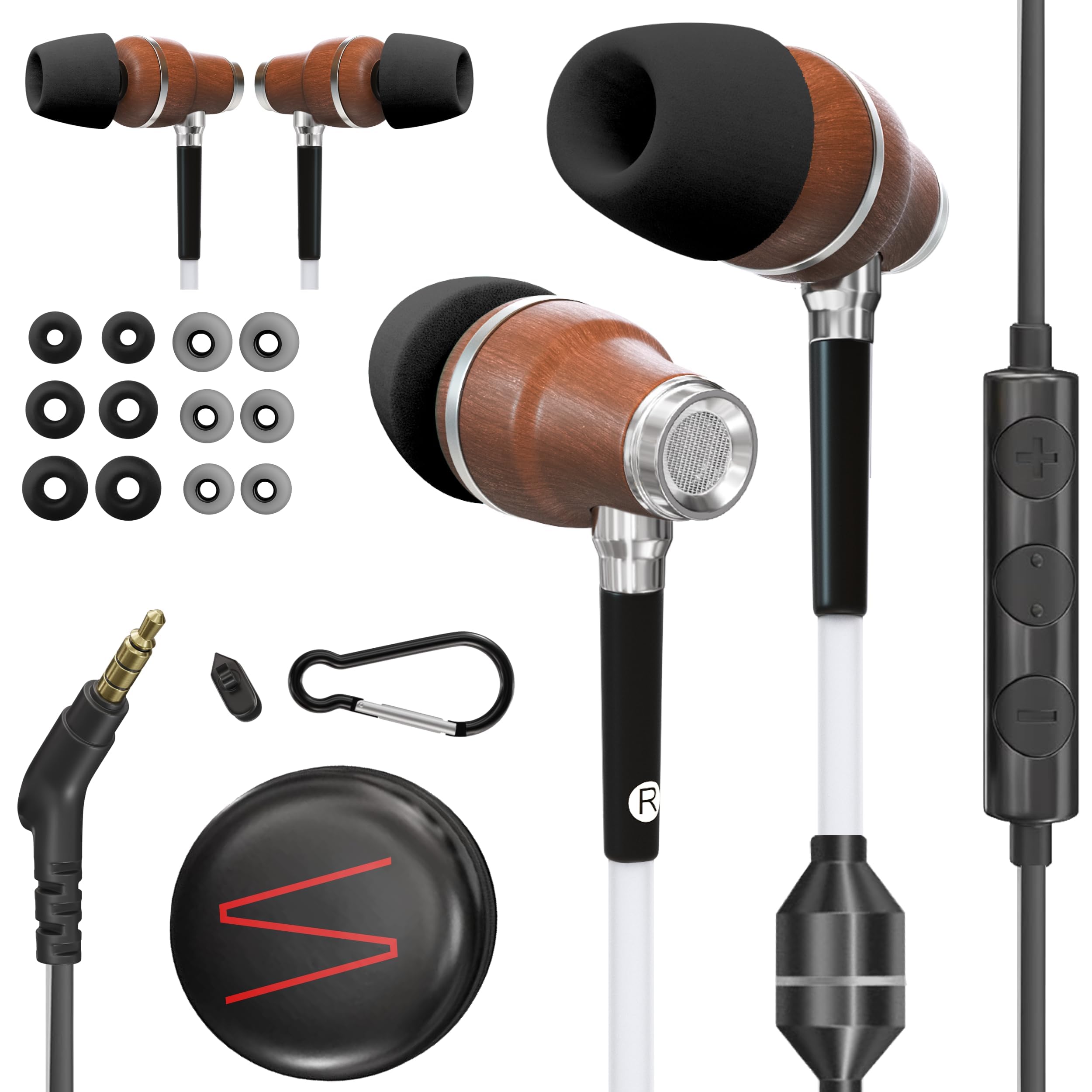
No battery, no Bluetooth, no charging — just a cable and real wood.
This is the odd one out, and that is the point. The Symphonized pair is wired: a 3.5mm aux jack, zero batteries to manage, and an air tube design aimed at reducing EMF exposure. If your worry is less about ear pressure and more about keeping a signal next to your head, this is the option built for that. The earpieces are real wood, which the maker says keeps the audio warm with deep bass and crisp highs.
Owners consistently mention clarity, fit, and looks, and the price-to-quality angle comes up often. It works for highway driving, a piano keyboard, and something as simple as a bike ride with minimal wind noise — and the multiple foam and silicone tips in different sizes let you find a snugger seat than most in-ears. It also never runs out of charge, which is a real plus if your listening happens on the move.
The catch is that it is still an in-ear design, so people who avoid anything in the canal should look elsewhere. Durability is the other question mark — the wire at the plug has failed within two years for some, and the microphone can pick up crackling interference in certain spots. Sound is clear and honest, but it is not an audiophile leap.
Standout strength: no charging, no pairing, and a wood housing that gives a warm, natural tone — the simplest listening experience on the list.
Second question to ask: the cable terminates at a plug that has worn out within a couple of years for a few buyers, so treat it gently or plan to replace it.
Worth it for: wired listeners who want no-battery, low-EMF listening and a warmer tone.
Not for you if: any in-ear fit bothers your ears or you need wireless freedom.
Know the Specs
Bone Conduction vs. Open-Ear Clip
Bone conduction headphones rest on your cheekbone and send sound through vibration, leaving the ear canal totally clear — that is the style behind the SHOKZ, Ogogrs and Raycon. Open-ear clips, like the Soundcore and Boytond, sit outside the ear and let sound in from the side. Both keep pressure off the ear canal, which is why they suit sensitive ears.
Water and Sweat Ratings (IP)
The IP number tells you how well a pair survives sweat and rain. The first digit is dust, the second is water. A higher second digit means more water resistance. IP67 and IP68 are the tougher ratings here (the Raycon is rated IP68), while IP55 handles sweat and splashes but not a dunking. None of these models should be swimmed in.
Battery Rating and Charging
An 8-hour rating sits at the workday line; the Ogogrs lists 10 hours and the Soundcore says 7 hours per charge, 28 with its case. Charging style matters too: the SHOKZ, Boytond and Raycon use proprietary magnetic cables, the Ogogrs takes Type-C, and the Symphonized needs no power at all because it is wired.
Fit, Weight and Frame
A wraparound band spreads pressure around the head; a clip hinges on the ear. Titanium frames bend and spring back, while thicker bands can run large on smaller heads. If you have a smaller head, note that the Ogogrs band slides loose for some while the Boytond clip needs a few tries to seat. Fit determines whether the pair stays put when you move.
Common Questions
Can headphones actually help with vertigo?
Is bone conduction safer for your ears than normal earbuds?
Which of these stays put best if I feel unsteady?
Do open-ear headphones let in too much background noise?
How long do these headphones actually last?
Can I wear these with glasses or earrings?
What is the difference between IP55, IP67 and IP68?
Do I need Bluetooth 5.4 or is an older version fine?
Can I use these for phone calls and video meetings?
Is a wired pair a better option than wireless for sensitive ears?
The Bottom Line
For most people worried about ear pressure, the headphones for vertigo winner is the SHOKZ OpenRun because its bone conduction design keeps the canal fully open, its 8-hour rating covers a workday, and the wraparound band holds steady — the most complete package of comfort, sound and sweat protection on this list. It is not the cheapest here, but it makes the fewest compromises. If you prefer a clip that never enters the ear and want real bass, grab the Soundcore C50i. And for a wired, no-battery, low-EMF alternative, the Symphonized Wooden Air Tube is the one to reach for. Whichever you choose, start with the open-ear styles and trust how your ears feel after a day.
How we choose
We do not accept paid placement. Every pick is matched to a real buyer and a real use-case; we do not hands-on test units.
Sources
Specifications: manufacturer listings and product documentation. Review insights: verified customer reviews, as of October 2026. Pricing: not shown on this page (it changes often); check the current price via the retailer link.
As an Amazon Associate, Aappliancez earns from qualifying purchases. This does not affect which products we feature.