Disclosure: Some links in this post are affiliate links. As an Amazon Associate I earn from qualifying purchases, at no extra cost to you. Learn more
Specs are compiled from manufacturer listings and verified buyer reviews and can change over time — please confirm the key details on the product page before buying.
You want to feel the road again, not float above it on a tower of foam. Low stack running shoes sit closer to the ground, which is why they feel quicker, more stable underfoot, and easier to control on turns — but the wrong pair will leave your feet aching and your toes pinched. Below you’ll find the nine pairs genuinely worth your attention, sorted by what each one actually does well.
This guide is built by comparing the manufacturers’ published specifications and the patterns across verified customer reviews, so you get each pick’s real strengths and trade-offs instead of marketing spin.
A low stack does not mean a harsh ride, and these picks prove it — some keep a roomy toe box, some add a springy plate, and all of them keep you connected to the pavement instead of hovering above it, which is the whole point of shopping for the best low stack running shoes.
Top Picks
How To Choose The Best Low Stack Running Shoes
The single biggest mistake buyers make with a low stack shoe is treating it like a normal trainer. A shoe that sits close to the ground rewards a shorter, quicker stride and punishes heavy heel-striking — so you need to match the shoe to how you actually run, not how you wish you ran.
Start with the drop, not the colour
Drop is the height difference between the heel and the toe of the shoe, measured in millimetres. A zero-drop shoe puts your heel and toes on the same level, which asks more of your calves and Achilles — the Altra Escalante 4 is a zero-drop design, while the On Cloudsurfer uses an 8 mm offset, so it eases you down gradually. If you have never run in a low-drop shoe, give your legs a few weeks to adapt before you judge it.
Know your toe box width
A low stack shoe has less foam to hide behind, so the fit at the front matters more. A wide toe box (extra room at the front of the shoe so your toes can spread) keeps your foot stable when it lands close to the ground. Brands like Altra build this in by default with their FootShape fit, and the Flux Adapt Runners lead with it too. If your feet are narrow, a roomy front can feel sloppy — size carefully.
Weight in ounces tells you how it will feel at mile ten
A shoe that feels fine on the shop carpet can feel like a brick over a long run. Lightweight builds matter more on a low stack shoe because you are already asking your feet to do more work. The Altra Escalante 4 is listed at 8.5 oz, while the On Cloudsurfer is listed at 305 g. Heavy-footed runners who want maximum ground connection should look at the lighter end of the range.
Side-by-Side Comparison
| Model | Best For | Drop | Weight | Cushioning | Amazon |
|---|---|---|---|---|---|
| Brooks Men’s Trace 4★ Best Overall | Everyday running and gym days | — | — | Responsive | Amazon |
| ALTRA Men’s Escalante 4Zero Drop Pick | Zero-drop fans with wide feet | 0 mm | 8.5 oz | Moderate | Amazon |
| On Women’s CloudsurferMost Cushioned | Long runs with spring in the step | 8 mm | 305 g | Cushioned | Amazon |
| Allbirds Men’s Tree Runner | Everyday walking and travel | — | — | Barefoot-feel | Amazon |
| Saucony Endorphin Speed 5 | Tempo runs and intervals | — | — | Springy nylon plate | Amazon |
| New Balance FuelCell Rebel V5 | Daily training with pop | — | — | Responsive FuelCell | Amazon |
| Flux Footwear Adapt Runners | Barefoot feel with a wide toe box | Zero-drop | — | Soft insoles | Amazon |
| Saucony Endorphin Pro 3 | Race day with a carbon plate | — | — | PWRRUN PB foam | Amazon |
| Mizuno Wave Prophecy 14 | Stability and shock absorption | — | — | INFINITY WAVE | Amazon |
Detailed Reviews
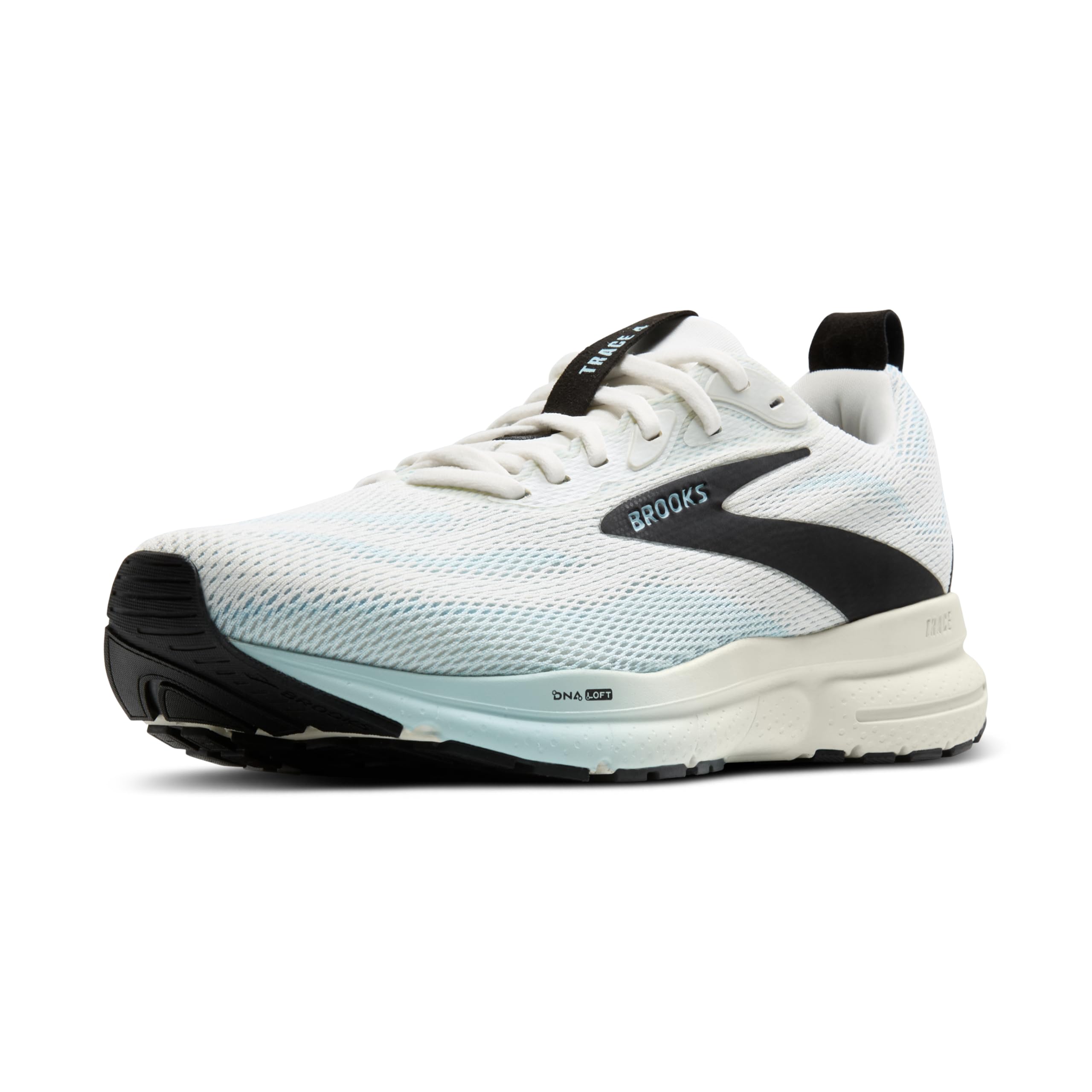
1. Brooks Men’s Trace 4 Neutral Running Shoe
Our pick — 4.5+★ from 850+ verified ratings; the strongest balance of quality and price.
The neutral daily trainer that stays comfortable from the first mile to the hundredth.
The Trace 4 earns the top spot by doing the unglamorous thing well: it stays comfortable. What wins people over is the build quality — it is the most-praised quality in the feedback by a wide margin, and the pattern holds whether buyers are logging road miles, standing through a gym session, or wearing them to the office. With 4.5+ stars across 800+ ratings, this is the crowd favorite of the entire list.
It suits a neutral runner (one whose foot does not roll dramatically inward or outward) who wants one shoe for several jobs. A long-time Brooks wearer who walks 4+ miles 6 days a week reports the shoes “wear like iron” and fit true to size — a real-world test that matches the spec sheet. The cushioning is described by owners as soft but responsive, with a secure fit and no break-in period, and the upper breathes well enough for warm-weather running.
What earns the crown
- Build quality is the thing owners praise most — the single most-mentioned positive across the reviews.
- True-to-size fit with a secure lockdown and no break-in period.
- Versatile enough for running, gym training, and everyday wear.
- Comfort that holds up over months, not weeks.
Where it holds back
- Durability feedback is mixed, so treat the outsole as a wear item over time.
- Narrow-footed fit is noted as a strength — wider feet may want to size up.
- Not the flashiest pick on the shelf.
Reach for this if: you want a neutral everyday shoe that handles road miles and gym days without fuss.
Look elsewhere if: you have a very wide forefoot — the Trace 4 is cut for a narrower fit.
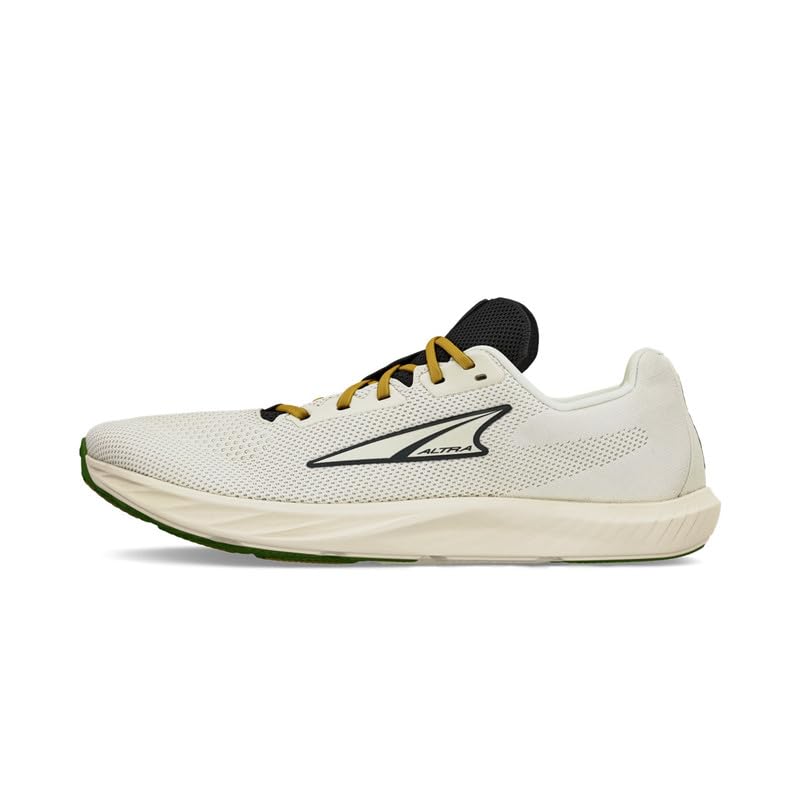
2. ALTRA Men’s Escalante 4 Road Running Shoe
The zero-drop shoe that gives a wide forefoot room to spread without a hint of barefoot weirdness.
Most low stack shoes make you choose between ground feel and room for your toes. The Escalante 4 refuses. It pairs a 0 mm drop (heel and toe on the same level) with Altra’s FootShape fit — a genuinely roomy toe box with a secure midfoot — and does it at 8.5 oz on the spec sheet. Fit is the second most-praised quality in the feedback, and owners with wide feet repeatedly say the front of the shoe stops squeezing their toes.
The thing that keeps it in the conversation is how it holds up. A repeat buyer now on a fourth Escalante pair says they “held up well past 300 miles,” and the shoe’s flexibility comes from FootPod technology in the outsole — a design that lets the shoe bend with your foot rather than forcing it flat. The Altra EGO midsole foam is described as responsive rather than pillowy, so you feel the road clearly without getting punished by it.
The honest trade-off is the heel. Cushioning at the back of the shoe was reduced versus the previous version, and a thinner tongue means it can slide forward on longer runs. The mesh upper also has a scratchier feel than buyers expect at this level. None of that stops it being the best low-drop shoe on this list for a wide forefoot — just know the heel is where the savings landed.
Why the toe box wins: the roomy FootShape front is the standout — it lets your toes spread naturally on every landing, and the secure midfoot keeps the shoe from feeling like a slipper.
The heel caveat: pressure at the back of the shoe is the recurring gripe, and the tongue is lightly lined — lace up snugly and break it in before a long run.
The one for wide-footed zero-drop converts: if you have been searching for a roomy toe box with real ground feel, this is the pick.
Hold off if: you need a plush heel — the Escalante 4 deliberately thins the back of the shoe.
3. On Women’s Cloudsurfer Sneaker

Two-layer CloudTec cushioning that absorbs impact and springs back without feeling mushy.
On calls this their most cushioned pair, and the shop-floor reaction confirms it. Comfort is the runaway favorite in the reviews — it is the most-discussed strength in the whole feedback set — and owners describe a bouncy, resilient ride that holds up over repeated long runs. The CloudTec sole uses two layers to absorb impact without feeling mushy, and the 8 mm offset keeps the heel slightly improve so your calves are not asked to do all the work on day one.
Versatility comes through loudest after comfort. One buyer wore a single pair for a full six-day theme park trip and never switched shoes; another ran roughly 7 miles across five sessions and called them “comfortable, cushioned, springy on pavement.” The Helion outsole foam is lightweight enough that the shoe does not drag on longer efforts, and the two-row upper lets you dial in the fit across the top of your foot.
Size is the thing to get right. The toe area runs small for a good number of buyers, and the listed weight of 305 g puts this on the heavier side of the list. Laces are also widely called out as weak — swap them and the fit improves noticeably. If you normally wear a half size up in running shoes, start there.
The comfort story: this is the cushioned low-stack option — the two-layer CloudTec sole absorbs impact while the Helion foam keeps the ride springy instead of dead.
The sizing snag: toe room is the recurring complaint, so order up half a size if your feet are on the wide side of normal.
Best for the runner who wants a soft landing: if you want cushioning without losing ground connection, the Cloudsurfer is the clear choice.
Think twice if: you have broad toes — the front of this shoe is cut close.
4. Allbirds Men’s Tree Runner, Everyday Sneakers

The machine-washable sneaker that keeps feet cool and close to the ground all day.
The Tree Runner is the closest thing on this list to a barefoot shoe that still looks presentable at the office. Comfort leads the feedback by a wide gap, and the breathable mesh upper keeps feet from overheating on warm days. It weighs in at 1.84 lb on the package spec, which keeps it light enough for all-day wear, and the removable insoles let you slot in your own orthotics if you use them.
The real differentiator is the care routine. You can pull the insoles and laces out and run the shoes on a wool or gentle cycle — no drying, no bleach. That makes them a genuinely practical travel shoe: they wear close to the ground, pack small, and clean up after a muddy weekend. Owners describe walking 2.5 miles in them without discomfort, and one logged a week of 15,000 to 25,000 steps a day with no foot pain.
The catch is the sizing. These come in full sizes only, and the fit has more mixed feedback than the comfort does — a common pattern is to size up. There is also a break-in window, and the laces have a habit of coming untied. None of that is unusual for a natural-material sneaker, but plan for it.
What makes it stick
- Machine washable on a gentle cycle — a genuine advantage over fabric trainers.
- Comfort is the most-praised quality by a clear margin.
- Breathable mesh upper and removable insoles.
- Light enough for long days on your feet.
What to plan around
- Full sizes only, and the fit runs narrow for some — size up.
- Break-in period before the shoe softens fully.
- Laces loosen; plan to swap them if that bothers you.
Pick this for the commute-and-weekend crowd: it is the low stack shoe you can wash, wear sock-free, and forget about.
Not for: runners who need serious cushioning on long road efforts — this is a walk-and-travel shoe first.
5. Saucony Men’s Endorphin Speed 5 Sneaker
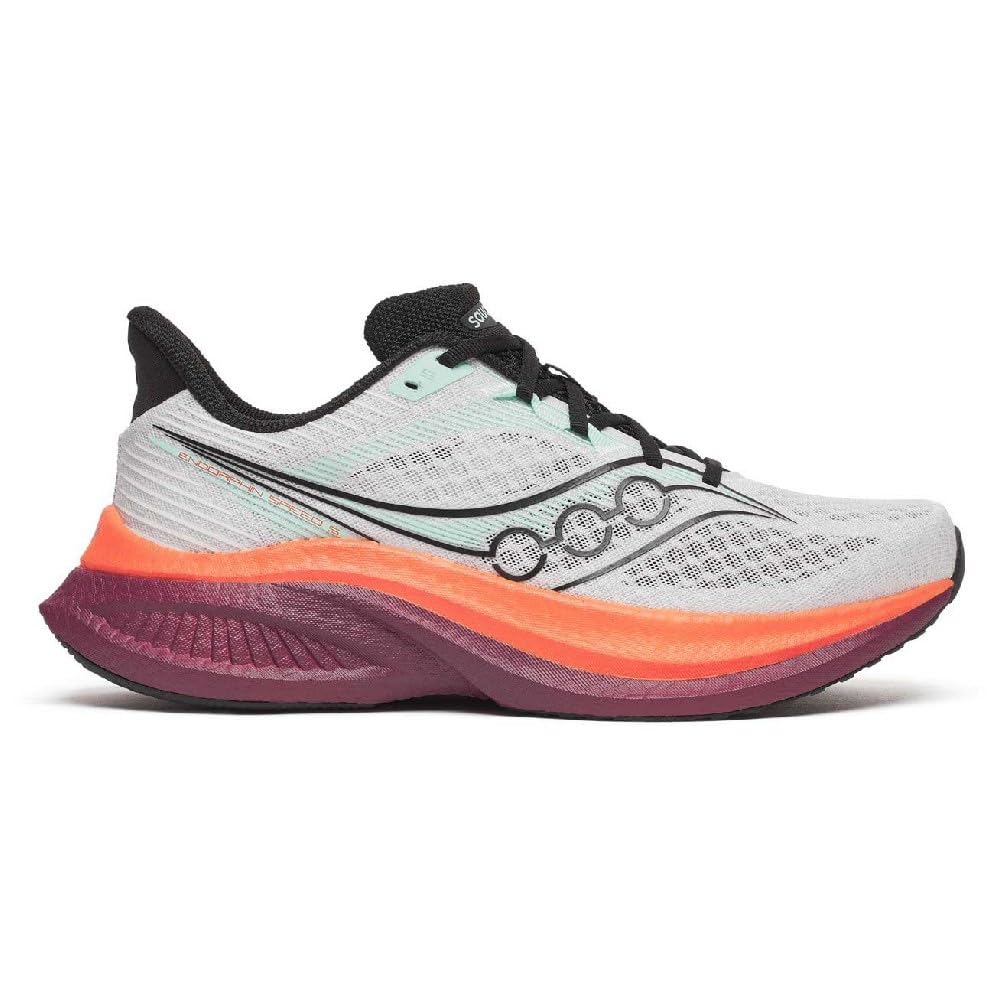
Built for intervals, with a nylon plate and rocker geometry that kick in at tempo pace.
The Speed 5 is a targeted tool: Saucony designed it as an up-tempo shoe, and the reviews back that up. Comfort is the most-praised aspect, followed by cushioning, and owners describe a roomy toe box with a breathable single-layer mesh upper that keeps feet cool during hard efforts. The nylon plate underfoot — a stiff insert that flexes with your stride — gives you a springy return that recreational runners can actually use, without the harshness of a carbon plate.
Where it really separates is pace. A runner logging 6- to 8:30-minute miles called it stable and comfortable at speed; another says the rocker geometry (a curved sole that rolls you forward) gives real propulsion in 5K efforts with no lower-leg soreness the next day. It also earns a strong niche in HYROX-style training, where you are mixing runs with strength work.
The Speed 5 is not a slow-shoe. The same reviewer who loved it at speed also found it flat and unenjoyable at 9- to 12-minute miles, so if your easy runs are genuinely easy, this is the wrong tool. Eyelet irritation showed up on a few first runs, and a minority of buyers report foam breaking down faster than expected. Treat it as a dedicated speed-work shoe and it delivers.
What it is built for: tempo runs, intervals, and race-pace work — the nylon plate and rocker geometry give you a springy kick exactly where you ask for it.
What it is not: an everyday recovery shoe — the same geometry that sings at speed feels dead at easy pace.
For the runner with a training plan and a calendar: this is the shoe for your hard days, not your easy ones.
skip it if: you want one shoe for everything — the Speed 5 punishes slow miles.
6. New Balance Men’s FuelCell Rebel V5
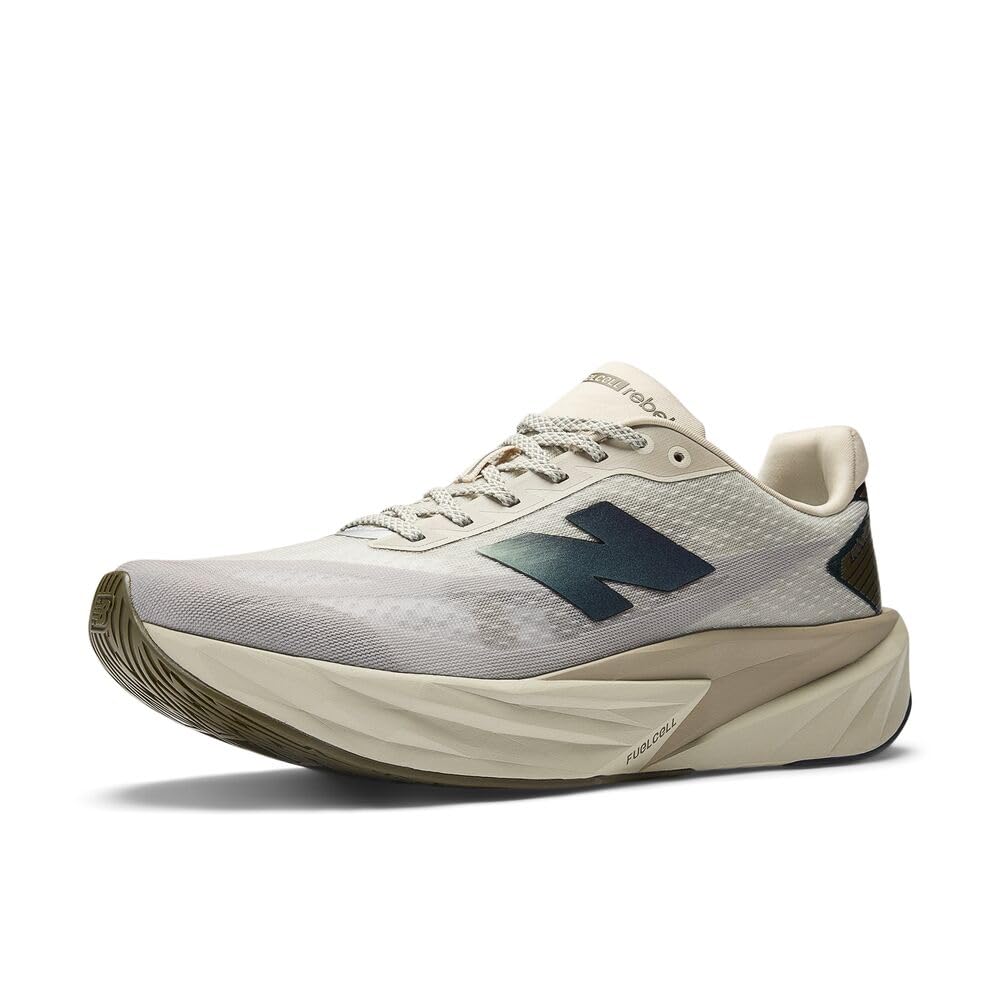
The everyday trainer that flips from steady miles to spontaneous sprints on FuelCell foam.
The Rebel V5 was built to make an everyday trainer feel fast. FuelCell foam underfoot gives a propulsive, responsive ride, and the enhanced geometric midsole stacks higher and extends wider than the previous version — which means more cushioning without the instability that usually comes with it. Quality is the most-praised aspect in the feedback, with cushioning and suitability for running tied close behind, and the FantomFit bonded upper adds support with very little weight.
That versatility is the whole pitch. The shoe adapts from long, steady sessions to shorter, harder efforts, which is why it suits a runner who works through a mixed training week. Owners describe the cushioning as supportive rather than mushy, and the breathable mesh upper keeps feet cool in warmer conditions. It also draws a strong following from runners who want one pair for all training types.
Fit is where you have to pay attention. The feedback is mixed — a few owners say the midfoot is snug while the heel and toe box run roomy, and sizing is inconsistent enough that some go up a half size. The arch support is also a minority complaint. The upper, though, gets a warm reception for not being overly thick — a common gripe with chunkier daily trainers.
The thing owners love: a supportive, non-mushy cushioning that still feels quick — the FuelCell foam gives real pop without turning the shoe into a wobbly platform.
The fit caveat: sizing is inconsistent in places — try before you commit to a full-size order if you can.
Made for the mixed-week runner: if your training includes easy days and hard days in the same shoe, the Rebel V5 handles both.
Elsewhere if: you need predictable sizing — this one runs all over the map.
7. Flux Footwear Adapt Runners
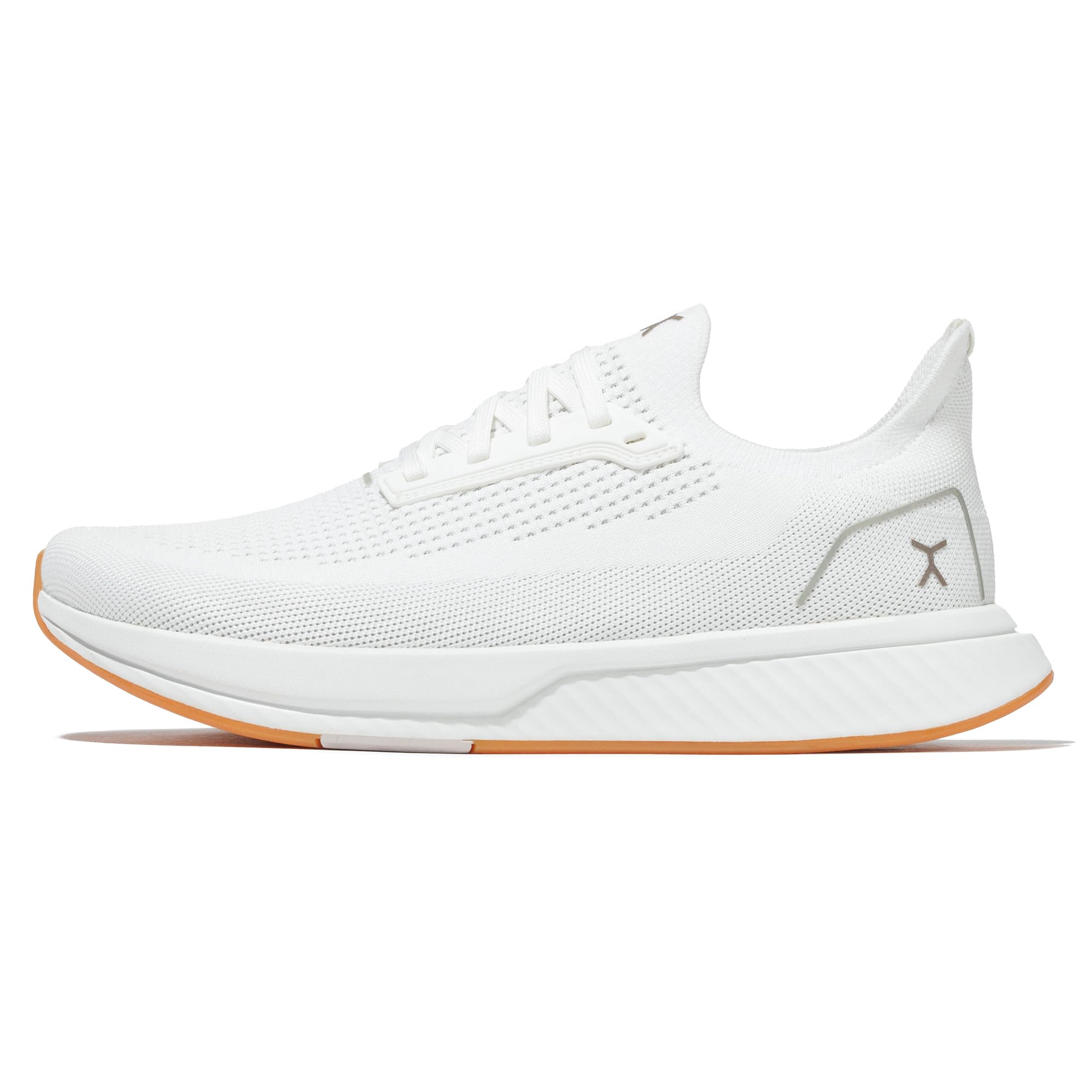
A zero-drop natural-movement shoe with a wide toe box that looks like a normal sneaker.
Natural movement shoes often announce themselves with an odd shape. The Adapt Runners do not. Flux pairs a wide toe box — extra room at the front so toes can spread — with a zero-drop sole, and the result reads like a regular sneaker from the outside while giving your foot room to work inside. Comfort is by far the most-praised aspect of this shoe, and cushioning holds the second spot, so it is not a punishing barefoot slab.
Owners use it for real days. One wore the pair through daily work, multi-mile theme-park walks, and a European backpacking trip. Another calls it their go-to for everything after a natural break-in period. The upper breathes, the insoles are soft, and the shoe is machine washable on a cold gentle cycle (air dry, never tumble dry — that shrinks it).
Sizing is the real story here, and it is a split one. Flux says themselves that Adapt Runners fit small for most and recommends sizing up half a size, and the mixed feedback confirms it — some find the midfoot too tight, and one buyer found different colours fit differently. High arches are a particular watch-out: a wide-arched foot can feel pressure across the top of the shoe. Order carefully and check the return policy before you commit.
The case for the Adapt
- Wide toe box that looks like a normal sneaker.
- Zero-drop sole for real ground feel.
- Soft insoles and breathable upper.
- Machine washable for easy care.
The case against
- Fit runs small and inconsistent — order up half a size.
- Midfoot can feel tight on some feet.
- High arches may feel pressure across the top.
The natural-movement pick for people who want to blend in: if you want a wide toe box and zero drop without the barefoot look, start here.
pass on it if: you have high arches or you refuse to size up — the fit is the weak point.
8. Saucony Mens Endorphin Pro 3
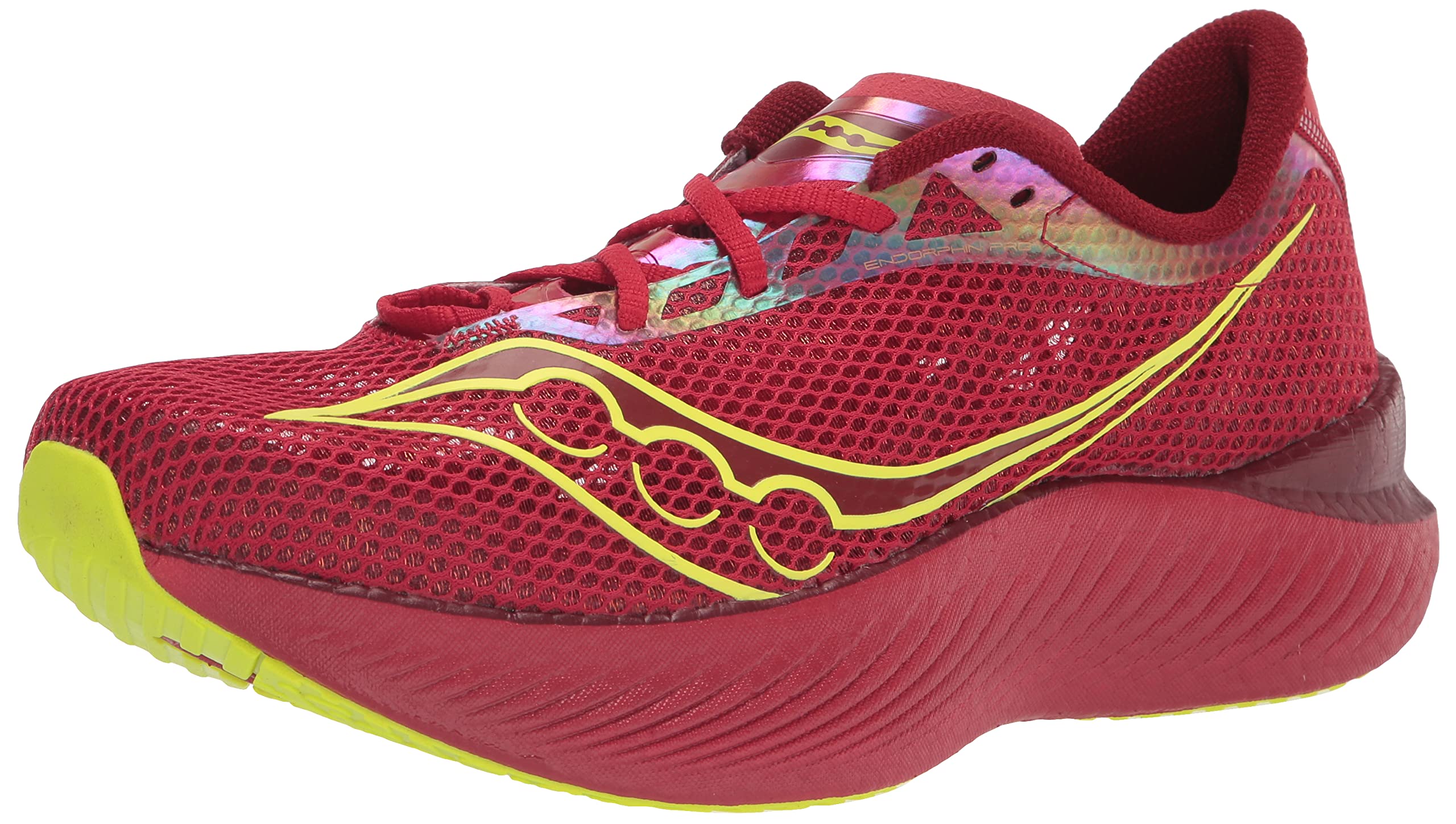
A carbon-plated racer with a thick PWRRUN PB stack that makes an honest case for shaving seconds off your split.
The Pro 3 pairs a carbon-fiber plate — a stiff insert that stores and returns energy with each stride — with a thicker stack of PWRRUN PB foam cushioning. That combination is designed to put more pop underfoot, and owners say it delivers: one credits the shoe with taking 15 seconds off a 1.5-mile time trial, and another calls it their new favorite race-day shoe. Quality is the most-praised aspect, followed by comfort, and it lands at 4.5+ stars across 200+ ratings.
What surprises people is how forgiving it is. A marathoner who raced Philadelphia in it describes a smooth rolling feel at marathon pace, with the plate snapping without harshness in the calves or Achilles. Another below-average runner says other plated shoes they tried fell off at easy pace; this one felt good at every speed. The wide-toe comfort also matters — owners with wider front feet find room in the toe box without a sloppy heel.
Buy the Pro 3 with a clear purpose. It is a race shoe, not a walking or lifting shoe, and the durability curve is flatter than a training shoe — one owner reports the outsole coming apart in under three months at 100 to 200 miles. There is also a category of runner who simply does not feel the plate doing anything. For a strong race-day shoe with real cushioning, it earns its spot.
Race-day reality check: the carbon plate and thicker PWRRUN PB stack deliver measurable speed benefits for owners who race regularly.
The honest limit: the sole is built for pace, not mileage — treat it as a race shoe, not a daily trainer.
The pick for the racer: if you have a race calendar and want a carbon-plated shoe that keeps you comfortable over the full distance, this one holds up.
Look elsewhere if: you want one shoe for everything — the plate and thin sole are not built for easy days or gym work.
9. Mizuno Men’s Wave Prophecy 14 Running Shoe

A stability-first design that trades plushness for a firm, shock-absorbing platform.
The Wave Prophecy 14 leads with its full-length INFINITY WAVE sole — a structural plate system designed to absorb impact and hold your foot steady. Quality is the most-praised aspect in the feedback, and owners who need a firm heel and stable midfoot consistently call out how supportive the shoe feels. The monofilament mesh and synthetic leather upper give it a distinctive, more armored look than the fabric shoes on this list.
It is not subtle, and that is the point. A pronating runner with flat feet describes it as the best running shoe they have worn, with a sturdy heel counter and firm midfoot for stability. The Mizuno lasts — one long-time wearer reports five-star durability across years of use. For long training runs where shock absorption matters more than ground feel, this is the pick.
The trade-offs are real and worth naming. The shoe is heavier than the minimalist peers on this list, and cushioning feedback is genuinely split — some owners love the firm, responsive feel; others find it stiff and clunky. A minority of owners mention wave plates separating under heavy use. If you have never owned a firm stability shoe, try before you commit.
What it is good at: big shock absorption and a firm platform for long days on your feet, especially useful for pronating runners.
What it costs you: weight and a firm, less forgiving ride — this is not a soft-shoe experience.
The stability-first choice: pick it if you want maximum shock absorption and your feet pronate on long runs.
Not for: runners who want pillowy cushioning — this shoe feels firm by design.
10. Brooks Trace 4 — Everyday Companion
The pair that crosses from the gym floor to the coffee shop without missing a step.
Some low stack shoes are strictly for running. The Trace 4 is the rare one that works for the whole day. The upper is breathable and the fit is secure — true to size with no break-in — so if you want one pair for the gym, the dog walk, and errands, this covers it. It is the same shoe as position one, and that versatility is the whole reason it sits comfortably in this list.
The cushioning is soft but responsive, which is the balance most buyers want: enough to protect your feet on hard pavement, not so much that you lose contact with the road. Owners with wide feet often split, so try before you buy if that is you. If you want an honest everyday shoe that handles a walk-heavy week without drama, this is it.
Where it shines
- Comfortable from day one with no break-in period.
- Versatile enough for gym, running, and casual wear.
- Breathable upper that handles warm days.
- Build quality owners keep coming back for.
Where it gives
- Durability feedback is mixed over the long haul.
- Not the lightest shoe on this list.
Pick it if: you want one shoe that works as hard at the café as it does on the pavement.
Look elsewhere if: you want a dedicated speed shoe — this one is built for comfort and consistency, not race pace.
Know the Specs
Stack Height and Drop
Stack height is the amount of material under your foot, and drop is the height difference between the heel and the toe. A lower stack puts you closer to the ground and makes the shoe feel quicker and more stable, but it gives you less to hide behind. A zero-drop shoe like the Altra Escalante 4 asks more of your calves and Achilles. An 8 mm drop like the On Cloudsurfer eases that transition. If you are moving from a max-cushion trainer to a low stack shoe, give yourself a few weeks to adapt.
Weight in Ounces and Grams
Weight matters more on a low stack shoe because your feet are already doing more work. The Altra Escalante 4 is listed at 8.5 oz, which keeps it light enough for speed work; the On Cloudsurfer is listed at 305 g, which puts it heavier on this list. Lighter shoes tend to feel faster on long runs but can feel thin under heavy impact. The right weight depends on stride and pace — a lightweight shoe is not automatically better.
Common Questions
Will a low stack shoe work for someone who has never run in one?
What is the difference between zero drop and low drop?
Can I use a low stack running shoe for walking and standing all day?
Do wide toe box shoes fit wide feet better?
How long should a low stack running shoe last?
Is a carbon plate overkill for a slower runner?
Should I size up in a low stack shoe?
Are low stack shoes good for treadmill running?
How do I clean low stack running shoes?
Will a low stack shoe help with stability on uneven ground?
The Bottom Line
For most buyers, the low stack running shoes winner is the Brooks Men’s Trace 4 Neutral Running Shoe because it handles running, gym work, and everyday wear with true-to-size fit, plus the build quality owners praise most. If you want a roomy toe box with a zero-drop sole, grab the Altra Escalante 4. And for race day with a springy carbon plate, the Saucony Endorphin Pro 3 is the one to reach for.
How we choose
We do not accept paid placement. Every pick is matched to a real buyer and a real use-case; we do not hands-on test units.
Sources
Specifications: manufacturer listings and product documentation. Review insights: verified customer reviews, as of October 2026. Pricing: not shown on this page (it changes often); check the current price via the retailer link.
As an Amazon Associate, Aappliancez earns from qualifying purchases. This does not affect which products we feature.