Disclosure: Some links in this post are affiliate links. As an Amazon Associate I earn from qualifying purchases, at no extra cost to you. Learn more
Specs are compiled from manufacturer listings and verified buyer reviews and can change over time — please confirm the key details on the product page before buying.
If your toilet base is ringed with a black, crumbling line, you do not need a plumber — you need the right tube of sealant and about ten minutes. The catch is that the wrong tube turns yellow in a month, peels at the first wipe-down, or refuses to come out of the nozzle at all. What matters most for a toilet is simple: it has to stick to porcelain and tile, survive constant splashes, and never shrink away from the joint.
This guide is built by comparing the manufacturers’ published specifications and the patterns across verified customer reviews, so you get each pick’s real strengths and trade-offs instead of marketing spin.
This breakdown of the best caulk for toilet covers cure times, squeeze-tube versus gun formats, and which colors hide mildew best.
Top Picks

How To Choose The Best Caulk for Toilet
The bead around a toilet base is the hardest seal in the house to get right. The floor is rarely perfectly flat, the joint moves a little every time someone sits down, and the area stays damp for hours after every shower. A tube built for windows or exterior trim will not hold up there. Four things decide whether your repair survives.
Waterproofing and material type
Look for the word “waterproof” on the label, not “water resistant.” Waterproof means the cured seal is meant to sit in standing splash and never let moisture through, which is exactly the toilet-base situation. Silicone is the classic choice and cures into a rubbery film. Hybrid polymer is the newer option — it grabs wet or dry surfaces and stays paintable, which silicone usually is not.
Cure time and how long you must stay off it
Every sealant has two clocks. The “initial hardening time” is how fast a skin forms on the surface, so you can stop worrying about dust and drips. Full cure is how long before the joint can take water. A tube that skins over fast is friendlier for a toilet, because you are working in a spot you cannot leave dry for a whole day.
Mildew resistance and color
The toilet base is the most mildew-prone joint in the bathroom. White reads as clean next to most porcelain and hides a fresh bead nicely. Gray blends with grout lines and stone floors. Clear disappears against tile but shows trapped grime underneath, which is why many bathroom jobs are better served by an opaque color you can wipe down.
Tube, squeeze, or gun
A caulking gun gives you control on a long, straight run. For the short curve around a toilet base, a squeeze tube is often easier — no gun to load, no wasted half-cartridge, and you can work one hand on the tube and one on a smoothing tool. Match the format to your job size: a squeeze tube for one short toilet bead, a gun cartridge for a long straight run.
Side-by-Side Comparison
| Model | Best For | Format | Hardening Time | Full Cure | Amazon |
|---|---|---|---|---|---|
| Flex Caulk Hybrid Polymer Waterproof Sealant, Clear, 6.6 oz★ Best Overall | Wet or dry surfaces | 6.6 oz squeeze tube | 10 minutes | 24 hours | Amazon |
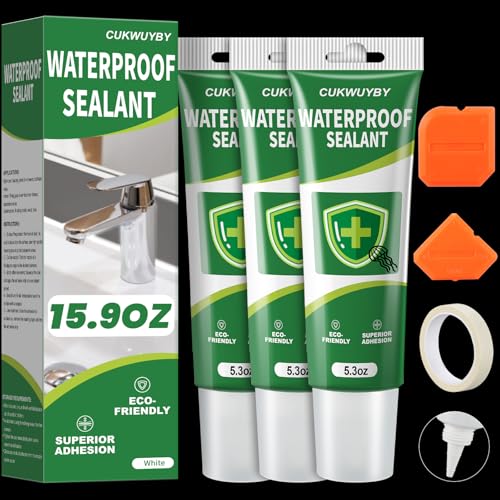
| 15.9 Fl Oz Silicone Caulk (3 Pack 5.3 Fl Oz)Best Value | Precise small repairs | 3 tubes, 5.3 fl oz each | 24 hours | 24 hours | Amazon |
| 8Oz Waterproof Caulk & Seal Silicone Sealant | Grout lines and tile gaps | 8 fl oz tube with tool kit | 30 minutes | 1 day | Amazon |
| Hemway Kitchen & Bathroom Light Gray Sealant & Adhesive | Bathroom moisture zones | 300ml gun cartridge | — | 24-48 hours | Amazon |
| Silicone Caulk & Sealant Gray, 100% Waterproof Silicone Sealant | Gray-on-gray bathroom finishes | 4 cartridges, 10.2 fl oz each | 30 minutes | 24 hours | Amazon |
Detailed Reviews
1. Flex Caulk Hybrid Polymer Waterproof Sealant, Clear, 6.6 oz
Our pick — over 4★ from 2,000+ verified ratings; the strongest balance of quality and price.
The one that grabs a wet toilet base and skins over in ten minutes flat.
That ten-minute initial hardening time is the headline. It is the fastest skin-over in this lineup — the 8Oz Waterproof Caulk & Seal needs 30 minutes for the same stage, and the three-tube CUKWUYBY set lists a full 24 hours. For a toilet base you cannot keep dry through a whole evening, that speed is the difference between a bead that stays put and one that sags while you are still smoothing it.
It is a hybrid polymer rather than a straight silicone, which is why the label can say it adheres wet or dry. It is also paintable, so if your base has a painted skirt you can color-match the bead later instead of staring at a clear line forever. The adjustable trigger-flow nozzle lets you dial the bead width with a twist, and the resealable cap means an unfinished tube does not harden into a brick overnight. Buyers report it sealing a windshield leak with a single bead along the upper windshield, with no water returning to the cab. The same logic applies to the ring around a toilet flange.
The honest trade-off, and the one that shows up most in owner feedback, is cleanup inside the tube. The product works, but uncured sealant left in the nozzle sets up, and scraping it out is tedious — worse when part of it has already cured and part has not. Keep the cap on between passes and this stays a non-issue. It is a 6.6 fluid ounce tube at 6.6 ounces, so plan it for one toilet, maybe one and a half small jobs, not a whole bathroom remodel.
What it does better than the rest
- Skins over in 10 minutes — the 8Oz kit needs 30, and the three-pack lists a full day
- Hybrid polymer grips wet or dry surfaces, so you do not have to wait for the floor to dry
- Trigger-flow nozzle sets the bead width and the Snap & Save cap stops the whole tube from curing
- Fully paintable, unlike most clear silicone beads
The parts that take getting used to
- Sealant left in the nozzle hardens and is genuinely annoying to scrape out later
- At 6.6 fluid ounces it covers roughly one toilet job before you are reordering
Grab this one if: you want the smoothest toilet-base repair — the fast-curing hybrid sticks where a standard silicone will not.
The catch: uncured sealant in the nozzle goes hard, so keep the cap on between passes.
2. 15.9 Fl Oz Silicone Caulk (3 Pack 5.3 Fl Oz)
Three small tubes that beat one big one for the tight curve around a toilet base.
The math is the appeal. You get three tubes at 5.3 fluid ounces each instead of one fat cartridge, which matters because a toilet base takes maybe one tube. Open a second only when you need it, and the first never dries out in the nozzle while it waits. That is the exact reason the small “single use” format wins — owners mention it saves the dried-out ends of larger tubes and gives a more precise tip on short, curved runs.
The formula is a modified polyether with silane that cures into an elastic film and is advertised as anti-yellowing, anti-shrink and anti-crack. The surface is white, which is the forgiving choice next to a porcelain base. It is listed as non-formaldehyde, non-toxic and odorless, and cures fully in 24 hours. The kit ships with tape and two scrapers, so you are not hunting for a tool on the day.
Where it splits owners is dispensing force. The ease-of-use feedback is genuinely mixed — the tube wants a firm, steady squeeze, and if you fight it the bead comes out lumpy. The trick that keeps coming up is smoothing with a soapy finger instead of the included guide, because the guide tends to drag. One caution worth knowing before you buy: it is sticky on skin, and plain water will not take it off. Dry paper towels or alcohol do. Between the three tubes at 5.3 fluid ounces each and the included extras, it is the least expensive way to seal a toilet base and still have spare tubes for the shower later.
Where it pays off: three small tubes at 5.3 fluid ounces each mean you open one, use one, and keep the other two clean — versus throwing away half a big cartridge after a single toilet bead.
The real snag: it is sticky going on and the included smoothing guide fights you, so plan to smooth with a soapy finger and keep dry paper towels nearby for cleanup.
Buy it if: you have a toilet base and a shower to do and would rather not waste half a cartridge.
Look elsewhere if: you want a tube that glides out easily — this one rewards a slow, firm squeeze.
3. 8Oz Waterproof Caulk & Seal Silicone Sealant

A complete repair kit for when the job stretches past the toilet base.
If your bathroom floor tiles are also dark along the grout, this kit handles the whole job, not just the toilet bead. You get two 8 fluid ounce silicone tubes, a three-in-one caulk scraper, and five replaceable silicone pads with 3R, 6R, 10R, 13R and 17R radius (the curve sizes that match different grout lines) for pulling old sealant out and pressing a clean new line back in. Two finger cuffs and two rolls of adhesive tape come in the box, so you can fix the tile gaps and reseal the toilet base without buying anything else.
The procedure is spelled out and worth following: clean and dry the surface, strip the old sealant, smooth within five minutes of applying, then replace the cap and rinse the nozzle. The sealant skins over in 30 minutes and cures in 24 to 48 hours, and the sheet warns against water contact until it is fully cured. Working range is 5°C to 30°C. That last point matters for a moist bathroom — if the air is cold, the bead takes noticeably longer to firm up.
The catch, and it is the one to weigh, is coverage. At 8 fluid ounces total, customers note it is just about enough for a single shower surround and nothing more, so a toilet plus a floor plus a tub means buying a second kit. There is also a color snag: the listing title and the box do not always agree, and at least one buyer expected clear and got white — easy to avoid by reading the box before you open it. The 3-in-1 scraper itself is the standout for getting old, gummy sealant out of a tile joint cleanly.
Why the scraper sells it: the multi-purpose tool with five replaceable radius pads removes old sealant and smooths the new bead without wasting product — a piece you would otherwise buy separately.
The honest limit: 8 fluid ounces is roughly one shower surround, so a bathroom-wide job takes a second kit.
Right for: a tile-and-toilet repair where you need to dig out the old grout line first — the included scraper does that work for you.
Not for: anyone sealing a whole bathroom in one pass; the 8 fluid ounce yield will run short.
4. Hemway Kitchen & Bathroom Light Gray Sealant & Adhesive
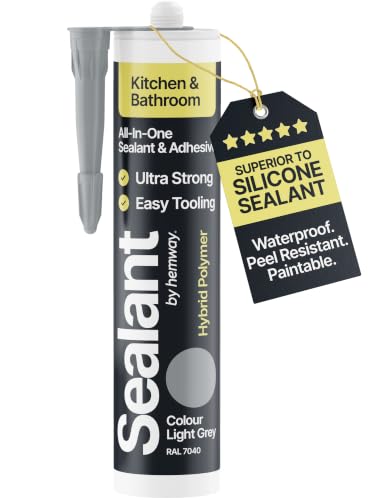
The gray cartridge that blends into stone floors and shrugs off shower steam.
Light gray is the reason to pick this one: against a charcoal or slate bathroom floor, a white bead draws the eye straight to the toilet base, while gray blends into the room. It is a hybrid polymer (a mix of silicone, acrylic and adhesive), so it stays flexible like silicone, takes paint like acrylic, and grabs like an adhesive. You can apply it underwater without releasing plasticisers (chemicals that can leach out), which helps when the joint is still beaded with moisture.
On paper it is a bathroom-first product. The coverage is roughly a 9.25 m x 3 mm bead and the cure time is 24 to 48 hours, depending on bead size, room temperature and humidity. It is odorless, solvent-free, and carries an ultra-low VOC rate. Compatible surfaces include wood, plastic, metal and concrete — a wider list than most silicone-only tubes, which usually want non-porous material. Owners single out the effectiveness in showers and the appearance once cured, and a recurring note says the finish comes up noticeably shiny.
Buyers who got it applied love the look and the durability — one described it holding up on shower door trim without cracking or separating. The consistent complaint runs the other direction: the paste is stiff and the tube can be genuinely hard to push through a caulking gun, with at least a handful of buyers giving up on a tube that would not dispense at all. The other nudge is the undertone — this gray leans slightly blue, which looks right on tile but can look off next to a warmer charcoal. If your bead is a short toilet-base curve, the resistance is a minor nuisance; on a long run, plan on a strong hand.
What the color buys you: a light gray bead that sits quietly against stone and slate floor tile, in a paintable hybrid that can go on a damp joint.
Then the tube fights back: owners describe a stiff, hard-to-dispense paste — some had to abandon a tube — and the gray carries a slightly cool blue undertone.
Consider it when: your floor is gray or stone and you want the bead to disappear into it, not announce itself.
Pass if: you are sealing a long, straight run — the paste is stiff enough to need a strong hand all the way.
5. Silicone Caulk & Sealant Gray, 100% Waterproof Silicone Sealant
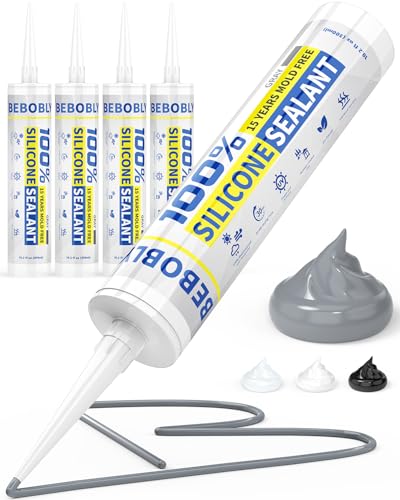
Four full cartridges of gray silicone — enough to redo every wet joint in the house.
This is the high-volume option: four cartridges at 10.2 fluid ounces each, all in gray. Compared against the three-tube set in this guide, you get four items instead of three, each one nearly twice the volume — a supply meant for a bathroom-wide refresh, not a single toilet bead. The formula is silicone, listed as 100% waterproof, and rated for use on most ceramic tile, porcelain, glass, metal, plastic, granite and wood, which covers every surface around a toilet and tub.
The temperature range is unusually wide: -122°F to +302°F, so the seal is built to stay flexible through both a cold garage and a hot sun-facing RV panel. The surface skins over in 30 minutes and fully cures in 24 hours. It is formaldehyde-free, solvent-free, non-toxic and odorless, with a very low VOC emission. Application is friendly to first-timers — cut the main opening, fit the clog-free nozzle, bevel the tip, then squeeze from the tail. One line worth noting: use it within three days of opening.
The recurring gripe is not the sealant itself but the packaging. Multiple reviewers point out the cartridges arrive without the applicator tips the instructions call for, so check the box the moment it lands. Beyond that, the feedback on the seal is strong — it comes out of the tube easily, dries fast and sticks to almost everything, and shoppers say it outlasting other brands that broke down near a sink. It is also genuinely sticky and messy to smooth, so gloves and ventilation are the right call on a toilet job.
Standout strengths
- Four cartridges at 10.2 fluid ounces each cover a full bathroom refresh, not one bead
- Rated -122°F to +302°F, so the seal holds through both cold and heat extremes
- Skins over in 30 minutes and cures in 24 hours
- Odorless, solvent-free and low VOC, with a clog-free nozzle included
Honest caveats
- Cartridges sometimes arrive without the applicator tips — check right away
- Very sticky and messy during application, so gloves help
The one for a full redo: four gray cartridges at 10.2 fluid ounces each equip you for the toilet, tub, sink and shower in one buy.
Watch for: the missing applicator tips some orders arrive without, and the sticky cleanup.
Know the Specs
Hybrid Polymer vs. Silicone
Hybrid polymer is a newer sealant chemistry that combines the rubbery flexibility of silicone with the paintability of acrylic and the grab strength of an adhesive. That is why the Flex Caulk and Hemway tubes can go on a wet or damp surface and take paint later. Straight silicone — like the CUKWUYBY, the 8Oz kit and the BEBOBLY set — cures into a rubbery film and is waterproof, but it generally does not accept paint. For a toilet base where the joint is already damp, hybrid polymer is the more forgiving choice; silicone is the cheaper, more proven one.
Hardening Time vs. Full Cure Time
These are two different clocks and mixing them up is the most common mistake. Initial hardening time is how fast a skin forms on the surface — usually 10 to 30 minutes — so dust and drips stop mattering. Full cure is how long the whole bead needs before it is fully waterproof, typically 24 hours. The Flex Caulk skins in 10 minutes; the 8Oz kit takes 30. Either way, keep water off the joint until it is fully cured, because an under-cured bead will pull away from porcelain at the first wipe-down.
Coverage and Tube Sizing
Toilet-base jobs are small, so oversize cartridges go to waste. The 8Oz kit yields 8 fluid ounces and buyer feedback says that covers about one shower. A 6.6 fluid ounce tube like the Flex Caulk is roughly a single toilet bead. The four-pack of 10.2 fluid ounce cartridges is built for a whole bathroom refresh. Match the tube to the number of joints on your list — an opened tube of uncured sealant hardens if you leave it too long.
Color, Mildew and Finish
White, gray and clear each solve a different problem. White reads as clean next to porcelain and hides a fresh bead. Gray blends with stone and slate floors — the Hemway light gray and the BEBOBLY gray both lean cool, which suits a gray bathroom but can clash with warmer tones. Clear disappears against tile, but shows trapped grime underneath and yellows faster in a wet zone, so an opaque color is usually the better call at a toilet base. Whatever you choose, wipe the cured bead down with a non-abrasive cleaner to keep mildew from settling into the surface.
Common Questions
Which caulk is best for the gap where the toilet meets the floor?
How long do I have to wait before the toilet can be used after sealing?
Do I need a caulking gun to apply these, or is a squeeze tube easier for a toilet?
Will silicone caulk stick to a damp or wet surface around the toilet?
How much caulk do I actually need for one toilet base?
Will white caulk turn yellow around the toilet base?
Can I paint over toilet caulk once it has cured?
What temperature can bathroom caulk handle once it is cured?
Why does my caulk keep shrinking away from the toilet base?
Is hybrid polymer caulk really better than regular silicone for a bathroom?
The Bottom Line
The right tube for a toilet base is the one that skins over fast and stays waterproof, not the cheapest or the biggest. Our top pick is the Flex Caulk Hybrid Polymer Waterproof Sealant, because its 10-minute initial hardening time outpaces the 8Oz kit’s 30 minutes and its wet-or-dry adhesion and paintable finish make it the most forgiving on a damp, curved base. It carries the highest star rating in this lineup, backed by thousands of buyer reviews. If your budget is tighter and you want spare tubes for the shower too, the 15.9 Fl Oz Silicone Caulk three-pack gives you three precise-tipped tubes that beat one large cartridge. And if your gray bathroom floor has tile gaps to fill before the toilet is done, the 8Oz Waterproof Caulk & Seal Tile Grout Repair Kit arrives with the scraper already in the box.
How we choose
We do not accept paid placement. Every pick is matched to a real buyer and a real use-case; we do not hands-on test units.
Sources
Specifications: manufacturer listings and product documentation. Review insights: verified customer reviews, as of October 2026. Pricing: not shown on this page (it changes often); check the current price via the retailer link.
As an Amazon Associate, Aappliancez earns from qualifying purchases. This does not affect which products we feature.