Disclosure: Some links in this post are affiliate links. As an Amazon Associate I earn from qualifying purchases, at no extra cost to you. Learn more
Specs are compiled from manufacturer listings and verified buyer reviews and can change over time — please confirm the key details on the product page before buying.
If your first step out of bed feels like stepping on a stone, the fix is usually the right amount of squeeze in the right place — a sleeve or sock that hugs your arch and ankle without strangling your toes. The tricky part is that the compression number stamped on the box does most of the work, and it also decides whether you can stand the thing for eight hours. Get that number wrong and you either feel nothing or you cannot wait to rip it off.
This guide is built by comparing the manufacturers’ published specifications and the patterns across verified customer reviews, so you get each pick’s real strengths and trade-offs instead of marketing spin.
Below you will find how to read a compression rating, which sleeve shapes suit which shoes, and honest notes on the fit quirks that decide whether a pair stays on your feet or ends up in a drawer. Every pick here is chosen to help you shop smarter for compression sleeves for plantar fasciitis.
Top Picks


How To Choose The Best compression sleeves for plantar fasciitis
The plantar fascia is the band of tissue running from your heel to your toes. Compression never touches the fascia directly — it supports the arch and ankle around it, and that support is what changes how your heel feels at the end of a shift. Here is what actually decides a good buy.
The compression rating decides everything else
Compression is measured in mmHg, which is a pressure unit — the higher the number, the harder the fabric squeezes. A 15-20 mmHg rating is the lighter, everyday band, comfortable enough for a full workday. A 20-30 mmHg rating is the firmer medical band, and it is noticeably harder to pull on.
Neither number is better in the abstract. A firmer sleeve can feel wonderful for two hours and unbearable by hour nine, so match the rating to how long you actually wear it.
Sleeve, sock, or strap — three different jobs
A foot sleeve stops at the ankle, so it hides under almost any shoe. A knee-high sock covers the calf too, which helps if swelling travels upward during long standing shifts. A strap-based brace adds an adjustable band you tighten by hand, so you can dial the squeeze up or down through the day.
Get the size right before anything else
Sizing is where most returns happen. Measure your arch and ankle first, and your calf if you are buying a knee-high. If your measurement lands between two sizes, size up — a too-small sleeve restricts circulation and will not stay where you put it.
Check what it is made of and how you wash it
Nylon and spandex blends hold their squeeze across many washes. Anything with a hand-wash-only instruction will keep its shape longer if you follow it, because machine heat is what kills elastic fibers.
Side-by-Side Comparison
| Model | Best For | Compression Rating | Form Factor | Fabric | Amazon |
|---|---|---|---|---|---|
| Physix Gear Compression Socks★ Best Overall | All-day wear at work or on a plane | 20-30 mmHg | Knee-high sock | Nylon blend | Amazon |
| TechWare Pro Ankle BraceHeaviest Support | Heel and arch pain during sport | — | Toeless foot sleeve | 80% Nylon, 20% Spandex | Amazon |
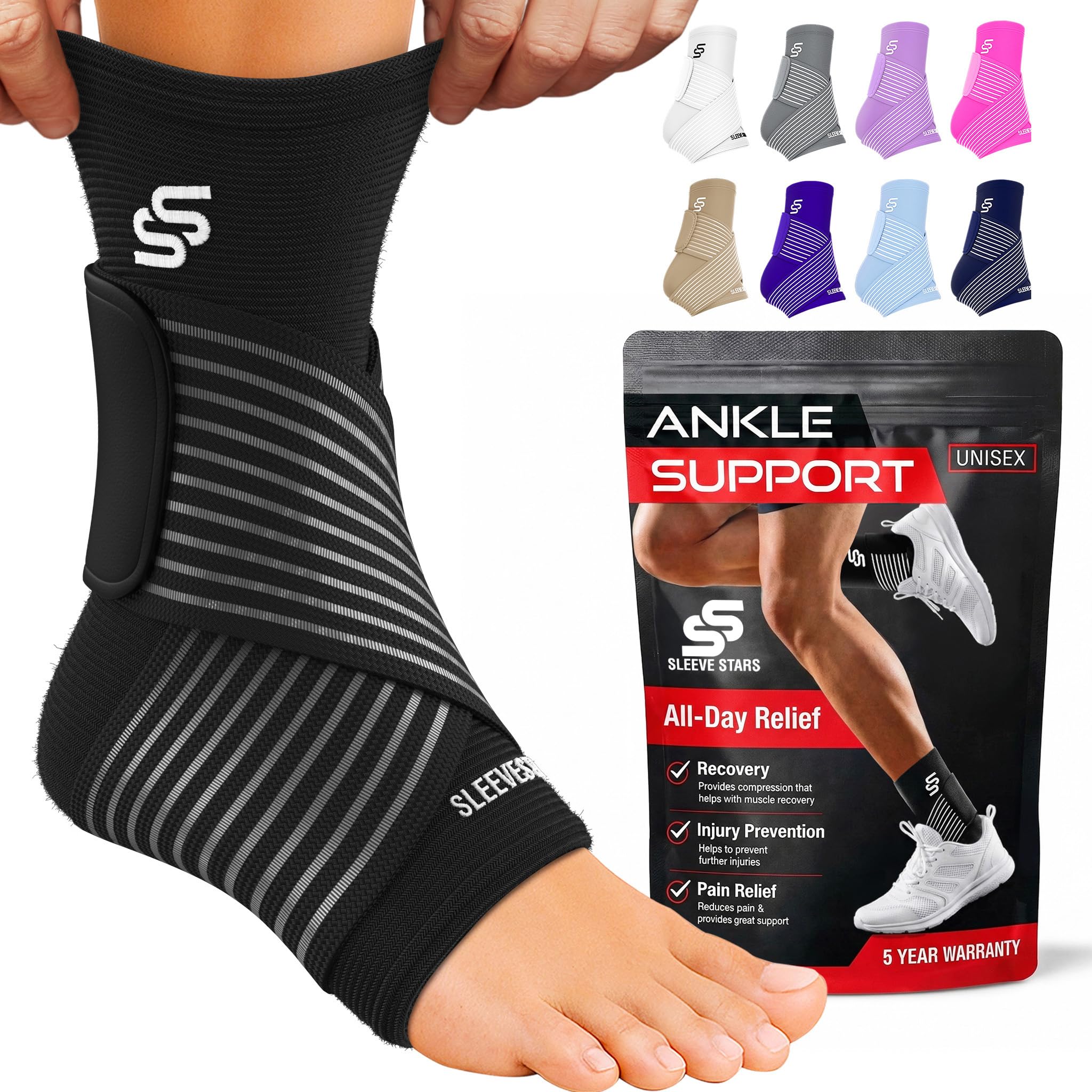
| Sleeve Stars Ankle BraceDial-In Fit | Adjustable support through the day | — | Sleeve with strap | Breathable knit | Amazon |
| Zensah Compression Foot Sleeve | Night wear and day wear together | — | Foot sleeve | Silver-ion moisture-wicking | Amazon |
| WHCOOL Low-Profile Ankle Brace | Slim shoe-friendly support | — | Ankle sleeve with wide strap | Nylon 3D knit | Amazon |
| Juclise Compression Crew Socks | Running and hiking comfort | — | Crew sock | Breathable bamboo blend | Amazon |
| ZOELION Ankle Brace | Achilles and arch support in one | — | 3D knit sleeve with strap | PA66 elastic nylon | Amazon |
| OS1st FS4 Merino Wool Socks | Wool-wearers with arch pain | — | Quarter crew sock | Merino wool | Amazon |
| DR. POTTER+ Arch Support Inserts | Barefoot and dress-flat wear | — | Sleeve with gel inserts | Elastic with gel pad | Amazon |
| 6 Pairs Ankle Compression Socks | Mild, light everyday support | 15-20 mmHg | Low-cut sock | 68% Nylon, 19% Spandex, 13% Polyester | Amazon |
| Darco FS6 Plantar Fasciitis Sleeve | Slim support that fits any shoe | — | Foot sleeve | — | Amazon |
Detailed Reviews
1. Physix Gear Compression Socks 20-30 mmHg
Our pick — 4.5★ from 96,000+ verified ratings; the strongest balance of quality and price.
The 20-30 mmHg knee-high that nurses keep re-buying after the fourteenth hour.
Start with the number, because it explains the rest: 20-30 mmHg is the firmer of the two common bands, meaning the fabric presses harder and holds its squeeze all day. That is why it gets worn through a full shift rather than for an hour on the sofa. It also travels further up the leg than a foot sleeve — the sock reaches the knee, so swelling that creeps up the calf gets squeezed too, not just the arch.
What wins people over is the build quality. The fabric reads thicker and softer than budget pairs, the toe seam survives repeated washing, and the sock stays put near the knee instead of rolling down mid-shift. Buyers report the difference plainly: “Nurse, 7yrs compression socks. Physix pricier but thicker, softer, higher quality than cheaper pairs. Easier to apply, less ankle swelling, less knee indentation after 14hrs. Survived 20 washes. Air dry only.” That 20-wash note matters, because hand-washing and air-drying is how elastic fabric keeps its 20-30 mmHg rating instead of relaxing into a plain sock.
Here is the honest catch. The size range is the most-discussed gripe in the reviews, and the official guidance is to measure carefully rather than guess from shoe size. Getting on a firm 20-30 mmHg sock also takes practice — the first week is a wrestle, then it becomes routine. Against the 15-20 mmHg low-cut pick further down, the pressure difference is real: 20-30 versus 15-20 is a 33% wider gap, and if you have never worn compression before, that gap is what you feel on day one.
What earns the top spot
- Firmer 20-30 mmHg squeeze that holds through a long shift instead of relaxing by lunchtime
- Knee-high coverage that also compresses the calf, unlike a low-cut or ankle-only sleeve
- Thicker, softer fabric that survives repeated washing and air-drying
- Works for standing jobs, travel, and post-workout recovery — one pair, several jobs
What to expect before you buy
- Size is the recurring complaint — measure your calf, not your shoe size, before ordering
- Firm socks take a week of practice to pull on smoothly
- Avoid the dryer; heat shortens how long the compression lasts
Made for: long days on hard floors — nursing, retail, warehouse, or a flight where your ankles swell by hour three.
Look elsewhere if: you want a light, barely-there feel or need something that disappears inside a low-cut sneaker.
2. TechWare Pro Ankle Brace Compression Sleeve
A toeless sleeve that puts firm pressure under the heel and lets your toes breathe free.
If your pain sits under the heel and along the arch rather than up the calf, this is the shape to look at. It is a foot sleeve, not a sock, so there is no toe box to fight with and the fabric concentrates on the arch and heel. The blend is 80% nylon and 20% spandex, which is why it feels smooth and stretches back into shape instead of going baggy. Worn weight is 2.08 ounces, light enough that you forget it is on once your shoe is laced.
The listing is blunt about sizing, and that is worth repeating: take all three measurements, and if you are on the borderline between sizes, size up. That advice exists because the squeeze is genuinely strong. People who wear it for desk-swollen ankles and for stability during chores tend to say it does exactly what they wanted. For mild ankle stiffness, swelling, and post-workout soreness, the support is well judged. For a real injury, it is no substitute for a proper brace — this is a daily-support sleeve, not a rigid one.
Cleaning is the one habit you must keep: hand wash in cold water with mild soap and air dry, because the instructions specifically say do not machine wash. That is normal for firm compression fabric. Wear it by itself or over an existing thin sock, and it stays put through walking, hiking, or a long travel day without rolling.
The trade-off to plan for: this is strong compression in a slim sleeve, so the sizing chart decides everything. Choose too small and it squeezes hard enough to cut circulation; choose right and it is comfortable for hours.
Reach for this if: you want heel-and-arch support that hides inside a normal shoe and can go over or under your everyday socks.
Not your pick if: you want zero thought about laundry — this one needs hand washing and air drying.
3. Sleeve Stars Ankle Brace Men & Women Support
The one you can tighten on a bad morning and loosen by afternoon.
A fixed sleeve gives you one level of squeeze. This one gives you a dial. The design pairs a soft sleeve with a separate adjustable strap, so you position the pressure where it helps and set the tightness yourself. That flexibility is the whole point, and it is why it lands well for anyone whose pain moves around — worst at the ankle in the morning, worse at the arch after a walk.
The strap placement also solves a specific annoyance: on a plain sleeve, the seam can sit right where it hurts. Here the band goes where you want it and stays away from sore spots. Support-wise it holds the ankle steady without locking it, so you can still drive, climb stairs, and walk normally. The fabric is a breathable knit that pulls sweat away, and it weighs 2.4 ounces, so it disappears inside a shoe.
The follow-up question buyers always ask is whether the strap slips. In practice it stays put when it is fitted correctly, and there is a small trick worth knowing: wear it over a thin sock to avoid any skin rub from the band. Sizing across the size range is the most-discussed point in the reviews, so check the measurement guide rather than trusting your shoe size.
Where it wins: adjustability. Two people with the same foot can set it to two different feels.
Where it asks a little of you: the strap needs occasional re-tensioning through a long day, and the fit chart is not optional reading.
Suits riders, walkers and shift workers: anyone who wants the same brace to feel right at 7 a.m. and 4 p.m.
Skip the fuss here if: you would rather pull on a single piece and forget it.
4. Zensah Compression Foot Sleeve
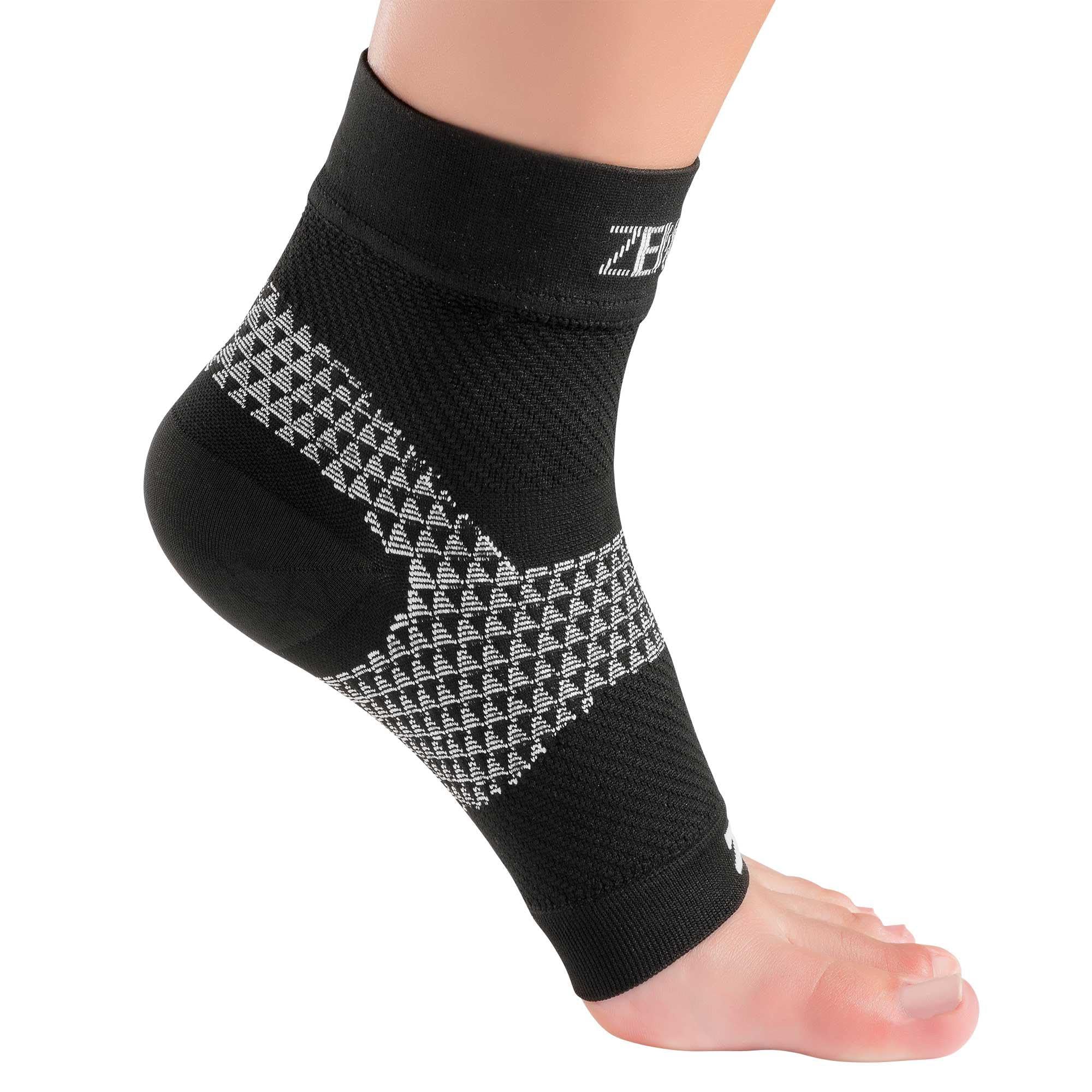
Built to be worn overnight, when a firm brace would keep you awake.
The plantar fascia tightens overnight, which is why the first morning steps hurt most. This sleeve is designed for that window. Instead of squeezing the whole foot, it uses a T-band that runs across the arch to stabilize the fascia itself, with a mesh section over the top to let heat out. The fabric is moisture-wicking and carries silver ions, which is the brand’s approach to keeping the sleeve fresh across consecutive nights.
The comfort angle is what sells it. It is a soft sleeve rather than a rigid splint, so you can sleep in it without waking up to rip it off. Worn alongside orthopedic shoes and a roller, the change shows up in the morning routine — walking to the bathroom without wincing, then a full dog walk later in the day. That is the real test, and it is why people who came in skeptical tend to stay.
Two things to know. The tension is genuine, so it takes a moment to pull on and off, and larger feet can find it very tight — a size 13-14 wearer is on the edge of the range. A rare sleeve arrives with rough seams that rub; that is an occasional unit, not the pattern, and the fix is a simple exchange. As an everyday mild-support sleeve for walking and standing, it plays a different role than the firmer picks above, and the two work well together.
Worth noting: the T-band is the reason this one feels targeted on the arch instead of tight all over.
Best fit for: anyone whose worst pain is the first ten steps of the day and who wants a mild sleeve to sleep in.
Consider another option if: you need firm all-day compression or you wear a very large shoe size.
5. WHCOOL Low-Profile Ankle Braces
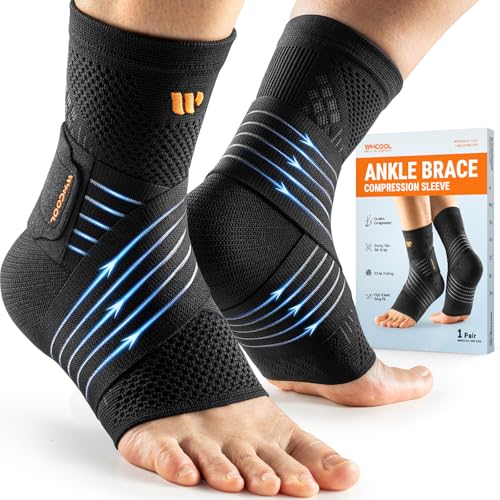
Under two ounces of nylon that slides into your regular shoes without a size-up.
Anything you wear inside a shoe has to earn its space, and this brace is built around that problem. It weighs 41 grams, which is light enough that it does not change how your shoe fits. The knit is contoured in an X shape that follows the natural line of the ankle, with a soft zone over the instep where thin fabric usually digs in. A wide adjustable strap wraps in a figure-eight pattern for extra stability when you want it.
The strap is the clever part. It sits away from the sleeve, so you can tighten for sport and loosen for the commute without swapping gear. The pair also arrives with a small kit of extras, which reviewers single out as a thoughtful touch that takes the guesswork out of first use. People who wear a brace every single day — including one long-term ankle case — report it holds up to that routine and stays comfortable, which is the hard test for anything worn daily.
The compromise is straightforward: a low-profile sleeve like this trades raw pressure for discretion. If you want a firmer, more medical-grade squeeze, the knee-high sock at the top of this list delivers more. This one is for the person who needs support to vanish under normal shoes.
Why it earns a spot
- 41 grams per brace — no bulky feel and no need to buy bigger shoes
- Separate wide strap gives two support styles from one purchase
- Ships as a two-pack with an exercise band, guide, and video to follow
- Breathable 3D knit with moisture-wicking finish for all-day wear
Where it gives ground
- Lighter pressure than a firm medical sock — mild support, not maximum
- Runs snug, so measure before ordering rather than guessing
- The figure-eight strap takes one practice run to wrap correctly
Built for: sneaker and dress-shoe wearers who want the brace invisible and the strap optional.
Wrong tool if: you need the firmest compression band available.
6. Juclise Women’s Compression Crew Socks

Cushioning where your shoe rubs, compression where your arch needs it.
Crew socks solve a problem a low-cut sleeve cannot: they cover the ankle bone, which is exactly where a boot or trail shoe grinds on a long hike. The padding here sits at the heel and ankle, and the toe is finished without a bulky seam to cause blisters. Compression runs through the arch and lower calf rather than the whole leg, which keeps the squeeze gentle enough to wear all day.
Fit is shaped per foot — left and right are cut differently, which is unusual at this tier and shows up in how well they hug the arch without twisting. The material is a bamboo blend that breathes and handles sweat, so feet stay cool on warm days and warm enough on cool ones. They are designed to stay put inside boots rather than sliding down into the heel.
One sizing note keeps coming up: this line runs small. Several buyers who followed the chart found the medium too tight and moved up a size, including a women’s 9.5 who switched to the large. If your measurement sits near the top of a range, go up. There is also a fair comment about durability on heavy daily nursing shifts — comfortable and soft early on, but showing wear after a few washes.
What buyers highlight most: the cushioning and the smooth toe, which is why walkers and hikers keep coming back to this pair.
Best for: runners, hikers, and boot wearers who want padding at the heel and a smooth toe.
Think twice if: you are between sizes or you need the sock to survive months of constant 12-hour shifts.
7. ZOELION Ankle Brace Compression Support
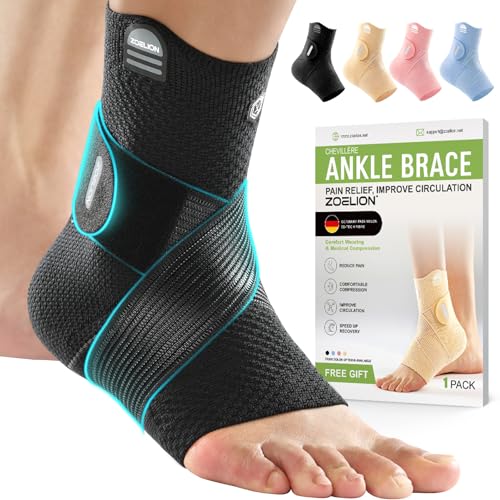
Three distinct pressure zones instead of one uniform squeeze around the ankle.
Most sleeves are a single tube of stretchy fabric. This one is woven in three sections: a soft comfort zone across the instep, a firmer pressure zone hugging the arch and heel, and flexible edges at the top and bottom so the fabric does not dig in or roll. That graduation is where the support comes from — the pressure is aimed rather than spread evenly.
Then there is the removable X-strap, a thin fishnet band you add when you want extra arch and Achilles support. Because it is a separate piece, you can leave it off on a light day and clip it on for sport, which is flexibility you do not get from a fixed sleeve. The body is a 3D knit using elastic PA66 nylon that moves with you and pulls sweat away, and it weighs 0.13 kg, slim enough to sit inside shoes without forcing a bigger size.
The honest limits: a couple of wearers find the fabric binds across the top of the foot, and one needed to size up after swelling changed their measurement. Those are fit notes, not defects — the right size solves both. What owners agree on is that it stays in place through the day with no bunching, which is the thing most sleeves fail at.
Standout features
- Three graduated zones target the instep, arch, and heel separately
- Removable fishnet X-strap adds support on demand
- PA66 high-elastic 3D knit stays put without sliding or bunching
- Trusted support that owners say feels worth far more than the purchase
Points to weigh
- A snug top edge can bind across the top of the foot for some
- Swelling changes your size — measure, then remeasure if in doubt
- The strap adds a step to your morning routine
An easy yes for: anyone juggling arch pain and Achilles tightness who wants one brace that handles both.
Better to skip if: you prefer a single-piece sleeve with nothing to attach.
8. OS1st FS4 Merino Wool Compression Socks
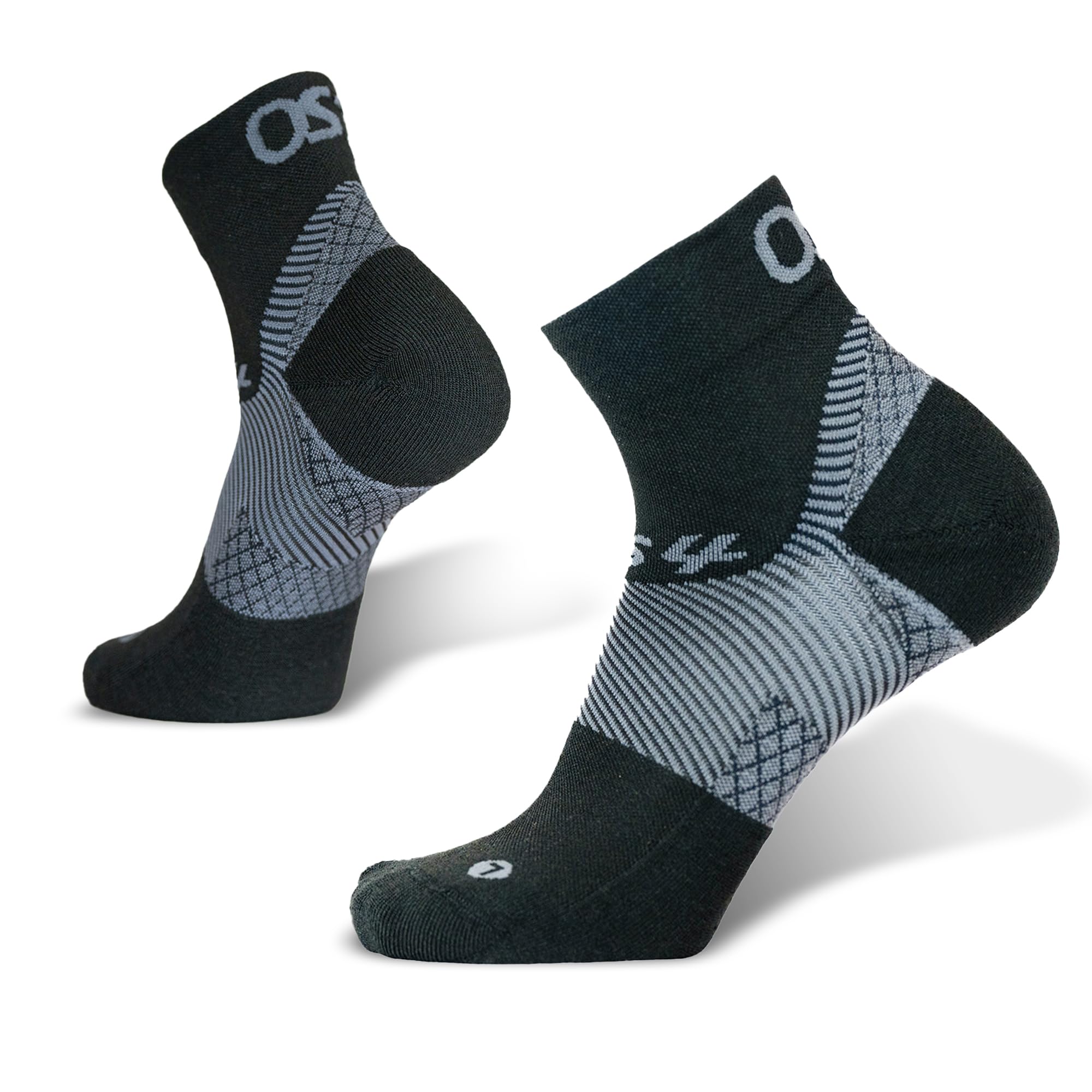
Merino warmth with medical-grade compression and no toe seam to rub.
If you already wear merino for the warmth and odor control, adding a synthetic compression sock underneath is a lot of layers. This one folds both jobs into a single quarter-crew sock. It is anatomically cut for left and right feet separately, which gives a closer, more custom fit than a one-shape-fits-both sock, and the construction is smooth so there is nothing to rub against a tender arch.
Medical-grade compression runs throughout the sock, supporting the arch and improving circulation instead of squeezing one narrow band. For a full shift on your feet, that shows up at the end of the day: no swelling, and the heel pain that normally greets you is quieter. Several owners mention a podiatrist recommended this sock, and its elastic pattern mimics the taping a foot specialist would apply.
The two honest trade-offs are price and wear. A single pair costs about as much as a multi-pack elsewhere, and a few customers note holes developing at the toe after limited use — that is a small share, but worth knowing if you plan to wear them daily. Getting them on the first time is a bit of a wiggle, then it becomes normal.
Who it suits: cold-footed walkers who want wool and compression without doubling up on socks.
The one caution: it is a single pair at a premium figure, so treat it as your best pair rather than your only pair.
Pick this if: you want merino comfort and arch support in one smooth sock.
Look on if: you need several pairs to get through the week or you dislike anything close-fitting at the toe.
9. DR. POTTER+ Arch Support Inserts Women

Arch support you can swap between thicknesses, even when you are barefoot at home.
This one is a different shape of solution: a sleeve with gel arch pads you can change out. The pad itself is soft gel with a textured non-slip surface, and the strap that holds it is breathable elastic, adjusted with Velcro for the pressure you want.
The real advantage is versatility. Because it does not rely on a shoe to stay in place, it works in bare feet around the house, in dress flats, and in mules — places a full shoe insert cannot go. That means relief during barefoot yoga, housework, or a night at home rather than only when you are laced into sneakers. It weighs 3.53 ounces and is slim enough that shoes do not feel bulky with it in.
Two fit quirks come up. On bare feet, the front edge can flip back and crease, which is a minor annoyance owners work around by wearing it over a thin sock indoors. And the Velcro grip can loosen after several months of daily use, so the strap may need replacing sooner than the pad wears out. Both are small things against how comfortable it is when you are off your feet.
Reasons it works
- Two removable pad heights let you dial in the right arch support
- Wearable without shoes — flats, mules, and bare feet at home
- Adjustable Velcro strap for a precise amount of pressure
- Slim enough that shoes do not feel bulky with it in place
Small quirks
- Front edge can flip and crease on bare feet
- Velcro can loosen after months of daily use
- Not a firm compression sock — this is arch support, not a squeeze
An easy yes for: anyone who is barefoot or in flats most of the day and wants support without a sneaker.
Not the right fit if: you need firm, all-day compression rather than a gel pad.
10. 6 Pairs Ankle Compression Socks 15-20mmHg
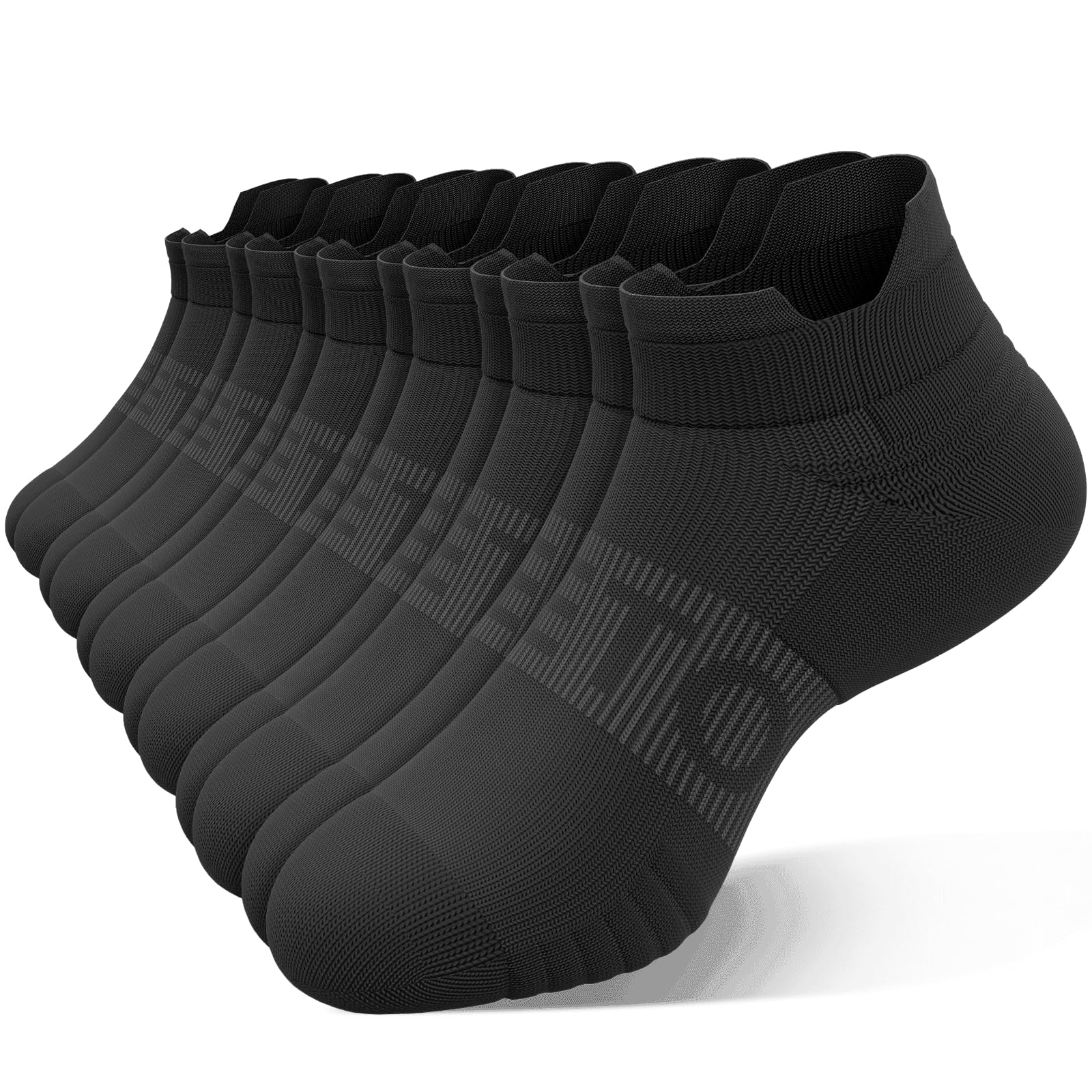
Six low-cut pairs at a mild rating — the easy entry point to daily compression.
If you have never worn compression and want to test whether it helps you at all, this is where to start. Six pairs means you can go a full week without washing, and the low-cut design means these look like ordinary ankle socks with shorts. The rating is 15-20 mmHg, the lighter everyday band, so the squeeze is gentle enough to forget you have them on.
Against the top pick here, the contrast is stark: the Physix Gear sock sits at 20-30 mmHg, and 20-30 versus 15-20 is a 33% wider gap — meaning this six-pack delivers noticeably less pressure. That is not a flaw, it is the point. A low-cut pair slides into any sneaker, keeps the arch supported, and lets you build up to firmer compression later if you decide you want it.
The build pairs a cushioned terry loop sole under the foot with a heel pocket that locks the sock in place instead of sliding down into your shoe. The material blend — 68% nylon, 19% spandex, and 13% polyester — pulls moisture away so feet stay drier than plain cotton. Reviewers point out the arch support genuinely helps on long days: “Compression on my weak ankles helped soooo much my legs do not tire as easily as I am on my feet about 10 hours a day.” The recurring small gripe is the fit running loose for some, and a few wish for thicker padding under the ball of the foot. Both are minor against a six-pair set.
Smart entry point: trying compression at a low rating, in a low-cut shape, without committing to a firm sock you might not tolerate.
Right for: first-time compression wearers and anyone who lives in sneakers and dislikes visible socks.
Move up a step if: you already know you want firm, medical-grade squeeze and calf coverage.
11. Darco FS6 DSC Compression Sock

A slim American-made sleeve that hides inside any shoe and even goes to bed with you.
For people who want support without pulling on a full sock, this is a straight answer. The FS6 is a zoned compression sleeve that runs from the arch to the top of the ankle, distributing pressure rather than concentrating it in one band. It is slim enough to sit under a normal shoe, and — unlike a bulkier brace — it can be worn to bed, which matters for anyone whose heel tightens up overnight.
It is made in the United States and weighs 2.4 ounces, so it is not something you will notice once it is on. For high-impact gym cardio, the support is firm enough to keep the arch stable through running and jumping. Owners who wear it through a workday under a knee-high sock report they can get through the day without limping.
The one thing to plan carefully is sizing. This sleeve runs small, and the large size is what most people need — a women’s size 8 foot lands on the large, with the medium too tight. If you are between sizes, order up. The squeezing can feel like a mild pinch when you are sitting still, which fades once you are up and walking, so wear it on days you are active rather than lounging.
The plain version: a slim, effectively-made sleeve that works well under shoes and in bed, provided you order the right size.
Good fit for: anyone who wants a discreet, shoe-friendly sleeve for workdays and nighttime.
Look at a roomier option if: you are right on the edge of the size chart or want a looser, lighter feel.
Know the Specs
mmHg and what the number means
mmHg stands for millimeters of mercury, the standard unit for pressure, and it tells you how hard the fabric squeezes your leg. A 15-20 mmHg rating is the lighter, everyday band, gentle enough to wear for a full shift. A 20-30 mmHg rating is firmer — noticeably harder to pull on, and typically chosen for more demanding all-day support. Neither is better on its own; pick the rating to match how long you plan to wear it and how much pressure your arch tolerates.
Foot sleeve vs. knee-high vs. strap
A foot sleeve stops at the ankle and hides under any shoe. A knee-high sock reaches the calf, so it also addresses swelling that travels up the leg. A strap-based brace adds an adjustable band for a pressure level you set by hand. The right choice depends on where your pain sits and how much room your shoes leave.
Fabric blends and how they hold up
Compression fabric is a blend of nylon and spandex, and the ratio determines how it feels and how long it lasts. Higher spandex content gives more stretch-back, so the sleeve keeps its shape after washing. Hand-washing and air-drying preserve the elastic fibers; the heat in a dryer is what shortens the working life of the compression.
Sizing and why it matters more than the rating
The single biggest cause of returns is the wrong size, not the wrong compression band. Measure your arch and ankle, and your calf if you are buying a knee-high. If you land between two sizes, size up — a too-small sleeve cuts circulation, rolls down, and will not stay where you put it.
Common Questions
What mmHg compression should I choose for plantar fasciitis?
Can I wear a compression sleeve to bed?
Do compression sleeves fit inside regular shoes?
How do I measure my foot for a compression sleeve?
How long does compression clothing last?
Is a foot sleeve better than a knee-high sock for heel pain?
Will a compression sleeve help me sleep through morning heel pain?
Can I wear compression over or under my normal socks?
Do I need special shoes to wear an ankle compression brace?
Are merino wool compression socks worth the higher cost?
The Bottom Line
The strongest all-round choice for most people shopping compression sleeves for plantar fasciitis is the Physix Gear Compression Socks, because its 20-30 mmHg rating holds its squeeze through a full shift and the knee-high cut also addresses calf swelling that a foot sleeve cannot reach. If you need support to slip inside your regular shoes, the TechWare Pro Ankle Brace gives firm heel-and-arch pressure in a slim toeless sleeve. And for the first ten steps of the morning, the Zensah Compression Foot Sleeve is the one designed to stay on overnight so your foot is not stiff when you get up. Whichever you choose, measure before you order — the right size matters more than the number on the box.
How we choose
We do not accept paid placement. Every pick is matched to a real buyer and a real use-case; we do not hands-on test units.
Sources
Specifications: manufacturer listings and product documentation. Review insights: verified customer reviews, as of October 2026. Pricing: not shown on this page (it changes often); check the current price via the retailer link.
As an Amazon Associate, Aappliancez earns from qualifying purchases. This does not affect which products we feature.