Disclosure: Some links in this post are affiliate links. As an Amazon Associate I earn from qualifying purchases, at no extra cost to you. Learn more
Specs are compiled from manufacturer listings and verified buyer reviews and can change over time — please confirm the key details on the product page before buying.
If you need something to hold a cut closed or keep a medical device stuck to skin, the pick that matters most is the 3M Vetbond Tissue Adhesive. It earns the top spot because it bonds wound edges directly, unlike the device-securement adhesives below. This guide breaks down the five skin adhesives worth considering, what each one does best, and which one fits your exact situation.
This guide is built by comparing the manufacturers’ published specifications and the patterns across verified customer reviews, so you get each pick’s real strengths and trade-offs instead of marketing spin.
Skin adhesives split into two jobs: closing wounds and holding devices in place. Which of those two jobs you have decides which bottle you buy. That split is what separates a working pick from a wasted purchase when shopping for the best adhesive glue for skin.
Top Picks

How To Choose The Best Adhesive Glue for Skin
The biggest mistake buyers make here is grabbing one bottle for every job. Closing a cut and taping a sensor to your arm are completely different problems, and the adhesive that solves one can fail at the other. Get the job right first, then match the formula.
Wound closure versus device securement
If you are closing a cut, you want a cyanoacrylate (a fast-curing liquid plastic that bonds tissue in seconds). It forms a flexible film over the wound and holds edges together while they knit. If you are securing a sensor, an ostomy bag, or a dressing, you want a tacky adhesive that grips tape and device edges, not a wound-closure film. Buying a securement adhesive for a cut, or a wound-closure film for a sensor, is the most common way buyers end up disappointed.
What cure time and water resistance actually mean for you
Cure time is how long the adhesive needs to reach full bond strength. Some formulas set in about a minute, while others keep curing for a full day. That matters because a device you slap on and immediately shower with may lift at the edges before the bond has set. Water resistance is the second half of the equation, since sweat, swimming, and long hot showers attack the bond from day one.
Removal is half the purchase
Every skin adhesive has to come off eventually, and how it comes off decides whether the experience is fine or miserable. Some lift cleanly on their own, some peel with alcohol, and some need an oil-based remover. Think about removal before you buy, especially for daily-use devices.
Side-by-Side Comparison
| Model | Best For | Format | Cure Time | Material | Amazon |
|---|---|---|---|---|---|
| 3M Vetbond Tissue Adhesive★ Best Overall | Closing minor cuts and wounds | 3ml bottle, liquid | 0.08 days | Cyanoacrylate | Amazon |
| Skin-Tac-H AdhesiveLongest Lasting | Holding pump and sensor tape | 4oz bottle | — | — | Amazon |
| New-Skin Liquid Bandage Spray | Sealing scrapes and small cuts | 1oz spray, pack of 2 | — | Liquid bandage | Amazon |
| Mastisol Liquid Medical Adhesive | Extended-wear device securement | Bottle, liquid | 24 hours | Epoxy resin | Amazon |
| Skinister Medical Adhesive Spray | Ostomy gear and prosthetics | 1oz or 2oz spray | 1 minute | Silicone | Amazon |
Detailed Reviews
1. 3M Vetbond Tissue Adhesive, 3ml Bottle, 1469SB
Our pick — over 4.5★ from 750+ verified ratings; the strongest balance of quality and price.
The bottle that closes a gash in seconds and skips the vet bill.
You buy Vetbond for one job: pulling a wound’s edges together and holding them there. It is a cyanoacrylate (a liquid plastic that cures fast into a flexible film) and it sets in about 0.08 days, which is roughly two hours to a full bond. A tiny 3ml bottle is the whole package, and that is deliberate, because a little goes a long way with this formula. The reusable applicator tips let you control exactly where the glue lands instead of flooding the whole cut.
What wins people over is effectiveness, which is the single most praised quality across the review pages. The most common thread is wounds that needed stitches being handled at home instead, with one buyer reporting a cat’s leg injury avoided repeated clinic visits and the gash shrank below half an inch. As one pet owner put it bluntly: “Works better than the people stuff.” That same glue is also reported holding a glucose monitoring device in place on a dog for a week at a time, and it dissolves on its own as skin heals, so there is no scraped-off removal moment.
The honest catch is cost and quantity. Value for money is the most mixed thing about this bottle, with some buyers calling it a bargain and others finding it expensive for 3ml. The applicator tips also draw divided opinion, so test the flow on a scrap before you aim it at a cut. This is a wound-closure product, not a general skin glue, so skip it if your goal is keeping a sensor taped down. For closing minor cuts at home or in a pet emergency kit, it holds 4.6 stars across 700+ ratings, and it is the one to reach for first.
What it does best
- Bonds wound edges in about 0.08 days, so a cut is sealed the same day you clean it
- Dissolves naturally as the skin underneath heals, so there is no painful peeling
- Reusable applicator tips give you precise placement on small cuts
- Holds consumer and veterinary adhesion equally well, according to the review history
Where it asks patience
- Effectiveness is what people rave about, but value for money is genuinely split — some find the bottle expensive for its size
- The 3ml bottle is small, so heavy users will reorder sooner than they expect
- Applicator tip feedback is mixed, so test the flow before a real application
- Skin irritation has been reported for a couple of days after removal on some sensitive areas
Reach for this if: you need to close a minor cut or secure a device on a pet, and you want a bond that dissolves by itself.
Look elsewhere if: you need a large bottle for daily, high-volume device changes — you will burn through 3ml fast.
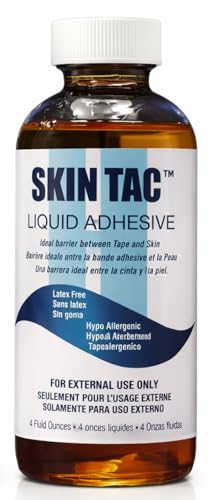
2. Skin-Tac-H Adhesive, 4oz Bottle
The 4oz bottle that keeps pump tape stuck through a soaking shower.
For anyone taping an insulin pump, a continuous glucose monitor, or a sensor to their body every few days, this is a different product with a different job than Vetbond. It does not close wounds. It makes the tape you already use actually stay stuck, and it does that job so well that a thin layer is reported holding sensor tape for two weeks or more where it previously failed within one. That length of hold is the whole reason people buy it.
The bottle format is the quiet advantage. One 4oz bottle is reported lasting a year or longer for regular users, which is why the wipes-versus-bottle debate usually ends with the bottle every time. Application is a two-step routine: clean the skin with an alcohol prep, apply a thin layer, wait a couple of minutes for it to turn tacky, then press your tape down. Quality leads everything buyers value here, with effectiveness right behind it, and the recurring praise is durability through showers, swimming, and sports.
The trade-off is stickiness in the wrong places. Overdo it and the tape goes rigid and stops gripping, and the large applicator ball is easy to overload, which attracts lint from clothing. Adhesion results genuinely vary, so a light hand is the skill to build. If you are tired of tape peeling off in the heat, this bottle outlasts the pads by a wide margin and earns its spot.
Why it lasts: the bottle format means one purchase covers a year or more of device changes, which beats the wipes on both convenience and economy.
The routine that works: alcohol prep, thin layer, wait two minutes, then stick — that sequence is what gets you to the two-week hold.
The one caveat: apply it sparingly, because a heavy layer makes tape stiff and actually less sticky.
3. New-Skin Liquid Bandage Spray, 1 Ounce (Pack of 2)

The spray that seals a scrape without ever touching the cut.
Here is the case for a spray over a brush: you never have to make contact with the wound, so there is no cross-contamination and no wincing at the moment of application. This two-pack covers scrapes, cuts, and skin cracks, and it stays on through sweat and wet sports while keeping the wound clean underneath. The sterile, adhesive liquid format is what makes it work on both small and larger cuts, per the people using it daily.
Quality and effectiveness are what buyers appreciate most, and the practical picture is a parent or hobbyist who wants a fast seal without a trip to the ER. The review pages tell the story of a deep finger cut that many would have taken for stitches, handled at home with easy-to-follow directions and healing nicely. The other thread that keeps coming back is placement: one in the truck, one in the tackle box. That is what a two-pack is for.
The one habit to build is keeping the spray tip clean, because a clogged nozzle is the failure mode that ruins the whole bottle. Compared to the Vetbond above, this is a surface seal rather than a deep wound binder, so think of it as the on-the-go option rather than the replacement. At 4.5 stars across nearly 600 ratings, it is the one to toss in a glovebox and forget about until you need it.
What sold it: no brush, no touching the cut — just spray and go, which is why it lives in trucks and tackle bags.
Best for: active families and outdoors people who want a sterile spray seal they can carry anywhere.
Know before you buy: it is a liquid bandage for the skin’s surface, not a deep wound closure product.
4. Mastisol Liquid Medical Adhesive
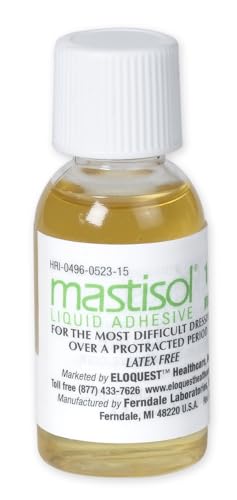
The device glue that re-bonds a sensor you thought was lost.
Mastisol is the one on this list that can rescue a device mid-wear. Where a sensor starts lifting days before it is due to come off, this liquid re-bonds the loosening edge back to skin, which is a trick the others here are not built for. It is a non-water-soluble formula, meaning it does not dissolve in moisture the way a water-soluble adhesive would, and it is designed to hold dressings, tapes, and small medical devices firmly even in high-moisture areas. That re-bonding ability is why device users keep it on hand.
It also boosts the grip of what you already use. The formula is described as compatible with most medical tapes, CHG-impregnated dressings, catheter securement, and steri-strips, and it is latex-free. In practice, users report it holding diabetes sensors that kept falling off early, securing a urostomy appliance, and even keeping an expensive sensor stuck to a furry dog where nothing else worked. It applies from a bottle in liquid form and reaches a full cure in 24 hours, so give it time to set before you stress the bond.
The trade-off is cleanup. The bond lasts a long time and holds firmly, but it leaves a residue that is genuinely hard to remove, and an alcohol wipe will not always cut it. An oil-based remover is the standard answer. If you change devices frequently, budget a minute or two for cleanup. If you just want your sensors to survive the full wear window, the numbers here — 4.6 stars across 600+ ratings — tell you it does that job. A larger bottle with a brush applicator is the one upgrade buyers keep asking for.
Standout strength: the only one on this list that re-bonds a loosening device, not just a fresh application.
Reach for this if: your sensors keep lifting early and you want them to survive the full wear window.
Skip the over-spray: the residue is sticky and stubborn, so keep an oil-based remover on hand for removal day.
5. Skinister Medical Adhesive Spray
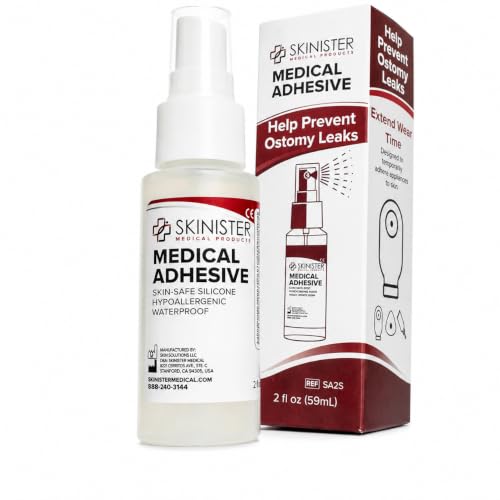
The silicone spray that holds an ostomy bag through a swim.
When the job is keeping an ostomy bag, a breast form, or a condom catheter exactly where it belongs, a silicone-based spray beats a liquid glue. This one is built for those uses, and it also works on tapes, bandages, prosthetics, and wig lace. The manufacturer states it is hypoallergenic, odor-free, and gentle enough for daily use on sensitive skin, and it is made in the USA by a licensed medical device manufacturer registered with the FDA, EUDAMED, and MHRA — that is the manufacturer’s claim, not a test result.
It sets fast. The listed cure time is one minute, so a device change does not eat your morning. It is designed to resist moisture so you can bathe, swim, and exercise without the bond failing, and the 1oz and 2oz bottles are airline-approved for travel. In use, buyers report it holding diabetes hardware, keeping supplies stuck through bathing for days at a time, and — for one owner — making a backless, strapless silicone bra reusable for years. It also pairs with a matching remover spray for sting-free removal, since the adhesive itself grips hard.
The honest size of the catch: this is the most expensive option here, and adhesion experiences vary widely, with some users finding it sticks through anything and others finding it does not hold at all. Apply technique matters — let the spray air out before pressing your device down, and rub it in if the nozzle delivers a stream instead of a mist. For 4.4 stars across 600+ ratings, this is the pick for complex daily wear, not the simplest entry point.
Where it shines: moisture resistance and a one-minute set time, which is why ostomy users keep it stocked.
Best for: daily ostomy, prosthetic, or breast form wear where the bond has to survive moisture.
The catch: it is the priciest bottle here, and results depend heavily on your application technique — test it on a small patch first.
Know the Specs
Cure time and why it matters
Cure time is how long the adhesive needs before it truly holds. A formula that cures in one minute is ready almost immediately, so you can load a device and get on with your day. A formula with a full cure time measured in hours needs patience before you stress the bond. If you are applying and leaving for work, fast-curing wins. If you are applying at night before bed, a longer cure is fine.
Material: cyanoacrylate versus silicone
Cyanoacrylate cures into a rigid but flexible film that bonds tissue edges, which is what you want for closing a cut. Silicone-based adhesives stay tacky and grip whatever you press onto them, which is what you want for holding a device against skin. Cyanoacrylate closes tissue; silicone holds devices. Read the formula type before you buy, and match it to your job.
Common Questions
Is surgical glue the same as the liquid bandage I can buy at the store?
Can I use device-securement adhesive to close a cut?
How do I remove skin adhesive without pain?
Will skin glue hold through showers and swimming?
Is Mastisol better than Skin-Tac for holding a CGM sensor?
How long does the 3ml Vetbond bottle last?
Can I use these adhesives on children or pets?
Why does Skin-Tac get less sticky if I use too much?
Do I need an adhesive remover spray, or can I just peel it off?
The Bottom Line
For most people, the winner among the options for the adhesive glue for skin is the 3M Vetbond because it delivers a fast, dissolving wound closure that both people and pets benefit from. If your need is holding pump tape or a CGM sensor in place through showers, grab the Skin-Tac-H. And for ostomy gear, breast forms, or prosthetics that have to stay put through moisture, the Skinister Medical Adhesive Spray is the one to reach for. Match the formula to the job — cyanoacrylate for cuts, tacky securement adhesive for devices — and the bond will hold.
How we choose
We do not accept paid placement. Every pick is matched to a real buyer and a real use-case; we do not hands-on test units.
Sources
Specifications: manufacturer listings and product documentation. Review insights: verified customer reviews, as of October 2026. Pricing: not shown on this page (it changes often); check the current price via the retailer link.
As an Amazon Associate, Aappliancez earns from qualifying purchases. This does not affect which products we feature.