Disclosure: Some links in this post are affiliate links. As an Amazon Associate I earn from qualifying purchases, at no extra cost to you. Learn more
Specs are compiled from manufacturer listings and verified buyer reviews and can change over time — please confirm the key details on the product page before buying.
If you want one straight answer: buy Bio-Oil Skincare Body Oil Serum if you have stretch marks, acne scars, or dry winter hands, and buy a silicone gel if you are treating a surgical or burn scar on the face. Everything else is a matter of what your scar actually is — old or new, raised or flat, on your belly or on your chin.
This guide is built by comparing the manufacturers’ published specifications and the patterns across verified customer reviews, so you get each pick’s real strengths and trade-offs instead of marketing spin.
This narrow category splits into two families — botanical oils that soften and hydrate, and silicone gels that sit on the scar as a clear barrier. Below you’ll find how each one behaves on real skin before choosing the best oil for scars for your own routine.
Top Picks

How To Choose The Best Oil for Scars
Start with the scar itself, not the bottle. A raised, itchy, healing scar behaves nothing like a faded stretch mark, and the two need different textures on the skin.
Match the formula to the scar type
Raised scars, keloids, and anything healing from surgery do best with a silicone gel — a clear liquid that dries into a thin sheet over the scar. Silicone is the ingredient that softens and flattens raised scar tissue. Botanical oils are the better pick for stretch marks, dry patches, acne marks, and overall skin texture, because they hydrate deeply and keep the skin supple. If your scar is still red and angry, gel. If your scar is flat but visible, either can help.
Check the ounces before you commit
A body oil is usually measured in fluid ounces and a gel in grams or milliliters. That difference decides how long a treatment lasts you. A 6.7 fl oz bottle used nightly can stretch for weeks, while a 20g tube of gel or a 10 mL bottle runs out far faster with twice-daily use. The weight in the listing tells you the real running cost, because you apply these products every single day, sometimes twice.
Read the ingredient list for your skin type
Vitamin E, chamomile, and lavender show up in the oil-style formulas, while squalane, emu oil, and liquid silicone dominate the gel side. Sensitive or acne-prone skin should lean toward a non-comedogenic (a formula that won’t block your pores) option. Fragrance matters here — a strongly scented oil can be lovely on the body and irritating on the face, and a fragrance-free gel is usually the safer call for anything near the eyes.
Set a realistic timeline
New scars generally respond faster than old ones. One brand notes eight weeks for new scars and three to six months for old ones with twice-daily use, and individual results vary by location. Consistency, not price, is what most determines whether you see a change.
Side-by-Side Comparison
| Model | Best For | Format | Size | Key Ingredients | Amazon |
|---|---|---|---|---|---|
| Bio-Oil Skincare Body Oil Serum★ Best Overall | Stretch marks and dry skin | Body oil | 6.7 fl oz | Vitamin E, Chamomile, Lavender | Amazon |
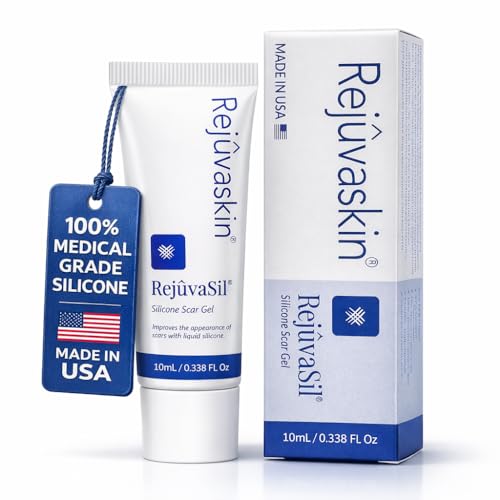
| Rejûvaskin RejûvaSil Silicone Scar GelPremium Pick | Facial and surgical scars | Silicone gel | 10 mL | 97% Liquid Silicone, Vitamin C, Emu Oil, Squalane | Amazon |
| ArtNaturals Vitamin E Body Oil & Gua Sha Set | Full-body glow plus massage | Body oil + tool set | 4 oz | Vitamin E | Amazon |
| Colonial Dames High Potency 50,000 IU Vitamin E | Extremely dry, chapped skin | Moisturizing cream | 6 oz | 50,000 IU Vitamin E | Amazon |
| Silicone Scar Gel (NOPUNZEL) 20g | New scars, burns and stitches | Silicone gel | 20 g | Medical-Grade Silicone | Amazon |
Detailed Reviews
1. Bio-Oil Body Oil 6.7 fl oz
Our pick — over 4.5★ from 55,000+ verified ratings; the strongest balance of quality and price.
The 6.7 fl oz workhorse that expects to be used nightly for months, not weeks.
If you are pregnant, freshly postpartum, or just fighting dry skin and old marks, this is the one to reach for first. The reason is size: at 6.7 ounces it outweighs the Rejûvaskin silicone gel by 5.9 times, so a nightly body routine does not run dry in a fortnight. The formula itself is a mix of Vitamin E, Chamomile Oil, and Lavender Oil, and it is listed as vegan, paraben-free, cruelty-free, and non-comedogenic — meaning it is built not to block your pores.
What wins people over is how it smells and how it behaves. It goes on silky rather than greasy, sinks in fast, and leaves skin soft with a light glow — good for dry winter hands, bellies, and everywhere a stretch mark shows. It also pulls duty as a daily moisturizer, so you are not buying two bottles. Buyers report the large bottle lasts around three months, and one used it on her belly from her second trimester to six weeks postpartum, gaining from 115 to 165 pounds with no stretch marks.
Here is the honest catch: some users with pre-existing stretch marks found it minimized rather than erased them, and the scent is polarizing — a small minority find it off-putting. The size also means you commit to a full bottle before you know how your skin reacts. It is not the right call if you want a clear, invisible film for a raised facial scar; that is what the silicone gels below are for.
The reasons it earns the top slot
- 6.7 fl oz lasts most nightly users roughly three months, far longer than a 10 mL gel
- Silky, fast-absorbing finish that hydrates without a greasy film
- Multi-purpose — stretch marks, acne scars, dry hands, and daily body care in one bottle
The trade-offs to weigh
- Works best on flat marks and dry skin, not on raised surgical scars
- Fragrance splits opinion, so sensitive noses may want to test first
Reach for this if: your focus is stretch marks, post-pregnancy skin, or full-body dryness you’ll treat every night.
Look elsewhere if: you need a clear, undetectable layer for a raised facial scar — a silicone gel fits that job better.
2. Rejûvaskin RejûvaSil Silicone Scar Gel 10 mL
A tiny tube of 97% liquid silicone engineered to soften and flatten raised scars.
For a surgical incision, a keloid, a burn, or an acne scar sitting on your cheek, this is the format that makes the most sense. Its 97% liquid silicone formula softens and flattens hypertrophic scars, keloids, and surgical scars. It is clear, odorless, and non-greasy, dries fast, and is water-resistant, so it can sit invisibly under makeup or sunscreen. It is also listed as hypoallergenic and free of fragrances and parabens, which suits sensitive and pediatric skin.
Beyond the silicone, it layers in Vitamin C, Emu Oil, and Squalane. Vitamin C brightens discoloration and evens out scar tone, while squalane soothes skin and eases healing itch. Owners mention using it nightly on a chemical burn from hair removal cream and seeing skin tone even out and texture smooth over a few weeks. One owner whose surgeon’s assistant recommended it after an operation said it helped with the itching and made the entire incision smoother. The recurring gripe is the size — the 10 mL tube is genuinely travel-sized and the value-for-money reaction skews negative, so it runs out quickly at twice-daily use.
The size is the trade-off and it is a real one: at 10 mL you are paying for a small, precise amount of an expensive ingredient, and a month of twice-daily use can empty it. It also has a greasy first feel that fades as it dries, which some users notice. What it delivers in return is discretion — no shine, no scent, no visible film — which matters for anything on your face or a child’s skin.
What it does best: Puts medical-grade silicone exactly where a raised or healing scar needs it, in a clear layer you can wear under makeup all day.
The honest catch: 10 mL goes fast with twice-daily use, and the price-per-milliliter reflection here is the most mixed part of the picture.
Best for: surgical, keloid, and facial scars where a discreet, odorless barrier matters most.
skip it if: you are treating large body stretch marks across the belly — you want the volume of a body oil for that.
3. ArtNaturals Vitamin E Body Oil & Gua Sha Set, 4 oz

An oil-and-tool pairing that turns scar care into a five-minute massage ritual.
What sets this one apart is that the 4 oz bottle arrives with Gua Sha facial tools, so you get the oil and the massaging implement in one package. The oil uses pure Vitamin E for scars, stretch marks, and cellulite, and doubles as a nail, cuticle, and massage oil. The Gua Sha tools use a light scraping motion for facial massage and lymphatic drainage, reducing puffiness and encouraging circulation for firmer-feeling skin. If you like your routine to feel like something rather than nothing, this earns its spot.
On the skin, the texture is silky rather than heavy, and it absorbs without leaving a greasy film, which is why it works on both the face and the body. Customers note a delicate rose fragrance from rose buds infused in the bottle and a soft glow after use. Where it shines hardest is feet and very dry areas — reviewers point out using it on their heels three to five times a week and clearing up calluses over about six months, and it doubles as a hand oil for rough, dry skin. Elbows, knees, and dry patches get the same treatment.
A word on the face: if your skin is combination or prone to breakouts, the full oil may feel too thick and cause congestion — a few users found it best kept to the body and very dry spots rather than the t-zone. It is also a 4 oz bottle, which is smaller than the 6.7 oz Bio-Oil above, so a full-body daily routine drinks it faster. Treat it as a focused oil-plus-massage set rather than a bulk body buy.
The standout: You are getting the oil and the Gua Sha tools together, so massage-based scar and circulation care is ready out of the package.
The catch: 4 oz is modest for a whole-body routine, and combination or acne-prone skin may only tolerate it on dry areas.
Choose this when: you want scar and stretch-mark care paired with a facial massage tool for a bit of a spa feel at home.
Ignore it when: you need the biggest bottle for the cheapest nightly coverage — the larger oil above wins that contest.
4. Colonial Dames High Potency 50,000 IU Vitamin E Moisturizer
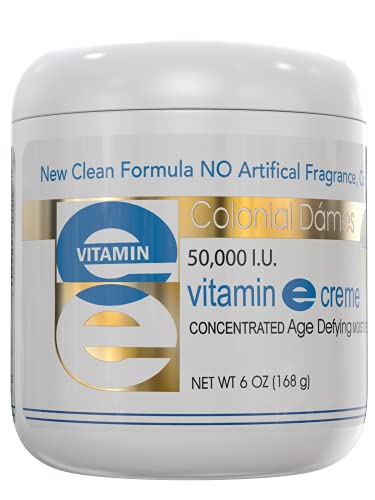
A dense 50,000 IU Vitamin E cream for skin that has gone past dry into chapped.
This is not an oil and it is not a gel — it is a rich cream, and you buy it for a specific problem: extremely dry, chapped, flaky skin and fine lines that need a heavy coat. The headline number is right in the name. It packs 50,000 IU of Vitamin E — 30% pure pharmaceutical-grade Vitamin E by volume, per the brand — making it stronger and thicker than a standard vitamin E lotion.
The routine is simple: smooth it into the face and throat, giving extra attention to fine lines, the under-eye area, and any dry or irritated spots, morning and night for round-the-clock care. Users with very dry skin find it keeps them soft and hydrated and reports say it helps clear up bumpy areas. The texture is creamy and non-greasy once worked in, and the brand behind it has been family-owned for over 135 years. Used on stretch marks or older scars, a heavy moisturizer like this mainly works by keeping that skin barrier hydrated and supple rather than by treating raised tissue.
The consistent caveat is the feel: this is a heavy cream and a portion of users mention the consistency and greasiness as a downside, along with fragrance that splits opinion and occasional skin irritation on sensitive faces. If you wear makeup over your skincare, budget a minute for it to settle. On very dry body areas and stubborn scabs it is a genuinely strong moisturizer; on oily or acne-prone skin, it can be more than you need.
Where it holds its own
- 50,000 IU Vitamin E in a 6 oz tub gives you a long-lasting supply for very dry skin
- Rich, creamy texture that keeps chapped and flaky areas comfortable
- Works morning and night on face, throat, fine lines, and dry patches
What to know before buying
- Heavy consistency and greasy feel put off some users
- Fragrance and occasional irritation make it a poor fit for sensitive facial skin
Pick this for: chapped, flaky, winter-dry skin and fine lines that need a rich cream rather than a light oil.
Skip it for: oily or acne-prone skin and fresh facial scars, where a lighter or fragrance-free option fits better.
5. NOPUNZEL Silicone Scar Gel 20g
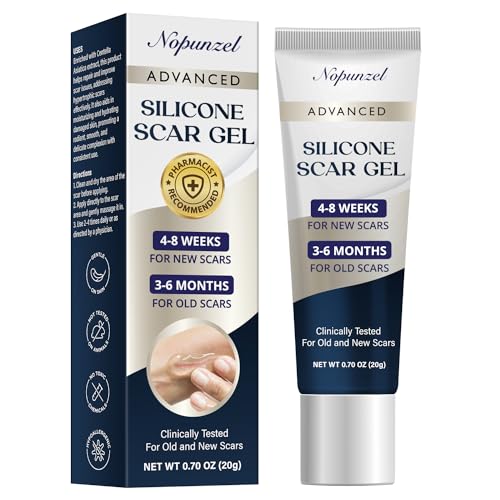
The budget silicone gel for new scars — C-sections, burns, stitches, and scrapes.
If you want to try a silicone gel without committing much, this 20g NOPUNZEL tube is the entry point. This non-surgical medical-grade silicone gel softens, flattens, and reduces the look of C-sections, hypertrophic scars, keloids, burn scars, acne scars, stretch marks, insect bites, cuts, and scrapes, old and new. Unlike the smaller 10 mL Rejûvaskin above, the 20g tube gives you twice the volume to work with at the entry tier, and its smooth, non-greasy formula is listed as suitable for all skin types and ages.
Use is a two-step ritual. Gently massage the scar area until you feel warmth, then apply the gel and massage until it has fully absorbed — twice to four times daily. The guidance is eight weeks for new scars and three to six months for old ones, with results that vary by the scar’s location and type. On sensitive skin the reports are encouraging: shoppers say no irritation at all and describe the scar feeling more comfortable and gradually flattening, with a little going a long way so the tube stretches over time.
The main thing to understand is that silicone works slowly and rewards patience. This is a treatment for fresh, healing scars and it asks for consistent daily use over months — skip days and you slow your own progress. For older, settled scars it is less likely to transform them. Think of it as a low-cost, low-commitment way to start silicone care early on a new scar.
Why it belongs on the list: It gives you the same medical-grade silicone approach as the premium pick but in a bigger 20g tube at the entry tier, so you can start early without a lot of spend.
Keep in mind: It is a long-game product — eight weeks for new scars, longer for old ones — so consistency matters more than the formula itself.
Reach for it when: you have a fresh C-section, burn, or stitched scar and want to start silicone early on a small budget.
Pass on it if: you expect a fast change on an old, fully-settled scar — silicone softens and flattens gradually, not overnight.
Know the Specs
Silicone Gel vs Botanical Oil
These are two different tools for two different jobs. A silicone gel is a clear liquid that dries into a thin, water-resistant sheet over the scar, and it is the format used for raised, surgical, keloid, and burn scars because the silicone itself helps soften and flatten the tissue. A botanical oil — Vitamin E, chamomile, lavender, or squalane based — does a different job: it hydrates deeply and keeps skin soft and supple, which suits flat marks like stretch marks, acne marks, and dry, scarred-looking skin. If your scar is red and healing, choose a gel. If it is flat but visible, an oil can improve how the skin looks and feels.
Ounces, Grams, and Milliliters
These treatments are sold by weight or volume and the numbers tell you how long a bottle lasts. A body oil like the 6.7 fl oz Bio-Oil is measured in fluid ounces, which is a large amount meant for whole-body, nightly use over weeks and months. Silicone gels are measured in grams or milliliters; a 20g tube or 10 mL bottle is a smaller, concentrated amount, because you only apply a thin layer to the scar itself. A gel typically runs out faster at twice-daily use, which is why the grams on the label are worth checking before you commit.
Concentration and IU
When you see a number like 50,000 IU on a vitamin E cream, that is international units — a measure of how much Vitamin E is in the product. A high IU count signals a stronger, more concentrated cream than a standard vitamin E lotion, which is why these products tend to be thicker and best for very dry, chapped skin rather than oily faces. More is not automatically better for every skin type; the right concentration depends on whether you are treating stubborn dryness or just keeping normal skin comfortable.
Non-Comedogenic and Fragrance
Non-comedogenic means the formula is made not to block your pores, which matters most on the face and any acne-prone area. Fragrance is the other spec to watch: a pleasantly scented body oil is a treat on legs and bellies, but a fragrance-free, hypoallergenic gel is often the safer choice for facial scars, sensitive skin, and children. If your skin reacts easily, put the unscented option on the face and save the scented oil for the body.
Common Questions
Do silicone gel and bio oil do the same thing for a scar?
How long does a scar gel tube actually last?
Which is better for a C-section scar, an oil or a silicone gel?
Can I use Vitamin E oil on a brand new scar?
How do I apply silicone scar gel correctly?
Is a heavy Vitamin E cream good for stretch marks on the belly?
Will an oil for scars clog my pores on my face?
How long before I see a change in an old scar?
Can I use scar gel and body oil together in one routine?
Is the 10 mL silicone gel size right for a large scar?
The Bottom Line
For most people, the oil for scars winner is the Bio-Oil Skincare Body Oil Serum because its 6.7 fl oz bottle covers stretch marks, acne scars, and dry skin in one nightly step that lasts months. If you want a discreet, odorless gel for a raised or surgical scar, grab the Rejûvaskin RejûvaSil Silicone Scar Gel. And for a fresh C-section, burn, or stitched scar on a small budget, the NOPUNZEL Silicone Scar Gel is the one to reach for.
How we choose
We do not accept paid placement. Every pick is matched to a real buyer and a real use-case; we do not hands-on test units.
Sources
Specifications: manufacturer listings and product documentation. Review insights: verified customer reviews, as of October 2026. Pricing: not shown on this page (it changes often); check the current price via the retailer link.
As an Amazon Associate, Aappliancez earns from qualifying purchases. This does not affect which products we feature.