Disclosure: Some links in this post are affiliate links. As an Amazon Associate I earn from qualifying purchases, at no extra cost to you. Learn more
Specs are compiled from manufacturer listings and verified buyer reviews and can change over time — please confirm the key details on the product page before buying.
If your tuna comes out of a can, shredded into gray flakes and packed in water, you are eating the bottom of the barrel. Jarred tuna is different: whole fillets or belly cuts, hand-packed in olive oil and sealed in glass so the fish stays moist and holds its shape. The picks below are the jars worth your money, sorted by what each one is actually best at.
This guide is built by comparing the manufacturers’ published specifications and the patterns across verified customer reviews, so you get each pick’s real strengths and trade-offs instead of marketing spin.
Every jar label repeats the same words: Ventresca (the fatty belly cut), Bonito del Norte (a premium white tuna), Yellowfin (a common tuna species), olive oil, glass jar. What decides whether you finish a jar in a week or leave it in the pantry is the cut, the oil, and the portion size. Here is how to tell which best jarred tuna fits how you actually eat.
Top Picks

How To Choose The Best Jarred Tuna
Jarred tuna is a small, expensive shelf, and the labels are not doing you any favors. Two jars sitting side by side can both say “Yellowfin” and “olive oil” and still be completely different products inside. The fix is to know the four label words that actually decide what you taste, then buy to the way you eat — a sandwich every day is a different job than a plated dinner for guests.
Cut: Fillet, Belly, or Ventresca
Fillet is the standard cut — clean, firm, and the safe pick for tuna salad or a sandwich. Belly, sold as Ventresca, is the oilier, fattier strip from the underside of the fish. It is noticeably softer and richer than a standard fillet, so it is better eaten on its own or over greens than chopped up with mayo. If a jar does not say Ventresca, assume you are getting a regular fillet.
Oil: The Difference Between Moist and Sawdust
Tuna packed in olive oil stays soft because the oil coats and protects the flesh. Tuna packed in water or brine dries out fast once you open the container. Some jars here pack in Spanish olive oil, which is also why the fillets hold together instead of shredding. A practical bonus: that leftover oil is seasoned by the fish, so you can pour it straight into a salad dressing or over pasta instead of throwing it out.
Sizing: Buy for How Often You Actually Eat It
The smallest jars here are single-portion cans, and the largest are 40.2-ounce multi-jar packs. Small cans are great for one sandwich but will not stretch to two people — a buyer who wanted a full meal learned that the hard way. Multi-packs cost less per jar and make sense if tuna is a weekly staple. Single large jars make sense if you open one and eat it across two or three days.
Side-by-Side Comparison
| Model | Best For | Units | Cut | Packaging | Amazon |
|---|---|---|---|---|---|
| Callipo Italian Canned Tuna in Olive Oil★ Best Overall | Single sandwiches and small portions | 25.2 Ounce | Fillet | 9 small cans | Amazon |
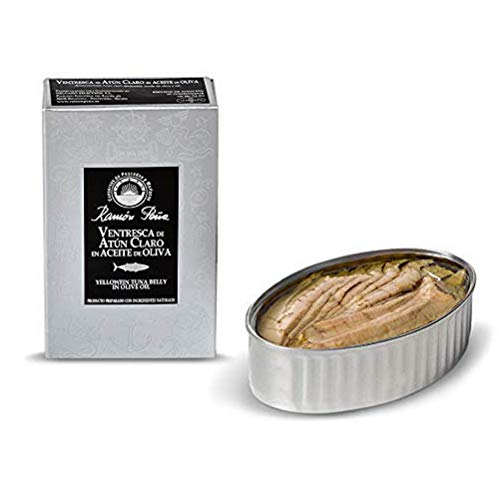
| Ramon Pena Yellowfin Tuna Belly (Ventresca)Most Tender Cut | A plated dinner, not tuna salad | 3.85 Ounce | Ventresca belly | Single tin | Amazon |
| Ortiz White Tuna in Olive Oil | Straight from the jar, no mayo needed | 7.76 Ounce | Hand-packed fillet | Glass jar | Amazon |
| Season Yellowfin Tuna Fillets in Olive Oil | Weekly lunches across a household | 40.2 Ounce | Fillet | 6 glass jars | Amazon |
| Tonnino Olive Oil Yellowfin Ventresca Belly Fillets | Gifting and improve plating | 40.2 Ounce | Ventresca belly | 6 glass jars | Amazon |
Detailed Reviews
1. Italian Canned Tuna in Olive Oil Callipo 2.8 Oz (Pack of 9)
Our pick — over 4.5★ from 400+ verified ratings; the strongest balance of quality and price.
Nine little cans of Italian tuna that make you stop buying supermarket brands.
If you want the jarred tuna the widest range of buyers agree on, this is it — 4.6 stars across 400+ ratings, the strongest score on this list. This is a nine-pack of 2.8-ounce cans that together add up to 25.2 ounces of Italian tuna in olive oil. That structure is the whole point. Each can is a sealed single portion, so nothing sits half-eaten in the fridge going dry.
Quality is the trait buyers bring up most, comfortably ahead of taste. Reworded straight from owner experiences: this tuna is good enough to eat straight from the can with a fork, no mayo, no mixing. The olive oil keeps the flesh moist and gives the fish a clean, non-fishy finish. Owners describe it as noticeably better than standard brands even after it goes into tuna salad, where most tuna loses its identity.
The honest catch is portion sizing and cost. These cans are genuinely small, and a buyer who expected a full meal found they needed two cans per sitting. Value for money draws mixed feelings for exactly that reason — if tuna is your go-to lunch four days a week, nine small cans disappear fast. One more thing worth knowing: buyers report a quality difference is obvious next to cheaper tinned tuna, and this is the pick to compare against the larger jars below if you mainly make sandwiches rather than plates.
Where It Wins
- Highest rating on this list at 4.6 out of 5
- Quality is the most-praised trait — the thing that keeps people rebuying
- Good enough to eat straight from the can without mayo
- Sealed 2.8-ounce portions mean nothing goes to waste
Where It Costs You
- The 2.8-ounce cans are small — one sandwich-sized portion each
- Buyers who expected a full meal needed two cans per sitting
- Value for money is the most mixed point on this jar
Grab it if: you want the highest-rated jarred tuna here and eat it mostly in sandwiches, salads, or straight from the can.
Think twice if: you cook tuna as a main course for two — you would burn through two cans a meal.
2. Ramon Pena. Yellowfin Tuna Belly (Ventresca) in Olive Oil
Belly-cut Spanish tuna that melts, if you are lucky enough to get the good jar.
This is one small tin — 3.85 ounces of Yellowfin tuna belly, the most oily and meaty part of the fish. It is the smallest container here by a wide margin: the Season six-pack below holds 40.2 ounces, roughly ten times the fish in this single tin. What you are paying for is the cut. Ventresca comes from the underside of the tuna, and it is hand-cut and hand-placed in the tin in Spain before it ships.
What sets this apart is texture. Owners describe the belly as tender, buttery, and melting in the mouth — rich but clean, not fishy, with a fat-to-flavor balance several compare to high-end sushi. It is eaten over salad with the can oil and a squeeze of lemon, or served as a main course rather than chopped into tuna salad. That is the correct use for it — this is a plated tin, not a lunchbox tin.
The real caveat is big: taste gets mixed reactions, and value is the one point buyers react to negatively. Some jars arrive firm and dry instead of tender, and one reviewer noted after a second try: “I’ve tried this brand 2 different times now and not impressed each time.” Flavor alone is close to a five, but consistency varies jar to jar, and a tin this small at this price is hard to justify if you are not eating it plain.
Texture is the reason to buy: the belly cut is the standout — tender and buttery enough that several buyers compare it to high-end sushi.
Consistency is the reason to pause: taste comes back mixed, and value is the only aspect buyers react to negatively in a measurable way.
Reach for this if: you want a tiny, carefully cut tin to eat plain over greens with lemon, and you care more about the belly texture than a large portion.
Look elsewhere if: you need consistent results jar after jar or a full meal from one tin — this is a small-batch gamble.
3. Ortiz White Tuna in Olive Oil
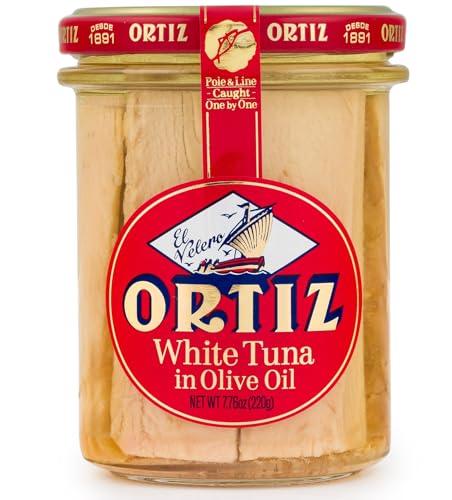
Spain’s prized Bonito del Norte, packed by hand in glass so you can see it.
Open this and you see why glass matters. Ortiz packs 7.76 ounces of hand-packed Bonito del Norte fillets — large, whole pieces you can actually see through the jar, not a shredded mash at the bottom. That is more fish per jar than the Callipo tins at 25.2 ounces across nine cans, and it comes in one reusable container instead of nine you throw away. The fillets are caught line-by-line during the Cantabrian Sea season, then packed in Spanish olive oil.
Quality leads here, as with the Callipo above, with taste close behind. Buyers describe the chunks as long and high-quality, and the texture as fresh and moist — soft enough that the brand’s own advice holds up. You do not need mayo. Eat it straight from the jar, flake it over a salad, or fold it through pasta. The olive oil that surrounds the fish is seasoned by it, so pour the leftovers into a dressing instead of down the sink.
The catch is the price tag, and it is the one point buyers push back on most. Value comes back as the single negative aspect, and it is real: this is a small jar for the money, so it suits people who actually taste their tuna rather than bury it under mayo. A bonus you will not see on most labels: this is the largest single jar here by weight, 7.76 ounces against the Callipo’s per-can portions, so it lasts across two or three sandwiches.
Why It Holds Up
- Whole hand-packed fillets you can see through the glass — no flakes
- Packed in Spanish olive oil that you can reuse in dressings
- Bonito del Norte from the Cantabrian Sea, line-caught one fish at a time
- Tender, moist enough to eat with no mayo at all
The Trade-Off
- Price is the one point buyers reliably push back on
- Value for money is the single negative aspect, not the positive ones
- One jar, not a pack — when it is gone you are reordering
This is your jar if: you want whole, visible fillets you can plate or eat plain, and you treat tuna as a real ingredient rather than a mix-in.
Not your jar if: you measure tuna strictly by cost per ounce and want the most fish for the least money — that is the multi-pack further down.
4. Season Yellowfin Tuna Fillets in Olive Oil
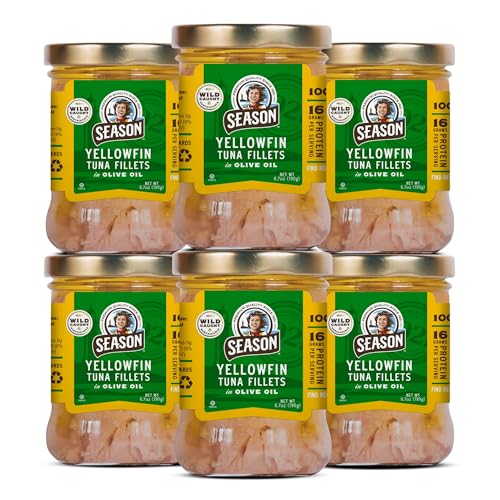
Six resealable jars of wild-caught fillets — the everyday workhorse.
For households that eat tuna weekly, six jars beats one jar every time. Season’s pack delivers 40.2 ounces of wild-caught Yellowfin fillets across six resealable glass jars, each holding 6.7 ounces. Compare that to the Ortiz jar above at 7.76 ounces in a single container — a 2.8-times gap in per-container weight — and the argument for buying in bulk becomes obvious if you go through jars fast. Each serving brings 16 grams of protein.
The jump in quality over canned tuna is the most-cited strength, with taste right behind it. One review line sums up the whole category better than any spec sheet: “Once you’ve tasted this super good Tuna, you’ll never be able to go back to Starkist, Bumblbee and the like again.” Owners mention it makes a satisfying lunch with lettuce and tomatoes, and that there is no metallic taste at all — the thing that turns people off cheap cans.
Two fair notes before you commit. Straight from the jar it comes across as slightly salty, so a quick drain and a squeeze of lemon helps. And value splits opinion — some find it worth the money, others call it a bit pricey — which is normal once you step up from canned. The good news is the packing itself is generous: real fillets in extra virgin olive oil, more satisfying by volume than the flaked stuff, and the oil can be strained off and saved for cooking.
Best on value per ounce: six jars totaling 40.2 ounces make this the sensible weekly-lunch pick if tuna is a habit rather than a treat.
A small heads-up: the flavor leans slightly salty straight from the jar — drain and add lemon if that bothers you.
Buy it if: you eat tuna several times a week and want real fillets in resealable jars rather than one fancy single serving.
Skip the bulk size if: you only open tuna occasionally — six jars is a lot of fish to get through, and glass jars need space.
5. Tonnino Olive Oil Yellowfin Ventresca Belly Fillets
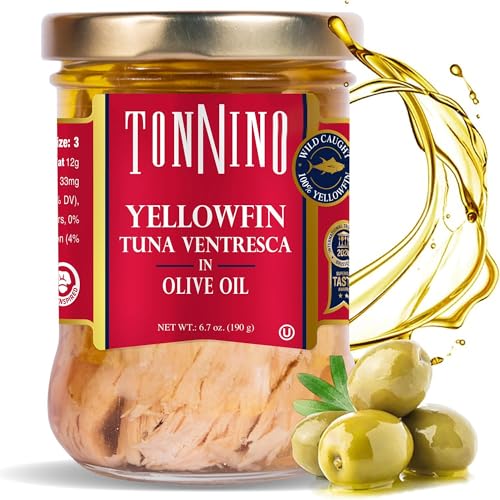
Whole belly fillets in a jar, plated straight from the lid with nothing added.
This is the jar you bring out when someone is coming over. Tonnino packs hand-cut Ventresca belly fillets from the tender underside of the yellowfin — noticeably softer and richer than a standard fillet, and a cut that is rarely sold in jarred tuna at all. Six jars, 6.7 ounces each, totaling 40.2 ounces. Each 6.7-ounce jar carries roughly 32 grams of protein. Whole fillets are hand-packed with no draining required, and there are no artificial preservatives or additives listed.
Taste is the runaway strength, and it is the most-discussed trait by far — texture, salad use, and tenderness all follow behind it. Customers note using it for a standout Salad Nicoise, and it plates beautifully straight from the jar onto crostini or a charcuterie board. The up-to-four-year shelf life makes these jars easy to buy as gifts without timing pressure. The traceability code on each jar lets you follow the fish back to its source fishery, and the whole lot is FAD-free wild-caught yellowfin. Gluten free, Non-GMO Verified, soy free.
Two things to weigh. Value splits opinion — some consider it worth every bit while others find it expensive — which is fair for a belly-cut jar at the top of the range. And vacuum seal failures happen occasionally in transit; a small number of reviewers point out compromised seals on arrival. That is packaging, not the tuna, and it is worth checking each lid when the box lands. The jars themselves are reusable, and one tip from a repeat buyer: a denture tablet soak brings the lids and jars back clean for storing dry goods.
What Earns Its Price
- Ventresca belly cut — softer and richer than standard fillets
- Whole hand-packed fillets, no draining, no artificial preservatives added
- Up to 4-year shelf life, so gift it without worrying about timing
- Traceable from ocean to table by scanning the jar
- 32 grams of protein per jar, gluten free and Non-GMO Verified
What to Watch
- Value splits opinion — the belly cut sits at the top of the range
- Occasional vacuum-seal failures in transit, so check each lid on arrival
- Six jars means real pantry space, not a spot on the door shelf
Worth it if: you want a whole-fillet belly cut to plate for guests or gift to someone who cooks, and you value the 4-year shelf life.
Save the money instead if: you are buying tuna to mash into a weekly lunch salad — the belly cut is wasted under mayo.
Know the Specs
Ventresca (Belly) vs Fillet
Ventresca is the belly of the tuna — the oiliest, meatiest strip, and the cut that reads as noticeably softer and richer than a standard fillet. Fillet, by contrast, is the firm, cleaner cut you want when tuna is going into a sandwich or mixed with mayo. Pick by how you eat: belly for a plate with lemon and greens, fillet for a lunch you build and stir.
Glass Jar vs Metal Tin
Glass lets you see the whole fillet before you open it, so you know you are getting intact pieces rather than flakes. Glass is also reusable and does not react with the fish, while a tin is single-use and cannot show you what is inside. If you are paying premium for whole fillets, glass is the format that lets you verify you got them.
Drained Weight and Total Units
A jar’s label weight includes the olive oil, so the numbers listed here tell you total weight, not just fish. Multi-packs roll that into one figure — the Season and Tonnino six-packs each list 40.2 ounces total, while the Callipo set carries 25.2 ounces across nine cans. If you serve tuna often, a bigger total is simply fewer reorders.
Wild-Caught, FAD-Free, and Traceability
Wild-caught means the fish was taken from open water rather than farmed. FAD-free refers to fishing that avoids fish aggregating devices, and the Tonnino jars go a step further with a code on the jar that traces the fish back to its source fishery. Look for those words on the label if sourcing matters to you.
Common Questions
Is jarred tuna better than canned tuna?
What does Ventresca mean on a tuna jar?
How many cans of Callipo tuna do I need for one sandwich?
Do I need to drain the olive oil before eating jarred tuna?
How long does jarred tuna last in the pantry?
What is the difference between Ortiz Bonito del Norte and standard yellowfin tuna?
Why did some Tonnino jars arrive with broken seals?
Is jarred tuna worth the higher cost than canned tuna?
Can I eat jarred tuna straight from the jar without cooking it?
Which jarred tuna is best for a Nicoise salad?
The Bottom Line
Reach first for the Callipo Italian Tuna in Olive Oil 2.8 Oz 9-Pack — it holds the highest rating of anything here at 4.6 out of 5, and quality is the trait owners rave about most. If you want whole visible fillets you can serve straight from the jar, pick up the Ortiz White Tuna Hand-Packed Fillets. For weeknight lunches, the Season Yellowfin 6-Pack is the practical staple, and if the jar is a gift, the Tonnino Ventresca Belly 6-Pack is the one to wrap. Whichever you choose, decide by how you eat tuna, not by the biggest label.
How we choose
We do not accept paid placement. Every pick is matched to a real buyer and a real use-case; we do not hands-on test units.
Sources
Specifications: manufacturer listings and product documentation. Review insights: verified customer reviews, as of October 2026. Pricing: not shown on this page (it changes often); check the current price via the retailer link.
As an Amazon Associate, Aappliancez earns from qualifying purchases. This does not affect which products we feature.