Disclosure: Some links in this post are affiliate links. As an Amazon Associate I earn from qualifying purchases, at no extra cost to you. Learn more
Specs are compiled from manufacturer listings and verified buyer reviews and can change over time — please confirm the key details on the product page before buying.
If you are petite, you already know the problem with compression socks: the standard ones are cut for a longer leg. You pull them up and the heel pocket sits somewhere near your ankle, or the calf band climbs past your knee and digs in all day. The fix is not a smaller version of a regular sock — it is a sock or sleeve actually built with a shorter leg length in mind, so the compression lands where it is supposed to. That is what this guide sorts out for you.
This guide is built by comparing the manufacturers’ published specifications and the patterns across verified customer reviews, so you get each pick’s real strengths and trade-offs instead of marketing spin.
The short version: leg length matters more than shoe size here, and the mmHg number tells you how much squeeze you are signing up for. Below you will find the honest breakdown of the best compression socks for petite women, plus the trade-offs worth knowing before you buy.
Top Picks

How To Choose The Best Compression Socks for Petite Women
The two things that ruin a compression sock on a petite frame are length and squeeze level. Get both wrong and you end up with a band bunching behind your knee or a sock so tight you cannot get it past your heel.
Measure your calf, not your shoe
The number that decides your size is the widest part of your calf, taken with a soft tape measure. Sizing charts are built around that circumference first, so a shoe size alone tells you very little. If you land between two sizes, sizing up gives you a looser feel and sizing down gives you a tighter squeeze — the BLITZU chart states exactly that rule in its own sizing guidance.
Read the mmHg number before anything else
Compression is measured in mmHg (millimeters of mercury — a pressure unit that tells you how much squeeze the fabric applies). An 8-15 mmHg sock is a light, everyday hug you can wear all day without thinking about it. A 15-20 mmHg sock is a moderate, noticeably firmer squeeze. A 20-30 mmHg sock is the firm end, meant for travel days and longer standing shifts. Match the number to how the sock will be used, not to how firm you think you want it.
Decide between a sock, a sleeve, and a zipper
A knee-high sock covers your foot and calf in one piece, which suits cold days and shoes you can slip on. A footless calf sleeve stops at the ankle, so you keep your own socks and skip the toe squeeze entirely — the Doc Miller sleeve and the BLITZU sleeves both work this way. A zippered sock opens down the side, which makes a firmer compression level far easier to get onto a short leg, and that is the whole idea behind the Presadee design.
Where the compression should sit
Graduated compression means the squeeze is strongest at your ankle and eases as it climbs toward your calf. That gradient is what supports circulation rather than just squeezing your leg evenly. On a petite leg, the gradient only works if the sock is short enough for the tightest zone to land at your ankle instead of halfway up your shin.
Side-by-Side Comparison
| Model | Best For | Compression | Form | Pairs Included | Amazon |
|---|---|---|---|---|---|
| Sockwell Women’s Micro Grade★ Best Overall | All-day wear and travel | Graduated, four zones | Knee-high sock | — | Amazon |
| CS CELERSPORT Compression SocksTop Performer | Flying and shift work | 20-30 mmHg | Knee-high sock | 3 or 4 Pairs | Amazon |
| NEWZILL Open Toe Compression SocksBest for Toe-Free Comfort | Toe-free coverage | 20-30 mmHg | Open-toe sock | — | Amazon |
| Pembrook Light Compression Socks | Cotton comfort for swelling | 8-15 mmHg | Knee-high sock | 3 Pairs | Amazon |
| Pembrook Light Compression, Second Colorway | Pattern variety on a light squeeze | 8-15 mmHg | Knee-high sock | 3 Pairs | Amazon |
| Doc Miller Calf Compression Sleeve | Short-frame calf support | 15-20 mmHg | Footless calf sleeve | 1 | Amazon |
| BLITZU Calf Compression Sleeves | Runners and long shifts | Graduated | Footless calf sleeve | 3 Pairs | Amazon |
| Copper Compression Socks 6 Pack | Everyday rotation on a budget | Graduated | Knee-high sock | 6 | Amazon |
| Presadee Petite Closed Toe Zipper Socks | Getting them on without a struggle | 15-20 mmHg | Zippered knee-high | 1 | Amazon |
| JOBST Relief Knee High | Everyday graduated support | 15-20 mmHg | Knee-high stocking | 1 | Amazon |
Detailed Reviews
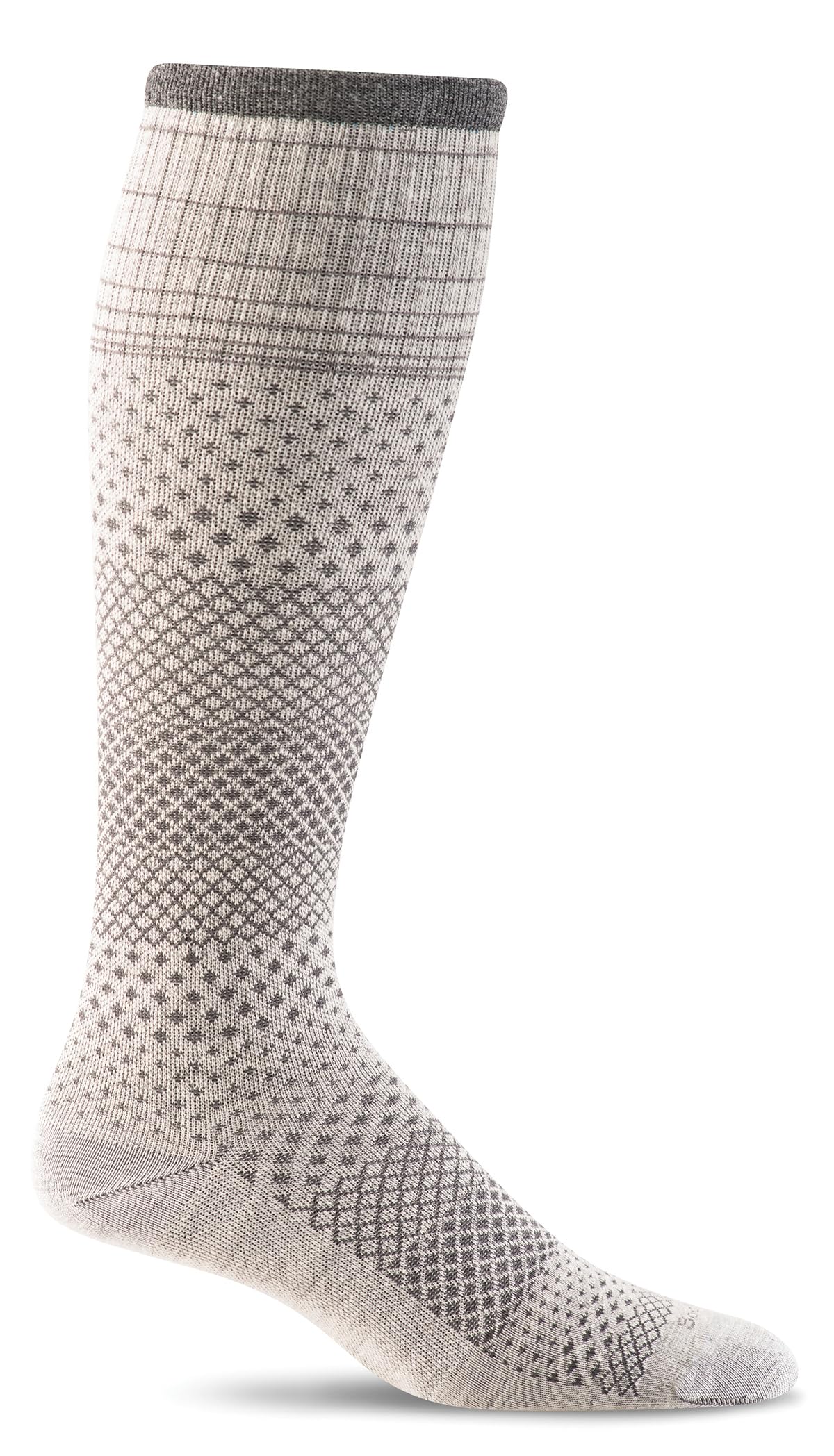
1. Sockwell Women’s Micro Grade
Our pick — over 4.5★ from 850+ verified ratings; the strongest balance of quality and price.
The wool-blend sock that holds its fit without strangling your calf.
Your feet stay dry and comfortable all day thanks to the fabric blend: 32% Merino wool, 31% rayon from bamboo, 32% stretch nylon and 5% spandex. That mix matters on a petite leg because it regulates temperature and keeps feet dry in a way plain nylon cannot, and the 5% spandex is what lets the sock hold its shape instead of bagging at the ankle. It is made in the USA with American wool-based yarns, and the Accu-fit construction uses four zones of graduated compression (each zone squeezes a little less as it moves up your leg) with a smooth toe closure (no raised seam to rub your toes) and an arch support band.
The comfort is what wins people over, and it is not close — that is the single most-praised trait by a wide margin, with fit running a distant second. Owners describe a sock that stays in place without pinching, and several compression strengths are offered so you can dial in how firm you want it. The patterns are a draw too: these read like real socks rather than medical wear, which matters if you want to wear them to the office. The brand states the yarn blend is designed to prevent blisters and regulate temperature.
The honest catch is durability — the wear-and-tear feedback is mixed rather than glowing. For a wool blend at this tier, that is a fair trade-off to weigh if you plan to wash and re-wear them hard every single day. If you want the softest fit and a look you would actually wear out of the house, this is the one. If you need the longest-wearing option at any cost, look at the JOBST or the Pembrook below instead.
What earns it the top spot
- 32% Merino wool and 31% rayon from bamboo, so feet stay dry and regulated through a full day.
- Four zones of graduated compression with a turn welt top that holds without digging in.
- smooth toe closure and arch support — two spots a petite buyer notices immediately.
- Multiple compression strengths and patterns, so you are not stuck with one medical-looking look.
Where it asks you to be careful
- Durability feedback is mixed — treat the wash cycle gently if you want them to last.
- It is a knee-high sock, so it will not suit anyone who wants a footless sleeve.
- Wool blend needs a little more care than an all-synthetic sock.
Pick it when: you want a compression sock that looks and feels like normal clothing and you would rather trade a little long-term wear for comfort right now. It holds the highest customer score in this group.
Look past it when: you need a footless sleeve, or you want the most hard-wearing option regardless of feel.
2. CS CELERSPORT Compression Socks 20-30mmHg
The pack that turns a firm 20-30 mmHg squeeze into an everyday routine.
Here is the contrast that matters: the NEWZILL above pushes 20-30 mmHg, and this pack matches it at 20-30 mmHg, but you get three or four pairs in one box instead of a single unit. That is the whole point of the CELERSPORT — a firm, travel-grade squeeze you can rotate through the week without hand-washing a single pair overnight. The four use cases the listing names are exactly the ones a petite buyer runs into: relaxing at home, long-distance travel, exercise, and standing work.
What buyers single out most is the comfort, and by a wide margin — nearly 900 mentions before compression even shows up as the second-most-praised trait. Getting them on and off is noted as easy, which is not something you can say about every 20-30 mmHg sock. Value lands third in the feedback, and owners compare the performance favorably to pricier medical brands. Size, length, and durability sit in the mixed column, so treat the size chart as the deciding factor.
That combined 20-30 mmHg rating is a real number for a real purpose — it is the squeeze level you want on a flight or a twelve-hour shift. It is also the honest catch: at that firmness, on a short calf, a pair sized wrong will feel tight at the top rather than evenly supportive. Measure your calf first. If you want your first compression sock to be a gentle one, the Pembrook at 8-15 mmHg is a better starting point.
Why it earns position two: a 20-30 mmHg squeeze paired with multiple pairs per pack is the combination that gets a sock worn daily instead of saved for special occasions.
The fit question to answer first: sizing is listed as mixed by buyers, so check your calf measurement against the chart before you pick a size.
Best matched to: flyers, nurses, and anyone on their feet all day who wants a firm squeeze they can wear every day of the week.
Rethink it if: you want the lightest possible hug or a footless sleeve instead of a full sock.
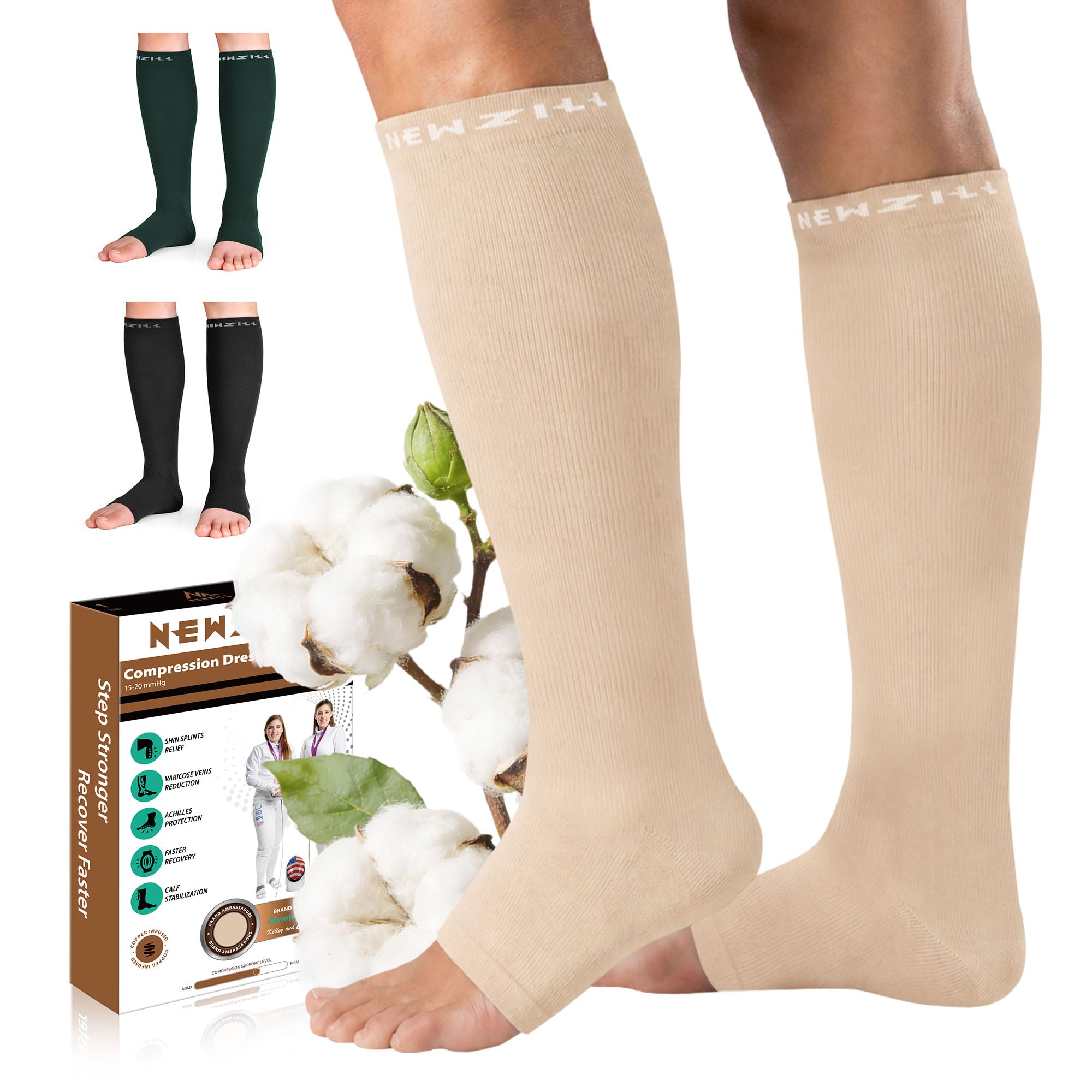
3. NEWZILL Open Toe Compression Socks 20-30 mmHg
Firm compression that stops at the toes, so nothing pinches up front.
Your toes stay free while your arch and calf get squeezed — the toe is open, so the fabric compresses your arch and calf and leaves your toes entirely alone. The compression rating is 20-30 mmHg (millimeters of mercury, the standard measure of how firmly the sock squeezes), tied with the CELERSPORT for the firmest squeeze here. NEWZILL also includes a step-by-step wearing guide, which is a small thing that makes a real difference the first time you put on a firm sock: reach in, grab the heel, turn it inside out to the heel, seat your foot, then roll up while smoothing out the wrinkles.
What buyers report first is comfort — support through the arches and calves — followed closely by how easy the socks are to get on and take off. That second point is worth pausing on, because a 20-30 mmHg sock is not usually described as easy to wrangle. The brand states a board-certified vascular surgeon recommends these socks, and the listing carries endorsements from U.S. fencing medalists. Take those as the brand’s own claims, not as a promise about your result.
The trade-off is the open toe itself. It is exactly why these are comfortable, and it is also why they are not the sock for a cold floor or a winter commute without a second pair underneath. For summer heat, a gym session, or anyone whose toes hate being covered, that trade goes the right direction every time.
What the wearers notice: arches and calves get the support, and the open front removes the toe squeeze that turns most people off firm socks.
Where it makes you compromise: exposed toes mean you will want a liner sock on cold days — a built-in cost of the footless front.
Reach for this if: you want the firm 20-30 mmHg support of a travel sock but cannot stand having your toes wrapped.
Choose something else if: you want one sock to handle a cold-weather walk on its own.
4. Pembrook Light Compression Socks 3 Pairs 8-15 mmHg
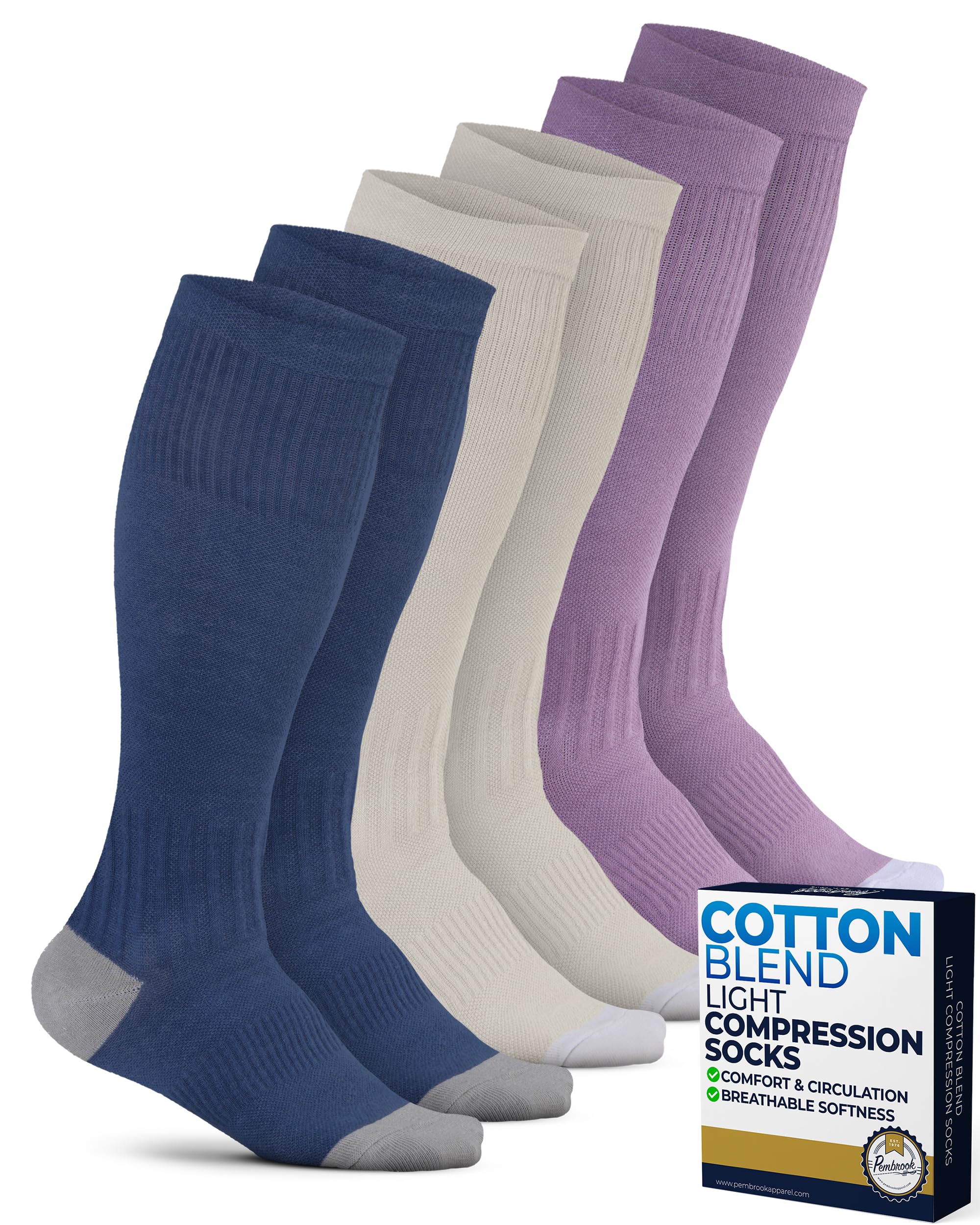
Cotton, three pairs, and a light squeeze you can forget you are wearing.
Start with the number that defines this sock: 8-15 mmHg. That is the gentlest squeeze in this whole lineup, and it is the reason the Pembrook is the pair to hand someone who has never worn compression before. Compare it to the NEWZILL above at 20-30 mmHg and you can see the spread — this is the light end of the range by a wide margin. Three pairs come in each pack, and the cotton material is a deliberate choice: it is a harder fabric to find in compression, and the listing names pregnancy and knee-high comfort as the intended uses.
Quality is the trait owners praise most, which is unusual for a light-compression sock — usually the squeeze takes the spotlight. Appearance is close behind, and the fun patterns and colors come up again and again as the reason people keep buying more. Ease of use and value both land in the positive column, and in the review pages the sock gets summed up simply: easy to put on, effective after hours of wear, and worth the money. The colors go well beyond plain black.
Fit is the one area where buyer opinion splits — some find it spot on, others call it a bit snug, and tightness around the knee comes up. That is normal for any knee-high sock, and on a short leg it is the length that decides whether it happens. One condensed report from a nurse of fifteen years, working at 5’0″ in a size Medium, describes a fit that stays comfortable and does not run too tall. The recurring color-mix-up gripe is worth a mention too, so order the exact shade you want.
Why the light squeeze wins people over
- 8-15 mmHg — light enough to wear all day, firm enough to feel supported during a shift.
- Cotton material, which is uncommon in compression and a big part of the comfort.
- Three pairs per pack with fun patterns and colors that read as normal socks.
- Easy to put on and stays in place, which is what keeps a beginner wearing them.
The honest fit note
- Fit splits opinion — some call it perfect, some find it snug, and knee tightness shows up.
- Colors sometimes arrive differently than pictured.
- 8-15 mmHg is too light if you need a firm squeeze for long-haul travel.
Suits you if: you are new to compression, want a cotton sock, or need a light everyday squeeze for swelling and long shifts.
skip it if: you need the firm 20-30 mmHg support of the CELERSPORT or NEWZILL for flying.
5. Pembrook Light Compression Socks 3 Pairs 8-15 mmHg Second Colorway
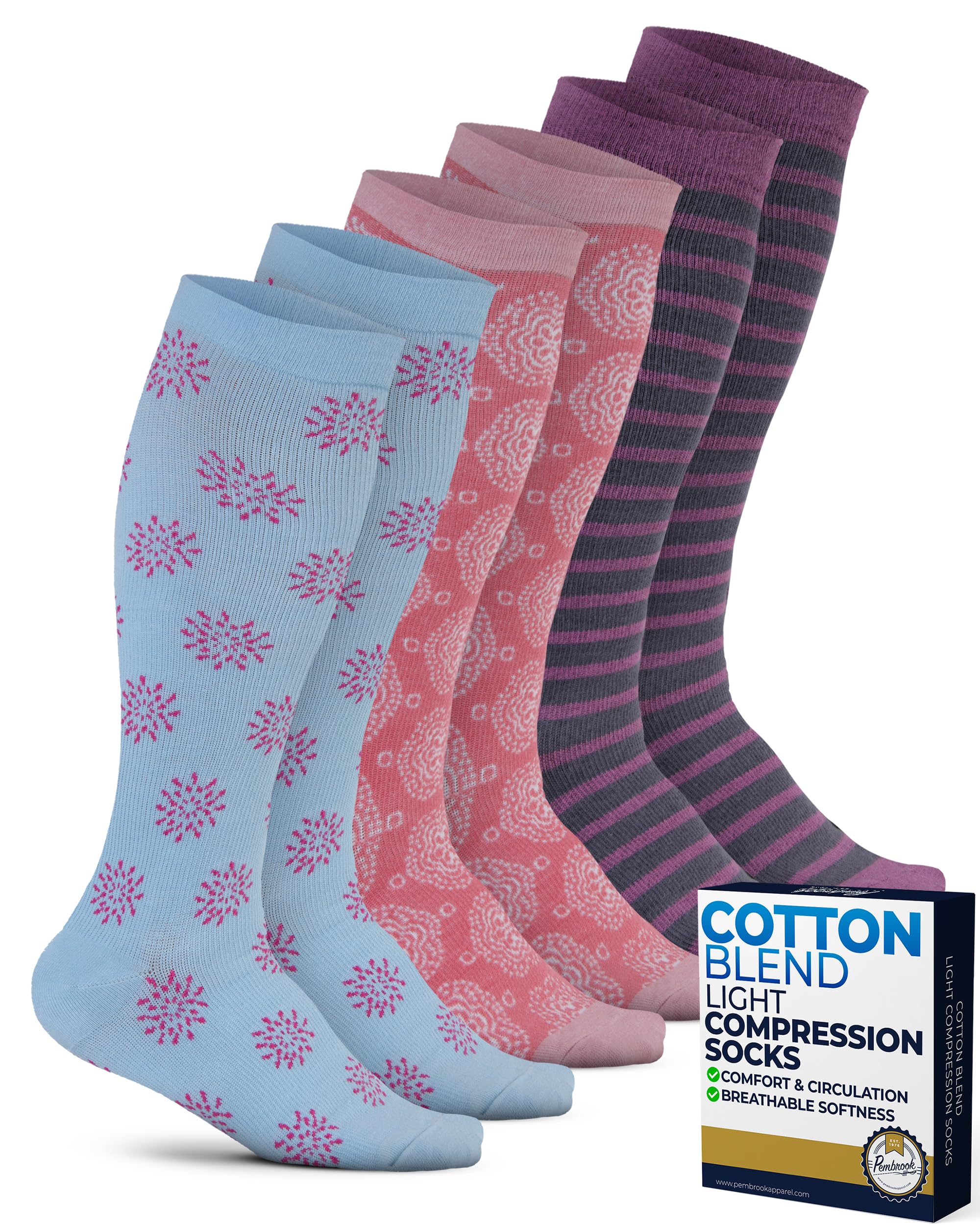
Same cotton softness as the pick above, in a different set of prints.
This is the same Pembrook cotton sock at 8-15 mmHg as the colorway above, offered with a different pattern set — three pairs per pack, soft cotton material, and the same light everyday squeeze. If you have already decided on the Pembrook feel and just want a different print, this is the listing to choose. The compression number is identical, so nothing about the fit changes between the two.
Feedback follows the same pattern as its sibling: quality leads the praise, compression comes next, and the appearance and color options keep coming up as the reason buyers come back for more designs. The ease of getting them on and off is a consistent theme, and the softness draws comment without fail. On a petite frame the knee-high length is the thing to watch — most of the fit comments land there rather than at the foot.
The candid fit note is the same as the first Pembrook: some find the fit perfect, others find it slightly snug, and tightness at the knee appears in the feedback. The upside is that three pairs of cotton compression at this level is an easy way to test whether a light squeeze works for you before committing to a firmer sock. Sizing runs to two-letter options, so check the chart against your measured calf.
The reason to pick this version: identical comfort and compression to the pick above, with a fresh pattern set if the first lineup did not land for you.
What to check before you buy: verify the size chart and the colorway, since the knee fit and the exact print are the two things buyers flag.
Right for you if: you want the softest cotton option and prints that go beyond plain black.
Not the one for you if: you need moderate or firm compression, which this 8-15 mmHg sock does not provide.
6. Doc Miller Calf Compression Sleeve 15-20 mmHg

Finally, a calf sleeve that assumes short legs exist — and says so out loud.
This one is aimed squarely at short frames, and it is the only pick here whose own description repeats that brief across every bullet. It is a footless calf sleeve, not a sock, so it covers the calf and stops — no toe, no heel, no foot length to fight with. Compression sits at 15-20 mmHg, the middle of the range, which puts it between the light 8-15 Pembrook and the firm 20-30 CELERSPORT. One pair per order, in a Small, one of the smallest offerings here.
You can toss it in the washing machine and it breathes, because the construction is nylon and spandex — and the fit comments are the striking part. The standout review comes from a 5’0″ buyer at 122 lbs who calls it out as a rare find for petite sizing. That is the whole story of this pick: it targets an audience most compression socks ignore. The listing also positions it for running, hiking, nursing, and teaching, all activities where a footless sleeve keeps your regular socks on underneath.
The honest downside: durability has a shaky stretch, with one report of the hem unraveling out of the package. Given the model’s size, this is a sleeve to treat as a single-season workhorse rather than an heirloom. On the flip side, buyers describe it as a fit that stays comfortable and holds position. If ankle compression is what you need, look elsewhere — this stops at the ankle by design.
The reason it earns a place: it is the rare calf sleeve that says “petite” and means it, from the small frame sizing down to the length.
The trade-off to accept: some units have arrived with a hem unraveling, so inspect yours on day one and treat it as a light-use workhorse.
Reach for this when: you want calf compression only and you want it cut for short legs — plus full use of whatever socks you already own.
Think twice if: you need ankle or foot compression, or you want a sock you can pull on and forget about for a season.
7. BLITZU Calf Compression Sleeves 3 Pairs
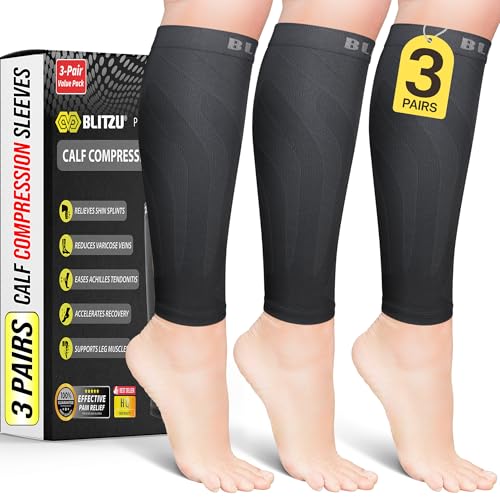
Three footless sleeves with stitched support zones built into the calf.
Three pairs in one pack is the first thing to note, and it is what makes this the practical pick if you want a sleeve you can rotate instead of wash every night. Patented kinesiology strips run along the sleeve to add stability. Unlike the Doc Miller sleeve above, which is a single pair, this one keeps backup pairs in the drawer.
The thing that wins people over here is the support itself — that is the most-praised trait, with fit right behind it in the feedback. Owners describe a sleeve that is neither too tight nor too loose, easy to get on, and comfortable enough for all-day wear. Fit is also where you need to be careful: one buyer with 17-inch calves found Large-XL spot on, and a 6’5″ wearer reported the sleeves stayed put on long walks. The brand’s own sizing tip is the one to follow — pull them higher first and then slide them down if you have leg hair, and go up a size if you are between sizes.
The honest limit is the stitched construction. The curvy seams can leave a brief indentation when swelling is present, and the sleeve runs thinner than the brand’s own thicker style, which some owners mention is cooler for summer and less plush in winter. Both are reasonable trade-offs for a lightweight, breathable sleeve you can wear under jeans. The 3-pair format makes it easy to keep one at the gym and one at home.
Why it leads on support: the three-section stitched build plus kinesiology strips gives this sleeve more structure than a simple tube, and the multipack keeps you in the habit.
The caveat to know: the seams can leave a light mark under heavy swelling, and it is a slim, warm-weather sleeve rather than a cushioned one.
Pick it when: you want a footless sleeve you can wear daily and rotate without hand-washing, and you prefer a slim, breathable build.
Pass when: you need a full sock that covers the foot, or a cushioned winter sleeve.
8. 6 Pack Copper Compression Socks

Six pairs of graduated knee-highs, and a color for every day of the week.
Six pairs in a single order is what makes this the rotation play — the whole point is you never run out. They are knee-highs with graduated compression, meaning the squeeze is strongest at the ankle and eases as it climbs, and the fabric is a wide top band that is built to prevent rolling, with 360-degree stretch for flexibility. The listing targets tired, heavy, restless and aching legs, plus plantar fasciitis discomfort, and wears as a dress, athletic, or casual sock. The description calls the compression “not true medical-grade” in the buyer feedback, so treat them as everyday light-to-moderate support rather than a clinical garment.
What wins people over is the quality, and it is the top trait by a wide margin — compression lands a clear second. Customers note a graduated squeeze that stays in place all day, thin spandex that does not itch, and bright colors that hold up after washing. Buyers describe relief and comfortable all-day wear through many washes. The care instruction from owner experience is simple: wash cold and hang dry to avoid shrinkage.
The honest catch is shrinkage. A few reviewers point out the socks pulling up tighter after a wash-and-dry cycle, and some found them harder to get back on after. Sizing up is the safe move if you are near a size boundary, and the review pages echo a buyer who needed two sizes to land on the right one. For the money and the number of pairs, it is about as low-risk as a first compression sock gets.
What makes it the value pick
- Six pairs per order, so you always have a clean one for work, the gym, or a flight.
- Graduated compression, with the tightest squeeze at the ankle and a wide top band that resists rolling.
- Bright patterns and colors that hold after many washes, going well beyond medical black.
- Thin, breathable spandex that does not itch and stays in place through the day.
What to watch
- Shrinkage after a hot wash or tumble dry — wash cold and hang dry.
- Not a true medical-grade compression level; treat it as everyday support.
- A few owners needed to size up after the first wash.
Your pick if: you want six pairs of colorful graduated knee-highs that cover the whole week and stay fresh after washing.
Not for you if: you need a documented mmHg medical level or a footless sleeve.
9. Presadee Petite Closed Toe 15-20 mmHg Moderate Zipper Compression Calf Leg Socks (Black, S/M)
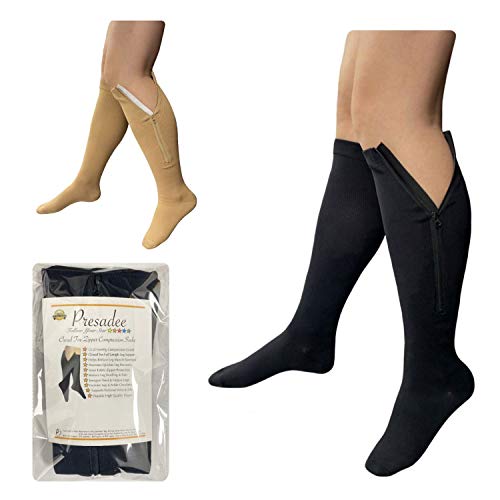
The zipper does the work — you step in, zip up, and you are done.
Every other pick here needs you to roll a firm sock over your heel. This one opens down the side with a zipper, so getting into a moderate 15-20 mmHg squeeze does not turn into a wrestling match. The zipper has an inner fabric guard that keeps the metal from rubbing your leg, which is a small design detail that makes a real difference when you wear it for hours. And the whole thing is cut in petite length sizing for shorter legs, with a closed toe. One pair per order, black, in small-medium.
What makes this a standout for petite buyers specifically is the length. The 5’1″ fit reports describe a shorter sock that fits properly where full-length ones run long, and the side zipper is called out as the reason application is easy — snug but not too tight. Buyers compare the quality favorably to other compression socks they have tried. The recommended use is anything that needs short or petite sizing, and the color palette sticks to black, nude, and white rather than prints.
The limit is the single pair per order and the slim color choices — you will not get a week’s rotation out of one box, so buy multiple. The zipper is also the one part to keep clean, since the inner guard protects against rubbing but does not stop lint from collecting in the teeth. Wash them gently and they should hold up fine.
Why it earns its slot: the side zipper plus the petite length makes a 15-20 mmHg sock genuinely easy to put on a short leg — the combination no other pick here offers.
The catch: one pair per order and a limited color list, so plan to buy more than one if you want a rotation.
Right for you if: getting a sock over your heel is the hard part, or you need a genuinely short knee-high at moderate compression.
Look elsewhere if: you want a multipack you can rotate without buying more, or you prefer a print over a solid color.
10. JOBST Relief 15-20 mmHg Knee High Graduated Compression Stockings

A sheer, quiet knee-high for the days you would rather nobody noticed.
This is the pick for dressier days. It is a sheer knee-high stocking rather than a cotton crew — 15-20 mmHg, graduated, with a regular band and a closed toe, and available in several colors. The manufacturer’s own guidance runs to how to measure for a ready-to-wear circular knit, how to don and doff the stocking, and how to care for it, which is more hand-holding than most listings offer. It sits at the premium end of this lineup, alongside the Sockwell.
The fit is what stands out in the feedback, with quality close behind. Owned wearers point to good compression without it feeling too tight, and the closed toe plus sheer fabric means this pairs with dress shoes or a skirt in a way a cotton sock does not. On a petite calf, the regular band is the part to think about — a band that sits mid-calf is comfortable; one that climbs toward the knee is the fit fight every knee-high shopper knows.
The honest trade is price and durability sensibility. As a single-pair sheer stocking, this is the one to wear for the ten days a year that call for a dressed-up leg, not the one to beat up at the gym. Treat it with the same care the manufacturer describes and it earns its place in the drawer. If you want a cotton sock for a long shift at the nurses’ station, the Pembrook is the softer answer.
What it does best: sheer, closed-toe coverage at 15-20 mmHg with a regular band, so a compression leg can pass for a normal stocking.
The trade-off: one pair, premium tier, so it is a piece to wear carefully rather than rotate daily.
Best for: the day you need compression under a skirt or dress and would rather nobody noticed.
Not for: heavy workouts, long shifts in a warm room, or anyone who wants several pairs to cycle.
Know the Specs
Compression Level (mmHg)
The mmHg number is the amount of squeeze the fabric applies, measured in millimeters of mercury. A light sock at 8-15 mmHg feels like a firm hug you can wear all day without noticing. A moderate sock at 15-20 mmHg applies a clearly firmer squeeze for long shifts and travel. A firm sock at 20-30 mmHg is the highest level in this lineup — the kind you reach for on a flight or at the end of a twelve-hour day on your feet. For a petite buyer, match the level to how the sock will be used, not to how strong the marketing copy sounds.
Footless Sleeve vs. Full Sock
A footless calf sleeve stops at the ankle and leaves your toes and heel uncovered, so you wear it over your own socks and keep the foot free. A full knee-high sock covers the foot and calf in one piece and works with bare feet. On a petite leg, the sleeve approach removes the length problem entirely — no heel pocket to misalign, no toe fabric to squeeze — which is why the Doc Miller and BLITZU sleeves exist. The trade-off is that a sleeve gives up foot support at the ankle end of the graduated gradient.
Common Questions
How do I size compression socks for petite women when my shoe size says I should wear a small?
What mmHg should I pick if I want a sock I can wear to work every day?
Do petite women need shorter compression socks, or is a smaller size enough?
Is a zippered compression sock as effective as a pull-on sock?
Can I wear a calf compression sleeve instead of a full sock?
How long does a good pair of compression socks usually last before the squeeze fades?
Will a knee-high compression sock stay up on a petite calf, or will it roll down?
What is the difference between graduated compression and regular compression?
Should I pick a cotton compression sock or a nylon one for short legs?
Can I wear compression socks for pregnancy swelling on an everyday basis?
The Bottom Line
For most petites, the compression socks for petite women winner is the Sockwell Women’s Micro Grade — it holds the highest customer score in this group at 4.6 stars, and the wool-and-bamboo blend plus the four-zone graduated fit makes it the most comfortable sock here for all-day wear. If you want a firm 20-30 mmHg squeeze for flying and shift work, reach for the CS CELERSPORT pack or the toe-free NEWZILL open-toe sock. And if getting a sock over your heel is the daily struggle, the Presadee petite zippered sock was built exactly for that.
The one honest nudge: the copper six-pack carries thousands upon thousands of owners behind it, and it is the lowest-risk way to find out whether a graduated knee-high suits your routine before you step up to a premium single pair. Whichever you choose, measure your calf first — that number, not your shoe size, is what decides whether the sock fits at all.
How we choose
We do not accept paid placement. Every pick is matched to a real buyer and a real use-case; we do not hands-on test units.
Sources
Specifications: manufacturer listings and product documentation. Review insights: verified customer reviews, as of October 2026. Pricing: not shown on this page (it changes often); check the current price via the retailer link.
As an Amazon Associate, Aappliancez earns from qualifying purchases. This does not affect which products we feature.