Disclosure: Some links in this post are affiliate links. As an Amazon Associate I earn from qualifying purchases, at no extra cost to you. Learn more
Specs are compiled from manufacturer listings and verified buyer reviews and can change over time — please confirm the key details on the product page before buying.
An open leg wound that refuses to close for weeks is frustrating, and the product you pick has to match the wound, not the label. The short answer: the AMERIGEL Hydrogel Wound Dressing is the pick most wound-care shoppers settle on, because a hydrogel (a water-based gel that keeps a wound damp and coated) is what stalled leg and foot ulcers usually respond to first. The other four options here are ointment-style creams and balms that sit on the surface.
This guide is built by comparing the manufacturers’ published specifications and the patterns across verified customer reviews, so you get each pick’s real strengths and trade-offs instead of marketing spin.
You will see what each product is actually for, who it fits, and where it falls short — plus what to check before you buy and which option suits venous, diabetic, or pressure wounds. Every pick below is built for a hard-to-heal leg or foot wound, so this is a practical shortlist of the best cream for leg ulcers for home wound care.
Top Picks

How To Choose The Best Cream for Leg Ulcers
A leg ulcer is an open wound that has stalled, not a scrape. The product you pick has to keep it moist without sealing in bacteria or irritating the surrounding skin. Format matters more than brand name.
Gel versus ointment
Hydrogels are water-based and thin. They liquefy at body temperature, so they spread across the whole wound bed instead of sitting in one lump — that is why they are the usual starting point for a leg ulcer that needs a damp, coated surface.
Ointments are oil or wax-based and thicker. They stay put on a pressure sore or a wound over a bony area, and many are designed to leave a protective layer. If your wound is shallow and on skin that rubs, an ointment often holds better.
Match the product to the wound stage
The stage number on the label tells you how deep a pressure ulcer has become. Small, shallow, weeping wounds and stage I to IV pressure ulcers need different handling. Read the label indications before you commit — a product labeled for cuts and abrasions may not be indicated for a venous stasis ulcer.
Skin sensitivity around the wound
Your skin beside an ulcer is often fragile and already broken down. Look for fragrance-free, dye-free, and alcohol-free formulas, and check whether the product is listed as hypoallergenic if you have reacted to creams before.
How often you will apply it
How many times a day you apply it changes your routine more than you expect. Some hydrogels are designed for one application a day — that matters if you care for someone bedridden or manage this around work. Ointments commonly call for up to three applications daily.
Side-by-Side Comparison
| Model | Best For | Format | Size | Wound Types Listed | Amazon |
|---|---|---|---|---|---|
| AMERIGEL Hydrogel Wound Dressing★ Best Overall | Stalled leg and foot ulcers needing a damp wound bed | Hydrogel dressing | 1 oz | Venous stasis, diabetic foot, pressure ulcers stage I-IV | Amazon |
| terrasil Wound Care 3X Healing Ointment 0.5ozCompact Trial Tube | A trial-size tube for a small or new wound | Ointment | 0.5 oz | Bed sores, leg sores, ulcers, burns, cuts, scrapes | Amazon |
| TriDerma MD Pressure Sore Relief Healing Cream | Bedridden and wheelchair users protecting fragile skin | Cream | 3.99 oz | Bed sores, pressure sores, ulcers, chafed skin | Amazon |
| terrasil Wound Care 3X Healing Ointment 1.7oz | Long-term use on an ongoing wound | Ointment | 1.7 oz | Bed sores, leg sores, ulcers, burns, cuts, scrapes | Amazon |
| iShanCare Diabetic Wound Ulcer Cream | Leg and foot ulcers where redness is the worry | Homeopathic ointment | 1.76 oz | Skin ulcers, varicose ulcers, septic wounds, pressure ulcers, bedsores | Amazon |
Detailed Reviews
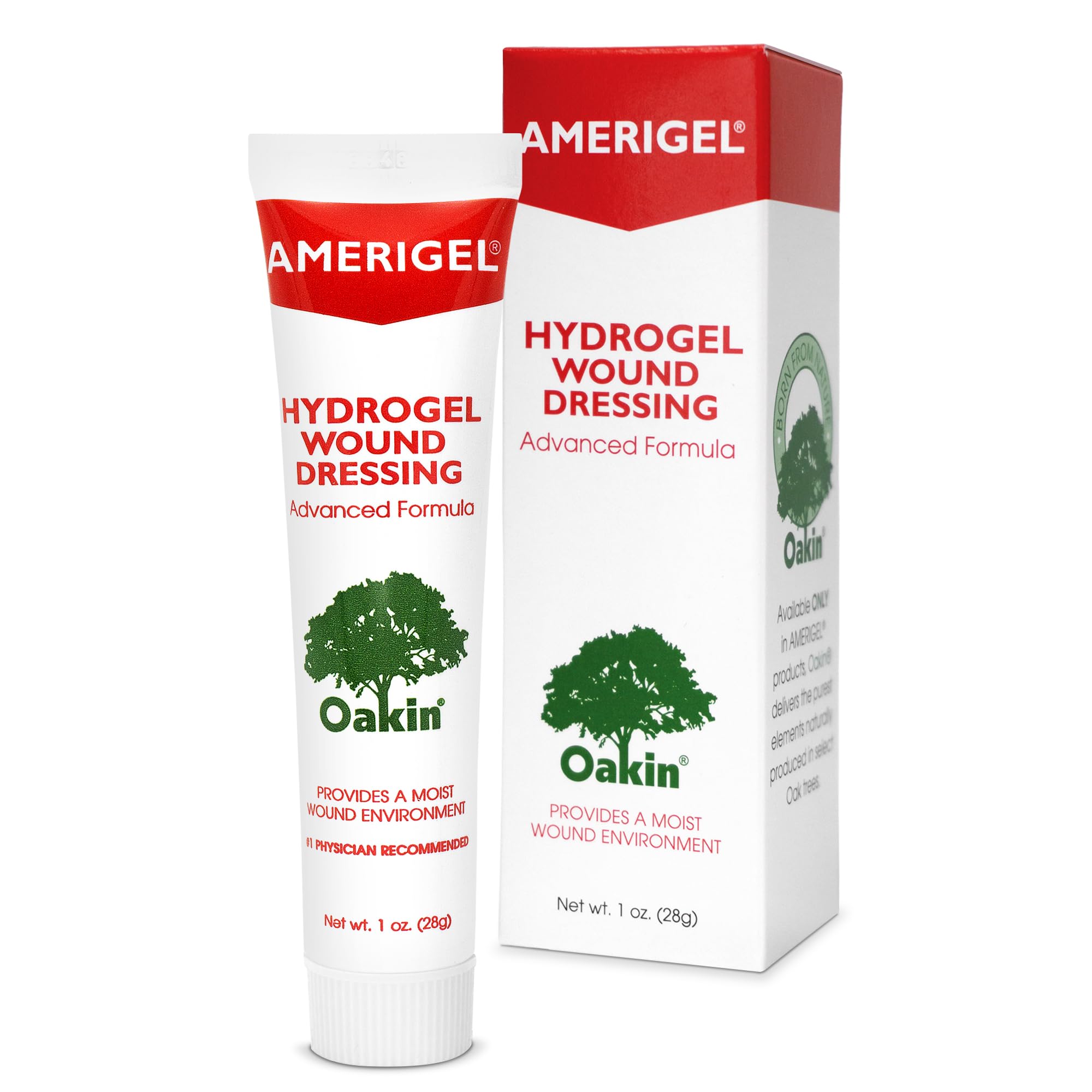
1. AMERIGEL Hydrogel Wound Dressing (1 oz)
Our pick — over 4.5★ from 3,000+ verified ratings; the strongest balance of quality and price.
The one you reach for when a wound has simply stopped closing.
AMERIGEL earns the top spot because it is a hydrogel — water-based, and it liquefies at body temperature. As it warms on your skin, it thins out and coats the entire wound bed rather than sitting in a single blob, so the whole open surface stays damp instead of drying into a crust.
The label backs that up with the indications you actually need. AMERIGEL is labeled for venous stasis ulcers and diabetic skin ulcers — the two most common leg wound types — and also for pressure ulcers at stage I through IV. That range is wider than the terrasil ointment below, which is labeled for bed sores, leg sores, ulcers, burns, cuts, and scrapes but not staged ulcers. If you manage a wound with a nurse or wound-care clinic, the label will line up with what they describe. AMERIGEL has been marketed for wound care since 2003.
The practical part is how little you use. The manufacturer says one application a day does the job, and that it holds moisture longer than saline or glycerin gels (glycerin is a syrupy liquid that draws water to the skin) — so you are not re-dressing the wound every few hours. The 1 oz tube sits comfortably in a first-aid kit, and the listing says it is FSA or HSA eligible (accounts that let you pay for healthcare costs with pretax money).
The honest catch is how long it takes. Buyers report a 2-year open leg wound shrinking at about four weeks, skin filling in around three months, then scabbing — not a one-week fix. You need to keep the wound under a sterile bandage through all of it, and hydrogel is a poor fit for a deep cavity wound because it is built for the surface.
Where it earns its keep
- Water-based hydrogel liquefies at body temperature so it covers the full wound bed
- Labeled for venous stasis, diabetic, and pressure ulcers stage I-IV
- Manufacturer describes one application per day and longer moisture retention than saline or glycerin gels
- FSA and HSA eligible wound care supply
The parts worth knowing upfront
- Healing is measured in weeks and months, not days — owners mention a 2-year wound took about three months to fill in
- Hydrogel is not made for deep or severe cavity wounds
- Skin reactions are reported both ways — some find it gentle, some feel stinging
Settle here if: you have a stalled leg, foot, or pressure ulcer and want the format that keeps the wound bed damp all day.
Look past this one if: the wound is a deep, narrow cavity, where a hydrogel cannot reach.
2. terrasil Wound Care 3X Healing Ointment (0.5 oz)
A half-ounce tube that lets you find out whether the formula suits your skin before you commit.
At 0.49 ounces, this is the smallest container on the list — against 3.99 ounces for the TriDerma cream below, that is a hair under an eighth of the mass. Treat it as a pocket-size starter for a small or new wound, not a long-haul supply. Anyone dressing a real leg ulcer every day will finish it quickly.
What you get for that size is a serious formula. terrasil leans on Allantoin as its active ingredient (a skin protectant — it sits on the surface and shields the skin while it repairs), and pairs it with Activated Minerals, jojoba oil, and calendula. The company claims the barrier kills 99.99 percent of bacteria around the wound, and customers note noticeable relief in 2 to 3 days. It is paraben-free, alcohol-free, dye-free, and fragrance-free, and the listing cites dermatologist testing and hypoallergenic approval for sensitive skin..
Painless application is what wins people over. Reviewers point out relief without the sting that other wound products produce, and shoppers say new tissue filling the wound where surgery had been discussed. Around the house it works on legs, backside, feet, and hands, and it is FSA and HSA eligible.
The honest limitation is that for all its barrier strength, terrasil does more for surface protection than for the kind of deep, slow venous ulcer the AMERIGEL hydrogel is indicated for. The listing says most buyers see results in two to three days, but a genuine ulcer is a longer project than that. Finish the tube, then decide whether the 1.7 oz jar suits you better.
The size math: at 0.49 ounces this tube holds a fraction of what the TriDerma cream does, so it suits testing the formula or a small wound, not a months-long dressing routine.
Start here if: you are brand-new to wound creams and want a low-commitment tube that is unlikely to sting.
Size up instead if: you are dressing a leg ulcer daily and need a container that lasts.
3. TriDerma MD Pressure Sore Relief Healing Cream (3.99 oz)

Built for skin that breaks down just from lying still.
Two skin protectants — Allantoin and Dimethicone (a silicone that forms a breathable film on the skin) — inside a non-greasy base with shea butter, colloidal oat, calendula, and vitamins A and D. The listing builds it specifically for wheelchair users, prosthetic wearers, and bedridden patients, so the design target is prevention as much as repair. That focus is narrower than the AMERIGEL hydrogel, which is labeled for staged ulcers.
Absorption is the reason it works day to day. It catches quickly, so you can apply it before sitting on a bed sore cushion or fold it into a bed sore prevention routine, instead of leaving a slick layer that never sinks in. It is also free of fragrance, parabens, steroids, sulfates, mineral oil, and phthalates — the list that matters if the skin around a wound has gone thin and reactive.
The company behind it is worth a line. TriDerma has made skincare under a US, women-owned brand since 1992, and the formula centers on its proprietary AP4 Aloe Vera Gel Complex — the listing says the AP4 complex naturally contains more than 200 compounds.. It is described for nurses, caregivers, and home health aides, and it is FSA eligible.
Usage advice is where the truth sits. Buyers report pressure sores clearing in about 5 days, with one account of the skin settling within 6 to 10 hours. Reviewers also note a standard-size tub is convenient for daily all-over use but does not last long, and a couple of buyers feel it costs too much for what you consume. It is a strong cream; it is just not cheap to use from head to toe every day.
Why caregivers keep it stocked
- Two skin protectants — Allantoin and Dimethicone — in a non-greasy, fast-absorbing base
- Built for wheelchair users, prosthetic wearers, and bedridden patients
- Fragrance-free, paraben-free, steroid-free, sulfate-free, mineral-oil-free, and phthalate-free
- TriDerma has been making it since 1992 and it is FSA eligible
What to weigh against it
- Regular daily use burns through a tub quickly
- Several buyers feel the cost is high for how much you apply
- It is aimed at pressure-sore skin, not the venous ulcer a hydrogel handles
The right call for: anyone managing a person who cannot shift position easily and needs ongoing skin protection.
Keep looking if: your wound is a weeping venous ulcer rather than skin at risk of breakdown.
4. terrasil Wound Care 3X Healing Ointment (1.7 oz)

Same proven formula, scaled up for the weeks a real ulcer takes.
This carries the identical terrasil Wound Care 3X formula as the 0.5 oz tube — Allantoin plus Activated Minerals, jojoba oil, calendula, no parabens, alcohol, dye, or fragrance — in a 1.7 oz container. The 99.99 percent bacteria-barrier claim is the same. What changes is how far it stretches: at up to 3 applications a day, the compact tube runs dry long before a slow wound is done. For a longer course, this is the smarter buy than the 0.5 oz tube.
Where this one separates itself is the longer timeframe. Owners mention new healthy tissue filling a surgery wound so large that further surgical cover had been on the table, and customers note fast healing with minimal scarring plus easy application that avoids the stinging other products cause. For an ongoing leg or foot wound, that combination — one formula you can trust daily over months — is the reason to buy the larger size.
Application is straightforward. Wash and clean the area first, dry it, then apply a thin layer up to 3 times daily until the skin improves, and cover with a bandage if needed. It is made in the USA and FSA and HSA eligible.
Two things to know before you buy. This is a surface ointment, so a deep cavity wound needs a different approach. And if scar appearance is your main concern, reviewers point out the improvement there is modest even when healing moves fast — the formula shines on closing wounds, not on fading old marks.
Same formula, longer run: the 1.7 oz jar is the version to pick if you expect to be applying an ointment up to 3 times a day for weeks rather than days.
Best for: a wound you expect to treat daily for weeks or months, where running out mid-treatment is the real frustration.
Not the one if: you want a hydrogel that coats a weeping ulcer rather than an ointment that sits on top of it.
5. iShanCare Diabetic Wound Ulcer Cream

The plant-based balm for legs that are swollen, red, and slow to settle.
This one goes after the redness, not the depth. You have a leg sore under tissue breakdown and swelling, and the skin around it is bright red and hot. Shoppers say redness gone the next day on legs where cheaper creams had barely helped. — that immediate visible change is the reason the accounts stand out.
The formula is homeopathic (built from plant and mineral ingredients rather than a single drug active), and the label lists 2 percent calendula as the active alongside cullen corylifolium seed, calamus draco willd, eucalyptus radiata, lemongrass, sesame oil, and beeswax. Calendula repeats across this list — the TriDerma cream above centers on it too, and so does the terrasil ointment. Buyers describe the composition as smooth and non-sticky, so it glides on instead of tugging at a tender leg, and the listing calls it mild enough for bedridden patients, children, adults, and the elderly.
Two useful details sit in the fine print. The manufacturer offers a 365-day money-back guarantee if the cream does not do the job for you. And at 1.76 ounces, this is a genuinely small container, which several buyers report will not last through a long treatment course.
Be clear about what this can and cannot do. It is a supportive topical, not a wound-management plan. If you have diabetes and a foot ulcer, that wound needs proper evaluation — a cream will not stand in for that, and no cream here should be treated as a cure. Call your clinician before switching anything, especially if the skin around a wound is spreading or your symptoms are getting worse.
The honest read: the strong point here is visible improvement in redness and a smooth, gentle texture. The recurring grumble is price relative to how little is in the container.
Worth trying when: redness and swelling around a leg sore are your main daily concern and you want a gentle, plant-based balm.
Do not rely on it alone if: you have a genuine venous or diabetic ulcer — that needs a proper wound-care plan, not a cream.
Know the Specs
Hydrogel versus ointment
A hydrogel carries water. Applied to a leg ulcer it warms to body temperature, thins, and spreads across the wound bed — useful where the whole open surface needs coating. An ointment is wax or oil-based, sits thicker on top, and often leaves a protective layer. That suits a pressure sore or a shallow wound on skin that rubs. If you are unsure which you are looking at, pour a little of the product on the back of a hand: if it thins and runs, it is a gel.
Wound types and the stage label
The stage number on a wound product tells you how deep a pressure ulcer has become, and the depth decides your dressing choice — stage I is surface redness, stage IV reaches deeper tissue. Venous, diabetic, and pressure ulcers are different conditions, and each has its own standard care. Read the label indications and match them to the actual wound. If the listing does not name your wound type, that is worth checking with your clinician before you start.
What the actives actually do
Allantoin and Dimethicone are skin protectants — they sit on the surface and shield it while the skin does its own repair. Calendula is a botanical included as an active in the iShanCare formula at 2 percent and in the TriDerma and terrasil listings as a supporting ingredient. None of these replace clinical wound care for an ulcer that has stalled.
Reading the size for daily use
Small tubes and compact jars make sense for testing and for small wounds. A leg ulcer dressed daily for weeks will move through far more product than the container suggests. Before you buy, work out a rough daily amount and compare it to the container size, then decide whether the compact tube or the full tub is the right place to start.
Common Questions
Which cream is best for a leg ulcer that has stalled for months?
Can I use a leg ulcer cream on a diabetic foot ulcer?
Is a hydrogel or an ointment better for a venous stasis ulcer?
How often should I apply a wound cream to a leg ulcer?
Will a leg ulcer cream sting on broken skin?
Can I use these creams around a bandage or a dressing?
How long does a tube of leg ulcer cream actually last?
When should I stop using a cream and see a doctor?
Are these leg ulcer creams eligible for FSA or HSA spending?
Does a cream help the skin around the ulcer as well as the wound itself?
The Bottom Line
After comparing the formulas, the labels, and what owners mention, the AMERIGEL Hydrogel Wound Dressing is the strongest pick overall for a stalled leg ulcer — it is a genuinely indicated hydrogel for venous stasis and diabetic skin ulcers, applied once a day and covered under a bandage. The terrasil ointment is the better fit if your priority is a protective barrier that is easy to apply, with the compact 0.5 oz tube for testing and the 1.7 oz jar for the long haul. TriDerma remains the one to reach for in bedridden and wheelchair care, and the iShanCare cream stands out for redness and swelling, with the manufacturer’s 365-day money-back guarantee behind it.
One honest nudge before you decide. You do not need a different cream for every wound type you will meet — pick the one that matches most of your situation and add a second only if a specific problem keeps coming back. And whichever you choose, clean the wound, apply a thin layer, cover it, and give it weeks rather than days. This is the comparison list of cream for leg ulcers picks that actually support a stalled wound, so choose by wound type and by format, not by label color.
How we choose
We do not accept paid placement. Every pick is matched to a real buyer and a real use-case; we do not hands-on test units.
Sources
Specifications: manufacturer listings and product documentation. Review insights: verified customer reviews, as of October 2026. Pricing: not shown on this page (it changes often); check the current price via the retailer link.
As an Amazon Associate, Aappliancez earns from qualifying purchases. This does not affect which products we feature.