Disclosure: Some links in this post are affiliate links. As an Amazon Associate I earn from qualifying purchases, at no extra cost to you. Learn more
Specs are compiled from manufacturer listings and verified buyer reviews and can change over time — please confirm the key details on the product page before buying.
If you want a phone that makes calls, sends texts, runs your apps, and holds a charge for days without draining your wallet, you do not need a flagship. The trick is knowing which basic Android phones actually deliver on battery, storage, and screen quality. This guide ranks nine open up Android phones by what they genuinely do well and where each one asks you to compromise.
This guide is built by comparing the manufacturers’ published specifications and the patterns across verified customer reviews, so you get each pick’s real strengths and trade-offs instead of marketing spin.
Your phone needs to last through your day, show text you can read without squinting, and work on your carrier. The specs that decide that are battery capacity in milliamp-hours (mAh — the size of the phone’s fuel tank), screen refresh rate in hertz (Hz — how many times per second the picture redraws), storage in gigabytes, and which carriers each phone truly works on. Match those specs to your day: hours of calls, screen-on time, and which carrier you use.
Top Picks


How To Choose The Best Basic Android Phones
A basic Android phone lives or dies on three things: battery capacity, screen quality, and whether it works with your carrier. Get them wrong and you are charging by noon or holding a phone your carrier will not activate.
Battery capacity and real talk time
Battery capacity is measured in milliamp-hours, or mAh — think of it as the size of the phone’s fuel tank. A 5000mAh battery is the standard for all-day use. A 10600mAh or 15000mAh cell, found on rugged models, can stretch into multiple days between charges. Look at the rated talk time in hours too, since that tells you how long a call actually runs before the battery quits.
Screen refresh rate and display type
Refresh rate, measured in hertz (Hz), is how many times per second the screen redraws. A 60Hz screen is the old baseline; 90Hz and 120Hz make scrolling and typing feel noticeably smoother. Display type matters too: AMOLED panels produce deeper blacks and richer colors than standard LCD, though both work fine for calls and texts.
Carrier compatibility is not optional
Many basic Android phones sold as “international models” work on GSM networks like T-Mobile and its MVNOs but not CDMA carriers like Verizon or AT&T. Some phones are locked to a single network entirely. Check the carrier list for each phone before you buy, because a phone that cannot activate on your network is useless no matter how good the specs look.
Storage and expansion
Internal storage holds your photos, apps, and videos. Look for at least 128GB if you take a lot of pictures. Many of these phones also accept a microSD card for expansion, which lets you add space later without buying a new phone. Some dual-SIM models share a slot between the second SIM and the memory card, so you cannot always run both at once.
Side-by-Side Comparison
| Model | Best For | Battery Capacity | Storage | Display | Amazon |
|---|---|---|---|---|---|
| Google Pixel 7 5G★ Best Overall | Best camera and software experience | 4277 mAh | 256 GB | 6.3″ OLED, 90Hz | Amazon |
| TCL 60 XE NXTPAPER 5GBest Display | Eye-friendly reading and eye strain reduction | 5010 mAh | 128 GB | 6.8″ NXTPAPER, 120Hz | Amazon |
| Samsung Galaxy A16 5GBest Talk Time | Long talk time on a budget | 5000 mAh | 128 GB | 6.7″ Super AMOLED, 90Hz | Amazon |
| T-Mobile Revvl 7 Pro 5G | T-Mobile and Metro users wanting big storage | 5000 mAh | 256 GB | 6.5″ AMOLED, FHD+ | Amazon |
| FOSSIBOT F101P Rugged | Outdoor work and extreme volume needs | 10600 mAh | 64 GB | 5.45″ FHD+ | Amazon |
| Moto G Power 5G 2024 | All-around everyday value | 5000 mAh | 128 GB | 6.7″ FHD+, 120Hz | Amazon |
| Motorola Moto G15 4G LTE | T-Mobile network users wanting a big battery | 5200 mAh | 256 GB | 6.72″ IPS LCD | Amazon |
| Samsung Galaxy A26 5G | Premium AMOLED and long update support | 5000 mAh | 256 GB | 6.7″ Super AMOLED, 120Hz | Amazon |
| Blackview Rock 2 Pro 5G | Extreme battery life and outdoor durability | 15000 mAh | 256 GB | 6.67″ LCD, 120Hz | Amazon |
Detailed Reviews
1. Google Pixel 7 5G 256GB
Our pick — 4.0+★ from 4,000+ verified ratings; the strongest balance of quality and price.
The camera-first pick that packs 256GB and five years of updates into one of the sharpest panels here
You get the sharpest text and the most storage for photos on this list with the Pixel 7 5G. Its 6.3-inch display packs 1421 pixels per inch (ppi — the number of pixels crammed into each inch of screen), so small text stays crisp. The 256GB of storage is double what the TCL 60 XE NXTPAPER 5G offers, which means more room for videos and apps. The wide and ultrawide rear lenses bring up to 8x Super Res Zoom, so you can crop in on a distant subject without losing the whole shot. Battery is rated at 4277 mAh (milliamp-hours — the size of the phone’s fuel tank). That is smaller than most picks on this page, and the talk-time rating comes in at 15 hours — a fraction of the 350 hours the Samsung Galaxy A16 5G claims.
The Tensor G2 chip and Titan M2 security chip (Google’s dedicated safe for your passwords and data) keep the software clean and bloat-free, which is exactly what buyers switching from a bloated carrier phone tend to notice first. The IP68 rating means it survives dust and water immersion, and the front glass is Corning Gorilla Glass Victus, a scratch-resistant sheet. What wins people over, though, is the camera processing — daylight shots land close to what an iPhone produces, and low-light shots come out genuinely useful rather than muddy. The fingerprint reader under the screen is the recurring gripe: it misses in bright sun and low light, and face open up is weak enough that it is not a real backup. For most buyers, that means a PIN or pattern is the reliable path in.
Where this pick earns its spot at number one is the balance: a 90Hz OLED panel, an IP68 build, 256GB of storage, and software support that runs for five years. The 256GB of storage is double the TCL 60 XE NXTPAPER 5G’s 128GB — storage: 256 GB versus 128 GB. If you store a lot of photos and apps, that headroom matters. The honest trade-off is battery: the 4277 mAh cell here is smaller than any other pick on this list, and the 15-hour talk-time rating is the lowest here. Heavy users will want a charger at the desk. Everyone else gets a camera phone that punches well above its tier.
What buyers brag about
- 256GB storage, double the TCL 60 XE’s 128GB, so you stop deleting photos to make room
- 1421 ppi on a 6.3-inch OLED panel keeps text and detail crisp
- Clean Android with no carrier bloatware — a repeated favorite among buyers
- IP68 rating means dust and water resistance, plus Gorilla Glass Victus scratch protection
Where it asks you to compromise
- 4277 mAh battery and 15-hour talk time are the lowest of the nine picks here
- Fingerprint reader is unreliable in direct sun and darkness
- No flash on the camera
- Face open up is weak enough that most people default to a PIN
Reach for this if: you prioritize camera quality and clean software over maximum battery life, and you want 256GB in a pocketable 6.3-inch body.
Look elsewhere if: you need multi-day battery endurance — the 15-hour talk time rating will not get you through heavy use.
2. TCL 60 XE NXTPAPER 5G
A 120Hz paper-texture screen built for eyes that get tired of typical bright phone displays
If your eyes ache after a long evening of scrolling, the TCL 60 XE is the pick for you. Its 6.8-inch NXTPAPER 3.0 display has a matte, glare-free surface that mimics paper, and the Eye Care Assistant automatically adjusts brightness and color temperature as conditions change. A dedicated side button flips between four modes — Standard, Ink Paper, Color Paper, and Max Ink — so you get vibrant color for video, a reading-friendly setting for books, and a paper-like view that conserves battery when you need it. The refresh rate is 120Hz (the screen redraws 120 times a second), which keeps scrolling smooth. That beats the Pixel 7 5G’s 90Hz panel — 120 Hz versus 90 Hz on the Google. The 5010 mAh battery also edges the Pixel’s 4277 mAh, and the 32MP front camera is a clear step up from the Pixel’s 12MP selfie shooter.
Under the hood sits a MediaTek Dimensity 6300 processor with 8GB of RAM and 8GB of virtual memory, which means the phone can juggle multiple apps at once without reloading them constantly. Storage lands at 128GB, expandable up to 2TB with a memory card — a useful ceiling if you plan on hoarding photos and video. Buyers report the phone feels fast in daily use: “I bought this phone against what people said and actually love it. It’s fast, great battery life and has all the features I need in a phone. I would buy again without hesitation.” The 5010 mAh battery carries 18W fast charging and reverse charging, so you can top up another device from the phone itself. The 50MP rear camera captures fine detail, and 360° Horizon Lock keeps video steady when you are walking and filming.
Here is the honest catch. The paper-like surface is the whole point, but it comes with a trade-off: touch sensitivity is reduced enough that a tap occasionally registers as a swipe, and the wake gestures are unreliable. A few users also report the display can be difficult to read in certain modes if their vision is weaker, and there is no battery percentage readout in the UI. Those are real annoyances, not deal-breakers — the bulk of buyers find the eye-friendly screen worth it. This one is for readers, late-night scrollers, and anyone who has ever turned down screen brightness just to make text stop stinging.
The eye-comfort angle: the NXTPAPER 3.0 display is genuinely different from a standard LCD or OLED. It reduces glare, adjusts to ambient light, and gives you four distinct screen personalities through a physical side button — a level of control no other pick here offers.
What you give up: the reduced touch sensitivity means you need a firm, deliberate tap rather than a light brush. If you are used to a glass-smooth smartphone screen, the paper texture feels different for the first day or two.
The eye-comfort champion: if your eyes fatigue after hours of phone use, no other pick here addresses that problem the way this one does.
Think twice if: you want a glass-smooth touch surface — the matte paper texture reduces sensitivity, so taps sometimes get misread as swipes.
3. Samsung Galaxy A16 5G 128GB
A 6.7-inch AMOLED screen and a talk-time rating that dwarfs everything else on this list
Talk time is where the Samsung Galaxy A16 5G separates itself. Its rated talk time is 350 hours, compared to the Pixel 7 5G’s 15 hours — 350 hours versus 15 hours on the Google. That gap matters if you spend hours on the phone or want a device that simply refuses to die. The 6.7-inch Super AMOLED panel runs at 90Hz refresh, with a resolution of 1080 x 2340 pixels and 385 ppi density, which keeps text crisp and colors rich. The 5000 mAh battery is rated by Samsung for about two days of average use. The body is water-resistant, and the fingerprint reader sits under the display. A 50MP main camera handles the everyday shots.
Before the box even arrives, know this: the model is an international version. It works with T-Mobile, Verizon, AT&T and their prepaid partners, but new lines on most US carriers are only supported on T-Mobile, because many carriers will not recognize an international IMEI (the phone’s unique identity number that a network checks before activation). It also does not support eSIM, so you need a physical SIM card. And on the dual-SIM model, you can run one SIM card plus a microSD card, but not two SIMs and a memory card at the same time. Buyers who accept that trade-off report solid results — the display comes up bright and clear, the battery carries through the day, and the setup with a physical SIM takes about 25 minutes including data transfer.
The honest caveat here is speed: at times the phone lags, especially under heavier loads. Some buyers describe the overall experience as mixed — quality and reliability both get split verdicts, and a few users hit problems from the very first week. That is why this pick sits at number three rather than higher. If you want a big AMOLED screen and a talk-time rating that reaches into the hundreds of hours, this one delivers. If smooth, snappy performance is a higher priority than talk endurance, the Moto G Power 5G may suit you better.
The headline number: 350 hours of rated talk time against 5000 mAh of capacity. That is an endurance-first profile.
Read the fine print: international model, no eSIM, and iffy new-activation support outside T-Mobile. The dual-SIM slot shares space with the memory card.
Choose this if: you are on T-Mobile or an MVNO like Metro, Mint, or Visible, and you want a big AMOLED screen with the longest claimed talk time here.
skip it if: you need a new line on AT&T or Verizon — international IMEIs are often not accepted for fresh activations there.
4. T-Mobile Revvl 7 Pro 5G 256GB
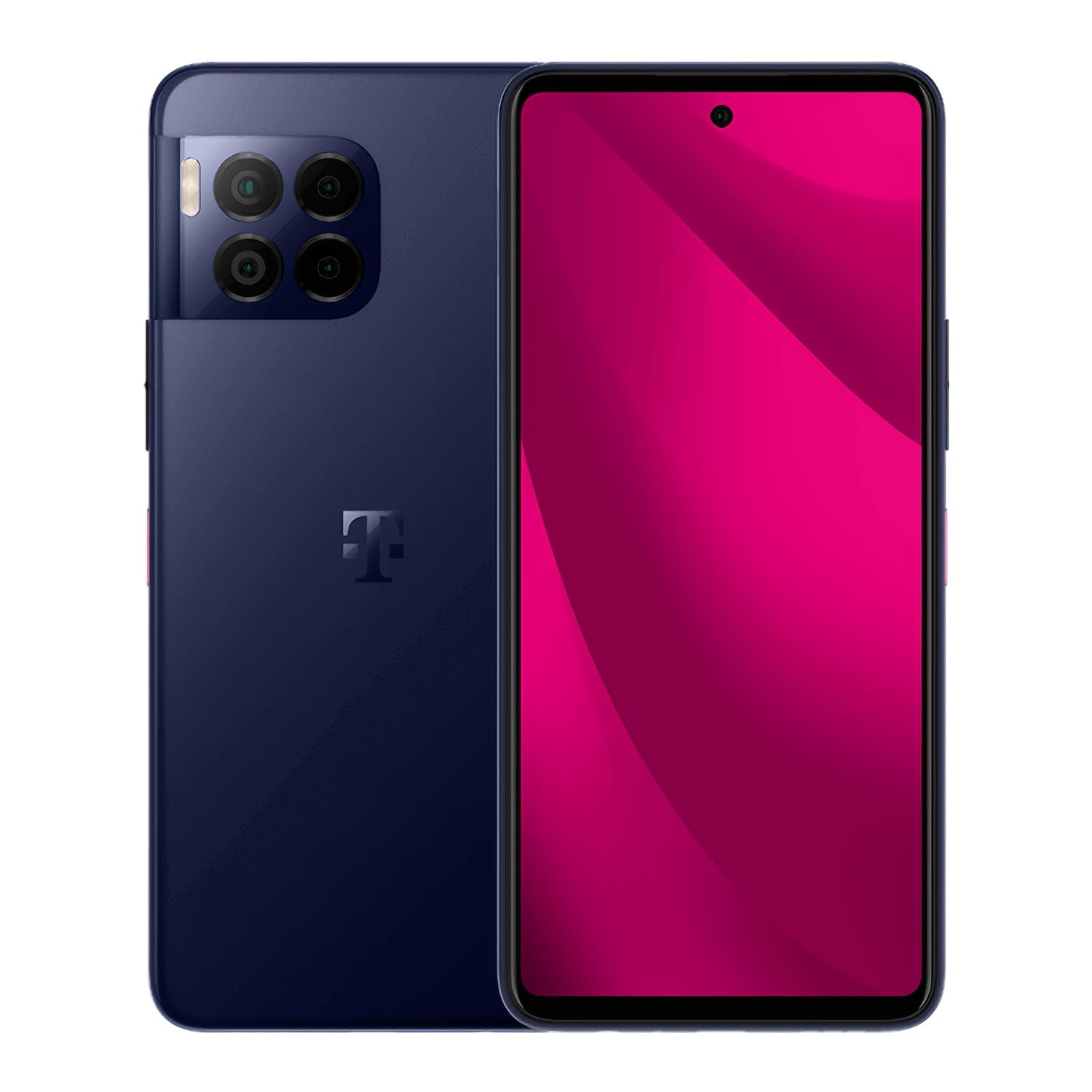
A T-Mobile-first phone with 256GB of storage and a Snapdragon chip pushing the apps
Anyone already tied to T-Mobile or Metro should look closely at the Revvl 7 Pro. It carries 256GB of built-in storage — the same as the Pixel 7 5G — and a Qualcomm Snapdragon octa-core processor for smooth multitasking. The 6.5-inch AMOLED panel runs at 1080 x 2436 resolution with 372 ppi, and the 5000 mAh battery supports fast charging. Owners mention the setup process is short: swap the SIM, copy data, done. The size is a recurring highlight — the screen is big enough for comfortable reading and video, and the blue finish earns its share of compliments.
Here is what you have to know before buying: this phone will not work on Verizon, AT&T, Cricket, or any CDMA network. It is built specifically for T-Mobile and Metro by T-Mobile, and it will also run on other carriers that piggyback on T-Mobile’s towers — Mint Mobile, Visible, Google Fi, Tello, and StandUp Wireless among them. Data compatibility is the single biggest complaint in the reviews, and it is the reason this phone only makes sense for one audience. If that audience is you, you get a 256GB phone with a Snapdragon chip and a clean, big screen — a genuinely good package.
The trade-off worth knowing: a few buyers have reported software update surprises after the first few weeks, including a launcher crash that required a T-Mobile tech to resolve. There is also no charging block in the box, and the bundled USB-C cable is shorter than most people expect. Neither is fatal — the phone has been widely used happily on T-Mobile’s network, and wireless charging quirks aside, it delivers on the big-screen, big-storage promise. For Metro and T-Mobile lifers, the value is real. For everyone else, keep reading.
Your match if: you are committed to T-Mobile or Metro by T-Mobile and want 256GB plus a Snapdragon processor without moving to a flagship price tier.
Not your match if: you are on Verizon, AT&T, or Cricket — this phone cannot activate on those CDMA networks at all.
5. FOSSIBOT F101P Rugged Call Phone
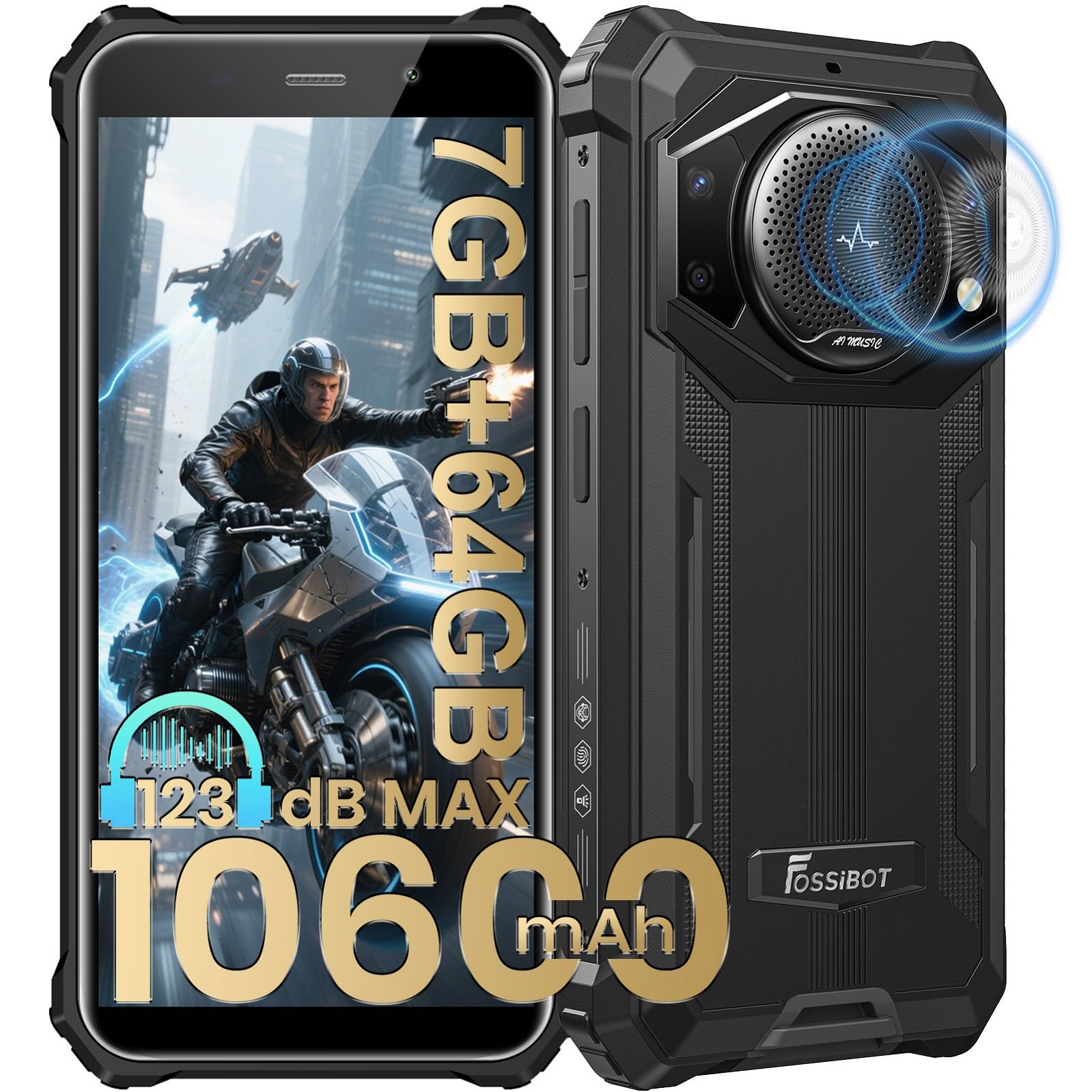
A 123dB speaker and a 10600mAh battery built for the loudest, toughest jobs
You will hear a call across a job site with the FOSSIBOT F101P’s 123dB speaker — 123 decibels is roughly the volume of a rock concert. The 10600 mAh battery is roughly twice what most phones here carry, and FOSSIBOT rates it for 1050 hours of standby, 94 hours of calls, and 32 hours of MP3 playback. Rugged credentials are backed up by an IP68 waterproof rating, meaning it survives a 1.5-meter soak for up to 30 minutes, plus an expectation of surviving 1.5-meter drops and temperature extremes. The 24MP main camera, 8MP front camera, 5MP macro lens, and 0.3MP bokeh lens cover the basics, with underwater photography supported.
Software is Android 13, and the phone runs on a seven-core memory setup (4GB built-in plus 3GB virtual, for a total of 7GB) with 64GB of internal storage that expands to 512GB via microSD. The 5.45-inch screen keeps the phone compact by 2025 standards. Buyers love the battery life and volume: “This is the best Android phone we have ever purchased. It is rugged and takes falls with no problem. I am loving that the charge usually lasts a full week or more.” For daily commuting, rural work, or camping trips, that kind of runtime means leaving the power bank at home.
The catch is size and software polish. This is a bulky phone — the 10600 mAh battery has to go somewhere — and the user experience is not as smooth as a mainstream brand. Customers note the fingerprint reader is unreliable, and one navigation bug required switching to gesture controls. A handful of reviews describe buggy performance, though the volume and battery-life praise far outweighs it. For anyone who needs a phone that survives a drop to concrete and can be heard over machinery, the trade-offs are worth it. For everyone else, a slimmer phone likely wins.
Built for the hard job
- 123dB speaker makes calls audible almost anywhere
- 10600 mAh battery with 1050-hour standby rating means charging weekly, not nightly
- IP68 waterproof, 1.5-meter drop-proof, survives temperature extremes
- Reverse OTG charging turns the phone into a power bank for other devices
What you carry
- The big battery makes this phone noticeably bulky in a pocket
- Fingerprint reader is unreliable per buyers
- Android 13 is a step behind the newer versions on other picks
- 64GB built-in storage fills fast unless you add a microSD card
Made for: construction crews, outdoor workers, and anyone who needs a phone that can be heard over machinery and dropped on concrete without flinching.
Consider size: the 10600 mAh battery is the reason it lasts a week, and the reason it feels heavy in a jeans pocket.
6. Moto G Power 5G 2024

The balanced everyday phone — 120Hz screen, 50MP OIS camera, and a battery that just works
The Moto G Power 5G is the pick if you want calls, photos, video, and apps handled well with no weak spot. It runs a 6.7-inch FHD+ display at 120Hz with Dolby Atmos stereo sound, so videos and games look and sound sharp. The 50MP rear camera has Optical Image Stabilization (OIS — a small motor that physically counteracts your hand shake, so low-light shots come out sharper). The 5000 mAh battery is rated at 24 hours of talk time and two days of average use, and 30W TurboPower charging tops it up quickly. Under the hood, the MediaTek Dimensity 7020 octa-core processor handles everyday apps without drama, and 128GB of storage expands up to 1TB via microSD.
Where this phone separates itself is refinement. Motorola’s build includes a fingerprint-resistant vegan leather back cover, plus an always-on display and built-in GPS. Buyers consistently describe it as the phone that does everything they need — 3-finger screenshots and shake-to-flashlight shortcuts get pulled out as favorites, and Motorola’s lightweight Android skin with no carrier bloat earns frequent praise. The speed, storage, and camera all land at a level that rivals phones costing twice as much, and setup with a fresh SIM or eSIM is painless.
Two honest notes. Some users report occasional glitches, and a few have hit friction with Gemini AI draining battery when enabled — turning that feature off restores normal runtime. Sequential OS updates during setup can also take a while. Neither is a reason to walk away; both are things to know going in. For buyers who want one phone that works every day, this is the value benchmark. Compared to the FOSSIBOT F101P, it is slimmer, has a bigger screen, and brings a fresher Android version — though the FOSSIBOT lasts roughly twice as long per charge.
Everyday balance: 120Hz display, 50MP OIS camera, 5000 mAh battery, MicroSD expansion up to 1TB, stereo speakers, always-on display. There is no weak corner here.
Small print: sequential OS updates take time on first boot, and turning off Gemini AI preserves the two-day battery rating. Buy a case and screen protector — the glass back scratches.
The safe pick: if you want one phone that just does everything well without a single standout flaw or a flagship price tag, this is the one.
Not the pick if: you need serious multi-day battery life or a screen you can read under heavy glare — the FOSSIBOT and TCL handle those needs better.
7. Motorola Moto G15 4G LTE XT2521-2

A T-Mobile-friendly phone with 256GB and a 5200 mAh cell that lasts two days under radio use
If you are on T-Mobile, Metro PCS, Mint Mobile, or Tello, the Motorola Moto G15 is the value play for storage and endurance. It carries 256GB of internal storage with 4GB of RAM, a 5200 mAh battery — the second-largest in this group after the rugged phones — and a 6.72-inch IPS LCD at 1080 x 2400 with 392 ppi density. That bigger cell stretches further per charge than the Moto G Power 5G’s 5000 mAh, and reviewers point out two full days of heavy use including FM radio playback. The 50MP main camera with dual LED flash handles everyday photos, and there is a 3.5mm headphone jack — a convenience the Pixel 7 5G and several others here skip entirely.
The software runs Android 15 on a MediaTek Helio G81 Extreme octa-core processor with 2×2.0 GHz performance cores, which is more than enough for messaging, browsing, maps, and video. Setup is painless according to buyers — one described dropping a Mint Mobile SIM straight in and having it work with no calls to the carrier. Another switcher from an iPhone said the SIM swap was the whole story: “I was tired of using an iPhone, so I decided to try this phone instead. I’m much happier with it than with my iPhone.” It has dual SIM support, Bluetooth 5.0, FM radio, and expandable memory.
Two things to know. First, this is a 4G LTE phone, not 5G — if you want 5G speed, look higher up on this list. Second, it takes a measured approach to speed: buyers describe it as a little slow but reliable, with excellent storage. That is exactly the trade you make for a phone that lasts two days on a charge. For calls, texts, photos, music, and maps, this is more than enough — and the 3.5mm jack suits anyone who still prefers wired headphones.
Solid for: T-Mobile-network users who want 256GB of storage, a 5200 mAh battery, and a headphone jack in one mid-range package.
Keep in mind: this is a 4G LTE phone, not 5G, and buyers describe it as a touch slow under heaviest loads.
8. Samsung Galaxy A26 5G 256GB

Six Android upgrades and a 120Hz AMOLED panel — the long-game pick of the group
The Samsung Galaxy A26 5G is built for five or six years of use, with up to six major Android upgrades. It ships with up to six major Android upgrades — the longest commitment on this list — plus a 6.7-inch Super AMOLED panel at 120Hz refresh. The Exynos 1280 octa-core processor with 8GB of RAM and a Mali-G68 GPU handles daily apps without drama. The triple rear camera setup includes a 50MP main, 8MP ultrawide, and 2MP macro, with a 13MP front camera that shoots video at 4K. The 5000 mAh battery, IP67 rating, 256GB of storage, and microSD expansion round out a genuinely premium spec sheet.
Buyers upgrading from the older Galaxy A16 — one of the picks above — describe this as a clear step up, with all-day battery and a smooth setup. The One UI 7 software on Android 15 feels modern, and the 120Hz AMOLED panel is vivid and bright. The Mint color adds personality to what is otherwise a conservative, business-grade design. The 25W fast charger in the box is a generic accessory, not Samsung-branded, but it works.
The honest limits: this is an international model, so brand-new carrier activations are generally limited to T-Mobile in the US — most other carriers will not recognize an international IMEI for fresh lines. A small number of buyers have hit network-compatibility frustration on networks that do not accept the phone. The camera is described as good but a step behind the Pixel 7 5G’s processing. Weighed against its five-year update runway and 120Hz AMOLED screen, those trade-offs are reasonable. This pick is for someone who values longevity and premium displays more than instant network flexibility.
Built for the long haul
- Up to six major Android upgrades — the longest update runway in this group
- 6.7-inch Super AMOLED at 120Hz keeps visuals smooth and detailed
- 256GB of storage with microSD expansion for photo hoarders
- IP67 rating means water resistance for rain and spills
What to plan around
- International model — new activations realistically need T-Mobile
- No U.S. manufacturer warranty; seller policy applies
- Camera is a step behind the Pixel 7 5G’s processing
- Uses a shared SIM slot for microSD expansion
The five-year phone: six major Android upgrades plus 120Hz AMOLED make this the pick for someone who buys a phone and keeps it until it dies.
Confirm first: you can activate on T-Mobile or an MVNO before you buy — international IMEIs are not accepted for new lines on most US carriers.
9. Blackview Rock 2 Pro 5G Rugged Phone
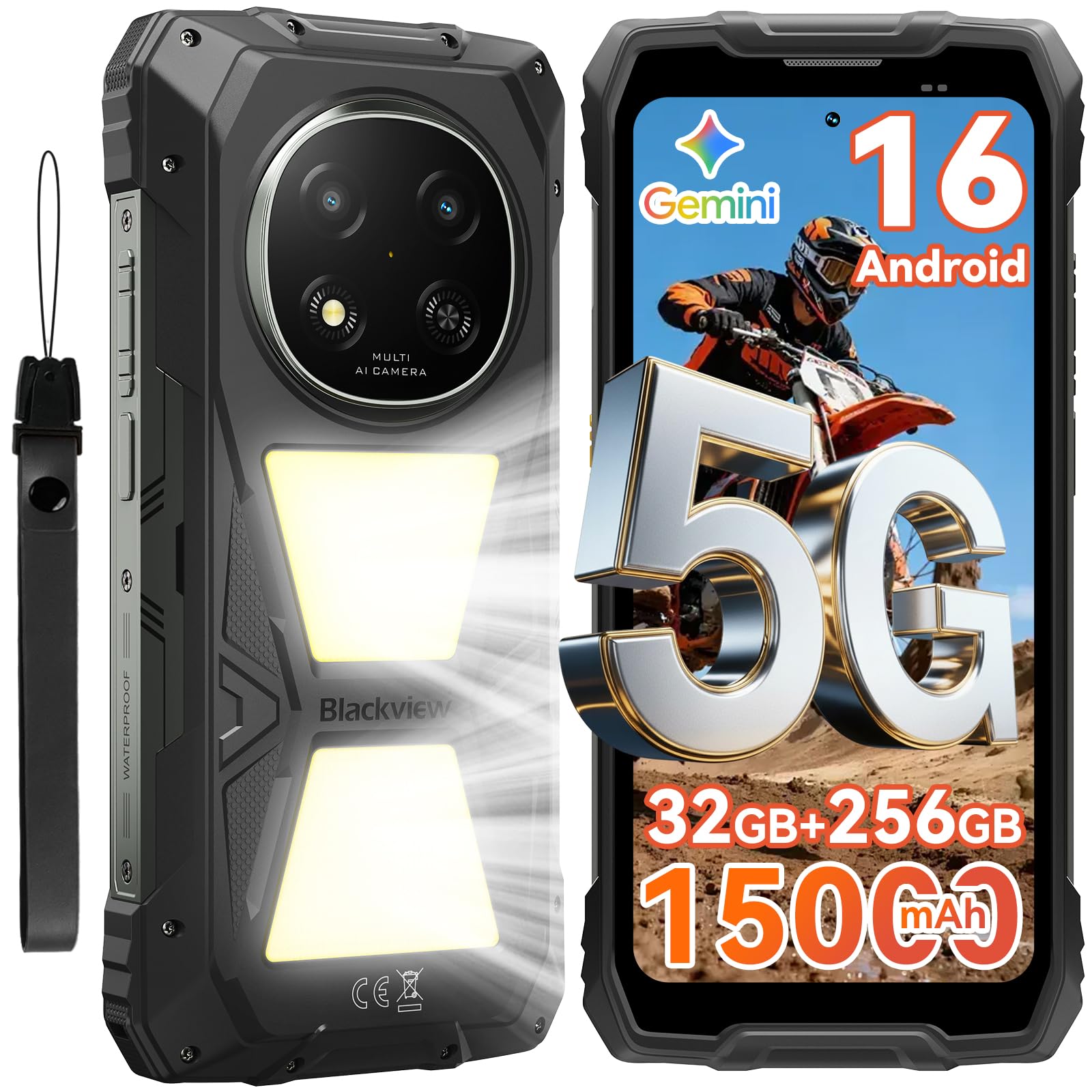
A 15000mAh battery and dual camping light for people who leave the pavement behind
Nothing else on this list comes close to the Blackview Rock 2 Pro’s 15000 mAh battery — the largest here, nearly three times the standard 5000 mAh on the other picks. Blackview rates it for 57 days of standby and 56.5 hours of continuous calls, plus 33W of charging speed. The dual built-in camping light throws 400 lumens from two LEDs, with lighting, SOS, and quick-flash modes for outdoor emergencies. The phone carries both IP68 and IP69K certifications — meaning it survives being soaked in rain and can handle high-pressure water jets — plus a 1.5-meter drop-proof rating from concrete. The 6.67-inch display runs at 2.4K resolution and 120Hz refresh with up to 450 nits of brightness, enough to read in direct midday sun.
Under the hood sits a MediaTek UMS9620 5G chipset and 32GB of memory (8GB physical plus 24GB virtual) alongside 256GB of storage that expands to 2TB via TF card. Android 16 with DokeOS runs the show. The Glove Mode feature lets you operate the screen without taking off work gloves. Buyers rate it as tough and long-winded: one notes that the 15000 mAh battery is a standout, and another reports the phone survived multiple drops without damage. Blackview’s customer support also stands out — one buyer had an out-of-production model replaced with the Rock 2 Pro within 72 hours.
Here is the caveat every serious buyer needs to know: this phone weighs 558g, and the manufacturer explicitly asks you to consider that before purchase. Buyers are split — heavy build feels quality to some, impossible to pocket for others. The 2340 x 1080 LCD panel at 360 ppi is fine, but less rich than the AMOLED panels above. And this is not a phone for the CDMA crowd: it works on GSM carriers like T-Mobile, Mint, MetroPCS, and others, but not AT&T, Cricket, Verizon, Straight Talk, or US Cellular. For a phone that survives a concrete floor, goes a week between charges, and lights your tent at night, nothing here comes close.
Rugged to the core: IP68 and IP69K certifications, 1.5-meter drop-proof, 558g of metal and glass — you know exactly what you are buying.
Carrier reality check: does not work on AT&T, Verizon, Cricket, Straight Talk, or US Cellular. Confirm your carrier is a T-Mobile-tower operation before ordering.
For outdoor pros: 15000 mAh, dual camping light, Glove Mode, and IP69K make this the phone you take camping, to a job site, or up a mountain.
Weight warning: at 558g it is nearly four times the weight of a typical slim phone — pockets will sag, and the manufacturer says so up front.
Know the Specs
Battery capacity and talk time
Battery capacity, written in milliamp-hours (mAh), is the size of the phone’s fuel tank. A 5000 mAh battery is the everyday standard and usually delivers a full day of mixed use. Anything above 10000 mAh sits in rugged territory and can stretch into multi-day or even multi-week use between charges, depending on how often you stream video or use GPS. Talk-time ratings — the hours of continuous calling a manufacturer claims — often run much higher than mAh alone would suggest, because voice calls use less power than video or gaming. A higher talk-time number can still mean weak video performance, so check mAh and talk time together.
Refresh rate and display type
Refresh rate in hertz (Hz) is how many times the screen redraws every second. At 60Hz, scrolling looks fine. At 90Hz or 120Hz, it feels smoother, and typing gives faster feedback. A 120Hz panel like the ones on the Moto G Power 5G, Galaxy A26 5G, and Blackview Rock 2 Pro is a genuine upgrade for anyone who scrolls a lot. Display type matters too: AMOLED panels (on the Samsung A16 5G, Revvl 7 Pro, and Galaxy A26 5G) create richer colors and deeper blacks than IPS LCD, and a NXTPAPER surface on the TCL 60 XE gives reading-friendly glare reduction no LCD or AMOLED panel matches.
Storage and memory
Internal storage holds your apps, photos, videos, and messages. 64GB is workable but tight; 128GB is the comfortable everyday floor; 256GB gives you real headroom for videos and downloaded media. RAM (random-access memory) is what keeps open apps from reloading — 4GB is fine for calls, texts, and one or two apps at a time, while 8GB keeps wider multitasking smooth. Several phones here let you add a microSD or TF card for more storage, sometimes up to 1TB or 2TB — but many share a slot with the second SIM, so running two lines plus an expansion card at once is not always possible.
Carrier compatibility and IMEI
Every phone has an IMEI — a unique identity number the carrier checks before letting the phone on its network. International models often carry an IMEIthat U.S. carriers will not recognize, which is why some phones only activate on T-Mobile for new lines. If you already have an active SIM, most international models drop into an existing line with no drama. CDMA networks (Verizon, AT&T, Cricket, US Cellular, and Straight Talk, depending on the model) do not work with every phone on this list, so confirm the phone’s stated carrier list before you buy. GSM-only phones like the Revvl 7 Pro, Moto G15, and Blackview Rock 2 Pro work best on T-Mobile or MVNOs that ride T-Mobile’s towers.
Common Questions
Will an open up basic Android phone work with my carrier?
Does the Samsung Galaxy A16 5G really last 350 hours of talk time?
What is NXTPAPER on the TCL 60 XE and is it worth it?
How much storage do I need on a basic Android phone?
Can the Blackview Rock 2 Pro really last 57 days on standby?
Is the Google Pixel 7 5G worth it over the cheaper options?
Will I be able to use two SIM cards and a microSD card at the same time?
How long will a basic Android phone keep getting software updates?
What does IP68 or IP69K mean on a rugged phone?
Why do some of these phones say they have “32GB of RAM” when they only have 8GB?
The Bottom Line
For most people, the best Basic Android Phones pick is the Google Pixel 7 5G — it holds the cleanest software, the strongest camera processing, and 256GB of storage in a compact 6.3-inch frame, and it is the phone most likely to still feel current in four or five years. If your priority is a display that goes easy on your eyes, the TCL 60 XE NXTPAPER 5G is worth a serious look for its 120Hz paper-texture screen. And if you want a bulletproof phone that can go a week between charges and comes with dual camping lights, the Blackview Rock 2 Pro 5G delivers on every rugged promise it makes. Whichever you pick, start by confirming carrier compatibility — that single check decides whether the phone works for you at all.
How we choose
We do not accept paid placement. Every pick is matched to a real buyer and a real use-case; we do not hands-on test units.
Sources
Specifications: manufacturer listings and product documentation. Review insights: verified customer reviews, as of October 2026. Pricing: not shown on this page (it changes often); check the current price via the retailer link.
As an Amazon Associate, Aappliancez earns from qualifying purchases. This does not affect which products we feature.