Disclosure: Some links in this post are affiliate links. As an Amazon Associate I earn from qualifying purchases, at no extra cost to you. Learn more
Specs are compiled from manufacturer listings and verified buyer reviews and can change over time — please confirm the key details on the product page before buying.
Direct sun bleaches pigment, dries out wood grain, and chalks a south-facing door within a couple of seasons. Direct ultraviolet light bleaches pigment, dries out the wood grain, and leaves a south-facing door chalky and cracked within a couple of seasons. A thicker coat will not fix it — you need a paint built to hold color under constant UV exposure. This guide lines up seven exterior paints and primers that can take that beating, from fast-drying touch-up cans to full-gallon acrylic formulas, so you can match one to your door’s material and your own patience level.
This guide is built by comparing the manufacturers’ published specifications and the patterns across verified customer reviews, so you get each pick’s real strengths and trade-offs instead of marketing spin.
The wrong formula means repainting the same door next spring. The right choice usually depends on dry time, fade resistance, and whether the formula self-primes, which is exactly what separates the entries on this list of the best paint for front door that gets a lot of sun.
Top Picks

How To Choose The Best Paint for Front Door That Gets a Lot of Sun
Sun exposure changes what matters in a paint. A door in full afternoon light faces heat cycling all day, so the finish has to resist fading and stay flexible as the wood and metal beneath it expand and contract. Two doors on the same street can need very different paints depending on whether they face east or west.
Match the formula to the surface
Wood, metal, and primed composite doors all pull a different kind of paint. Water-based acrylics are the common choice for exterior doors because they clean up with soap and water and stay flexible. Oil-based products level out smoother and hide brush marks better, but they tend to yellow and dry more rigidly under constant sun. If your door is pre-primed metal, an acrylic that grips smooth surfaces will outperform a paint that needs heavy sanding first.
Read the dry and recoat windows
Dry-to-touch time tells you when you can stop worrying about dust sticking to the finish. The recoat window tells you when you can safely add the next coat without lifting the one beneath. On a hot, sun-facing door, a fast dry time is a friend and a fast recoat time is a necessity — otherwise you are waiting outdoors in the heat for hours between coats. Always check both numbers before you start, because applying the second coat too early is among the most common reasons an exterior finish looks streaky.
Do not skip prep on a sun-baked surface
Baked, chalky paint will not hold a new coat no matter how good the formula is. Sand the surface, degrease it, let it dry, then paint. A self-priming formula saves a step, but it does not replace a clean, dull surface — it only means you may not need a separate primer coat on top of your prep work.
Side-by-Side Comparison
| Model | Best For | Finish | Dry Time | Coverage | Amazon |
|---|---|---|---|---|---|
| Modern Masters Elegant Front Door Paint★ Best Overall | Fade-proof front doors and shutters | Satin | 1 hour | 100 sq ft | Amazon |
| BACKDROP Premium Exterior Paint (Night on Earth)Best for Harsh Sun | Harsh sun, humidity and weather | Semi-Gloss | 60 minutes to touch | 200 square feet | Amazon |
| BACKDROP Premium Exterior Paint (After Hours) | Deep charcoal on exterior doors and trim | Semi-Gloss | 60 minutes to touch | 200 square feet | Amazon |
| Rust-Oleum Painter’s Touch Brush-On (Oil-Rubbed Bronze) | Metallic accents on doors and trim | Metallic | 30 minutes | 120 sq ft | Amazon |
| Glidden Total Exterior Paint & Primer All-in-One | Full-door coverage on a tight budget | Satin | 1 hour | Up to 400 sq ft | Amazon |
| PRESTIGE Paints Exterior Paint Porch Swing | Sun-facing doors on a lighter palette | Satin | Not listed | 250-400 sq ft | Amazon |
| PRESTIGE Paints Exterior Paint Van Dyke Brown | Brown door matches on a strict budget | Semi-Gloss | Not listed | 325 sq ft | Amazon |
Detailed Reviews
1. Modern Masters Elegant Front Door Paint
Our pick — 4.5+★ from 3,500+ verified ratings; the strongest balance of quality and price.
If your door bakes in afternoon sun, this is the fade fighter to beat.
This is the one to reach for when color survival matters more than anything else. It carries Never-Fade technology, which is the manufacturer’s term for a binder system built to keep pigment stable as UV light hammers the surface day after day. That matters most on south- and west-facing doors, where ordinary exterior paint starts going chalky and washed-out within a couple of seasons. The formula is water-based, so it also stays flexible as the door expands and contracts in the heat rather than cracking the way a rigid coating can.
Speed is the other reason it sits here. Dry-to-touch is 1 hour, and full cure lands at 1 hour as well — the fastest full cure of anything on this list, and four times quicker than the BACKDROP Premium Exterior semi-gloss below, which needs 4 hours. Coverage runs 100 sq ft per can, which is enough for a standard single front door and gives you working time to brush the molding and roll the flat panels. It lays down as a smooth satin finish that is easy to wipe down when pollen or road dust lands on it.
Buyers confirm the 1-hour dry time and 100 sq ft coverage the spec sheet leads with. Buyers report that it “dries to the touch in 1 hour and covers up to 100 sq. ft.” — so that 1-hour figure is not just a label value. Fast drying does mean fast working, and the biggest real-world friction is exactly what owners describe: brush and roller marks set in before you can smooth them out, especially in darker colors. That is the honest trade-off on any quick-drying exterior paint. The fix that comes up again and again is adding a flow additive at the recommended ratio, which gives you more open time and a flatter finish. Warm soap and water cleans everything up, and owners consistently love that it goes on like melted butter.
Where It Wins
- Never-Fade technology built specifically to hold color under direct UV exposure
- Fastest full cure here at 1 hour — 4× quicker than the BACKDROP semi-gloss
- 100 sq ft coverage per can covers a standard door with a single container
- Water-based formula, easy cleanup, and a low-odor application
What To Watch
- Dries fast enough that brush marks set quickly — a flow additive helps in dark colors
- At 100 sq ft per can, a door plus shutters will need more than one can
- Lighter colors show fewer imperfections than deep satin shades
Reach for this if: your door gets direct sun for hours, color fade is your top worry, and you want the fastest cure available here.
Think twice if: you plan to work slowly over a large area — the quick dry time rewards a confident hand and penalizes hesitation.
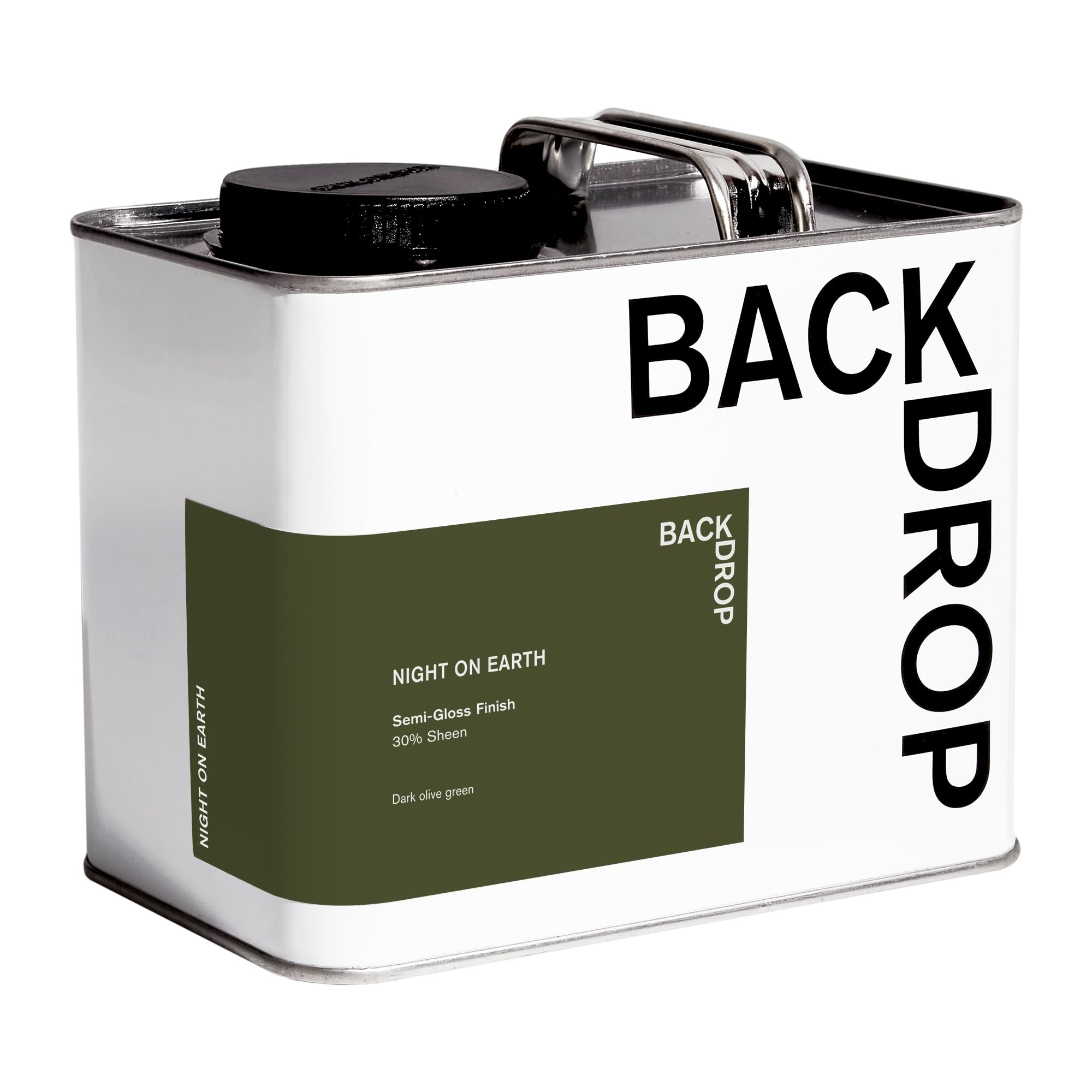
2. BACKDROP Premium Exterior Paint (Night on Earth)
A dark olive semi-gloss built to shrug off sun, humidity, and weather at once.
Dark doors take the worst of the sun, so a deep color needs a finish engineered for the weather. The manufacturer rates this one for exterior doors and trim specifically because of how it handles direct sun. Its 30% sheen semi-gloss gives you durability and washability without the mirror-like glare a full gloss throws back at you. And unlike the Modern Masters satin above, this one leans hard into a sturdier, scrubbable surface.
Where this pick separates itself is the prep-free workflow. The can self-primes, which means you may not need a separate primer coat before you paint — a real saving when you are prepping a door that has been baking in the sun for years. Application is quick, with a 60-minute touch dry and a 3-4 hour recoat. The container itself is designed for controlling the pour without a tool. Coverage runs 200 square feet for a 0.5 gallon can, and the formula is Green Wise Certified as Ultra Low VOC — it is made without formaldehyde or other off-gassing substances, so it does not gas off in the heat. Backdrop is also the first Climate Neutral Certified paint company.
Owners describe the color as true to the label and the application as smooth-flowing, and one review sums the whole appeal up neatly: “Absolutely love the color and it makes our door look amazing!!!” The honest catch is coverage. Owners mention that the “Color dried really dark and moody” and needed multiple (3+) coats on cabinets and shelves — so a richer, darker shade like this olive will drink more finish than a lighter tone. The other note that comes up is that the price feels a touch high for a 0.5 gallon can, though the reviewers who mention it still call the paint “very nice, smooth flowing.”
Semi-gloss sheen, real durability: The 30% sheen level is the number that decides whether this fits your door.
The dried-dark note in practice: Several customers note the shade lands deeper than the swatch suggests. Plan for three coats of the olive, and check that shade against your house in daylight before you commit to the whole door.
Best for: a sun-beaten exterior door where you want the deep color, and you want to skip the separate primer step.
Skip if: you are working to a set budget — the small 0.5 gallon can means a full door plus trim pushes past one container.
3. BACKDROP Premium Exterior Paint (After Hours)

A charcoal black that holds up to full sun without going gray.
Black is the harshest color for a sun-facing door, because it absorbs light and heat instead of bouncing them off. This finish is built to survive exactly that. It carries the same 30% sheen semi-gloss as the olive above, so the surface stays tough and washable under weather, humidity, and direct sun. The container design mirrors the other Backdrop can as well — self-priming, easy open and close with no tool, and a clean pour spout that keeps the rim tidy.
The specs match its sibling here too: 60 minutes to touch, 3-4 hours to recoat, 200 square feet of coverage from the 0.5 gallon can, and the same Green Wise Certification as an Ultra Low VOC formula free of formaldehyde and other off-gassing substances. The light itself matters less on this shade — it is a soft charcoal black, described as a shade lighter than the brand’s Dark Arts color, so it reads black without turning into a flat, dead void on a bright wall. Owners describe it as “smooth” and true to the promised color, and one long-term test involved a converted van exterior that held up to highway speeds without flaking off.
The sharp edge to plan for is cure on non-porous surfaces. The deep pigment and thick consistency keep it from dripping, which is a genuine perk working overhead. But the same richness that makes it vivid is what makes it unforgiving on cabinets and other hard, sealed surfaces — where the paint can stay tacky and mars easily even after weeks, sometimes needing a strip and repaint. On an exterior door where you are painting over a properly prepared surface, it performs as intended. If you want the clean, opaque black and you are working on a door, not cabinetry, this is the closest match you will find to a true charcoal.
The Strong Side
- Soft charcoal black holds deep color under full sun without turning gray
- 30% sheen semi-gloss resists weather, humidity and dirt
- Self-priming, with a tool-free can and clean pour spout
- Ultra Low VOC, made without formaldehyde off-gassing
The Honest Catch
- On sealed cabinets the thick pigment can stay tacky — it is a door paint, not a cabinet paint
- 0.5 gallon can means a second container for door plus trim
- The shade is a softer charcoal, not a pure black — check it against your trim before starting
Pick it for: a sun-facing door in a deep charcoal black, where you want the color to stay rich under constant exposure.
Leave it if: you are sanding and painting interior shutters or cabinets — buy a cabinet-specific finish for that job.
4. Rust-Oleum Painter’s Touch Brush-On (Oil-Rubbed Bronze)

The fastest-drying option here, and the only one that fakes real metal.
If your door has brass or bronze hardware you want it to match, this is the one on the list that does it. The metallic oil-rubbed bronze finish is designed to look close to the real thing rather than a flat brown spray with shimmer on it. The brush-on version gives you control around hinges, kick plates, and letter slots that a spray can cannot, and it goes on smoothly with excellent hide. It works on wood, metal, plaster, masonry, and unglazed ceramic, so it also handles shutters and trim in the same pass.
Dry-to-touch is 30 minutes — that is the fastest on this list, and it lands the second half of the speed gap the comparison data shows: this is 0.5 hours to touch against the Modern Masters 1 hour, a two-times gap in your favor when you are working outside on a warm day. You will want to prep carefully: sand the surface with 180 or 200 grit sandpaper, wash it with a degreaser, let it dry, then paint. The result is a chip-resistant acrylic coating that stands up to exposure.
Buyers keep returning to one point: the metallic finish reads like real oil-rubbed bronze. Reviewers point out this paint “probably gave our 15 year old tables a few more years of life,” and the hardware-matching angle holds for exterior trim as much as for furniture. It is thick enough to cover flaws with foam-brush application and dries smooth and shiny. Two things to keep in mind: it runs easily on vertical surfaces, so use long, quick strokes and do not overwork the paint, and it does not hide defects — any dent or scratch in the door will show through. Metallic finish is also unforgiving of uneven texture, so avoid dabbing and let the paint level itself.
The metallic effect is the point: The 120 sq ft coverage and 30-minute dry time are both strong numbers, but what makes this pick sit on the list is the look — nothing else here replicates oil-rubbed bronze on a front-door pull or kick plate.
Where it asks more of you: This is the one entry that requires sanding and degreasing before it will hold, and its metallic sheen magnifies any surface flaw underneath. Give it a clean, flat surface and it delivers; rush the prep and every defect shows.
Choose it when: you want to match oil-rubbed bronze hardware, refresh a metal door accent, or cover trim and patio pieces in the same finish.
Buy something else if: your door has deep scratches you would rather hide — a matte acrylic covers flaws better than a metallic sheen.
5. Glidden Total Exterior Paint & Primer All-in-One
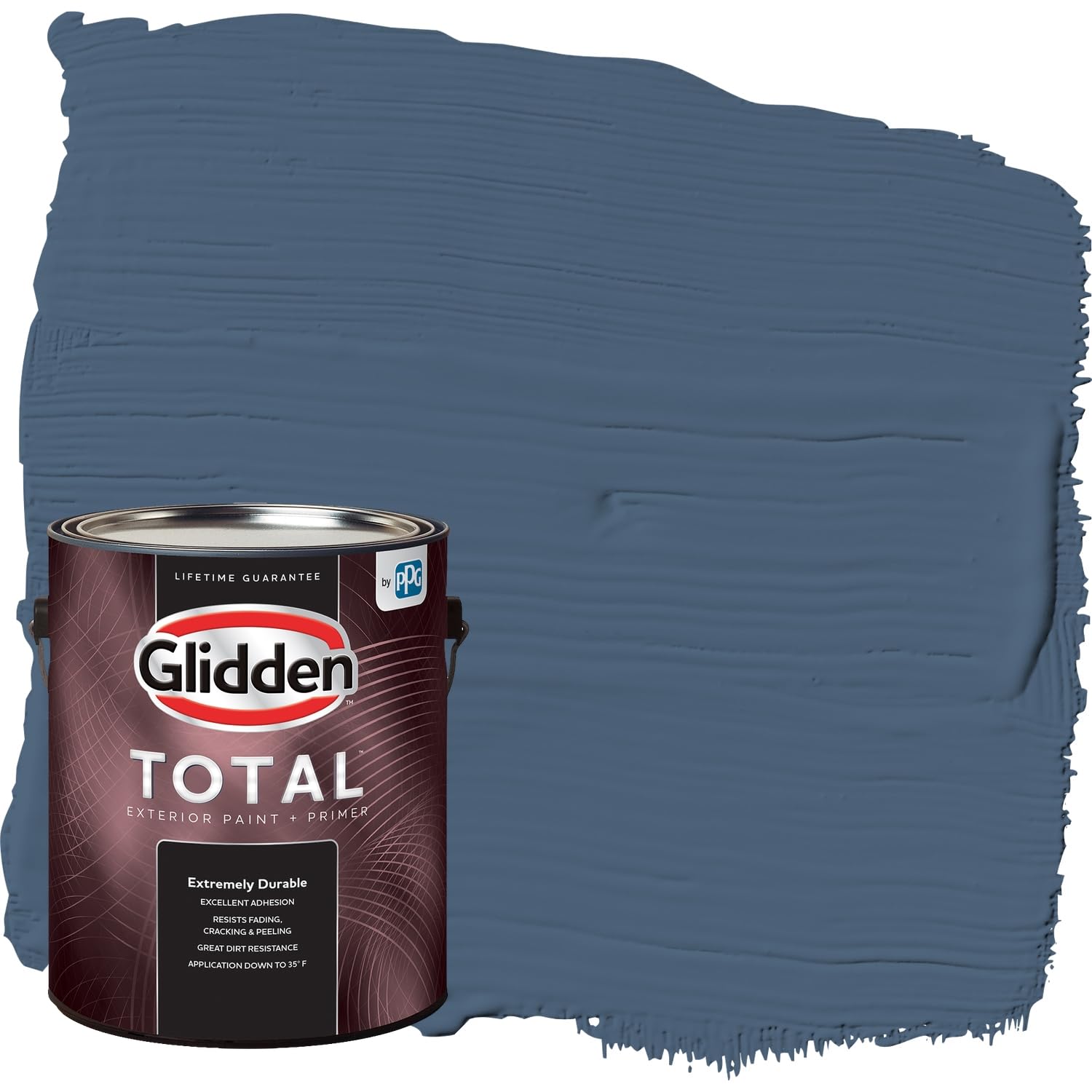
A full gallon that covers a whole door and more, without the premium markup.
This is the gallon to buy when the door is large, the sun is brutal, and you would rather not buy two cans. The formula resists fading, cracking, and peeling — the three things direct sun does to a wood or masonry door over time — and it applies down to 35 degrees Fahrenheit, which means you can still paint in a cold snap when the sun is low and the afternoon light is weaker. The Blue Fjord satin color is a soft blue that holds up well in bright daylight.
The coverage is the headline number. Up to 400 sq ft from a single gallon means a front door, its frame, and both sides of the shutters can all come from one container, with paint to spare. That is the practical difference between this and the 100 sq ft Modern Masters can or the 120 sq ft Rust-Oleum bottle. It is an all-in-one paint and primer, so it offers excellent hide and coverage without a separate priming step for most prepared surfaces, and it includes a stir stick in the can. It also handles dirt resistance well, which matters on a door that collects road dust and pollen in a sun-exposed spot.
Owners describe the coverage as strong enough that two to three coats fit within the gallon. The recurring note is that this is best when you do not need a precise color match, since the finish can read a little different in bright light than it does on the swatch. The color-matching caveat is not a defect — it is an ordinary characteristic of an all-in-one exterior paint at this value point. What you trade for the lower tier is that precision, not the durability.
What Earns The Place
- Up to 400 sq ft of coverage — more than three times the area of the 100 sq ft Modern Masters can
- Resists fading, cracking and peeling, the sun’s main attacks on an exterior door
- Paint and primer in one saves a step on prepared surfaces
- Applies down to 35 degrees Fahrenheit
Where It Gives Ground
- Color can shift in bright light versus the swatch — best if you are not chasing an exact match
- Satin finish is less scrubbable than a semi-gloss on a heavily used door
- Not rated as waterproof, so pair it with a topcoat if the door takes driven rain
It suits you if: you have a large door or a door-plus-shutters job and want maximum coverage from one container.
Look past it if: exact color matching is non-negotiable for your trim, or you need a semi-gloss for a high-traffic door.
6. PRESTIGE Paints Exterior Paint Porch Swing
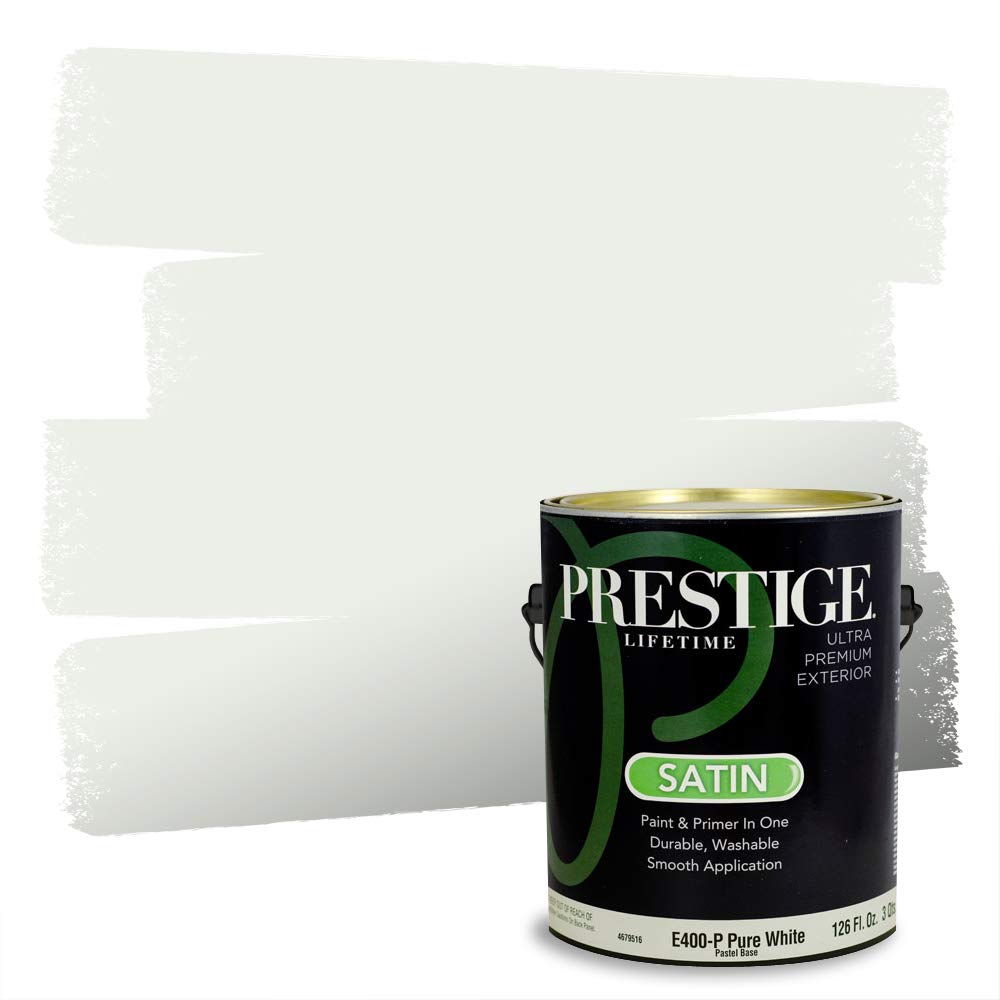
A soft off-white that reflects sun instead of soaking it up.
Light colors are the quiet secret to a cooler, longer-lasting sun-facing door. This Porch Swing shade is a pale off-white, which means it bounces sunlight away from the surface instead of absorbing heat the way the charcoal and bronze picks above do. The finish is a 100% acrylic latex in satin, which cleans up with soap and water and holds a washable, durable coating. For a door that has to look clean from the street, a light satin hides ordinary dust better than a deep gloss would.
Application is straightforward. The high-hiding formula covers smoothly, and it is a paint-and-primer-in-one, so prepared surfaces may not need a separate primer. The VOC rating is low — under 50 grams per liter — which keeps the smell down when you are working outside on a warm day. The gallon weighs in around 12.1 pounds, and the coverage average is 250-400 sq ft per gallon, which is enough for a door and its trim in a single container. It ships with a can opener and a stir stick.
The realistic knock here is that this is a low-volume listing, so you have less owner feedback to go on than with the crowd-tested picks. The brand’s color-matching is the other thing to weigh: the light off-white is a clean, easy shade to match, but if you are trying to hit a specific named color, verify the swatch first — this is not a formula tuned for exact brand-name matches. If your goal is a simple, sun-reflecting door color on a fair budget, the light shade does exactly what it needs to do.
The light-color advantage: That pale off-white is not just a style choice — it is the practical move on a door that faces full sun, because it reflects heat rather than absorbing it the way a black or bronze finish does.
One thing to check first: The listing has only a thin layer of owner feedback compared to the others on this list. The formula is capable, but if you need certainty from a large review history, weigh that against the others above.
This fits: a light-painted front door in a sunny spot, where you want a reflective off-white and a paint-and-primer step in one can.
Rethink it if: your door is dark and heavily used — a semi-gloss cleans up better on a high-traffic entrance.
7. PRESTIGE Paints Exterior Paint Van Dyke Brown

The only pick here that tells you exactly which designer color it is chasing.
Most of the paints on this list ask you to hope the shade looks right. This one is built to answer that question up front: it is a comparable match to a named Sherwin Williams Van Dyke Brown, which takes a lot of the guesswork out of matching a front door to existing trim. The finish is semi-gloss, the tougher, easier-to-wipe surface you want on a door that faces the weather all year. It is a 100% acrylic latex, so it cleans up with soap and water, and the low-VOC formula sits under 50 grams per liter before tinting.
The semi-gloss finish is the one to choose if you want the easiest wipe-down when a sun-facing door collects dust and grime. The 12-pound gallon ships as a single can of paint, and the high-hiding formula applies with a smooth, even coat.
The gray-tinged reputation is what you want to know before buying. The brown reads softer than the original designer shade for some — reviewers describe it as a light, soft gray rather than a deep brown, though other owners call it an exact match to a black door and love the durability. Owners split on the color — some call it a soft gray, others an exact match — but agree the finish holds up through storms. The reviews describe the finish holding up through multiple major storms, with a durability that beats ordinary porch paint for the same money. Read the brown question as a “check the swatch at home in your light” note, not a red flag on the paint itself.
The value claim that holds: A semi-gloss, 100% acrylic gallon with 325 sq ft of coverage, matched to a recognized designer color name, is the strongest combination of finish quality and precision on this list.
The gray-tinge reality: Several shoppers say this brown lands closer to a soft gray in person than the designer shade it references. If color fidelity is your whole reason for buying, order a sample first; if you just want a durable, easy-to-clean brown door, it delivers.
The pick for you if: you want a semi-gloss brown door matched to a known designer shade, with a full gallon covering door and trim.
Give it a pass if: you need a true, dark chocolate brown — the finish can read grayer than the reference shade.
Know the Specs
Dry Time vs. Full Cure Time
Dry-to-touch is when you can stop worrying about dust and drips settling into the finish — often 30 minutes to an hour on an exterior paint. Full cure is when the paint has hardened all the way through and can take normal wear. The two numbers are not the same, and a paint with a short dry time can still need hours to fully cure. Modern Masters lists both at 1 hour, while the Backdrop semi-gloss lists 60 minutes to touch but 4 hours to full cure. Match your second coat to the recoat window, not the dry time, or the finish will lift.
Self-Priming Formulas
Self-priming means the paint can bond to a bare or lightly primed surface without a separate primer coat underneath. It saves a step, but it does not replace surface prep — sanding and degreasing still matter on a sun-baked door. BACKDROP’s exterior paints and Glidden’s Total line both offer paint-and-primer-in-one, and both are still built to be applied over a clean, dull surface. If your door has old chalky paint on it, primer in the formula will not save a coat you skipped on prep.
Common Questions
Will a satin finish hold up on a door that faces direct afternoon sun?
How many coats do I need on a sun-facing front door?
Is water-based or oil-based paint better for a door in full sun?
How much paint do I need for a front door and its trim?
Can I paint a metal front door that gets a lot of sun?
Why does my exterior door paint stay tacky after it dries to the touch?
How long should I wait between coats on an exterior door?
Do I need a separate primer on a door that already has old exterior paint?
Will a dark paint color fade faster in direct sunlight?
Can I paint a front door when the temperature is below optimal?
The Bottom Line
For most people repainting a front door that gets a lot of sun, the paint for front door that gets a lot of sun winner is the Modern Masters Elegant Front Door Paint because it earns that spot on the two things that matter most here — color fade resistance and a cure time that gets the job done in a single hour, four times faster than the Backdrop semi-gloss. If you want a deep, weather-tough color and prefer to skip a separate primer coat, reach for the BACKDROP After Hours semi-gloss. And for a large door plus shutters from a single can on a budget, the Glidden Total Exterior covers up to 400 sq ft and does the job with paint to spare. Choose the color you love, then pick the formula that holds it longest in direct sun.
How we choose
We do not accept paid placement. Every pick is matched to a real buyer and a real use-case; we do not hands-on test units.
Sources
Specifications: manufacturer listings and product documentation. Review insights: verified customer reviews, as of October 2026. Pricing: not shown on this page (it changes often); check the current price via the retailer link.
As an Amazon Associate, Aappliancez earns from qualifying purchases. This does not affect which products we feature.