Disclosure: Some links in this post are affiliate links. As an Amazon Associate I earn from qualifying purchases, at no extra cost to you. Learn more
Specs are compiled from manufacturer listings and verified buyer reviews and can change over time — please confirm the key details on the product page before buying.
If you want a camera that films what you’re doing without you holding anything, the answer is a small magnetic body camera that clips to a cap, lanyard, or collar and records your point of view hands-free. The hard part is that this is a young, uneven category — some models shoot genuine 4K and run for hours, others claim 4K and stall the moment the app disconnects. This guide separates the models that hold up in real use from the ones that only look good on the listing page.
This guide is built by comparing the manufacturers’ published specifications and the patterns across verified customer reviews, so you get each pick’s real strengths and trade-offs instead of marketing spin.
Every pick below was chosen on four things: the resolution it truly records, how long it runs on a charge, how it mounts, and what owners say after weeks of use. if you need discreet first-person footage for travel or a rugged recorder for work, this breakdown of the wearable camera matches the right body cam to how you actually shoot.
Top Picks
How To Choose The Best Wearable Camera
A wearable camera lives on your body, not in your hand. That changes what matters. A camera that shoots beautiful video but weighs you down or falls off your hat is useless — the point is to forget it’s there and still get the shot. Before you compare models, get clear on the four specs that separate a camera you’ll actually wear from one that sits in a drawer: resolution and frame rate, runtime, storage, and waterproofing.
Video resolution and frame rate
Resolution is simply how many pixels make up each frame, and more pixels generally means more detail you can zoom into or crop later. The real-world catch is frame rate: 4K at 30fps (30 frames per second) is smooth and sharp for walking, while 4K at 60fps doubles the frames so fast motion stays fluid. If you film a lot of movement — cycling, running, action — the higher frame rate is worth chasing, because it means less blur when you slow clips down in editing.
Battery runtime and how you charge it
Runtime is the number that quietly ruins good footage: a camera that dies at minute 40 won’t capture a two-hour hike. Most wearable cams either run off a small internal battery or a larger charging case that tops the camera back up on the move. Decide how long your typical session is first — a quick commute clip needs far less than a full festival day — then pick a camera whose rated runtime clears that bar with room to spare.
Storage: built-in memory vs microSD
Some cameras bake storage right into the body with no card slot needed; others take a removable microSD card you can swap or upgrade. Built-in memory is simpler and nothing can fall out, but when it fills up you have to offload files before you shoot again. A card slot gives you flexibility and lets you carry spare cards, but you have to buy and manage them yourself.
Waterproofing and durability
Waterproof ratings tell you how much moisture a camera survives. An IPX8 rating means the camera itself can be submerged without any extra case, which matters for rain, pools, and surf. A rating like IP67 means it handles heavy rain and brief submersion, but not deep diving. Some cameras list a depth in meters only when you add an included housing — so read carefully whether the waterproofing is built in or comes from an accessory.
Side-by-Side Comparison
| Model | Best For | Video Resolution | Rated Runtime | Built-in Storage | Amazon |
|---|---|---|---|---|---|
| Insta360 GO Ultra Black★ Best Overall | All-round POV and travel | 4K at 60fps | 180 minutes | 128 GB | Amazon |
| Xtra Atto Wearable 4K (128GB)Longest Runtime | Long hikes and editing speed | 3840 pixels | 220 minutes | 128 GB | Amazon |
| Ahlirmoy 4K Mini POV Body CamBest for Travel | Budget hands-free clips | 4K at 30fps | 120 minutes | 64 GB | Amazon |
| BOBLOV KJ23Pro 2K | Long work shifts | 2K | 15 hours | 128 GB | Amazon |
| BOBLOV M5 2K GPS | GPS evidence and security | 2560 pixels | 12 hours | 128 GB | Amazon |
| SJCAM C400 4K Vlogging | All-day vlogging | 4K at 30fps | 7 hours | — | Amazon |
| AeroTek 2K Police Body Cam | Night patrol | 3840 pixels | 12 hours | 64 GB | Amazon |
| Catchallway 4K Mini Body Cam | Very cheap daily capture | 4K Ultra HD | 100 minutes | 64 GB | Amazon |
| SJCAM C110Plus | Waterproof POV on a budget | 4K at 30fps | 120 minutes | 128 GB | Amazon |
Detailed Reviews
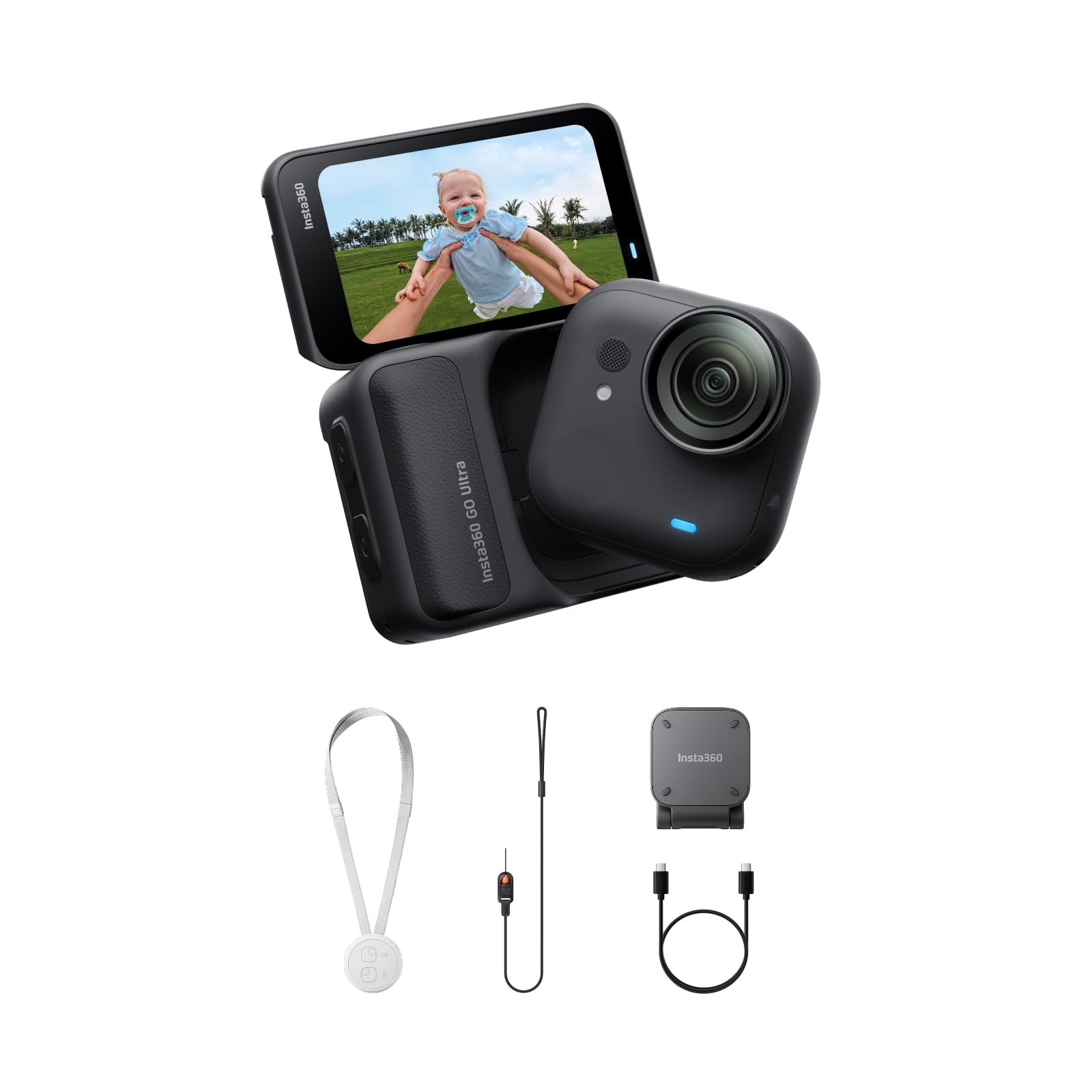
1. Insta360 GO Ultra Black – 4K Hands-Free Vlogging Camera
Our pick — 4.0+★ from 1,000+ verified ratings; the strongest balance of quality and price.
The wearable that finally shoots hands-free 4K without feeling like a gadget strapped to your head.
If you want one camera for everything — cycling, diving, running, travel — this is the model most people should buy. It weighs just 53g and is roughly the size of a watch, yet it records 4K at 60fps with 4K Active HDR (a mode that keeps both bright and shadowy areas visible in the same shot). That combination matters because 60fps halves the motion blur on fast rides, and HDR keeps your footage usable when you move from shade into sun. The crowd clearly agrees: it holds a 4.0+ star average from a heap of verified shoppers, and crisp 4K video is the thing people praise most, with compact size a close second.
What genuinely makes it a wearable is the mounting. A magnetic pendant and a magnetic easy clip let you wear it on your chest or cap and immediately get first-person POV (point-of-view) footage with both hands free — no gimbal, no selfie arm. It is IPX8 waterproof from the start, meaning you can submerge the camera itself without any extra case, and the supplied Dive Case takes it down to 197ft (60m). Battery runs 70 minutes on the standalone camera and up to 3 hours in the Action Pod, with a charge from 0–80% in only 12 minutes, so a coffee stop covers your next clip.
Compare it to the Xtra Atto below and you can see the trade-offs clearly. The Atto captures 3840 pixels versus this camera’s 1080-pixel effective video figure — but the GO Ultra answers back with 4K at 60fps and 4K Active HDR, which the Atto does not list, and with 128GB of built-in memory versus the Atto’s 128GB over a 3.6x resolution gap the two trade blows rather than one walking away. Buyers report this model fixes the flaws of the earlier GO 3S, with faster charging, cooler running, and a microSD slot added. The recurring gripe is battery life — the rating sits at mixed, with some owners calling it low while others find it fine — and it needs new accessories if you’re upgrading, since only the pendant and hat clip are included.
What owners rave about
- Sharp 4K at 60fps with 4K Active HDR for balanced light in one shot
- Just 53g and watch-sized — the magnetic pendant frees both hands for true POV
- IPX8 waterproof on its own, and the Dive Case reaches 197ft (60m)
- 0–80% charge in 12 minutes, so short stops refuel a full session
Where it asks for patience
- Battery life draws mixed reviews — the rating is the honest weak spot
- The Action Pod itself is not waterproof, only the camera is
- You cannot swap to a fresh battery; charging is the only refuel
- Upgraders from the GO 3S will need to buy new accessories
Buy this if: you want the most complete hands-free 4K camera for mixed travel, cycling, and water use.
Think twice if: you need to shoot continuously for hours without a charger — the runtime here is its one soft spot.
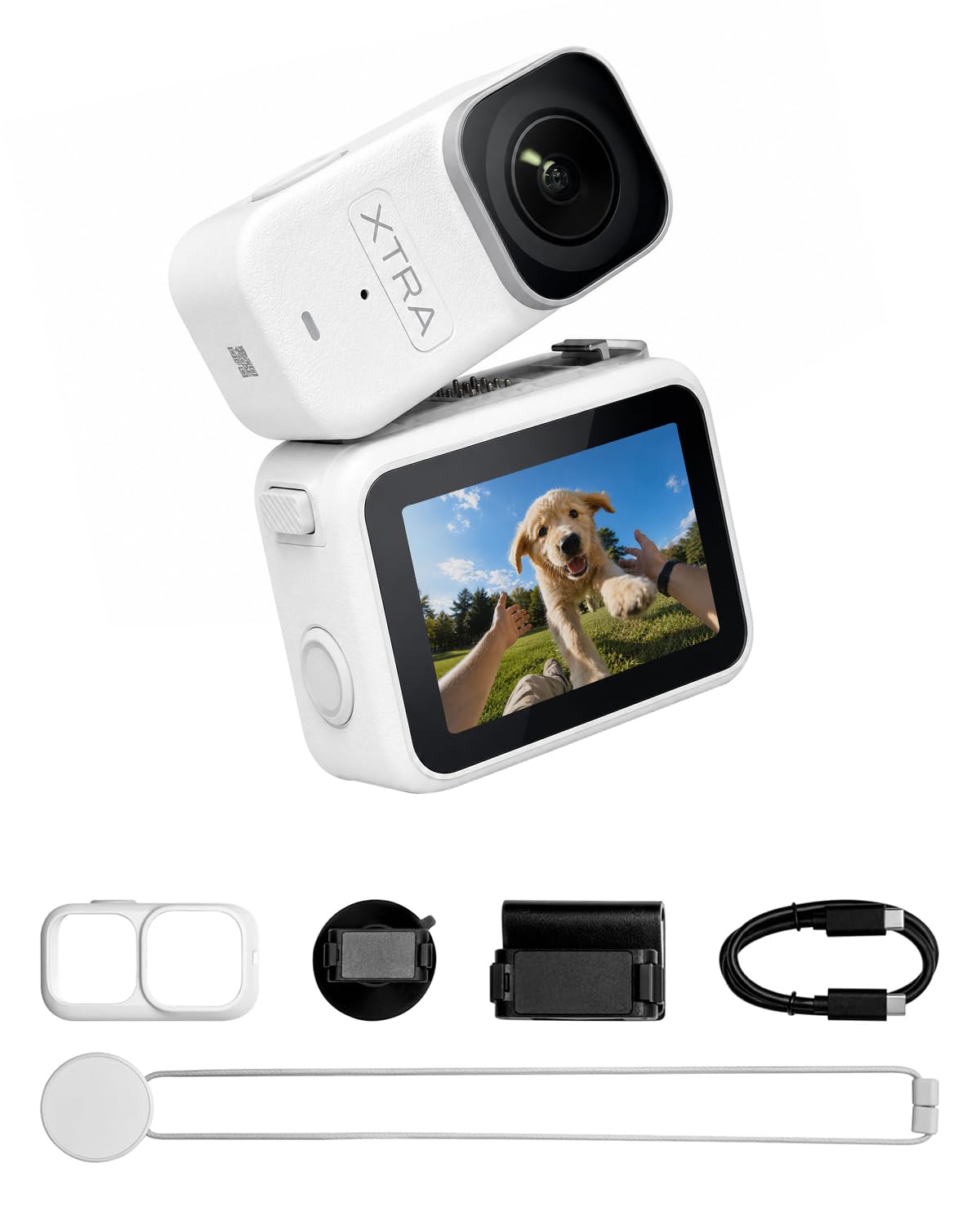
2. Xtra Atto Wearable 4K Action Camera (128GB)
The marathon runner of thumb cameras — 220 minutes of capture for the days that do not fit in one battery.
For hikers and riders whose sessions stretch past the two-hour mark, the headline number here is runtime: 220 minutes with the Vision Dock, versus 180 minutes on the Insta360 GO Ultra above. That gap is the whole pitch — a camera you do not have to babysit mid-trail. It weighs 54g and mounts to a cap or headband, so it stays out of your way while you stay in the moment. The 1/1.3″ sensor and 4K/60fps recording keep footage rich and smooth, and a 5-minute pre-recording buffer means you can hit capture after something happens and still save the seconds before it.
The other number owners care about is transfer speed. With 128GB built-in and 600MB/s transfer speeds through the dock, this camera moves 1GB of heavy 4K footage to your PC in around 3 seconds — owners mention exactly that, which turns offloading from a chore into a coffee-sip task. The magnet is strong enough to snap onto a helmet, a pet collar, or gym equipment, opening up angles a handheld camera simply cannot take. Stabilization is built in, the touchscreen setup is quick, and the Standard Bundle includes the Vision Dock, magnetic hat clip, magnetic lanyard, ball-joint adapter, and a protective case.
The honest caveat is lens protection and battery drain. This model lacks a removable lens cover or custom ND filters, so a scratched lens cannot be replaced, and 4K recording pulls the battery down faster than 1080p — the Vision Dock helps, but heavy 4K days still lean on it. Internal storage also fills quickly, and microSD files transfer only after moving off the internal drive, which slows that slick transfer claim in practice. What wins people over is the sheer clarity: owners call the 4K/60fps footage sharp and vibrant, note beautiful 10-bit color (a wider color depth that keeps gradients smooth) at 60fps, and say the 1/1.3″ sensor holds up in all kinds of light.
The runtime case: 220 minutes of recording and a 3-second 1GB transfer make this the pick for long sessions and fast workflows — the two things that define a day of real shooting.
The size of the compromise: no replaceable lens glass and faster 4K battery drain mean you shoot with care and keep the dock charged.
Reach for this if: your trips run long and you want footage off the camera and onto your PC within seconds.
Look elsewhere if: you need swappable lens protectors or filter options for creative work.
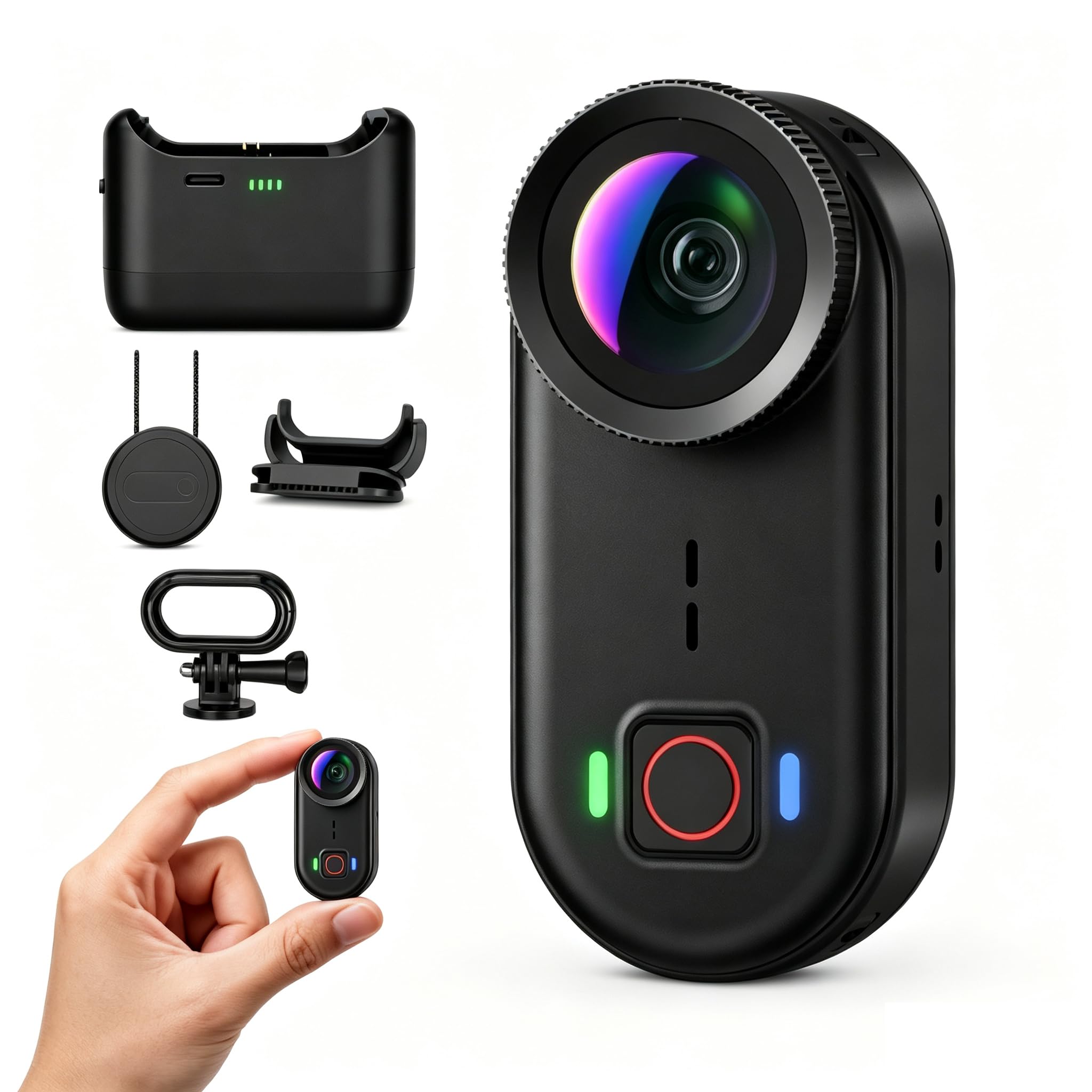
3. Ahlirmoy 4K Mini Body Action Camera POV Body Cam
Pocket-sized, waterproof without a case, and built to keep rolling when the day keeps going.
Call this the travel companion that endures. It shoots 4K at 30fps through a 150° wide-angle lens, and its EIS 2.0 six-axis stabilization (electronic anti-shake that counteracts your body’s movement) smooths footage even during fast-moving scenes. The standout durability is the IPX68 waterproofing — good to 33ft (10 meters) with no extra housing, so pool splashes, rain, and snorkeling are all fair game straight from the start. On the endurance side, the ultra-low 280mAh battery powers 120 minutes of runtime, and the wireless charging case adds 230 more for a 350-minute stretch, which is what makes this suited to a full day of travel.
What buyers keep coming back to is the steadiness and the portability. The footage stays clear even when the camera is moving fast, the size is small enough to disappear into a pocket or clip, and the Wi-Fi pairing through the Viipulse app lets you shoot remotely and preview what you’re getting while you travel. The magnetic lanyard and 360° rotating back clip let you wear it on clothing, hats, helmets, or bikes for hands-free POV — no tripod, no arm fatigue.
The real friction is the wireless link. Setup can be fiddly: pairing over Wi-Fi is the difficult part, and if the app closes mid-recording the camera can stop and disconnect, forcing a fresh reconnect. That makes it less suited to a videographer who needs to monitor constantly, and more suited to someone who sets it going and trusts the clip. Battery is one more honest note — some find the out-of-box runtime on the short side for serious recording, though the charging case closes most of that gap.
Why travelers pick it: 350 minutes of total runtime, IPX68 protection without a case, and 4K at 30fps with six-axis anti-shake is a travel-ready package that survives wet and wild days.
Your pick if: you shoot water, weather, and movement and want one compact rig that handles all three.
skip it if: your workflow depends on a rock-solid phone link that stays connected while you record.
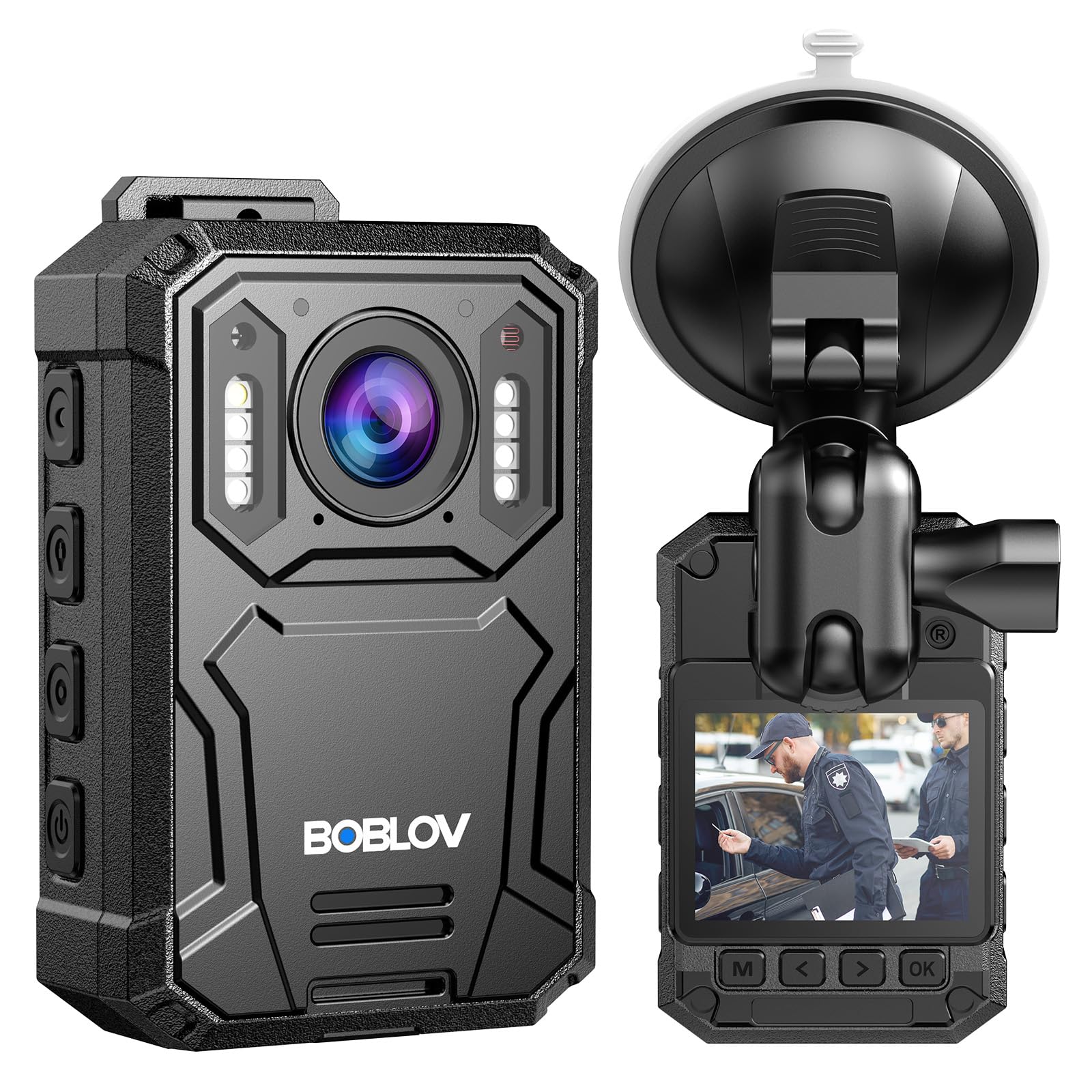
4. BOBLOV KJ23Pro 2K 128GB Body Worn Camera with Night Vision
A workhorse worn camera built for the long shift, not the short vlog.
If your job means recording for hours on end, the 4000mAh battery here is the reason to look. It supports up to 15 hours of continuous recording at 1080P, so a full shift fits inside one charge without juggling power banks. Video comes in at 2K with 38MP photos, and five IR lights (infrared LEDs that light up a scene invisible to the naked eye) give you usable footage in complete darkness — the feature that makes it suited to night patrols and surveillance. Built-in 128GB memory means it is ready to record the moment it arrives, no card needed.
What this camera gets right is endurance and clarity together. Owners routinely report it lasting through long shifts and multi-hour outings on a single charge, and the quality of the recorded footage is the thing people praise most here — a tight 2K image that stays legible across a whole workday. The kit is generous too: long and short 360° clips, a car charger and bracket for dash-cam use, and a USB-C interface for faster, more reliable data transfer when you back up the day’s files.
The honest caveats sit around reliability and clips. Photos come with a green tint, though the camera’s own screen looks fine — one owner found that difference after offloading. Motion detection and loop recording (auto-overwriting the oldest footage when storage fills) handle the essentials, and the IP66 rating shrugs off rain without a case. On the video side, owners rate it more than capable for the price; a minority see it as a starter camera rather than a pro tool, and a small number want more body-mount options than the included clips.
Shift-length proof: 15 hours at 1080P turns this into a camera you set and carry rather than monitor and recharge.
One real awkwardness: that same strong magnet needs backing, since thin jackets leave the clip less secure than a collared shirt.
Matches your work if: you need all-shift recording with night vision and 128GB on board from day one.
Pass if: you want a swappable battery or cinematic color straight out of the camera.
5. BOBLOV M5 2K GPS Body Camera

A rugged recorder with GPS tagging — the one you trust to hold up when the footage has to count.
This is the pick for anyone who needs to tie footage to a place. It captures in 2560x1440P at 30fps and shoots 48MP photos, and the GPS function logs where each clip was recorded, which is what makes it useful for evidence review and for sharing travel footage with locations attached. Six IR lights handle nighttime use, and the shell is IP67 waterproof (handling heavy rain and brief submersion) as well as two-meter drop-resistant, so it survives a knock off a mount without missing a beat.
Ruggedness is the story here. The ABS shell shrugs off weather and drops, the 4200mAh battery charges fully in 5–6 hours and supports up to 12 hours of recording at 1080P with the IR off, and the package includes a car suction bracket that turns it into a windshield dash cam for continuous monitoring. Customers note it works reliably in tough conditions and that the internal 128GB memory makes file access easy with no card shuffling.
Weigh the trade-offs and it stays honest. The 1440P resolution is lower than the 3840 pixels the AeroTek’s sensor lists, so if sheer sharpness is your priority the other pick is ahead. A minority of reviewers point out battery complaints — some find it does not hold a charge as long as they want. The unit is on the bulky side and sits far heavier than the 54g Xtra Atto, so it is not one you forget you are wearing, and a small number find the on-screen controls fiddly at first.
Built to survive: IP67 rain protection, two-meter drop resistance, and 12 hours of runtime make this the pick that stays reliable when the conditions are not.
Buy this if: you need location-stamped footage and a rugged body that works as both a worn camera and dash cam.
Look past it if: you want the lightest, smallest camera on this list.
6. SJCAM C400 4K Vlogging Camera
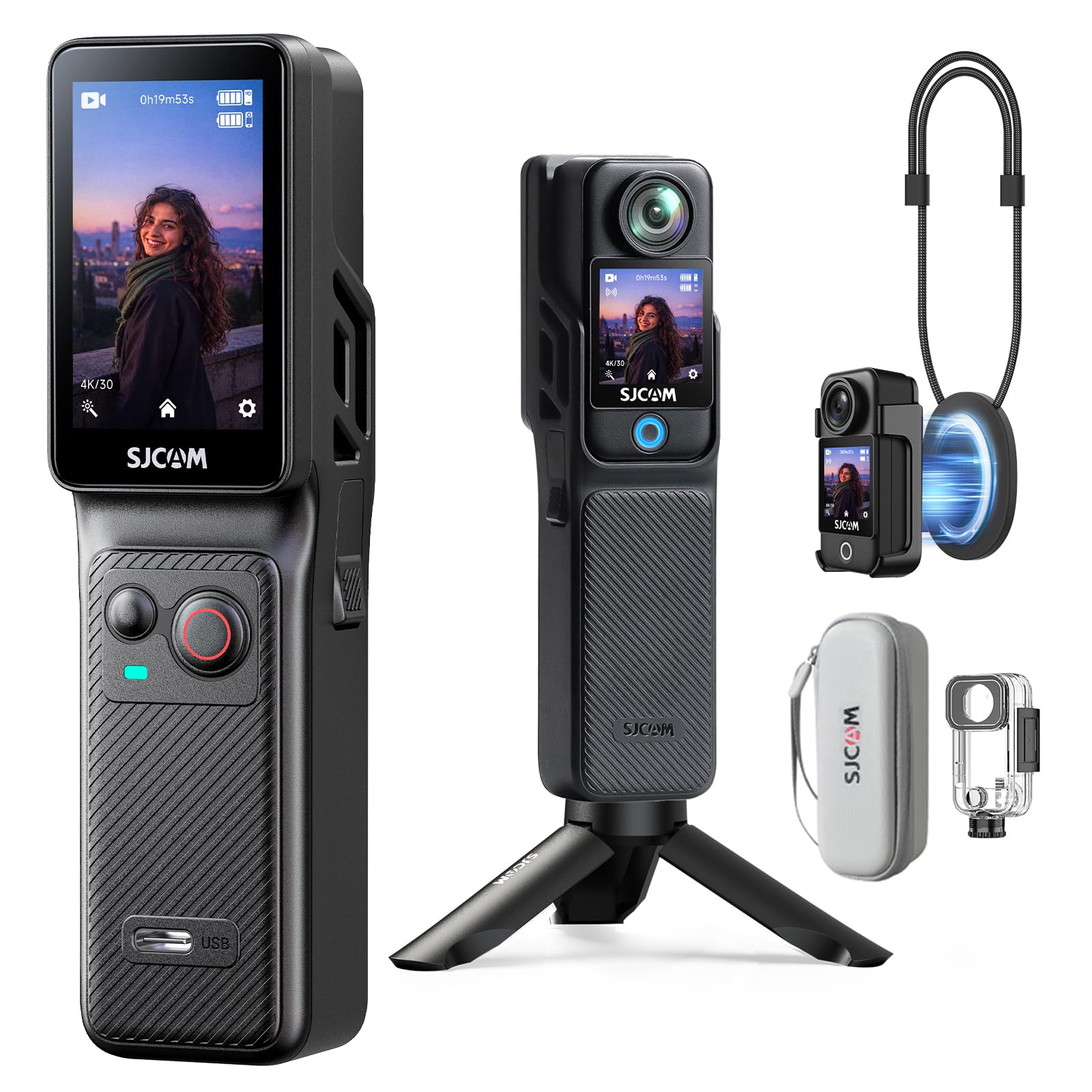
A modular vlogging rig that flips from handheld to wearable without swapping cameras.
This is the most versatile camera on the list, and the reason is the 7.3-hour runtime. SJCAM pairs the internal battery with a 3000mAh power handle to deliver 437 minutes of 4K recording, which is what makes it suited to all-day motorcycling, festivals, and long-form content where you cannot stop to recharge. It shoots 4K at 30fps and 20MP stills, and the 2.29″ rotatable touchscreen flips between horizontal and vertical so you can frame Shorts and Reels natively in 9:16 without cropping.
The clever part is the modular design. Use it as a standalone pocket camera, a wearable body camera for hands-free recording, a handheld vlogging rig, or a remote-controlled device — the detachable handle doubles as a wireless controller that lets you frame and shoot from up to 8 meters away. Six-axis SteadyMotion stabilization keeps footage smooth on mountain bikes and hikes, and the included waterproof housing takes it down to 30 meters (98ft), so adventure shots are covered. Shoppers say excellent video quality, a helpful app, and good audio, though some notice it picks up wind noise outdoors.
Where it gets complicated is operation. The menus can feel clunky — navigating to review videos and photos takes some learning — and a minority find the on-screen interface slower than they would like. It also uses a MicroSD card, which you buy separately, so factor that into your setup day. A small number of buyers report image quality that did not meet their expectations, but the majority land on good value for a camera that does so many jobs in one kit.
The all-day angle: 437 minutes of 4K from a camera you can wear, hold, or stand on a table is the flexibility that separates it from the fixed-shape wearables above.
The reality check: the interface wants patience on day one, and a MicroSD card is not in the box.
For you if: you want a single camera that handles handheld, wearable, and remote shooting across a long event day.
Not for you if: you want the simplest possible pick-up-and-go interface.
7. AeroTek 2K Police Body Cam with Ultra Infrared Night Vision
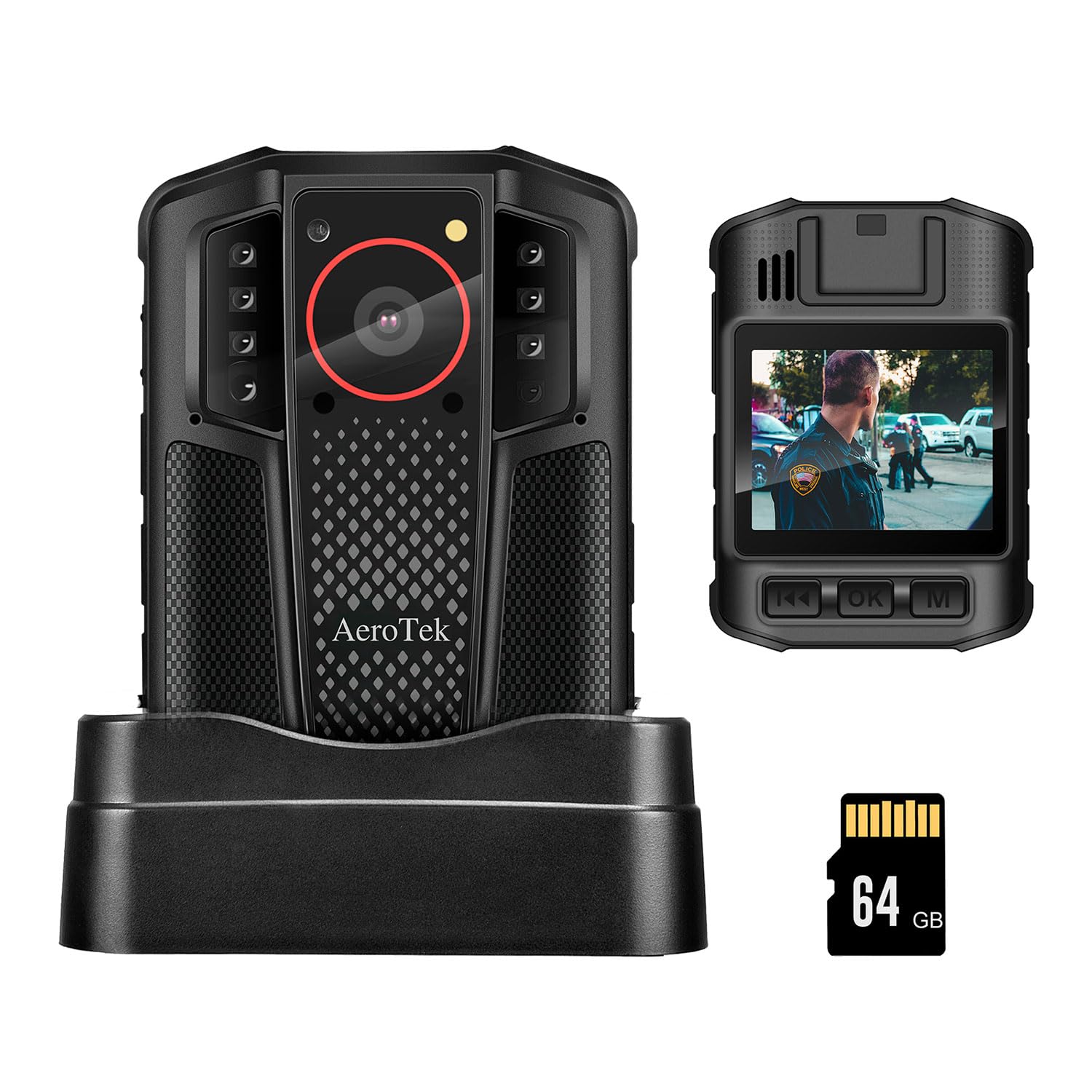
Seven infrared lights and a 170° lens — made for the dark, not the daylight vlog.
Night recording is where this camera earns its keep. Seven IR lights plus one supplemental light deliver strong exposure and dynamic range when the light drops, and they keep working in complete darkness. The 2K sensor and 170° wide-angle lens give you broad coverage, and the 64GB of built-in memory with a C10 card rating means files write quickly. The 3000mAh battery supports up to 12 hours of continuous recording, so a long shift fits inside a single charge, and the durable body is built to take a knock.
For security and patrol work, the extras matter. Motion detection and loop recording handle hands-off monitoring, the auto-record-on-power-on saves fumbling, and the audio stays clear even in noisy environments — which is exactly what you want when the footage has to hold up. Owners mention the 4K-style resolution giving detailed photos and vibrant colors, and the wide lens offering ultra-broad sweep, all in a casing described as sturdy and well-built.
The honest limits are worth naming. The manual leaves room for improvement, and a small number of customers note GPS icons not working as expected or timestamps needing to be checked carefully before use — a real reminder to verify settings before a shift. It is also not meant for vlogging: the wide lens looks stretched when you pan. Battery lasts about three to four hours of continuous recording in one owner’s experience, which is shorter than the rated figure in heavy use.
Grab this if: your work happens in low light and you need durable, wide-angle recording that runs all night.
Steer clear if: you want a camera for smooth panning video or handheld vlogging.
8. Catchallway 4K Mini Wearable Body Camera (64GB)
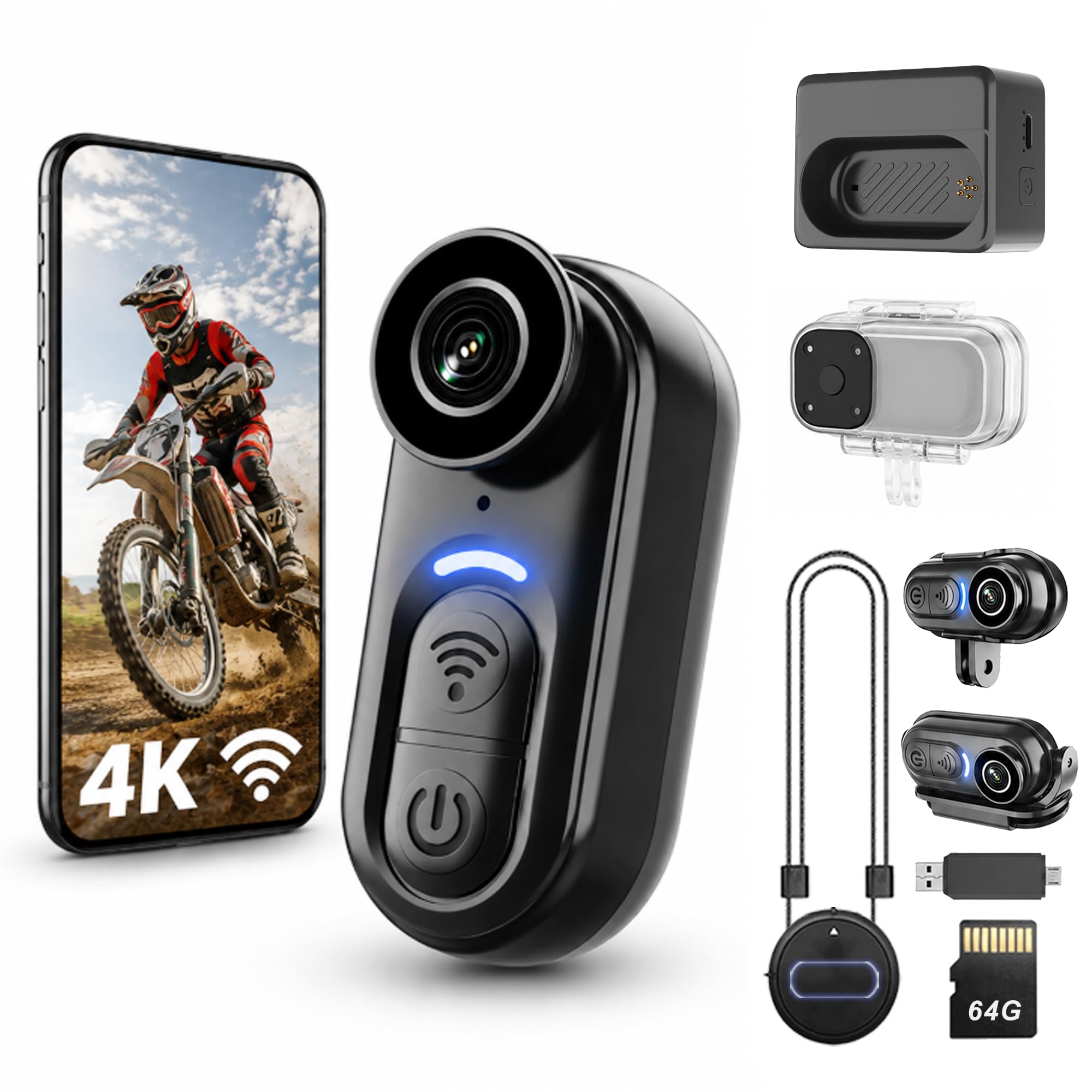
A thumb-sized recorder that covers a day of light clips without weighing you down.
For casual capture — short outings, quick vlogs, a few minutes at a time — this compact camera does the essentials at a budget-friendly point. It shoots 4K Ultra HD with audio, records up to 100 minutes continuously on a charge, and the included portable charging case stretches total runtime to 6 hours, so a full day of stop-start clips is covered. Six-axis stabilization plus automatic WDR (a mode that evens out harsh light and deep shadow) keeps footage clear in uneven indoor and outdoor conditions.
The mounting is what makes it wearable. A strong magnetic mount, a cap mount, and a helmet base let you attach it to a helmet, collar, bag, bike, or dashboard, and it auto-switches between landscape 16:9 and portrait 9:16 so your clips drop straight into social formats. Loop recording overwrites the oldest files so you never hit a full card, and built-in Wi-Fi pairs to an app for previewing, editing, and sharing from your phone. A 64GB micro SD card is included, as is a 2-in-1 card reader for fast transfers.
What wins people over is the size-to-quality ratio — owners are surprised how good the footage looks for a camera this small, and many mention its cute, pocketable form and easy operation. The honest friction sits in the magnet and the app: thin jackets and thick fabric can leave the magnetic hold weaker than it should be, and if the camera powers off unexpectedly you have to reconnect it in the app to get going again. Picture quality holds up for casual use but will not match a dedicated action camera at the top of this list — one buyer notes an occasional color shift on offloaded photos.
The value read: 4K Ultra HD, 100 minutes of continuous recording, and a 6-hour charging case at a budget price is a lot of camera for the money.
One caveat to size correctly: the magnet wants a snug, thick attachment point — light fabric makes it feel less secure.
Right for you if: you want an unobtrusive, budget-friendly body camera for short daily clips and quick shares.
Not for you if: you need pro-grade footage or a magnet that grips the thinnest jacket.
9. SJCAM C110Plus 4K POV Magnetic Action Camera (128GB)
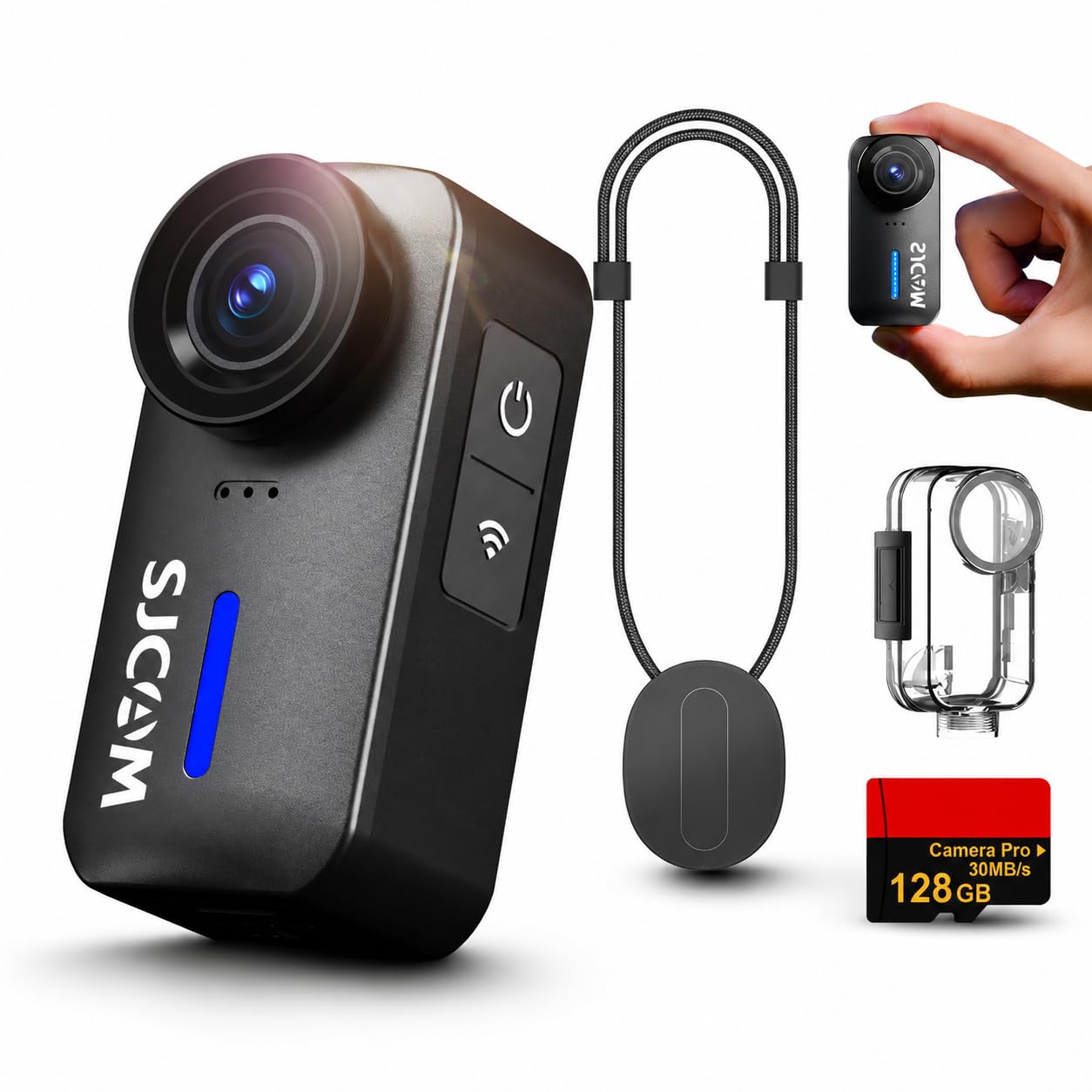
A magnetic POV camera that dives to 30 meters when the water calls.
For snorkeling, surfing, and any trip where the camera gets wet, this is the entry into real waterproof shooting. It records 4K at 30fps and 20MP photos through an F1.8 large aperture (a wide lens opening that lets in more light for brighter images), and the IP68 waterproof case takes it down to 30 meters (98ft) with the color balance tuned for underwater clarity. At 82g it is one of the lighter POV cameras here, and the built-in magnet plus magnetic lanyard let you clip it to a shirt or helmet for hands-free first-person footage.
The wide view and smooth footage are the draw. A 170° lens captures broad landscapes and group shots with distortion correction built in, and six-axis gyro stabilization (an electronic system that cancels out shakes) keeps mountain-bike and running footage steady. Time-lapse and slow-motion modes are on board, and the 1100mAh battery supports up to 120 minutes of continuous recording, with a Type-C port that lets a power bank keep it topped up on longer days out.
The catch is the app experience. Buyers consistently report the video quality and stabilization are the strong points, but a recurring frustration is that recorded clips sometimes throw an “unknown error occurred” message and refuse to play back on a phone, and the in-app editing is basic — you cannot trim clips inside the program. A couple of owners describe it as a you-get-what-you-pay-for camera. If playback on your phone is central to your workflow, plan to move files to a computer first.
Choose it if: you want genuine 30-meter waterproofing and a wide, stabilized 4K POV camera on a budget.
Choose differently if: you need to review and trim clips directly on your phone with no hiccups.
Know the Specs
Resolution and Frame Rate
Resolution is the pixel count of each frame, and higher numbers mean more detail you can crop or zoom later. Frame rate is separate: 30fps is smooth for walking, and 60fps keeps fast motion fluid for cycling or running. A camera that lists 4K at 60fps is doing more work per second than one at 30fps, so check both numbers — resolution alone can hide a choppy frame rate.
Waterproof Ratings
Waterproof ratings describe how much water a camera survives. IPX8 means it can be submerged without a case, which suits rain, pools, and surf. IP67 handles heavy rain and brief submersion. Some cameras only reach a deep depth — like 30 meters (98ft) — when you add an included housing, so always check whether the protection is built in or comes from an accessory you must fit first.
Built-in Memory vs microSD
Built-in memory is sealed inside the camera, so nothing can fall out or be lost — but once it fills you have to offload files before shooting more. A microSD slot lets you swap or upgrade cards, though you buy and manage them yourself. Cameras with large built-in storage like 128GB suit anyone who wants to shoot immediately without a trip to buy a card.
Battery Runtime and Charging
Runtime is the number that decides whether your footage survives the session. Some cameras run off a small internal cell measured in minutes, while others add a charging case or power handle that delivers hours. Faster charging — like a 0–80% fill in a short stop — matters when you cannot pause to top up. Weigh the rated runtime against your longest typical shoot, then keep a power bank or spare for longer days.
Common Questions
How long can a wearable camera actually record on one charge?
Will a wearable camera work without a microSD card?
Can I wear a body camera on a cap or helmet hands-free?
Is 60fps better than 30fps for action footage?
How waterproof is a wearable camera for swimming and surfing?
Do I need a separate case for underwater footage?
How do I transfer footage from a body camera to my phone or PC?
Does a magnetic mount stay put during cycling or running?
Which wearable camera is better for night recording?
Is built-in storage or a microSD card better for a wearable camera?
The Bottom Line
The best wearable camera for most people is the Insta360 GO Ultra: 4K at 60fps, 4K Active HDR, and IPX8 waterproofing in a 53g body that mounts magnetically for hands-free travel, cycling, and water footage. If long sessions and fast offloads matter most, the Xtra Atto answers with 220 minutes of recording and 128GB on board. And if you need all-shift coverage with night vision, the BOBLOV KJ23Pro is the one to reach for.
Whatever you shoot, pick the model whose strongest spec covers your weakest spot: the longest runtime if your sessions run long, the strongest magnet if you move fast.
How we choose
We do not accept paid placement. Every pick is matched to a real buyer and a real use-case; we do not hands-on test units.
Sources
Specifications: manufacturer listings and product documentation. Review insights: verified customer reviews, as of October 2026. Pricing: not shown on this page (it changes often); check the current price via the retailer link.
As an Amazon Associate, Aappliancez earns from qualifying purchases. This does not affect which products we feature.